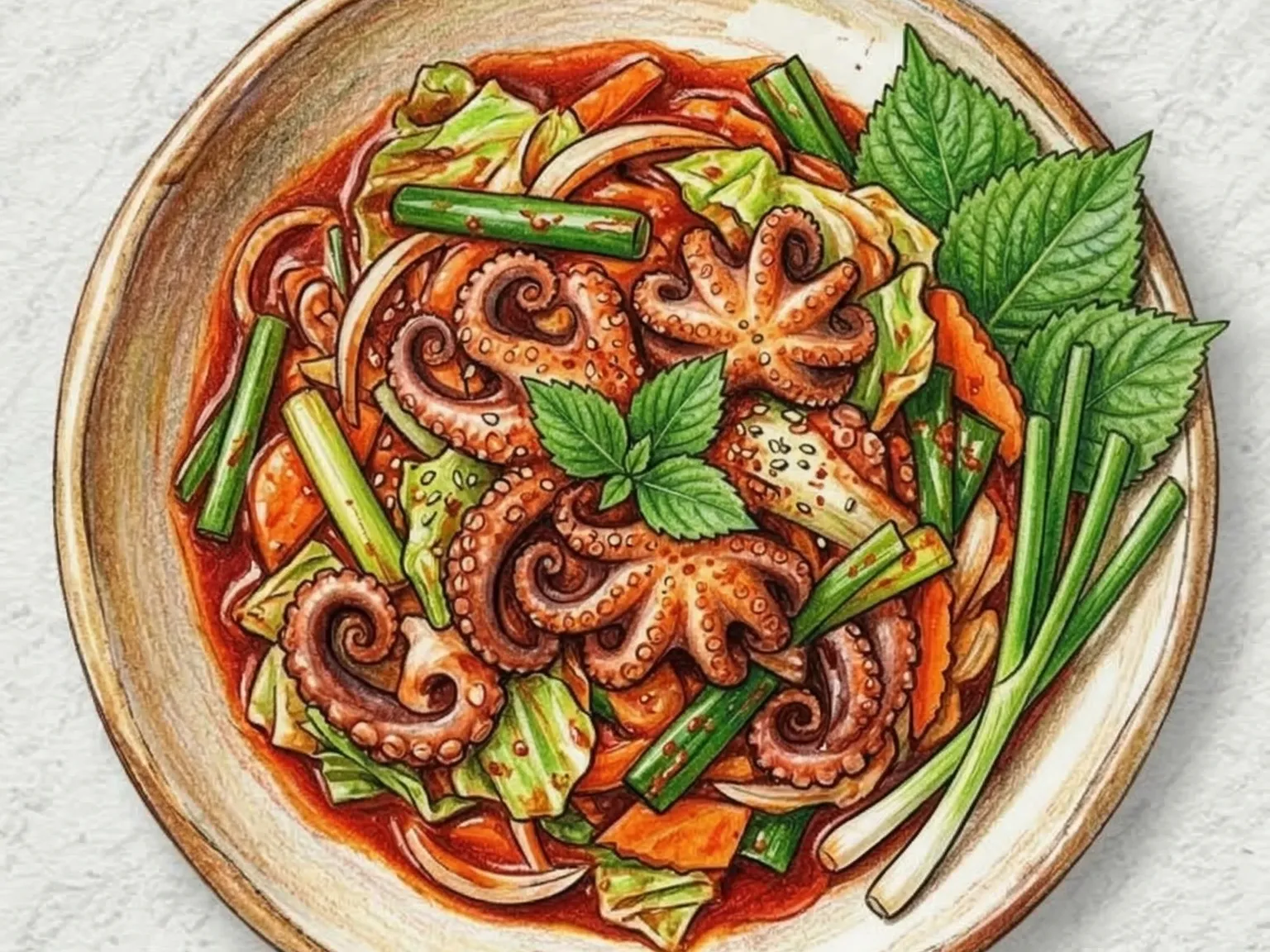
Korean Spicy Webfoot Octopus Stir-Fry
Quick answer
- Total time
- 25 min
- Level
- Easy
- Servings
- 2 servings
- Ingredients
- 10
About this dish
Made in spring with webfoot octopus (jjukkumi) full of roe, each bite comes with little pops.
Read more
The octopus is rubbed hard with coarse salt to strip its slime, blanched briefly, coated in gochujang sauce and stir-fried over high heat in under two minutes.
Ingredients
Instructions
- 1
Clean 300 g of webfoot octopus by removing the innards from inside the head, then rub well with coarse salt.
When the slippery coating loosens, rinse several times in cold water and drain thoroughly.
- 2
Blanch the octopus very briefly in boiling water, then lift it out right away.
Stop as soon as the outside begins to curl slightly, because this short step reduces later stir-fry time and prevents toughness.
- 3
Mix 3 tablespoons gochujang with gochugaru, soy sauce, sugar, minced garlic, and part of the sesame oil.
Coat the blanched octopus evenly and let it sit briefly so the seasoning clings before it hits the pan.
- 4
Slice half an onion into thick pieces and cut one green onion on the bias.
Heat the pan fully over high heat, add oil, and stir-fry the onion first until the edges turn glossy and sweet.
- 5
Before the onion turns fully translucent, add the seasoned octopus and toss quickly over maximum heat.
Keep the stir-fry within two minutes so the octopus stays springy and the sauce does not release too much liquid.
- 6
Add the green onion and toss a few more times just until its aroma rises.
Turn off the heat, finish with the remaining portion of the measured 1 teaspoon sesame oil, and serve immediately with steamed rice or as a soju snack.
Use-up ingredient planner
Turn these ingredients into two more meals
The overlap excludes basic seasonings. Open the next recipe and your selected dishes will stay with you.
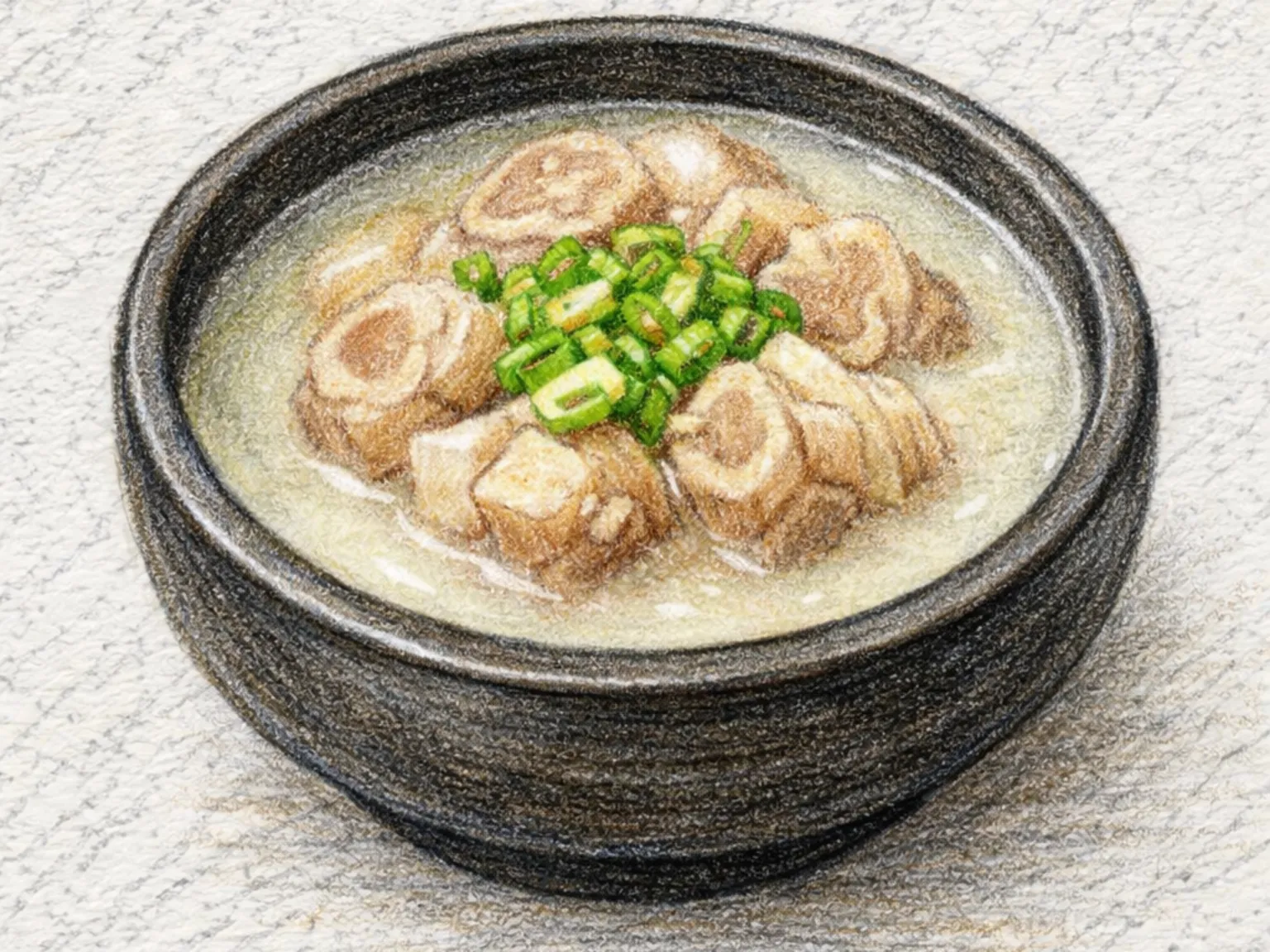
Korean Beef Trotter Soup (Silky Collagen-Rich Slow-Cooked Broth)
Onion, Green onion
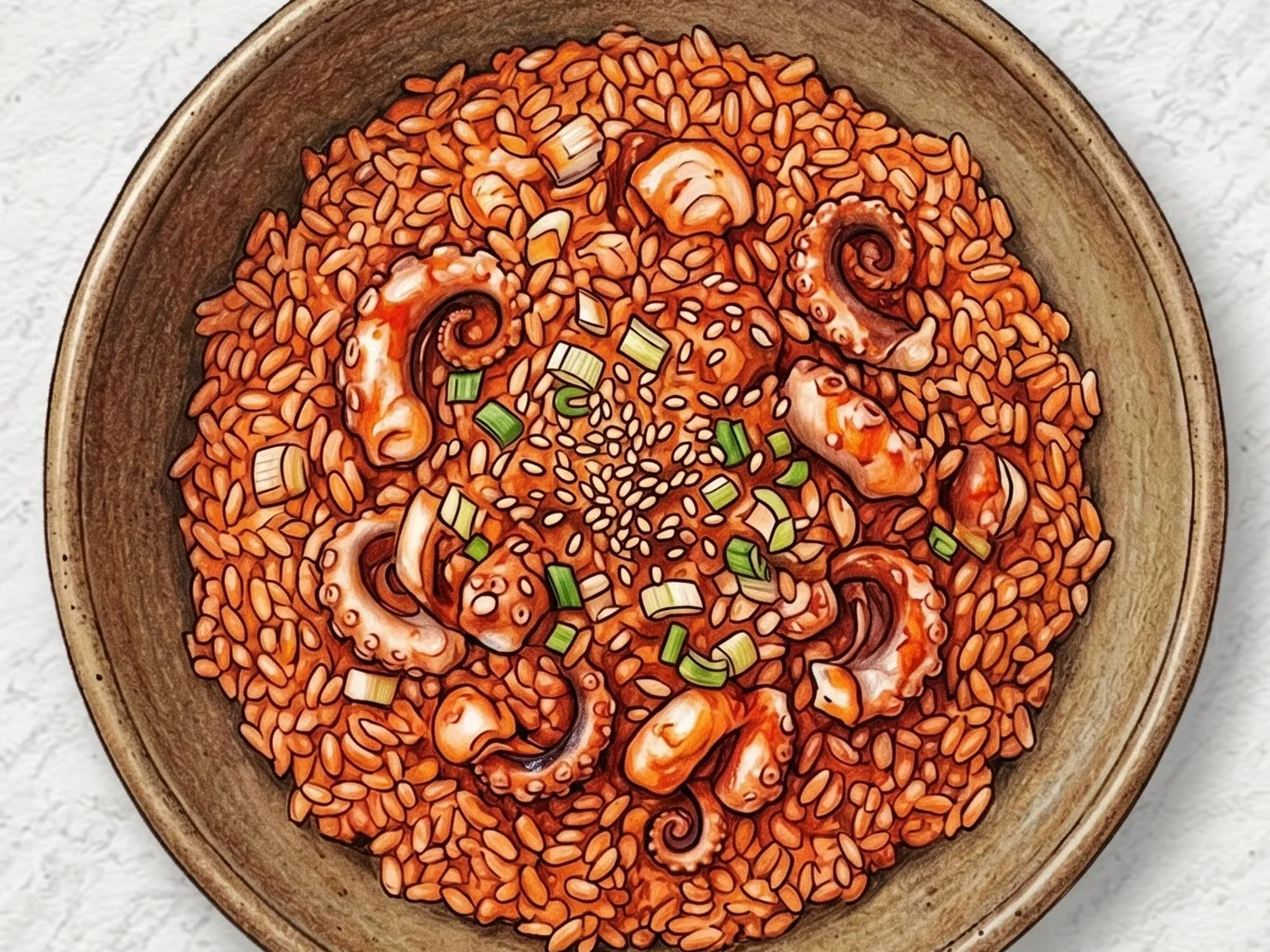
Korean Stir-Fried Octopus Fried Rice
Onion, Green onion

King Oyster Mushroom Rice Bowl
Onion, Green onion
Tips
Variations
Jjukkumi-bokkeum with Green Onion
This spicy baby octopus stir-fry uses plenty of green onion for bold aroma. The onion's sweetness softens the heat while keeping the dish lively.
Baby Octopus Stir-fry with Shepherd's Purse
Baby octopus with shepherd's purse creates a spring-focused stir-fry with fresh herbal notes. Peppery greens and spicy sauce pair well with the chewy seafood.
Webfoot Octopus and Bean Sprout Stir-Fry
Webfoot octopus is stir-fried with crunchy bean sprouts in a spicy sauce. The chewy octopus contrasts with the crisp sprouts.