Korean Grilled Webfoot Octopus
Quick answer
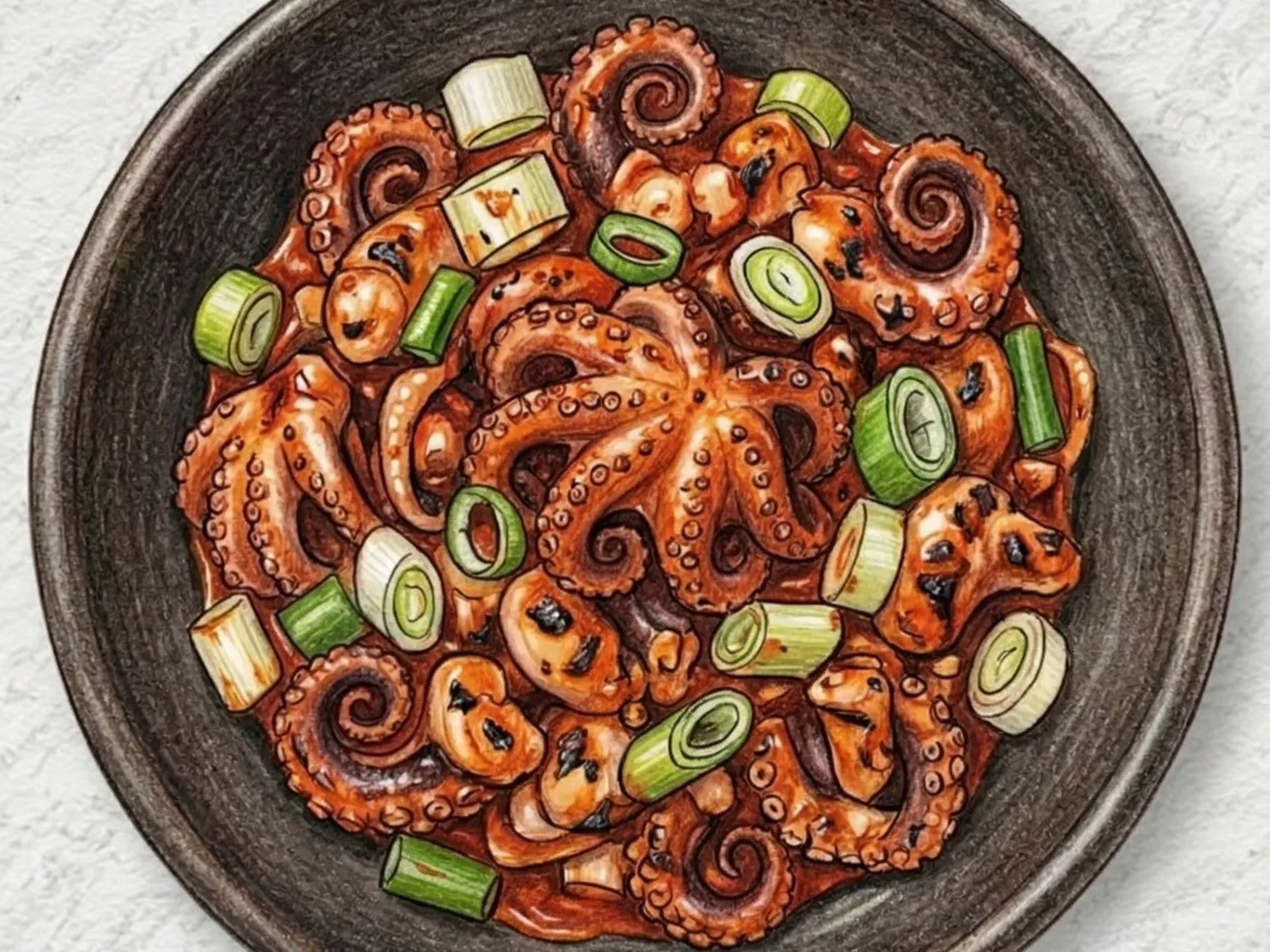
Cleaned webfoot octopus is tossed in a marinade of gochujang, chili flakes, soy sauce, and sugar for ten minutes, then seared on high heat for just three to four minutes.
What makes this special
- Jjukkumi-gui is spicy grilled webfoot octopus seared on high heat to maintain a springy texture.
- 3-4 minutes on high heat keeps webfoot octopus springy, not rubbery
- Pre-spawning spring season brings roe-filled bodies with peak nuttiness
Key ingredients
Core cooking flow
- 1 Remove the innards from 400 g webfoot octopus, then rinse well under running water.
- 2 Mix 1.5 tablespoons gochujang with 1 tablespoon each gochugaru, soy sauce, and minced garlic.
- 3 Coat the cleaned octopus evenly with the marinade and let it stand for only 10 minutes.
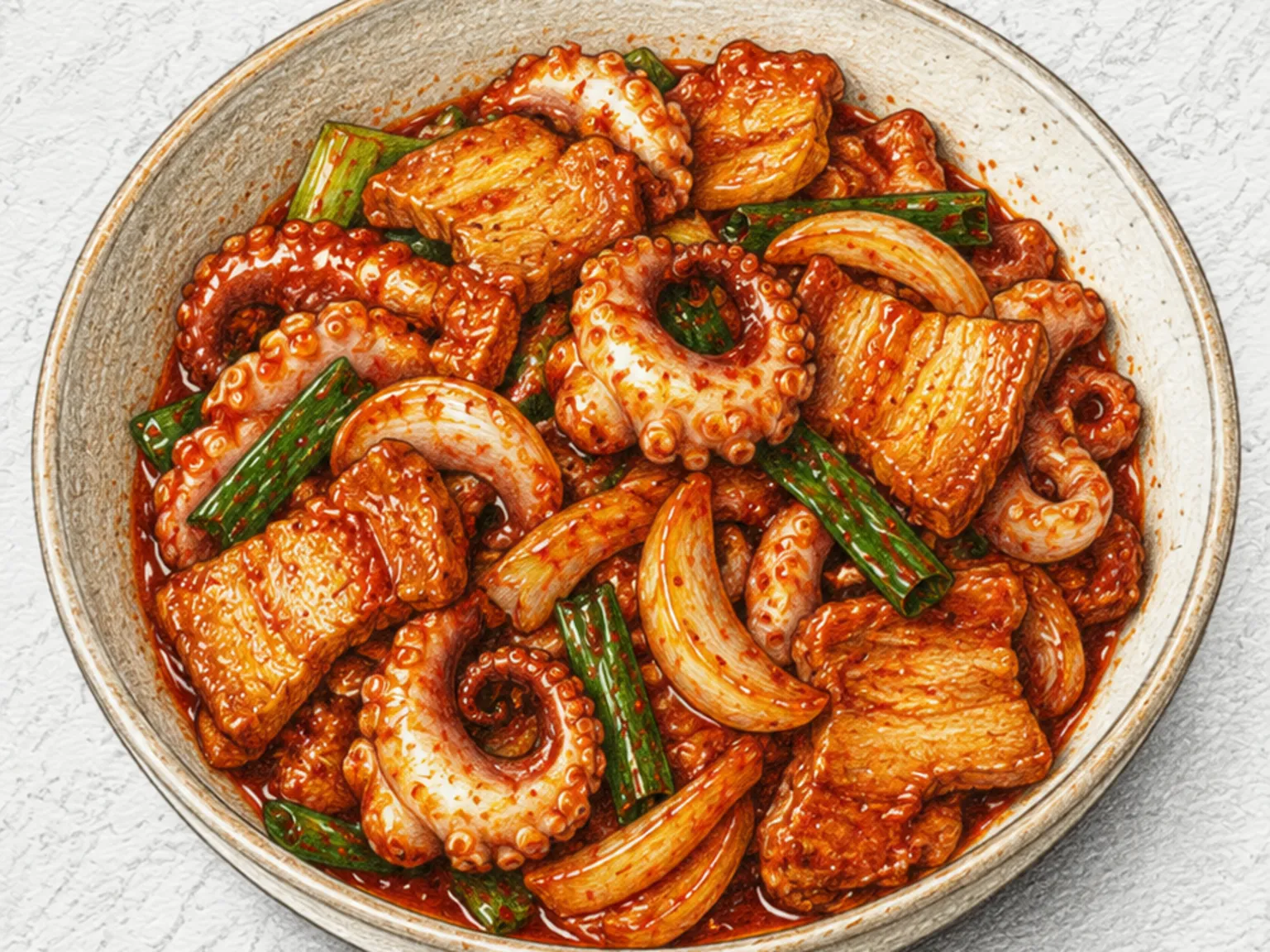
Cleaned webfoot octopus is tossed in a marinade of gochujang, chili flakes, soy sauce, and sugar for ten minutes, then seared on high heat for just three to four minutes. Webfoot octopus has thicker tentacles than nakji and a more resilient chew, which makes it particularly well suited to this type of spicy, high-heat preparation. The short cooking time is not a shortcut -- it is the point. Overcooking webfoot octopus makes it rubbery and dry, and the difference between three minutes and five minutes is the difference between tender-chewy and tough. High heat is equally important: the goal is to sear, not steam, so the pan must be very hot and the pieces should not be crowded. Where the glaze catches on the pan surface and scorches slightly, it leaves behind charred bits that coat the octopus with a smoky depth the marinade alone cannot provide. Green onion added in the final seconds cuts through the heat with a sharp, fresh note. Just before the main harvest season in spring, webfoot octopus carries roe that adds a rich, creamy nuttiness to each bite, and this is when Korean cooks consider the ingredient at its peak. The cooked pieces wrap well in perilla leaves and are also popular as a fried rice finisher.
Instructions
Read the steps as a cooking flow: prep, heat, seasoning, doneness control, and finish.
- 1Step
Remove the innards from 400 g webfoot octopus, then rinse well under running water.
Drain thoroughly and pat off excess moisture so the spicy marinade does not become watery in the pan.
- 2Season
Mix 1.5 tablespoons gochujang with 1 tablespoon each gochugaru, soy sauce, and minced garlic.
Add 1 teaspoon each sugar and sesame oil, then stir until the sugar dissolves and the paste looks even.
- 3Step
Coat the cleaned octopus evenly with the marinade and let it stand for only 10 minutes.
Do not marinate much longer, because the octopus can release too much liquid and steam instead of sear.
- 4Control
Heat the pan very well over high heat, then spread the octopus in a single layer.
If the pan is crowded, cook in batches so moisture can evaporate quickly and the sauce can catch slightly.
- 5Season
Sear for 3-4 minutes, tossing quickly, until the octopus curls and the sauce lightly scorches on the pan surface.
Stop before it tightens too much, because overcooking makes it rubbery and dry.
- 6Finish
Add 30 g green onion and toss for just 20-30 seconds to keep its fresh aroma.
Transfer immediately while the octopus is still springy, and serve hot with the glossy spicy coating intact.
After the steps
Pick a recipe that fits this dish.
Continue with shared ingredients, meal pairings, or a similar method.
Recipes That Go Well With This
More Grilled →Based on shared ingredients and meal pairing
Korean Spicy Grilled Octopus
Muneo-yangnyeom-gui is a Korean spicy grilled octopus dish where pre-boiled octopus is cut into bite-sized pieces, marinated for ten minutes in gochujang, gochugaru, soy sauce, oligosaccharide syrup, and minced garlic, then seared quickly in a smoking-hot pan. Since the octopus is already cooked, extended heat exposure only toughens it-the entire grilling step should finish within three to four minutes. Blotting the octopus completely dry before cooking prevents the sauce from becoming watery and ensures rapid caramelization at high temperature. Sesame oil, sliced green onion, and sesame seeds are tossed in after the heat is off, adding a toasted, aromatic layer over the spicy-sweet glaze.
Korean Grilled Sea Snail with Gochujang
Pre-boiled sea snail meat is sliced thin, trimmed of tough visceral parts, and marinated for fifteen minutes with sliced onion in a sauce built on gochujang, gochugaru, soy sauce, oligosaccharide syrup, and minced garlic. A screaming-hot pan sears the marinated snail in three to four minutes, concentrating the spicy-sweet sauce onto the surface while preserving the snail's signature firm chew. Green onion goes in for the final minute, followed by a drizzle of sesame oil. The briny depth of the sea snail meets the fermented heat of gochujang in every bite.
Korean Namhae-Style Clam Broth
Namhae-jogae-tang is a southern coastal Korean clam soup that relies on an abundance of clams and minimal interference to produce a broth of startling clarity and depth. The clams are purged in salted water, then cooked in water spiked with rice wine, which tempers any raw ocean smell. As the shells pop open, they release their natural liquor - briny, faintly sweet, and concentrated - which becomes the soup's defining flavor. Sliced green and red chilies add gentle heat and color without overwhelming the shellfish, while garlic and green onion contribute a quiet aromatic layer. Salt is added cautiously, since the clams themselves bring significant salinity. The result is a transparent, intensely flavored bowl that tastes like the sea distilled into its purest form, and it is traditionally enjoyed as both a drinking companion and a light meal.
Korean Kkotge Gochujang Gui (Spicy Grilled Crab)
Kkotge-gochujang-gui is a Korean spicy grilled crab where halved blue crabs are thoroughly coated in a thick paste of gochujang, gochugaru, soy sauce, oligosaccharide syrup, and garlic, then marinated for fifteen minutes before going onto a medium-heat grill. The sugar in the syrup and the fermented compounds in the gochujang caramelize over direct flame, forming a glossy, dark-red lacquer on the shell while the crab meat underneath is steam-cooked by the insulating shell, keeping it moist and sweet. Controlled medium heat is essential because the sauce scorches quickly: four minutes shell-side down first, then a flip for five to six more minutes ensures even cooking without burning. When the crab is turned, the sauce drips into the interior cavity and coats the exposed meat directly, intensifying the spice penetration on the flesh side. A final drizzle of sesame oil and a scatter of toasted sesame seeds layer a nutty, smoky fragrance over the lacquered coating.
Serve with this
Korean Stir-Fried Sweet Potato Stems
Goguma julgi - sweet potato stems - are the above-ground vines of the sweet potato plant, a byproduct that Korean cooks transform into a summer namul rather than discarding. The most labor-intensive step is peeling each stem by hand, pinching the outer skin with a fingernail and pulling it away to reveal the tender core beneath. After blanching for two minutes and rinsing in cold water, the stems are stir-fried in perilla oil with garlic and seasoned with soup soy sauce. Perilla powder stirred in at the end thickens the remaining liquid into a nutty glaze. In season during summer, the stems are harvested from sweet potato fields before the tubers themselves are dug up.
Korean Tuna Gimbap (Chamchi Gimbap)
Chamchi gimbap is a Korean seaweed rice roll filled with canned tuna mixed with mayonnaise, along with carrot, spinach, and pickled radish, all wrapped in seasoned rice and a sheet of roasted gim. The creamy tuna filling contrasts with the crisp vegetables, while the tangy pickled radish cuts through the richness and keeps each bite lively. A longtime staple in Korean lunchboxes and picnic spreads, the roll slices neatly into rounds that are easy to eat without utensils. Sesame oil brushed on the outside adds a subtle sheen and a nutty aroma. Spacing the fillings evenly before rolling ensures a clean, colorful cross-section with every cut - part of what makes well-made gimbap visually satisfying alongside the taste.
Chicken Mu (Korean Fried Chicken Radish Pickle)
The crunchy, sweet-sour radish pickle served with every order of Korean fried chicken - now easy to make at home in under 15 minutes. Cubed radish is submerged in a cooled brine of vinegar, sugar, salt, and whole black peppercorns. Using fully cooled brine rather than hot is critical for maintaining the radish's firm, snapping crunch. Ready to eat after one day of refrigeration, its bright acidity cleanses the palate between bites of crispy chicken. Stored in a glass jar, this pickle keeps for over a week.
Similar recipes
Korean Gochujang-Grilled Butterfish
Byeongeo gochujang-gui is a Korean spicy grilled butterfish where fillets are brushed with a paste of gochujang, soy sauce, plum syrup, minced garlic, and red pepper flakes, then pan-fried over medium heat. Butterfish has an exceptionally fine, soft flesh that absorbs the marinade readily, and the plum syrup's fruity acidity offsets the fermented heat of gochujang so the finish stays clean. The glaze must be applied in thin, repeated layers during cooking; a single thick coat causes the sugars to scorch before the fish cooks through. Each side needs roughly three to four minutes over medium heat, and a wide spatula prevents the delicate flesh from breaking when flipped. A light squeeze of lemon at the end adds brightness that prevents any lingering oiliness and sharpens the overall flavor.
Korean Spicy Baby Octopus Fried Rice
Jjukkumi bokkeumbap is a spicy fried rice built around webfoot octopus, where every element of the technique exists to preserve the squid's signature springy chew. The octopus is first rubbed with salt to strip off the surface slime, then cut to bite-size and seared over high heat for no more than three minutes. The gochujang-based sauce, bolstered with chili flakes, soy sauce, sugar, and garlic, concentrates spice and umami before the rice enters the pan and soaks up the red seasoning grain by grain. A drizzle of sesame oil at the end adds a nutty fragrance that lifts the dish slightly, and melted cheese is a popular addition for softening the heat without dulling the flavor. The oceanic character of the octopus - its brininess and elasticity - gives this fried rice a depth that ground pork or vegetables simply do not replicate. Not overcooking the octopus is the single most important decision in the recipe.
Korean Webfoot Octopus Tofu Stew
Jjukkumi dubu jjigae is a Korean stew of webfoot octopus and soft tofu cooked in a gochugaru-seasoned anchovy broth. A full 450 grams of jjukkumi goes into the pot, providing a bouncy, chewy texture in every spoonful. The tofu absorbs the spicy broth as it cooks, creating a soft counterpoint to the firm octopus, and the contrast between the two textures is a central part of the dish. Rice wine added early in the cooking process neutralizes any fishiness from the seafood, keeping the broth clean-tasting rather than pungent. Soup soy sauce deepens the umami base without darkening the broth too heavily, and gochugaru provides the heat. Zucchini and onion contribute natural sweetness that rounds out the broth and prevents the salt from the seafood from feeling sharp or one-dimensional. Jjukkumi becomes rubbery if overcooked, so removing the pot from heat three to four minutes after it comes back to a boil is the key step for keeping the octopus tender and springy rather than tough.