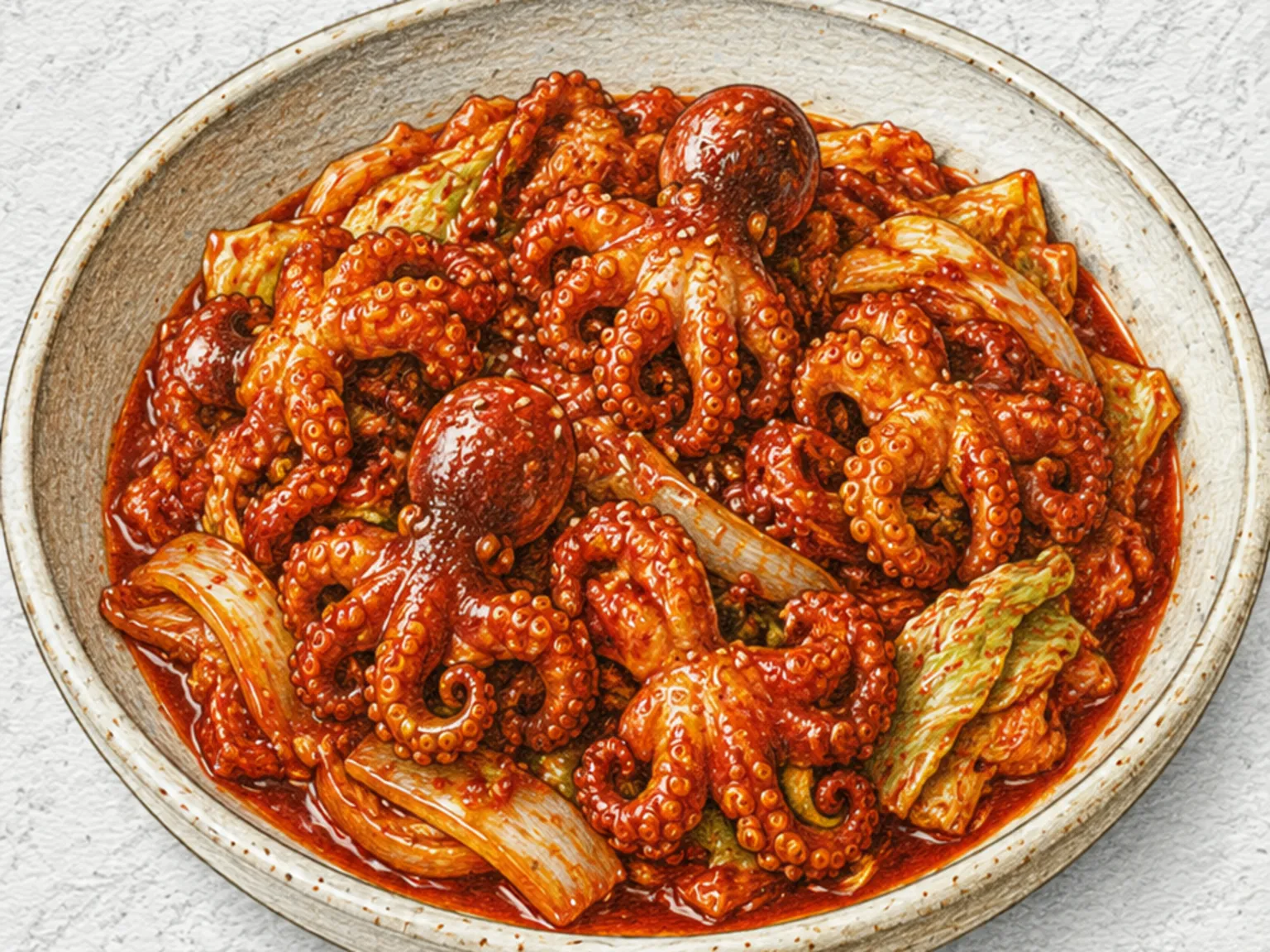
Korean Spicy Steamed Baby Octopus
Quick answer
- Total time
- 35 min
- Level
- Medium
- Servings
- 2 servings
- Ingredients
- 8
About this dish
Baby octopus, at its best in spring, spends only a short time in a gochujang and gochugaru marinade before steaming on a bed of cabbage and onion.
Read more
Ten minutes is enough to coat the pieces before they start giving up water. As the vegetables soften, their juices mix with the marinade into a small pool of spicy sauce at the bottom. The cabbage keeps the octopus off the steamer and takes the edge off the heat. The steamer should be at a full boil before the octopus is added, and the lid stays shut so the steam stays strong. The window between springy and rubbery is narrow, and the moment the pieces curl up plump is the moment to stop.
Ingredients
Instructions
- 1
Rinse 450g baby octopus under cold running water to remove slime and debris.
Remove the innards from the heads and cut into 5cm lengths.
- 2
Mix 1.5 tbsp gochugaru with 1 tbsp each gochujang, soy sauce, and minced garlic until no thick streaks remain.
Add the prepared baby octopus and marinate for just 10 minutes so the seasoning coats without drawing out too much moisture.
- 3
Cut 120 g cabbage into wide 3 cm pieces and slice 1 onion into thick strips.
Spread them evenly across the steamer base, making a loose bed that keeps the octopus from direct contact and softens the chile heat.
- 4
Bring the steamer water to a full rolling boil over high heat before adding the food.
Spread the marinated baby octopus over the vegetables in one layer, then cover immediately so the steam stays strong and even.
- 5
Keep the heat high and steam for about 10 minutes only.
Avoid opening the lid repeatedly, because heat loss lengthens cooking and can make the octopus tough; it is ready when the pieces curl and look plump.
- 6
Turn off the heat and uncover, then toss gently so the cabbage juices blend with the spicy seasoning without breaking the vegetables. Drizzle 1 tsp sesame oil at the end and serve while warm, before the octopus tightens.
Use-up ingredient planner
Turn these ingredients into two more meals
The overlap excludes basic seasonings. Open the next recipe and your selected dishes will stay with you.
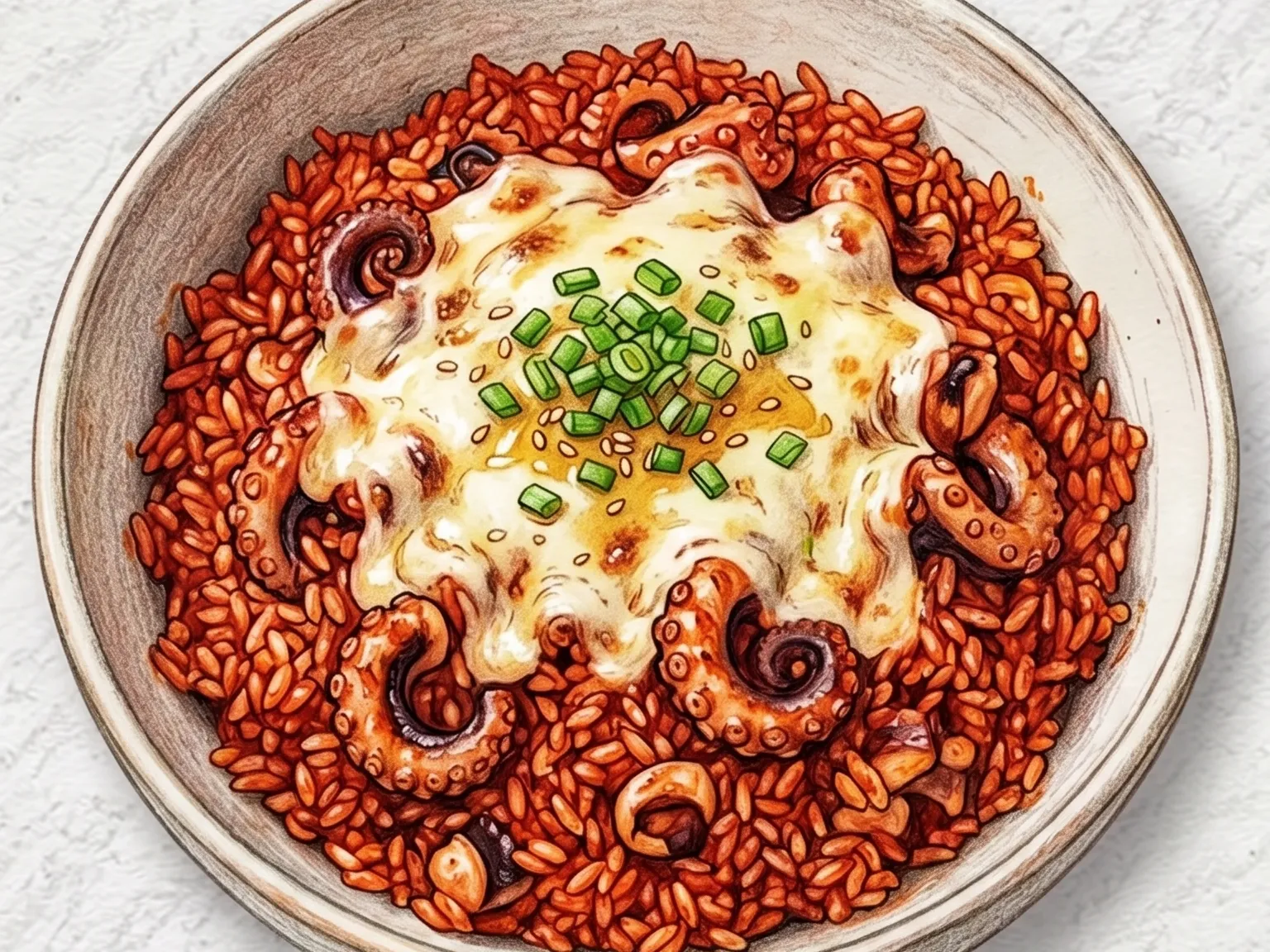
Korean Spicy Baby Octopus Fried Rice
baby octopus, onion
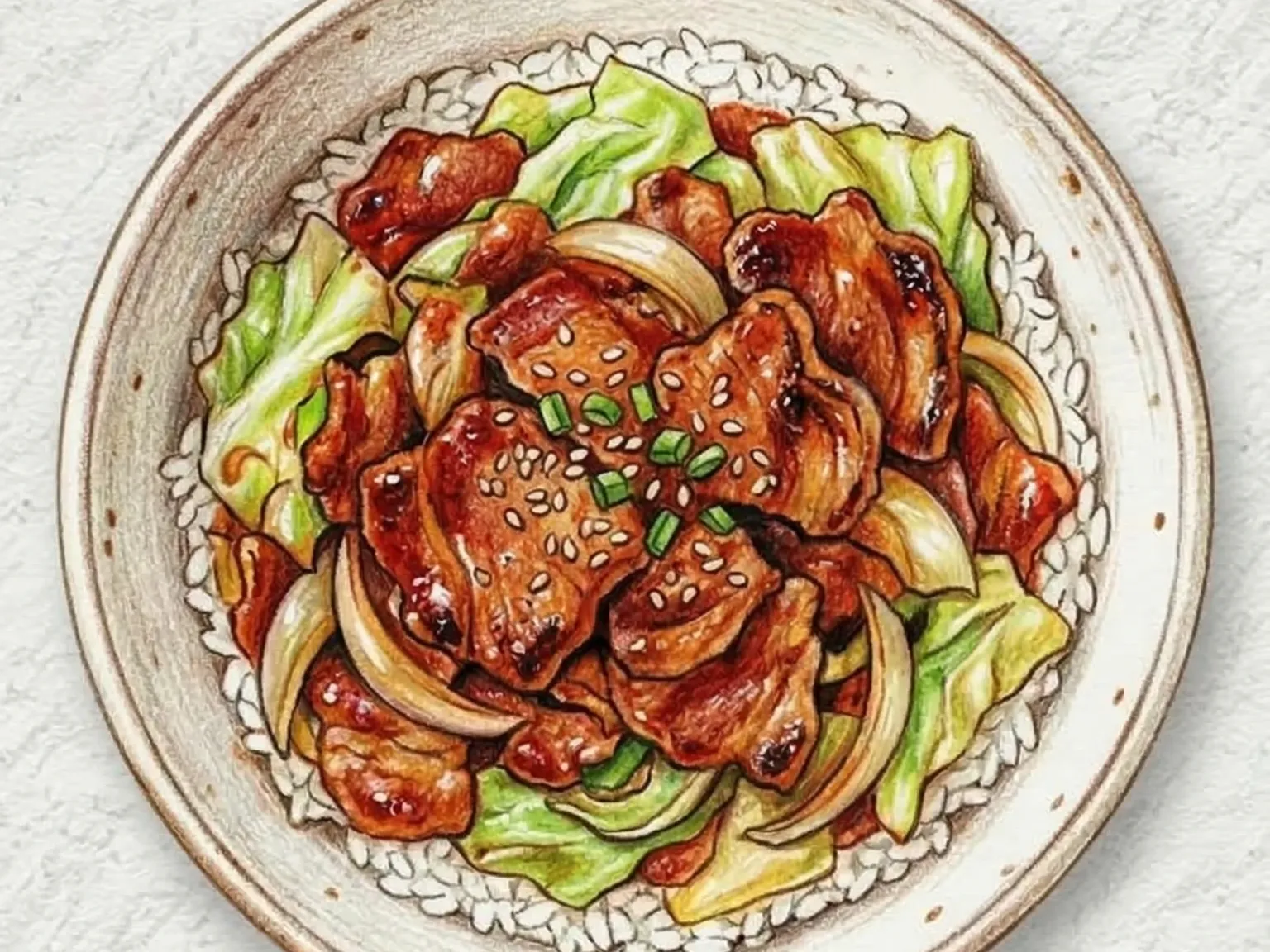
Korean Spicy Pork Rice Cup
cabbage, onion
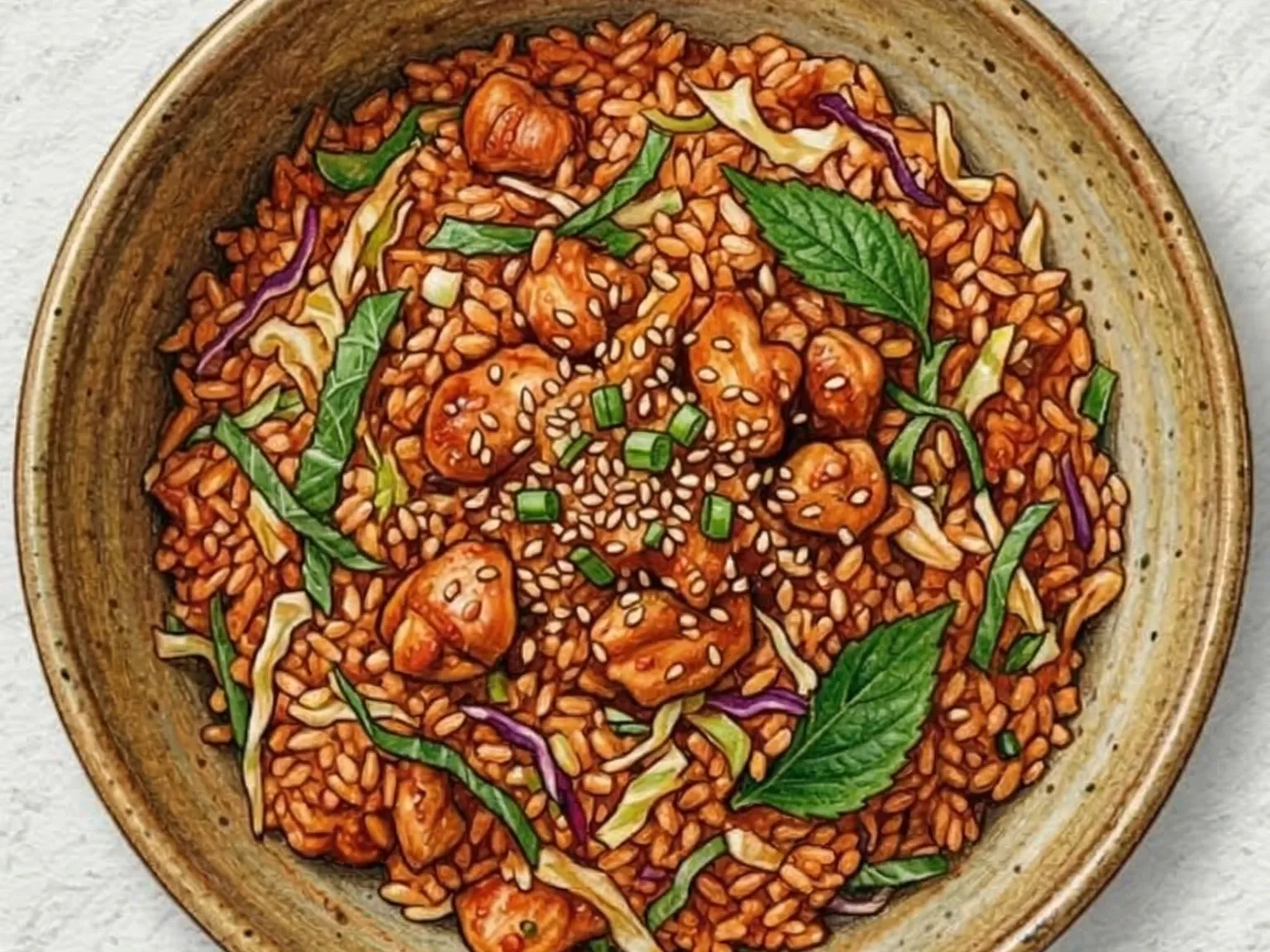
Dakgalbi Fried Rice
cabbage, onion