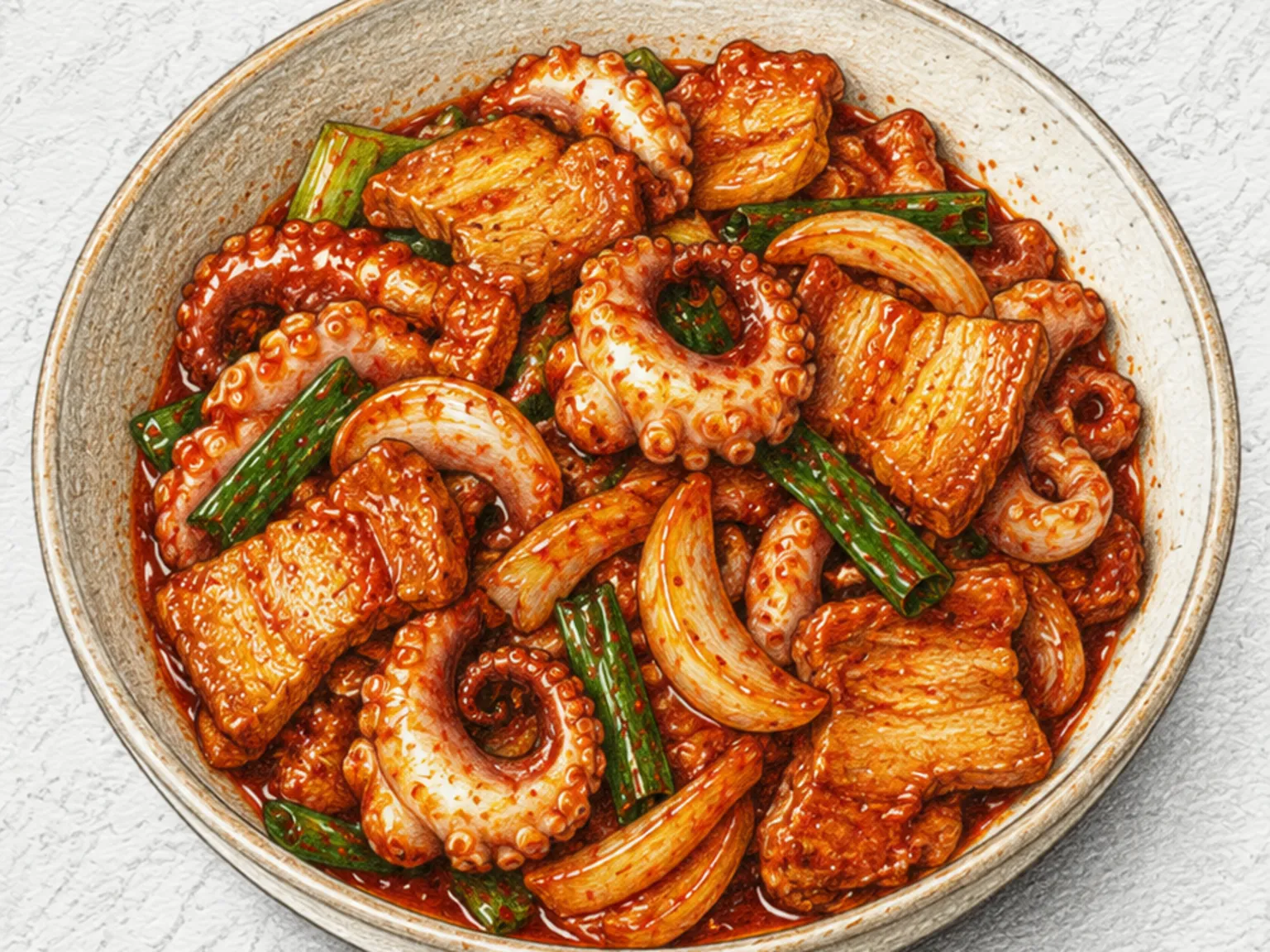
Korean Spicy Webfoot Octopus & Pork Belly Stir-fry
Jjukkumi-samgyeop-bokkeum combines chewy baby octopus and thick pork belly slices in a spicy stir-fry. The pork belly is first grilled until golden to render its fat, then the octopus and gochujang-based sauce are added for a fast, high-heat toss. Pork richness and the octopus's clean ocean flavor merge inside the chili seasoning, with onions and scallions adding sweetness. It is typically served sizzling on a hot plate, and diners often finish with fried rice made in the remaining sauce.
Adjust Servings
Instructions
- 1
Clean octopus by removing innards, rubbing with salt, and draining well.
- 2
Cut pork belly into bite-size pieces and slice onion and green onion.
- 3
Mix gochujang, gochugaru, soy sauce, garlic, and sugar for sauce.
- 4
Render pork belly in a hot pan first, then add onion.
- 5
Add octopus and sauce, then stir-fry quickly over high heat for 3-4 minutes.
- 6
Add green onion, cook 1 minute, and finish with sesame oil.
As an Amazon Associate, we may earn from qualifying purchases.
Tips
Nutrition (per serving)
More Recipes

Korean Spicy Webfoot Octopus Stir-Fry
Jjukkumi-bokkeum is a Korean seafood stir-fry of small webfoot octopus tossed with vegetables in a fiery gochujang and gochugaru sauce over high heat. The octopus must be cooked quickly to stay chewy; overcooking turns it tough, so heat control is key. The bold, spicy kick from the chili paste is the defining character of this dish, tempered by the natural sweetness of onions and scallions. Spring jjukkumi with roe inside adds a popping texture when bitten, making the seasonal version especially prized.

Korean Squid & Pork Belly Stir-fry
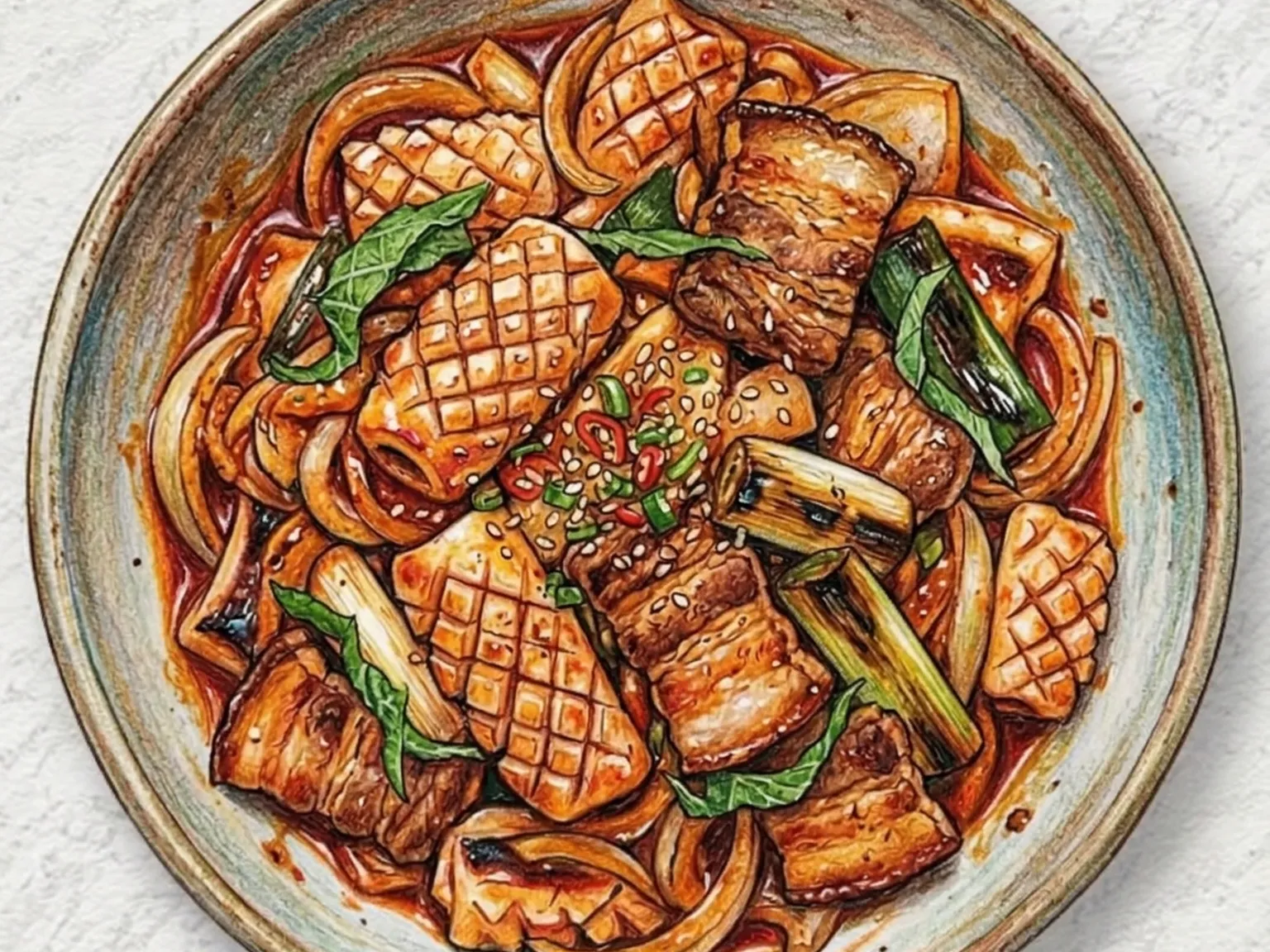
Osam-bulgogi is a Korean stir-fry that pairs scored squid and sliced pork belly in a single pan with a gochujang-gochugaru-soy-sugar sauce, delivering both oceanic umami and rich meatiness in every bite. The pork belly cooks first for three minutes, rendering its fat into the pan - this rendered fat then becomes the cooking medium for the squid, deepening the overall flavor. Squid is scored in a crosshatch pattern so the thick sauce penetrates its flesh, and onion provides sweetness to balance the heat. Scallion and perilla leaves finish the dish, adding freshness to what is a staple anju (drinking snack) in Korean restaurants.

Korean Spicy Beef Stir-Fry
Sogogi gochujang-bokkeum marinates thin-sliced beef in a paste of gochujang, soy sauce, sugar, and minced garlic, then stir-fries it over high heat. The chili paste's spiciness and the sugar caramelize together on the meat's surface, building a dark, sticky glaze with layered heat. Onion cooked alongside the beef releases moisture that helps the seasoning distribute evenly across every slice. A finish of sesame oil adds a roasted nuttiness on top of the bold, spicy-sweet profile -- intensely flavored enough that a small portion carries a full bowl of rice.

Korean Spicy Stir-fried Octopus
Nakji-bokkeum is a fiery Korean stir-fry of small octopus (nakji) coated in a sauce of gochujang, gochugaru, soy sauce, sugar, and garlic, tossed with bean sprouts, onion, carrot, and scallion. Bean sprouts line the bottom of the pan, releasing moisture to prevent sticking while adding crunch. The vegetables and half the sauce go on next, then the octopus on top, covered and steamed on medium heat for three minutes before a final high-heat stir-fry sears everything for two minutes. Speed is critical - octopus toughens with prolonged cooking - and the dish is often mixed with boiled thin wheat noodles for a heartier meal.

Korean Grilled Webfoot Octopus
Cleaned webfoot octopus is tossed in a marinade of gochujang, chili flakes, soy sauce, and sugar for ten minutes, then seared on high heat for just three to four minutes. The brief cook time preserves the octopus's natural springy texture, while the intense flame adds a smoky char to the spicy glaze. Green onion tossed in at the very end introduces a fresh, sharp note that cuts through the heat.

Korean Stir-fried Silkworm Pupae
Beondegi-bokkeum starts with canned silkworm pupae, drained, rinsed, and stir-fried in oil with garlic, soy sauce, and gochugaru over medium heat. As the moisture evaporates, the pupae develop a light crust while the soy sauce creates a glossy, salty glaze across their surface. Sliced cheongyang chili and scallion go in at the end, layering sharp heat and allium fragrance over the pupae's earthy, nutty base flavor.