Korean Grilled Clams (Butter Garlic Mixed Shellfish Grill)
Grilled Medium

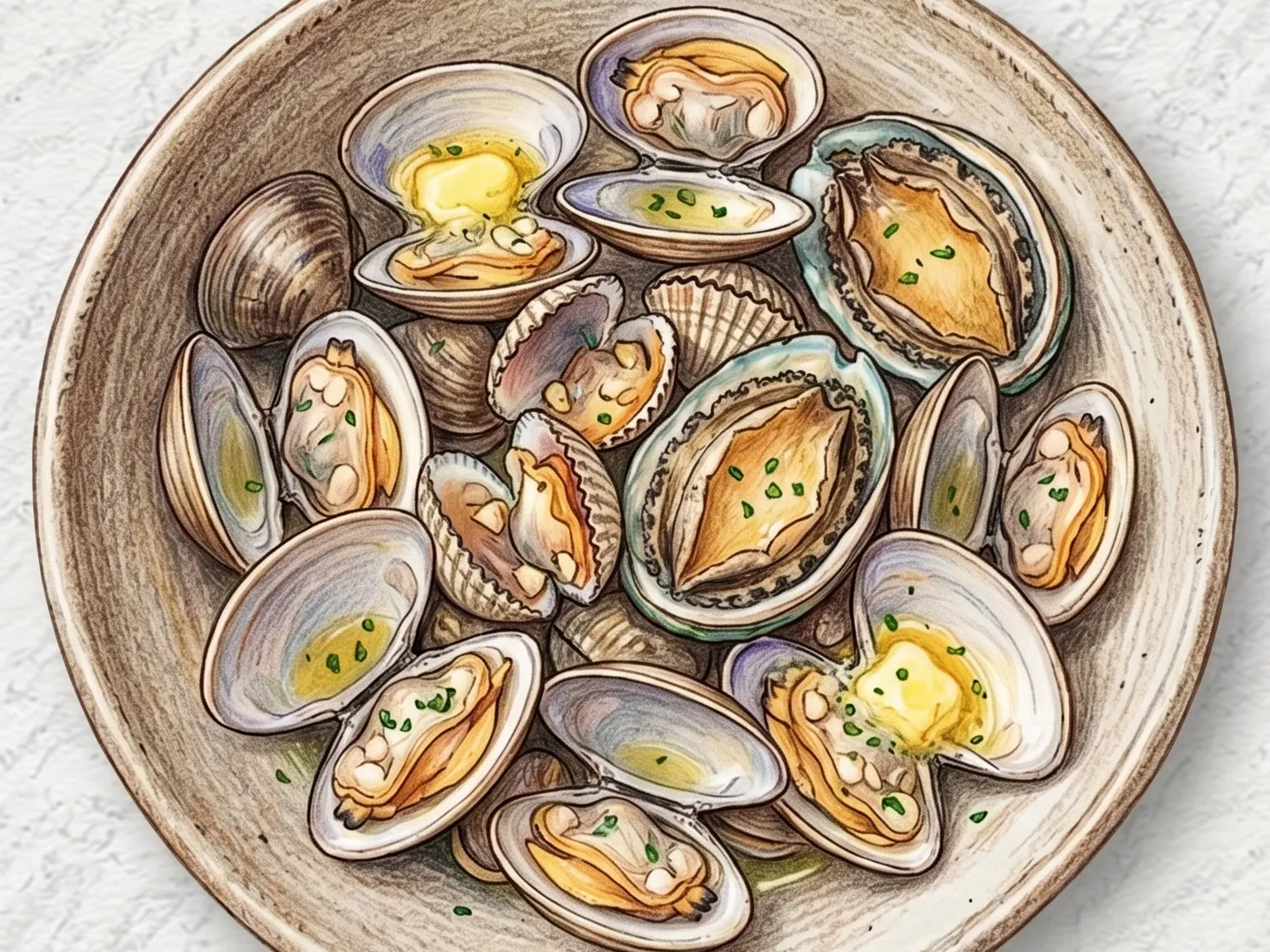
Korean Grilled Clams (Butter Garlic Mixed Shellfish Grill)

Quick answer

Mixed clams are submerged in salt water for at least one hour so they expel any sand and grit naturally, then placed shell-side down on a hot grill or pan.

What makes this special

  • Jogae-gui is a mixed shellfish grill prepared with a salt water purge and melted garlic butter.
  • 1-hour brine purge removes all sand and grit from the shells
  • Clam liquor pooling in open shells merges with garlic butter into a sauce
Total time
37 min
Level
Medium
Servings
2 servings
Ingredients
6
Calories
260 kcal
Protein
27 g

Key ingredients

mixed clamssalt waterminced garlicbutterrice wine

Core cooking flow

  1. 1 Submerge 800 g mixed clams in 3 cups salt water and purge them for at least 1 hour.
  2. 2 Rinse the purged clams under running water, rubbing the shells clean, then drain them in a sieve.
  3. 3 Heat a grill or heavy pan over high heat until very hot, then arrange the cl...

Mixed clams are submerged in salt water for at least one hour so they expel any sand and grit naturally, then placed shell-side down on a hot grill or pan. As the shells gradually crack open from the heat, a knob of butter, minced garlic, and a splash of rice wine are dropped into each opened shell for one to two more minutes of cooking. The briny liquid that the clams release mingles with the melting butter, building a concentrated natural sauce inside every shell without any additional stock or seasoning needed. Because clams vary in size, they open at different times, so pulling each one as soon as it opens rather than waiting for the whole batch prevents overcooking. Any clam that stays firmly shut after the others have opened should be discarded as unsafe. Chopped fresh parsley scattered over the finished clams cuts through any residual fishiness with a clean herbal note.

Prep 25min Cook 12min 2 servings
Recipes by ingredient → garlic butter parsley

Instructions

Read the steps as a cooking flow: prep, heat, seasoning, doneness control, and finish.

6 steps
  1. 1
    Season

    Submerge 800 g mixed clams in 3 cups salt water and purge them for at least 1 hour.

    Keep them in a cool place so they can release sand and grit before cooking.

  2. 2
    Heat

    Rinse the purged clams under running water, rubbing the shells clean, then drain them in a sieve.

    Let excess water drip off well, because wet shells can splatter on the hot pan or grill.

  3. 3
    Control

    Heat a grill or heavy pan over high heat until very hot, then arrange the clams in one layer with the shells on the surface.

    Avoid piling them up, or they will open unevenly and cook too long.

  4. 4
    Step

    As each shell opens, divide 20 g butter, 1 tablespoon minced garlic, and 1 tablespoon rice wine among the opened clams.

    Spoon them into the shell gently so the briny juices stay inside.

  5. 5
    Season

    After seasoning, lower the heat to medium and cook for 1-2 minutes more.

    Once the butter melts and the garlic smells fragrant, remove each clam promptly so the meat stays tender.

  6. 6
    Finish

    Discard any clam that remains closed after cooking.

    Transfer the cooked clams with their shell juices to a plate, sprinkle with 1 teaspoon chopped parsley, and serve while still hot.

After the steps

Pick a recipe that fits this dish.

Continue with shared ingredients, meal pairings, or a similar method.

Recipes That Go Well With This

More Grilled →

Based on shared ingredients and meal pairing

Korean Butter-Grilled Crab
Shared ingredient: butter Grilled

Korean Butter-Grilled Crab

Kkotge-beoteo-gui refers to a Korean preparation of blue crab that is grilled with a butter glaze. To prepare this dish, the crabs are first sliced into halves and then placed on a grill set to medium-high heat. Throughout the cooking process, a mixture consisting of melted unsalted butter, finely minced garlic, soy sauce, and fresh lemon juice is applied repeatedly as a baste to ensure the flavors permeate the meat thoroughly. As the heat is applied, the butter mixture flows into the various gaps and crevices within the crab shell. This action allows the nutty flavor of the butter to coat each individual fiber of the crab meat. This richness is intended to enhance the natural sweetness inherent in blue crab without masking its original profile. The inclusion of soy sauce introduces necessary saltiness, while the lemon juice adds a sharp acidity that functions to balance the heavy fats and keep the overall profile of the dish clear. Before any grilling takes place, the cleaned crab pieces are treated with a small amount of rice wine. This liquid is rubbed directly onto the surface of the crab to neutralize the strong, briny scent that can often remain on raw seafood, preparing the meat for the application of the butter and seasonings. The grilling starts with the crabs placed shell-side down on the grate for an initial duration of four minutes. This orientation allows the heat to conduct through the hard shell, which effectively steams the meat inside in a gentle manner. After this period, the crabs are flipped over. Basting the now-exposed flesh directly is a critical step to ensure that the delicate proteins do not lose moisture or become dry under the direct heat of the grill. The total time spent on the grill should not exceed ten minutes in aggregate. If blue crab is cooked beyond this threshold, the texture of the meat undergoes a negative transformation, becoming rubbery and losing the natural juices that contribute to its tenderness. Selecting larger crabs with a higher volume of flesh is recommended, as thicker pieces of meat are capable of absorbing the butter-based basting liquid more effectively. For additional aromatic complexity, fresh herbs like rosemary or thyme can be added into the liquid mixture. These herbs introduce a subtle herbal quality that helps to further soften any lingering fishy characteristics in the finished dish.

Korean Butter-Grilled Scallops
Shared ingredient: butter Drinks

Korean Butter-Grilled Scallops

Garibi butter-gui sears fresh scallops in garlic butter until each side develops a deep golden-brown crust, then finishes with lemon juice and parsley to balance the richness. Removing every trace of surface moisture with paper towels before seasoning is the single most important step -- water on the surface of the scallop causes it to steam rather than sear, and no caramelized crust will form until that moisture has evaporated. Each side cooks for only one to two minutes at the highest heat the pan can sustain, leaving the center just barely opaque and the texture tender rather than rubbery. After flipping, butter and minced garlic are added directly to the hot pan and spooned continuously over the scallops so the aroma infuses the surface. A squeeze of lemon and a scatter of chopped parsley added just before removing from heat layers acidity and freshness over the butter richness. Simple to prepare and fast to cook, this dish appears regularly at home gatherings in Korea as a crowd-pleasing appetizer.

Korean Namhae-Style Clam Broth
Serve together Soups

Korean Namhae-Style Clam Broth

Namhae-jogae-tang is a southern coastal Korean clam soup that relies on an abundance of clams and minimal interference to produce a broth of startling clarity and depth. The clams are purged in salted water, then cooked in water spiked with rice wine, which tempers any raw ocean smell. As the shells pop open, they release their natural liquor - briny, faintly sweet, and concentrated - which becomes the soup's defining flavor. Sliced green and red chilies add gentle heat and color without overwhelming the shellfish, while garlic and green onion contribute a quiet aromatic layer. Salt is added cautiously, since the clams themselves bring significant salinity. The result is a transparent, intensely flavored bowl that tastes like the sea distilled into its purest form, and it is traditionally enjoyed as both a drinking companion and a light meal.

Korean Butter-Grilled Mussels
Similar recipe Grilled

Korean Butter-Grilled Mussels

Mussels are steamed open with white wine, then tossed in melted garlic butter for a second round of cooking. The wine lifts the brininess while the butter adds a nutty depth that clings to each shell. A squeeze of lemon at the end cuts through the richness, keeping the finish clean. Scattered chives bring color and a mild onion note. Serving with crusty bread alongside to soak up the buttery broth rounds out the dish into a satisfying starter or bar snack. It can be served as a grilled side dish or drinking food, with simple accompaniments chosen to match the sauce, broth, or topping.

Serve with this

Korean Stir-Fried Sweet Potato Stems
Side dishes Medium

Korean Stir-Fried Sweet Potato Stems

Goguma julgi - sweet potato stems - are the above-ground vines of the sweet potato plant, a byproduct that Korean cooks transform into a summer namul rather than discarding. The most labor-intensive step is peeling each stem by hand, pinching the outer skin with a fingernail and pulling it away to reveal the tender core beneath. After blanching for two minutes and rinsing in cold water, the stems are stir-fried in perilla oil with garlic and seasoned with soup soy sauce. Perilla powder stirred in at the end thickens the remaining liquid into a nutty glaze. In season during summer, the stems are harvested from sweet potato fields before the tubers themselves are dug up.

🏠 Everyday 🍱 Lunchbox
Prep 30min Cook 10min 4 servings
Korean Grilled Eel Rice Bowl
Rice Medium

Korean Grilled Eel Rice Bowl

Jangeeo deopbap is a bowl of grilled freshwater eel over steamed rice, where the key technique is building up a thick, lacquered glaze through multiple applications of a sweet-salty sauce reduced from soy sauce, mirin, sugar, and ginger juice. The eel starts skin-side down on the grill over medium heat for around five minutes to crisp the skin, then is flipped and basted repeatedly with the sauce as it finishes cooking. A single coat of sauce produces a pale, thin color, so at least two applications and ideally three or more are needed to build the characteristic glossy surface. With each additional coat, the sugars in the sauce react with heat through both Maillard browning and caramelization, layering flavor with every pass. Because freshwater eel is naturally fatty, fat drips during grilling can cause flare-ups, so heat control is important throughout the process. Sansho pepper dusted on at the end cuts through the eel's inherent richness with a sharp, numbing fragrance that balances the sweet glaze and keeps the dish from feeling heavy.

🎉 Special Occasion 🏠 Everyday
Prep 10min Cook 15min 1 servings
Korean Spicy Fermented Squid Jeotgal
Kimchi Medium

Korean Spicy Fermented Squid Jeotgal

Ojingeo jeotgal is a Korean fermented squid preserve made by salting cleaned, finely chopped squid for one hour to firm the flesh and extract moisture, then dressing it in a paste of gochugaru, minced garlic, ginger, fish sauce, and corn syrup. The salt cure intensifies the squid's natural chewiness, and cutting the pieces small accelerates seasoning absorption during the two-to-three-day cold fermentation. Chili flakes coat every surface in a deep red layer that delivers steady heat, while corn syrup adds gloss and a mild sweetness that prevents the salt from dominating. Spooned over steamed rice, each piece offers a firm, springy chew followed by a wave of fermented umami. Mixing in a touch of sesame oil before serving softens the saltiness and adds a nutty fragrance that rounds out each mouthful.

🍱 Lunchbox 🏠 Everyday
Prep 30min 4 servings

Similar recipes

Korean Butter-Grilled Abalone
Grilled Medium

Korean Butter-Grilled Abalone

Scored abalone is seared quickly in garlic butter, with the cooking time kept to two or three minutes so the flesh stays springy and firm rather than contracting into a tough, rubbery state. Minced garlic is added to the melted butter first, allowing its fragrance to bloom before the abalone goes in, so the shellfish absorbs the full depth of the butter. A small addition of soy sauce to the pan deepens the umami without masking the delicate sweetness of the abalone itself. For an extra layer of oceanic richness, the abalone liver can be minced and stirred directly into the butter sauce as it finishes; the liver melts in, contributing a briny, mineral depth that amplifies the sea flavor of the dish. The finished abalone is best served in the cleaned shells, which both keep the butter sauce pooled around the meat and make for an appealing natural presentation. A light squeeze of lemon juice just before serving cuts through the richness of the butter and brings out the natural sweetness of the shellfish.

🍺 Bar Snacks 🌙 Late Night
Prep 20min Cook 10min 2 servings
Korean Salt-Grilled King Prawns
Grilled Easy

Korean Salt-Grilled King Prawns

Daeha-sogeum-gui is a Korean salt-grilled king prawn preparation where whole shell-on prawns are placed directly on a bed of coarse sea salt and cooked over indirect heat. The salt draws out surface moisture while conducting steady, even heat beneath the shells, so the prawns essentially steam inside their own carapace and keep their flesh springy rather than contracted. Scoring the back with kitchen scissors and removing the intestinal tract before cooking eliminates any off-note from the gut, leaving only the clean, natural sweetness of the prawn. The precise moment to pull them from the heat is when the shells turn a solid bright orange, as any longer drives off the moisture that keeps the flesh tender. A squeeze of fresh lemon adds acidity that sharpens the natural umami without masking it, and the dish works well with no additional seasoning at all.

🍺 Bar Snacks 🎉 Special Occasion
Prep 15min Cook 12min 2 servings
Korean Steamed Clams with Soju
Drinks Easy

Korean Steamed Clams with Soju

Bajirak sul jjim is a Korean drinking snack of baby clams steamed open in soju with garlic and butter, producing a savory broth suited for dipping bread or cooking noodles afterward. The alcohol in soju evaporates quickly, steaming the clams open while stripping away any fishy odor, and leaving a faint grain-spirit aroma in the liquid. Butter is added after the shells open so it emulsifies with the released clam juice to form a rich, cohesive sauce; adding it from the start causes the fat to separate and float on top. Generous sliced garlic steams alongside the clams, losing its raw bite while retaining a mellow fragrance that builds depth in the sauce. Diagonally cut cheongyang chili adds a sharp heat accent to the salty, buttery liquid. Scallion is scattered on top at the end for a fresh finish. White wine can replace soju, adding acidity and a different aromatic character, but soju's clean grain note pairs more naturally with clams in a Korean context. Bajirak - short-neck clams - are smaller and sweeter than other Korean clams, making them well suited for quick steaming, and frozen clams release sufficient broth to make the dish work. Cooking thin wheat noodles in the remaining liquid after the clams are eaten makes an excellent final course.

🍺 Bar Snacks ⚡ Quick
Prep 20min Cook 10min 2 servings

Tips

Discard clams that stay closed after cooking.

Nutrition (per serving)

Calories
260
kcal
Protein
27
g
Carbs
6
g
Fat
13
g