Korean Steamed Yellow Croaker
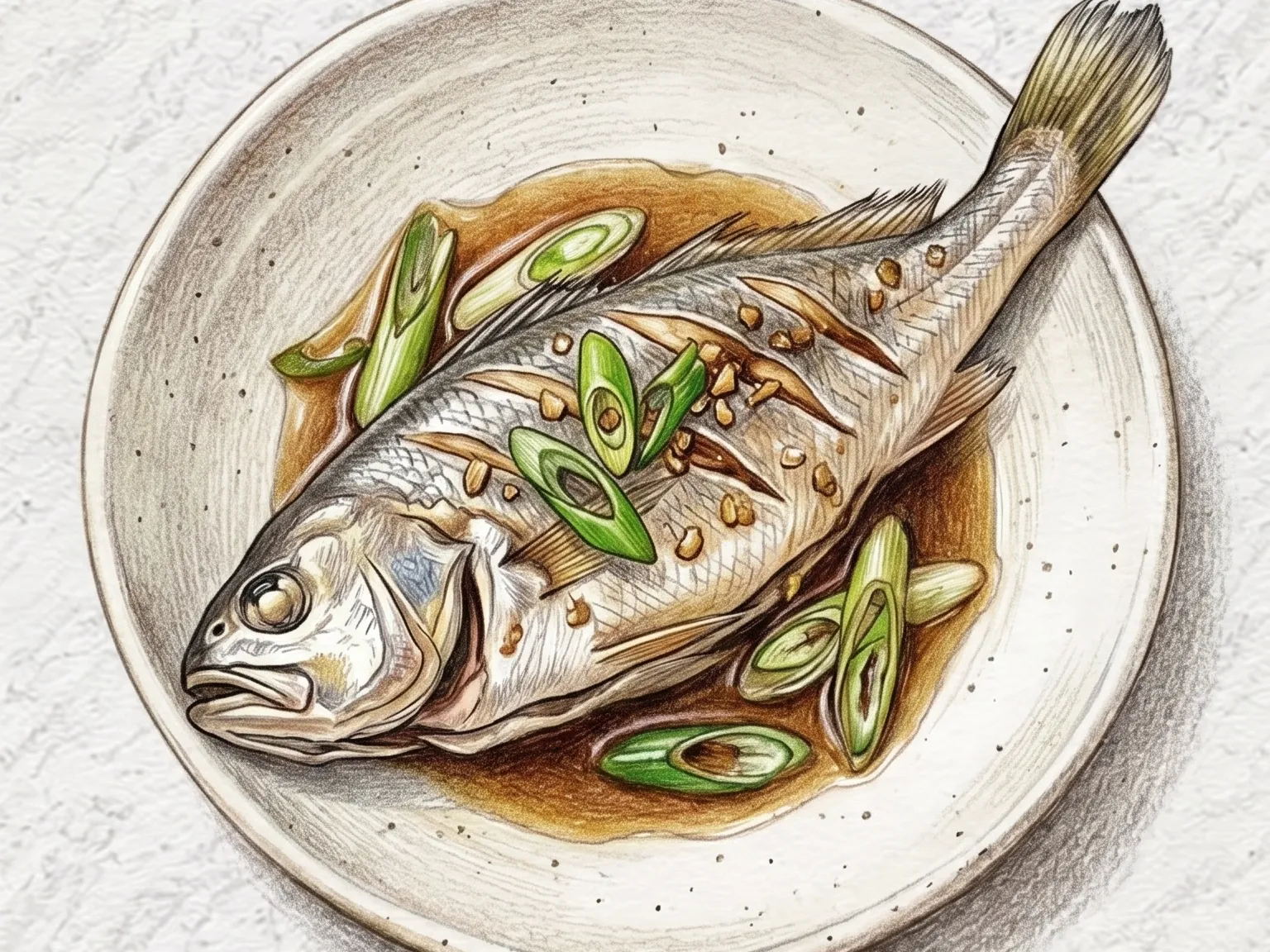
Jogi-jjim is Korean steamed yellow croaker cooked with a soy sauce, cooking wine, garlic, and ginger seasoning. The fish is scored on both sides so the sauce penetrates the flesh, then steamed in two stages - first with half the sauce, and again with the remaining sauce and sliced green onion. Cooking wine and ginger work together to eliminate fishiness, letting the croaker's naturally mild, clean flavor come forward. The delicate, flaky meat pulls away from the bone easily, making this a gentle, home-style banchan suited to everyday meals.
Adjust Servings
Instructions
- 1
Scale and clean the croaker, then score the surface.
- 2
Mix soy sauce, wine, garlic, ginger, and water to make the braising sauce.
- 3
Place fish in a steamer-safe dish and pour in half the sauce.
- 4
Steam over medium heat for 15 minutes until cooked through.
- 5
Add remaining sauce and green onion, then steam 5 more minutes.
As an Amazon Associate, we may earn from qualifying purchases.
Tips
Nutrition (per serving)
More Recipes

Korean Steamed Flounder (Whole Flatfish with Soy Garlic Sauce)
Gajami-jjim is a Korean steamed flounder dish prepared with a light soy sauce seasoning, onion, and green onion. Rice wine is added during cooking to neutralize any fishiness while keeping the flesh moist. The seasoning is restrained-soy sauce and garlic provide just enough flavor without masking the flounder's naturally mild, clean taste. With its soft texture and few bones, this dish works well as an everyday banchan alongside rice and soup.

Korean Steamed Sea Bream (Whole Fish with Soy Ginger Rice Wine)
Domi-jjim is a whole sea bream steamed with soy sauce, rice wine, and ginger. Sea bream is a firm white fish with mild flavor, and steaming preserves its moist, flaky flesh without drying it out. Rice wine and ginger eliminate any trace of fishiness, leaving only a clean umami taste, while soy sauce provides a subtle seasoning that does not overpower the fish. Presenting the whole fish on a platter gives the dish a striking appearance, making it a frequent choice for holiday tables and when hosting guests.

Korean Steamed Spanish Mackerel
Samchi jjim is a Korean steamed-braised Spanish mackerel dish cooked over radish slices with soy sauce, garlic, and cooking wine. The radish cushions the fish from direct heat while releasing a clean sweetness into the braising liquid, and soy sauce seasons the delicate flesh evenly. Because the mackerel is soft and flaky, it is never flipped; instead the sauce is spooned over it repeatedly. Green onion and fresh chili are added at the end for a pop of color and gentle heat. Paired with rice and a ladle of the reduced sauce, it highlights the clean flavor of the fish alongside soy-based umami.

Korean Steamed Croaker (White Fish Radish Soy)
Mineo-jjim is a Korean steamed croaker prepared with Korean radish, green onion, ginger, and rice wine. Croaker is prized among white fish for its fine-grained flesh and mild aroma, and steaming preserves its delicate, moist texture without drying it out. Ginger and rice wine work together to eliminate any trace of fishiness, while the radish releases a gentle sweetness into the broth as it cooks. Seasoned with just a touch of soy sauce at the end, this dish lets the natural flavor of the fish take center stage and is well suited for formal meals.

Korean Braised Yellow Croaker
Jogi-jorim is a Korean braised yellow croaker simmered with radish and onion in a soy sauce and gochugaru seasoning. Yellow croaker has delicate flesh and mild flavor, making it well-suited for braising as the sauce penetrates the fish thoroughly. The radish absorbs the braising liquid and turns sweet-savory, while cheongyang chili adds a low, steady heat. It is a quintessential Korean rice-side dish - the sauce is so flavorful that diners inevitably mix it into their rice.

Korean Braised Butterfish
Silky butterfish braised in soy-gochugaru sauce on a bed of radish - a lean, protein-rich Korean main course at just 330 calories. The radish serves a dual purpose: it prevents the delicate fish from sticking to the bottom of the pot, and it absorbs the braising liquid as it cooks, turning into a side dish in its own right with a sweet, savory depth. Butterfish flesh is exceptionally soft, so the fillets should never be flipped during cooking; instead, the braising liquid is spooned over the top every few minutes to ensure even heat distribution. Ginger works from the start of cooking to neutralize any fishiness, while gochugaru introduces a mild heat that adds complexity without masking the clean taste of the fish. Scallion pieces dropped in during the final two minutes release their fragrance into the steam rising from the pot, tying the aromatics together. At 330 calories and 31 grams of protein, this is a lean yet nourishing main course that pairs naturally with steamed rice and a simple vegetable side.