Korean Braised Pork Trotters
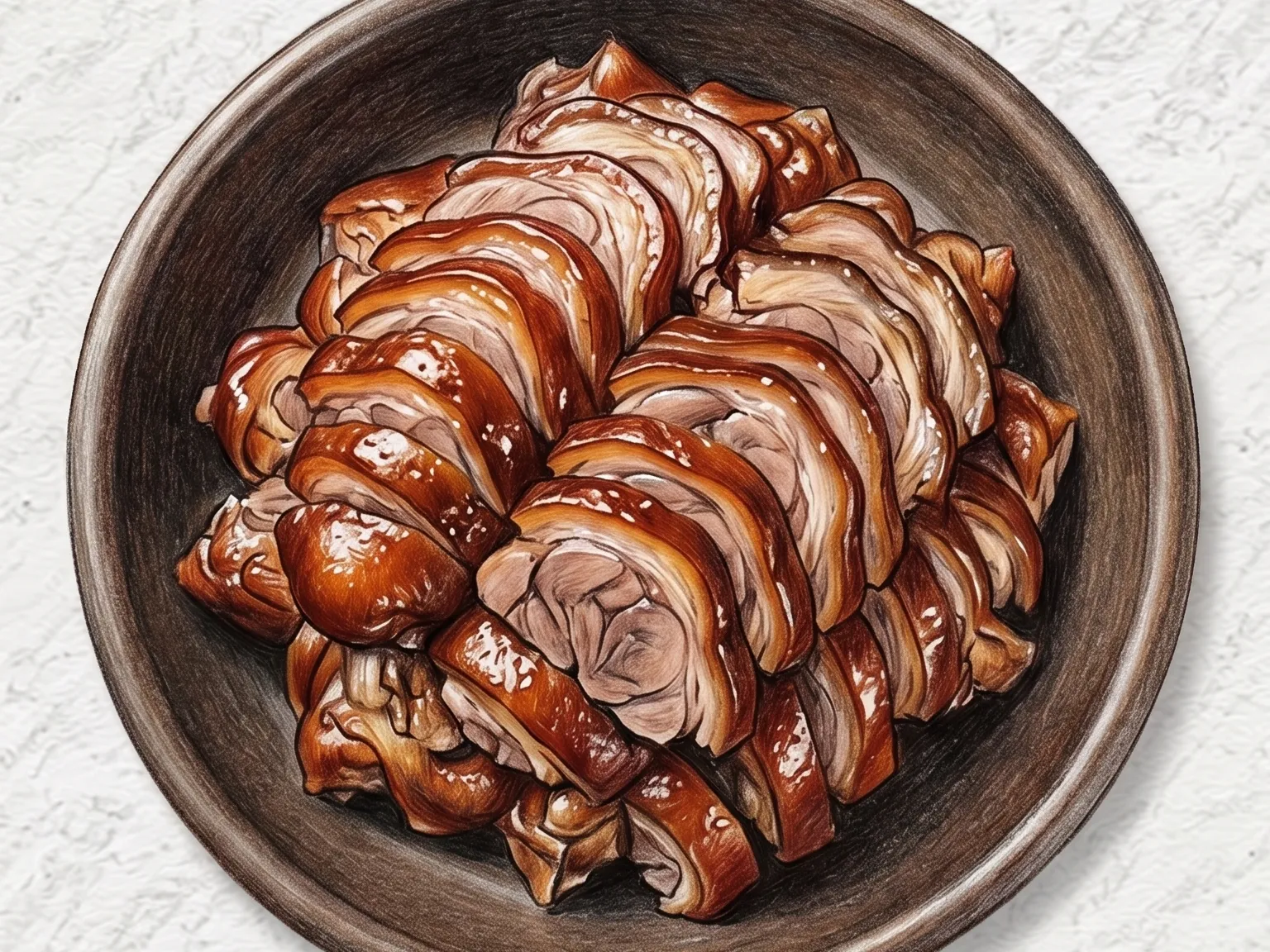
Jokbal is Korean soy-braised pork trotters slow-cooked for over two hours in a broth of soy sauce, garlic, ginger, onion, green onion, and whole peppercorn. The trotters are blanched first to remove impurities, then simmered gently until the collagen-rich skin turns glossy and the meat becomes fork-tender. The long braise allows the soy seasoning to penetrate deep into the layered skin and meat, creating a rich, savory flavor throughout. Traditionally sliced while still warm for the softest texture, jokbal is served with salted shrimp dipping sauce or ssamjang, wrapped in lettuce leaves - a classic Korean late-night food and drinking accompaniment.
Adjust Servings
Instructions
- 1
Rinse trotters and blanch in boiling water for 5 minutes.
- 2
Boil water with soy sauce, sugar, garlic, ginger, onion, green onion, and peppercorn.
- 3
Add blanched trotters, boil hard for 15 minutes, then reduce to medium-low.
- 4
Cover and braise gently for 90+ minutes until tender.
- 5
Reduce sauce until glossy and turn off heat.
- 6
Slice before it fully cools and firms up.
As an Amazon Associate, we may earn from qualifying purchases.
Tips
Nutrition (per serving)
More Recipes

Korean Braised Pork Ribs
Dwaeji galbi-jjim is a Korean braised pork rib dish simmered in a soy sauce base with Korean radish, carrots, and onion. The ribs cook low and slow until the meat practically falls off the bone, absorbing the ginger- and garlic-infused braising liquid along the way. The radish chunks turn translucent and soak up the seasoning, becoming as flavorful as the meat itself. Served with steamed rice, this dish is a hearty main course suited to cooler weather.

Korean Braised Beef Trotter
Ujok-jjim is Korean braised beef trotter simmered for over two hours with soy sauce, garlic, ginger, and green onion until the collagen-rich joints turn soft and gelatinous. The long, low braise dissolves the connective tissue into the cooking liquid, making it so concentrated that it sets into a firm jelly when cooled. Sugar and soy sauce create a sweet-savory seasoning that penetrates deep into the layered skin and tendons. Traditionally regarded as a nourishing food for joint health, this is a slow-cooked comfort dish especially popular among older generations in Korea.

Korean Braised Chicken Feet
Dakbal-jjim is chicken feet braised in a bold sauce of gochujang, gochugaru, soy sauce, and sugar. The skin and cartilage of the feet release gelatin as they cook, creating a chewy, sticky texture that is the hallmark of this dish. Gochujang and chili flakes layer their heat in different registers while sugar adds a caramel-like sweetness to balance the spice. Cooking wine takes the edge off any gaminess, and as the sauce reduces it coats each foot in a thick, glossy red glaze that makes this a popular accompaniment to drinks.

Korean Braised Oxtail (Soy Collagen Radish Braise)
Kkori-jjim is a Korean braised oxtail dish that begins with a long initial boil to tenderize the joints, followed by a second braise in soy sauce, sugar, and garlic. The collagen in the oxtail joints melts during the extended cooking, thickening the sauce into a glossy, gelatinous consistency while the meat becomes fork-tender. Korean radish and carrot cook alongside the tail pieces, contributing sweetness, while jujubes and ginkgo nuts add an understated elegance. This is a celebratory dish, typically reserved for holidays and special occasions, prized for its deep beef flavor and rich mouthfeel.

Korean Soy-Braised Pork and Potatoes
Dwaejigogi-gamja-jorim is a Korean braise of pork shoulder and potatoes simmered together in a soy sauce seasoning. The potatoes absorb the meat drippings and soy marinade, becoming fluffy inside with a salty-savory glaze on the surface. Onions added to the pot lend gentle sweetness that softens the overall saltiness. Combining protein and starch in a single pot, it is a practical one-dish meal for busy weeknights.

Korean Soy Pulp Stew (Okara with Aged Kimchi and Pork)
Biji jjigae is a stew made from soy pulp - the byproduct of tofu making - cooked with well-fermented aged kimchi and pork. The soy pulp gives the broth a thick, porridge-like consistency with a nutty undertone, while salted shrimp and perilla oil layer in depth. The tangy kimchi and rendered pork fat meld into the grainy texture, creating a hearty bowl that has been a staple of Korean home cooking for generations.