Korean Stir-Fried Bamboo Shoots
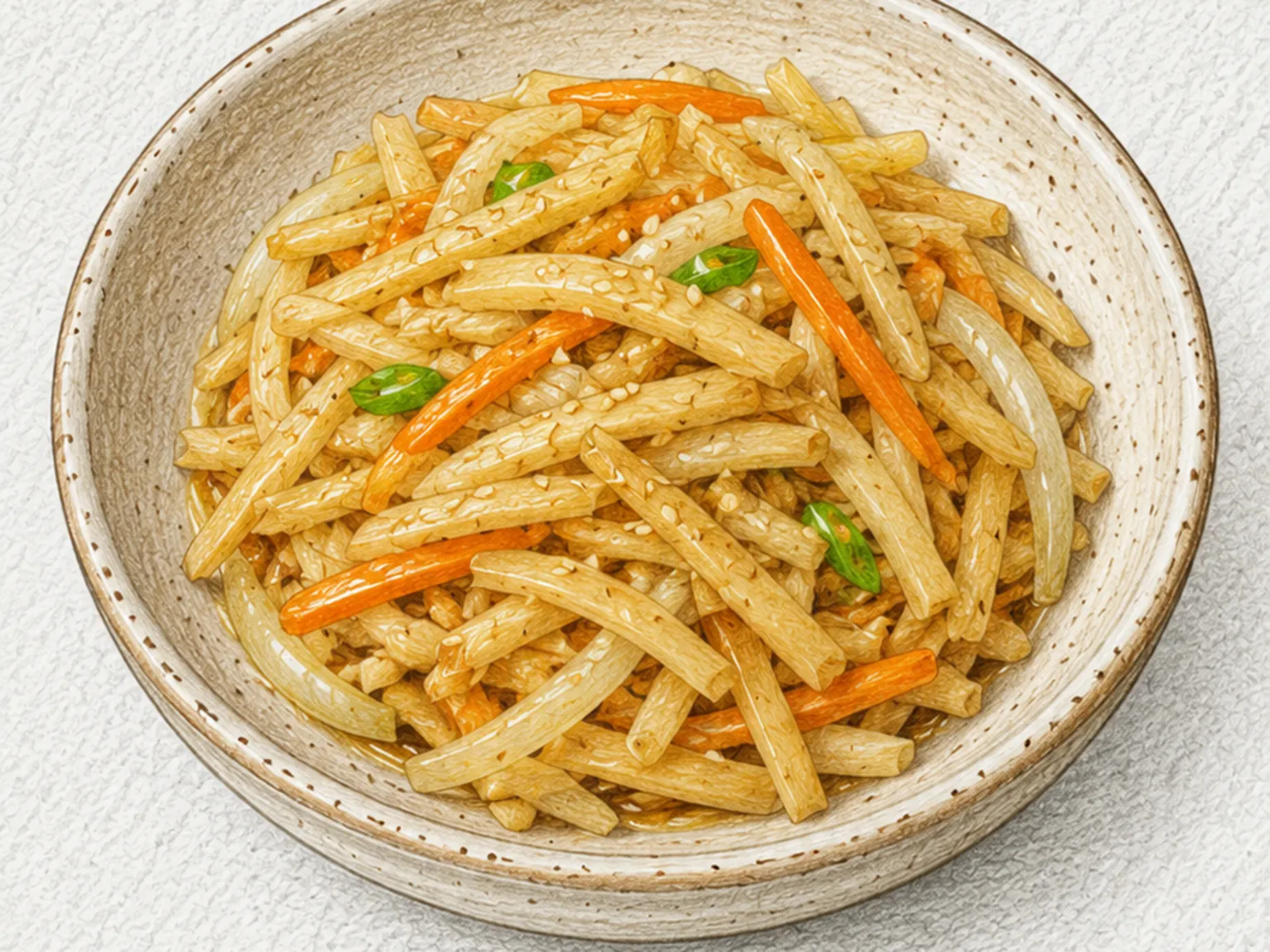
Juksun-bokkeum is a soy-seasoned stir-fry of bamboo shoots - a banchan closely tied to spring, when fresh juksun appears briefly in Korean markets from April through May, primarily from Damyang in Jeollanam-do. Fresh shoots must be boiled in rice-rinsing water for at least thirty minutes to neutralize their oxalic acid bitterness; canned shoots need a thorough rinse to remove the tinny taste. Julienned shoots are stir-fried with carrot and onion over high heat for a short burst - prolonged cooking draws out moisture and turns them rubbery. The seasoning is restrained: soy sauce, a pinch of sugar, garlic, and a finish of sesame oil, producing a subtly sweet, nutty dish. Bamboo shoots are rich in dietary fiber and low in calories, which gives this banchan high satiety per bite.
Adjust Servings
Instructions
- 1
Blanch bamboo shoots for 2 minutes and slice into strips.
- 2
Julienne carrot and onion to similar thickness.
- 3
Heat oil and briefly sauté garlic.
- 4
Add vegetables and stir-fry 3 minutes, then season with soy sauce and sugar.
- 5
Finish with sesame oil and turn off heat.
As an Amazon Associate, we may earn from qualifying purchases.
Tips
Nutrition (per serving)
More Recipes

Korean Stir-Fried Garlic Scapes
Maneuljjong-bokkeum is stir-fried garlic scapes - the curling flower stalks cut from garlic plants before they bloom - seasoned with soy sauce and oligosaccharide syrup. Garlic scapes carry the plant's growth energy in a concentrated, milder form: they deliver a gentle garlic fragrance without the sharp bite of the bulb. Cutting into 4 to 5 cm pieces and blanching for thirty seconds softens the outer fibrous skin while keeping the interior crisp. Skipping the blanch and going straight to the pan creates an uneven result - tough outside, undercooked inside. The syrup-and-soy combination builds a sweet-salty glaze on the scape surfaces, and sesame oil is added only after the heat is off to preserve its fragrance. This banchan keeps in the refrigerator for about five days, making it a reliable weekday side dish. Spring through early summer is peak garlic scape season.

Korean Stir-Fried Kimchi (Caramelized Aged Kimchi Banchan)
Kimchi-bokkeum is the default way Korean households use up kimchi that has fermented past its fresh prime. Stir-frying tempers the sharp lactic acidity that over-ripe kimchi develops - the heat transforms the sourness into something mellower, sweeter, and more rounded. Onion goes in first and cooks until translucent, laying a sweet foundation before the kimchi and garlic join. Medium heat is essential: it drives off moisture gradually, yielding a thick, concentrated sauce rather than a watery stew. A small addition of gochugaru brightens the color, and a pinch of sugar balances the fermented tang. One tablespoon of kimchi brine amplifies the umami from the lactobacillus culture itself. The finished banchan is versatile enough to eat straight over rice, fold into fried rice, or pile on top of ramyeon.

Korean Stir-fried Dried Shrimp
Geon-saeu-bokkeum transforms a handful of dried shrimp - a Korean pantry staple - into a quick, crunchy banchan. The shrimp are dry-toasted in a pan first to drive off residual moisture, intensifying their briny aroma and setting up the crisp texture. Soy sauce, rice syrup or oligosaccharide, and garlic are added and reduced over low heat until the shrimp are coated in a thin, glossy sweet-salty glaze. The timing is critical: the moment the syrup bubbles once, the heat must drop, or the coating hardens into a tooth-breaking shell. A finish of sesame oil and sesame seeds rounds out this compact side dish that works equally well in lunchboxes and as a drinking snack.

Korean Stir-Fried Eggplant Banchan
Gaji bokkeum transforms eggplant - a vegetable Koreans have cultivated since the Goryeo period - into a quick, oil-glazed banchan where the cooking speed matters as much as the seasoning. The eggplant is sliced into half-moons, and the pan must be scorching hot before the pieces enter; any hesitation and the eggplant will steam rather than sear, turning it into a soggy mass. High heat with minimal oil produces lightly charred edges while the interior turns silky and almost custardy. Soy sauce, garlic, and sesame oil go in during the final thirty seconds, sizzling against the hot surface and coating each piece in a thin, caramelized layer. The dish has a concentrated, clean umami taste without the heaviness of a braised preparation. Korean home cooks make this as a weeknight banchan precisely because it takes under ten minutes from cutting board to table.

Korean Stir-fried Potato Strips
Gamja-bokkeum is a staple Korean side dish made by stir-frying julienned potatoes until they reach a satisfying tender-crisp texture. Soaking the potatoes beforehand removes excess starch, preventing them from clumping in the pan. A light seasoning of garlic and salt draws out the potato's natural mild flavor, while a finishing touch of sesame oil and seeds adds a warm nuttiness. It is a humble yet addictive banchan that pairs effortlessly with steamed rice.

Korean Stir-fried Fish Cake with Vegetables
Eomuk-yachae-bokkeum is a Korean stir-fry of fish cake sheets with onions, carrots, and bell peppers in a soy-based glaze. The chewy fish cake contrasts with the crisp vegetables, delivering varied textures in every bite. Soy sauce and oligosaccharide syrup create a lightly sweet and salty coating that clings to each piece. The entire dish cooks in under ten minutes, making it a go-to option for packed lunches or quick weeknight sides.