Korean Bamboo Shoot Beef Stir-fry
Quick answer
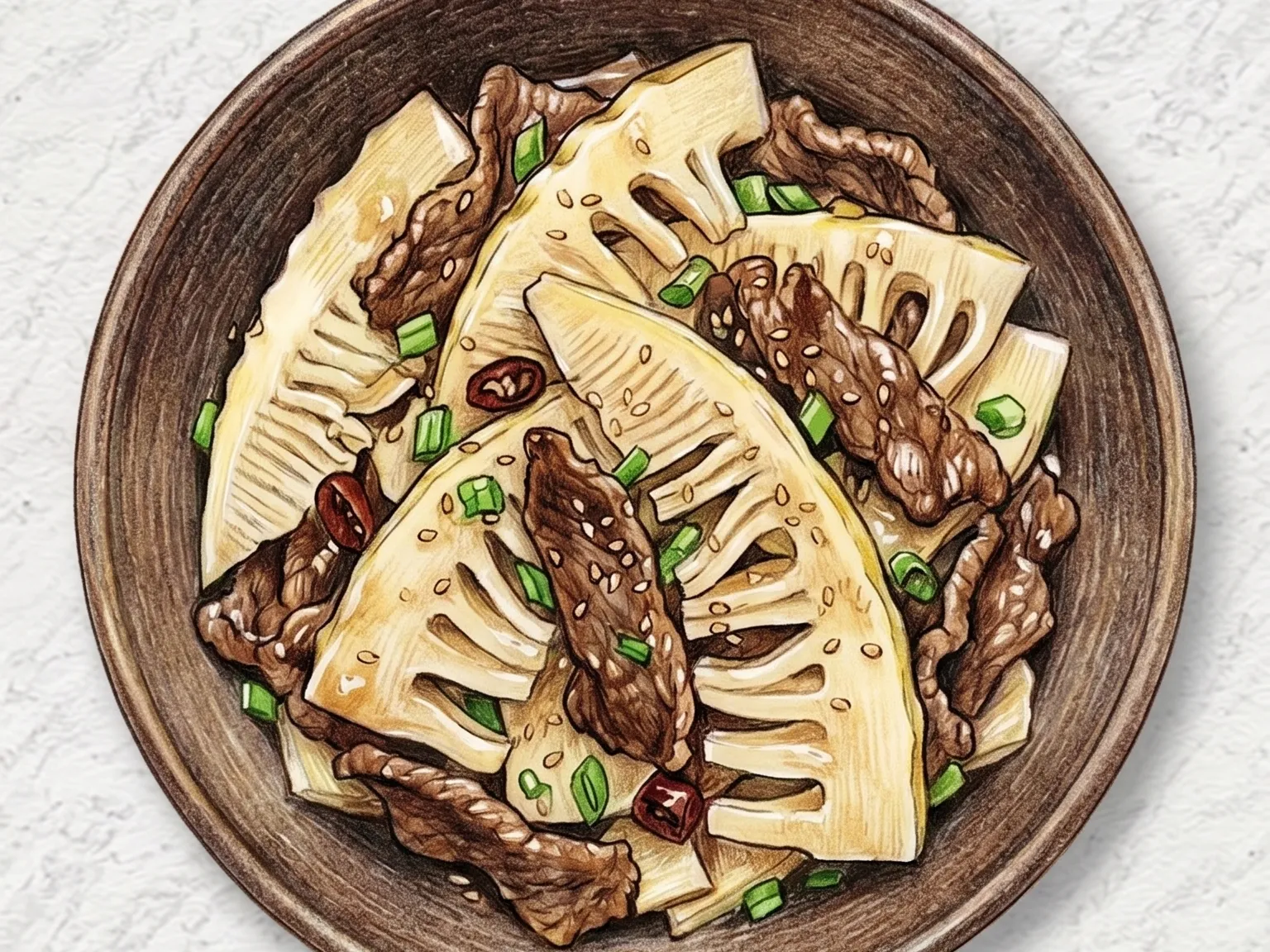
Juksun-sogogi-bokkeum is a Korean stir-fry of boiled bamboo shoots and thinly sliced beef seasoned with soy sauce, cooking wine, and sesame oil.
What makes this special
- Crisp bamboo shoots and thin beef strips meet soy sauce and sesame oil in a light Korean stir-fry.
- Bamboo shoot sliced against the grain for maximum crunch
- Beef and shoots stir-fried separately then combined
Key ingredients
Core cooking flow
- 1 Pat 280 g boiled bamboo shoots dry, then slice them thinly across the grain so they stay crisp.
- 2 Cut 220 g lean beef round into thin strips about the same length as the bamboo shoots.
- 3 Heat a pan over medium-high heat and add half the sesame oil.
Juksun-sogogi-bokkeum is a Korean stir-fry of boiled bamboo shoots and thinly sliced beef seasoned with soy sauce, cooking wine, and sesame oil. The bamboo shoots bring a crisp, fibrous snap to each bite, while the beef, cut thin and cooked briefly over high heat, stays tender and juicy. The soy-based seasoning is kept deliberately restrained, allowing the mild natural sweetness of the bamboo shoots and the savory depth of the beef to remain the focus. Canned bamboo shoots are acceptable, but fresh spring bamboo shoots, available for a short window each year, deliver noticeably better crunch and a fragrant, grassy aroma that canned cannot replicate. Fresh shoots should be boiled in rice washing water first to remove the bitter, astringent taste before slicing and stir-frying. A finish of toasted sesame seeds and a drizzle of sesame oil added off the heat rounds out the dish with a nutty, aromatic note.
Instructions
Read the steps as a cooking flow: prep, heat, seasoning, doneness control, and finish.
- 1Heat
Pat 280 g boiled bamboo shoots dry, then slice them thinly across the grain so they stay crisp.
If the bamboo aroma is strong, blanch the slices in boiling water for 1 minute and drain well.
- 2Season
Cut 220 g lean beef round into thin strips about the same length as the bamboo shoots.
Marinate for 10 minutes with 1 tablespoon soy sauce, cooking wine, half the minced garlic, and black pepper.
- 3Control
Heat a pan over medium-high heat and add half the sesame oil.
Spread the beef in a thin layer, stir-fry for only 2 minutes, and remove it as soon as the surface changes color.
- 4Control
Add the remaining sesame oil to the same pan, then add the onion, green onion, and remaining minced garlic.
Stir-fry over medium heat for about 1 minute, just until the garlic smells fragrant without browning.
- 5Control
Add the bamboo shoots and the remaining 1/2 tablespoon soy sauce, then raise the heat to medium-high.
Stir-fry for about 3 minutes until pan moisture reduces and the bamboo edges look glossy.
- 6Finish
Return the beef to the pan and stir-fry for 2 more minutes so the seasoning coats everything evenly.
Turn off the heat before the beef toughens, check the seasoning, and serve immediately while hot.
After the steps
Pick a recipe that fits this dish.
Continue with shared ingredients, meal pairings, or a similar method.
Recipes That Go Well With This
More Stir-fry →Based on shared ingredients and meal pairing
Korean Beef & Lettuce Cabbage Stir-fry
Ssamchu soegogi-bokkeum stir-fries soy-and-pear-juice-marinated beef over high heat, then folds in ssamchu (Korean leafy cabbage) just long enough to barely wilt. Pear juice tenderizes the beef and lends a subtle sweetness, while soy sauce, garlic, and sesame oil form a glossy glaze as they hit the hot pan. The ssamchu stems go in a minute before the leaves and Cheongyang chili, preserving a mix of crunchy and soft textures in the finished dish. A final drizzle of sesame oil off the heat locks in the fragrance, making this a lightly spicy beef-and-greens stir-fry with clear, clean flavors.
Korean Selleri Sogogi Bokkeum (Celery Beef Stir-fry)
Selleri sogogi-bokkeum stir-fries soy-marinated lean beef round with celery, onion, and bell pepper over high heat. The beef is seared first for about two and a half minutes then set aside, and the vegetables are cooked separately in the same pan to keep them crisp before everything is combined. Oyster sauce and soy sauce give the beef a deep umami character, while celery's herbal freshness and firm crunch lighten the overall dish. Adding celery leaves at the very end intensifies the aromatic, almost grassy fragrance.
Korean Taro Porridge (Perilla Oil-Toasted Rice with Taro Root)
Soaked rice is toasted in perilla oil until fragrant, then simmered with peeled taro in a generous amount of water until the porridge reaches a thick, flowing consistency. Some taro pieces dissolve into the liquid and naturally thicken it, while others hold their shape and offer a starchy, crumbly bite. The gentle nuttiness of perilla oil and the mild earthiness of taro create a soothing combination with no sharp flavors. Seasoning with just salt preserves the delicate taste of the taro without masking it.
Korean Bellflower Root & Beef Stir-fry
Deodeok-sogogi-gochujang-bokkeum is a Korean stir-fried side dish of pounded bellflower root and thinly sliced bulgogi-cut beef cooked together in a bold gochujang sauce. Beating the root with a mallet breaks up its dense fibers, increases its surface area, and allows the spicy paste to penetrate deeply, resulting in a texture that is simultaneously crisp and chewy after cooking. The fermented heat of gochujang and the saltiness of soy sauce work together to amplify the meaty richness of the beef, and the thick sauce binds the root and meat into a cohesive whole. Adding sesame oil and toasted sesame seeds at the end layers in a nutty, aromatic finish. Deodeok's faint natural bitterness and herbal fragrance survive the cooking process and create a complexity that distinguishes this dish from standard gochujang stir-fries. It is a boldly flavored side dish that pairs insistently with plain steamed rice.
Serve with this
Manduguk (Korean Dumpling Clear Broth Soup)
Manduguk is a Korean dumpling soup in which hand-folded dumplings stuffed with ground pork, tofu, scallion, and garlic are dropped into a clear, simmering broth, typically anchovy-kelp stock or beef broth, and cooked until they float. As the dumplings cook, their thin wheat-flour wrappers release a subtle starch that gives the broth a barely perceptible body, while the filling leaks savory juices that enrich the liquid gradually. A thin drizzle of beaten egg stirred in near the finish creates silken wisps on the surface of the broth and gives the bowl a more finished appearance. Shredded egg strips and crumbled dried seaweed scattered on top add a pleasant contrast in color and a faint oceanic note to the flavor. Many Korean households serve manduguk on Lunar New Year as an alternative to tteokguk, and some combine the two by adding sliced rice cakes alongside the dumplings. Dumplings can be made in large batches and frozen raw, which means this soup can be pulled together quickly on weeknights without sacrificing any of the flavor that comes from homemade filling. A small dish of soy-vinegar dipping sauce served alongside lets each person adjust the seasoning at the table, and the light acidity of the sauce cuts through the mild broth in a way that makes the contrast between the two worth trying.
Korean Stir-Fried Seaweed Stems with Perilla
Deulkkae miyeokjulgi-bokkeum stir-fries salted seaweed stems with perilla oil and ground perilla seeds, diverging from the standard sesame-and-soy version by foregrounding the earthy nuttiness of perilla. Desalting the stems in cold water for at least fifteen minutes is the essential first step - too brief and the dish is unpalatably salty, too long and the oceanic character washes away entirely. Garlic is sauteed in perilla oil to build an aromatic foundation, then the drained stems join with soup soy sauce and a splash of water for three minutes of stir-frying. Ground perilla seeds go in at the end, where they bind with the residual moisture and coat each strand in a pale, creamy film. Julienned onion added alongside contributes sweetness that balances the seaweed's brininess. The perilla powder's starch partially gelatinizes on contact with heat, thickening the sauce - but overcooking past this point turns the coating chalky, so timing the final addition is critical. Sesame seeds scattered off heat complete the dish.
Korean Mushroom Dumpling Hot Pot
Mandu jeongol is a generous hot pot of twelve large dumplings simmered with napa cabbage, shiitake mushrooms, oyster mushrooms, and bok choy in anchovy-kelp stock. The two varieties of mushroom add layers of umami to the clear broth, while the cabbage and bok choy soften and release their natural sweetness as they cook. The dumplings cook directly in the simmering stock, their wrappers gradually turning chewy as the filling flavors seep into the surrounding liquid. Soup soy sauce and garlic provide a clean, understated seasoning that keeps the broth from overshadowing any single ingredient. The right moment to eat is when the vegetables have wilted and the dumplings float to the surface, signaling they are cooked through. The absence of any spice or strong seasoning makes this one of the more universally approachable hot pots, suited for all ages. Leftover broth absorbs cooked rice or soaked glass noodles easily, turning what remains into a satisfying finish to the meal.
Similar recipes
Korean Beef and Pimpinella Stir-fry
Beef sliced thin for bulgogi is marinated in soy sauce, cooking wine, minced garlic, and black pepper for ten minutes, then spread in a single layer across a hot pan so every piece browns without steaming. Crowding the pan drops the temperature and causes the meat to stew in its own liquid rather than sear, so a wide, flat arrangement is essential. Sliced onion goes in next for two minutes to draw out its sweetness, followed by chamnamul, a Korean wild green whose aroma sits somewhere between celery leaf and parsley but sharper and more distinctly herbal. The chamnamul needs only forty seconds of tossing; any longer and the stems lose their crunch while the leaves wilt and the aroma fades. Sesame oil stirred in off the heat coats every piece in a nutty richness, and whole toasted sesame seeds burst with oil when bitten. Chamnamul is a spring green harvested from late March through April, so this stir-fry has a short seasonal window. At 365 calories and 30 grams of protein, it is a nutrient-dense plate that makes the most of that brief peak.
Korean Spicy Gochujang Dried Squid Stir-Fry
Jinmichae, shredded dried squid, is a Korean pantry staple valued for its chewy texture and the umami that builds and intensifies the longer you chew. This preparation coats the strands in a gochujang glaze, making it one of the most reliably present banchan in Korean households. Briefly soaking the dried squid in water before squeezing it dry softens the tough fibers and opens them to absorb the sauce more evenly. The sauce of gochujang, gochugaru, rice syrup, soy sauce, and garlic is stir-fried first over low heat to mellow the raw chili sharpness, then the squid is tossed through quickly over the same heat. Sesame oil and toasted sesame seeds are added off the heat, coating the strands in a sweet, spicy glaze that keeps well at room temperature for several days.
Korean Stir-Fried Bamboo Shoots
Juksun-bokkeum is a soy-seasoned stir-fry of bamboo shoots, a banchan closely tied to spring, when fresh juksun appears briefly in Korean markets from April through May, primarily from Damyang in Jeollanam-do. Fresh shoots carry oxalic acid, which must be neutralized by boiling them in rice-rinsing water for at least thirty minutes; skipping this step leaves a harsh, bitter aftertaste. Canned or vacuum-packed shoots, available year-round, need a thorough rinse under running water to remove the metallic tinned flavor before cooking. Julienned bamboo shoots are stir-fried with carrot and onion over high heat for a short, controlled burst. Prolonged cooking draws out moisture and turns the shoots rubbery, so timing is crucial. The seasoning is deliberately understated: soy sauce, a pinch of sugar, minced garlic, and a finishing drizzle of sesame oil produce a subtly sweet, nutty dish that lets the natural crunch of the shoots come through. Bamboo shoots are rich in dietary fiber and notably low in calories, making this banchan a filling choice for those watching their intake.