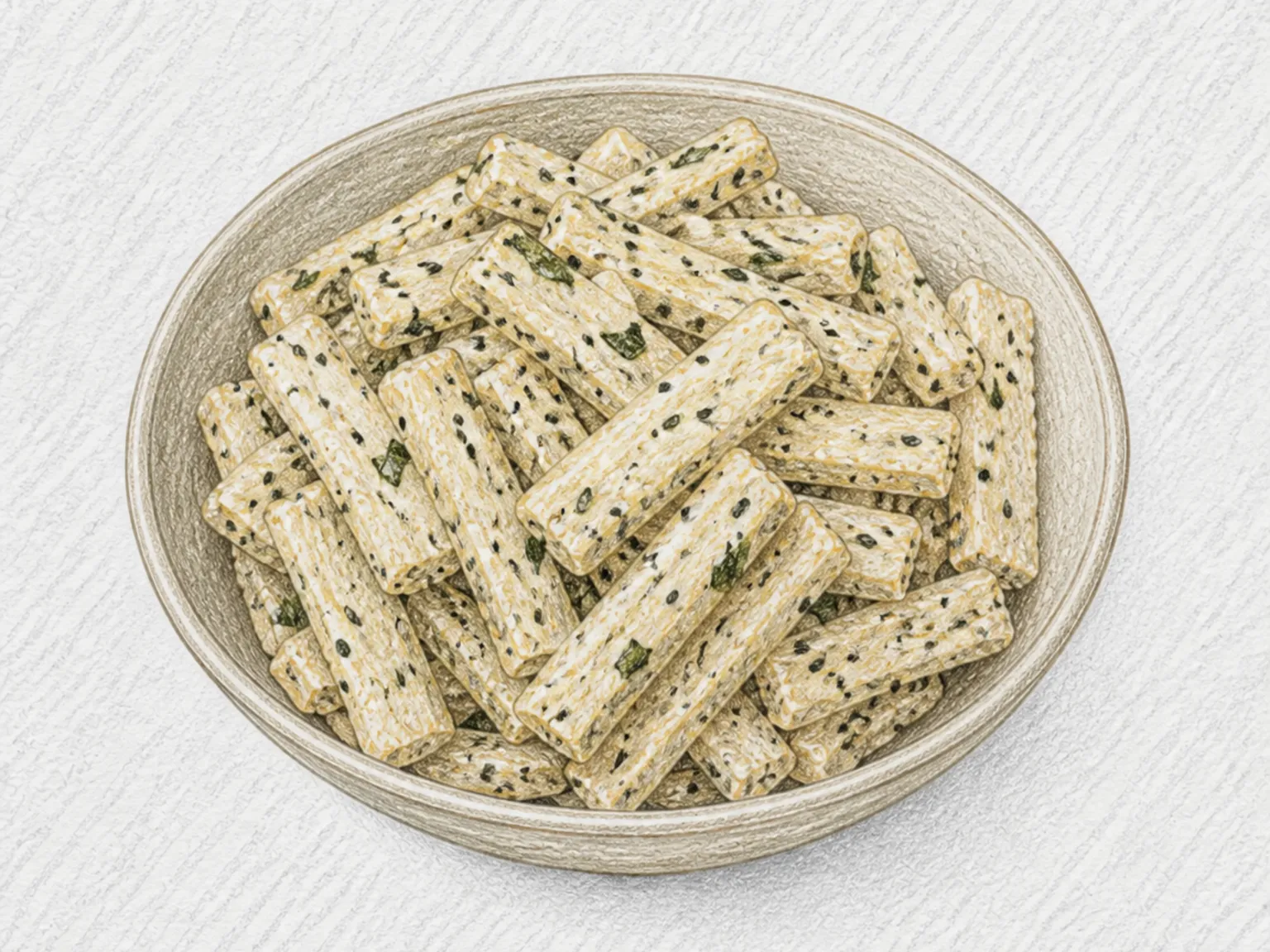
Kakimochi (Dried and Fried Rice-Cake Crackers)
Quick answer
- Total time
- 23820 min
- Level
- Hard
- Servings
- 80 servings
- Ingredients
- 7
About this dish
Pounded glutinous rice studded with grated taro, black sesame, and torn nori is sliced thin, air-dried for about two weeks, and only then fried.
Read more
In oil that is not too hot, each dry slice puffs up into a light, crisp cracker. The rice has to be pounded longer than for ordinary mochi, until no grains show, or the thin slices crumble at the edges. Before frying, a test piece should snap with no damp layer at its center, and any piece with a mold spot or musty smell is thrown out along with its neighbors. A cool, dry, well-ventilated spot is needed before starting, because the drying takes weeks.
Ingredients
Instructions
- 1
Rinse 4.5kg glutinous rice until the water clears, soak for 8 hours, and drain for 1 hour.
Tear 4 nori sheets into 5mm pieces and combine with 120g grated taro, 36g salt, 18g black sesame, and 15g baking soda.
- 2
Steam the soaked rice over strong steam for 45 to 60 minutes until translucent and tender through the center.
Transfer it hot to a mochi pounder with the mixed additions and pound longer than ordinary mochi, until no grains remain and the dough is smooth.
- 3
Moisten hands and work surface lightly.
Divide the hot mochi into 8 long logs, shaping each about 6cm wide and 4cm high. Arrange without touching, cover with clean cloth, and firm in a cool place for 2 days.
- 4
Slice the firm logs 2 to 3mm thick with a clean sharp knife.
Arrange pieces individually on mesh without overlap, shade-dry for 2 days, then transfer to mesh bags and dry about 12 more days in a cool, dry, well-ventilated place.
- 5
Break a test piece and confirm it is hard through the center with no damp layer.
Discard any piece with mold spots or a musty smell together with adjacent pieces. Store fully dried kakimochi in an airtight container in a dry place.
- 6
Fry only the amount needed.
Heat 1L oil in a deep pot to 140C, add a few dried pieces at a time, and fry for 2 to 4 minutes, turning until expanded evenly and crisp through. Drain on a rack and cool completely.
References checked
These references were consulted when this page was prepared or corrected. A source check does not mean the recipe was independently kitchen-tested.
- 일본 농림수산성 うちの郷土料理
「房総のふるさと料理」(農業千葉刊行部) · Checked: 2026-08-11
Use-up ingredient planner
Turn these ingredients into two more meals
The overlap excludes basic seasonings. Open the next recipe and your selected dishes will stay with you.
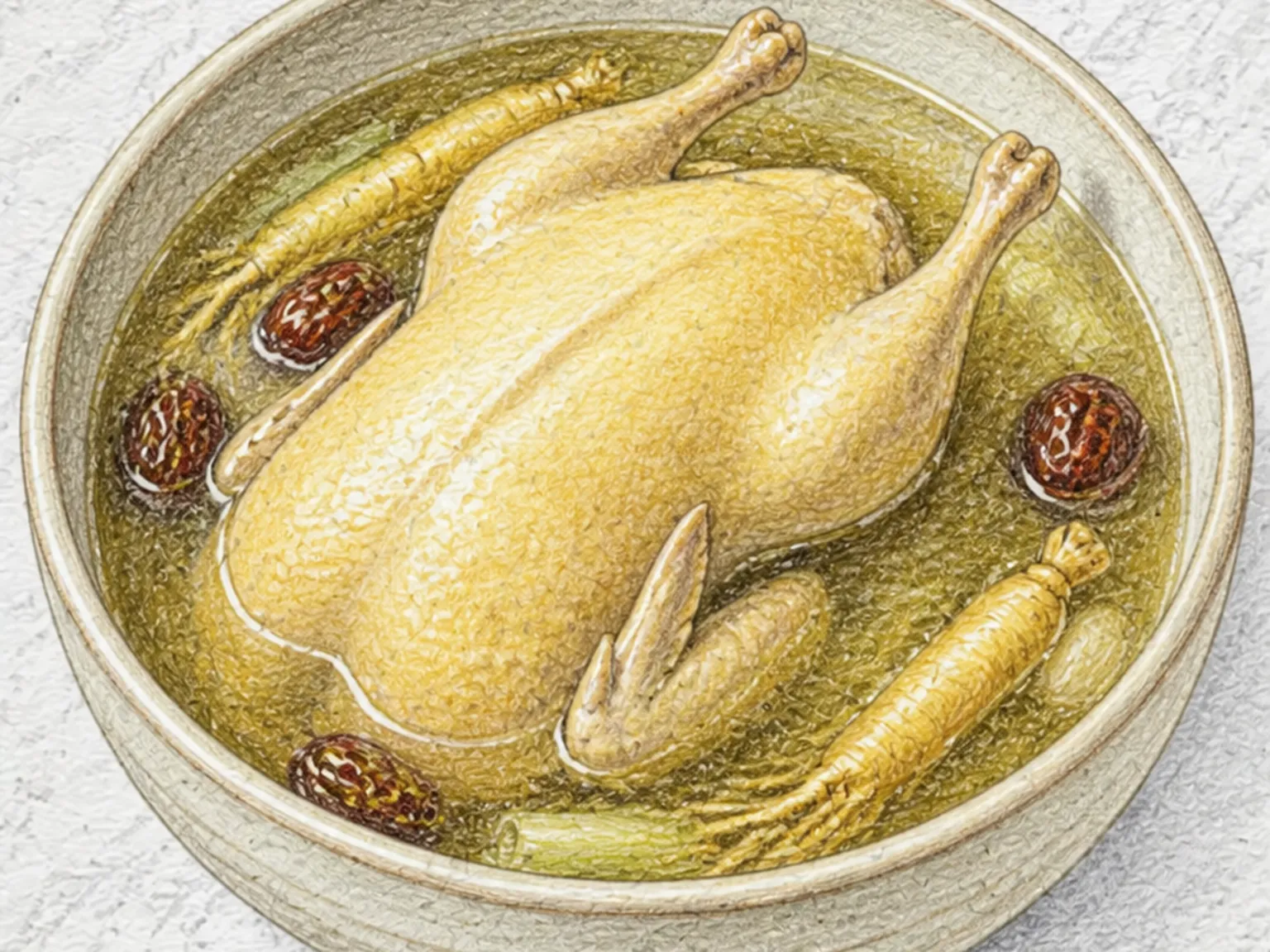
Korean Whole Duck Baeksuk
glutinous rice
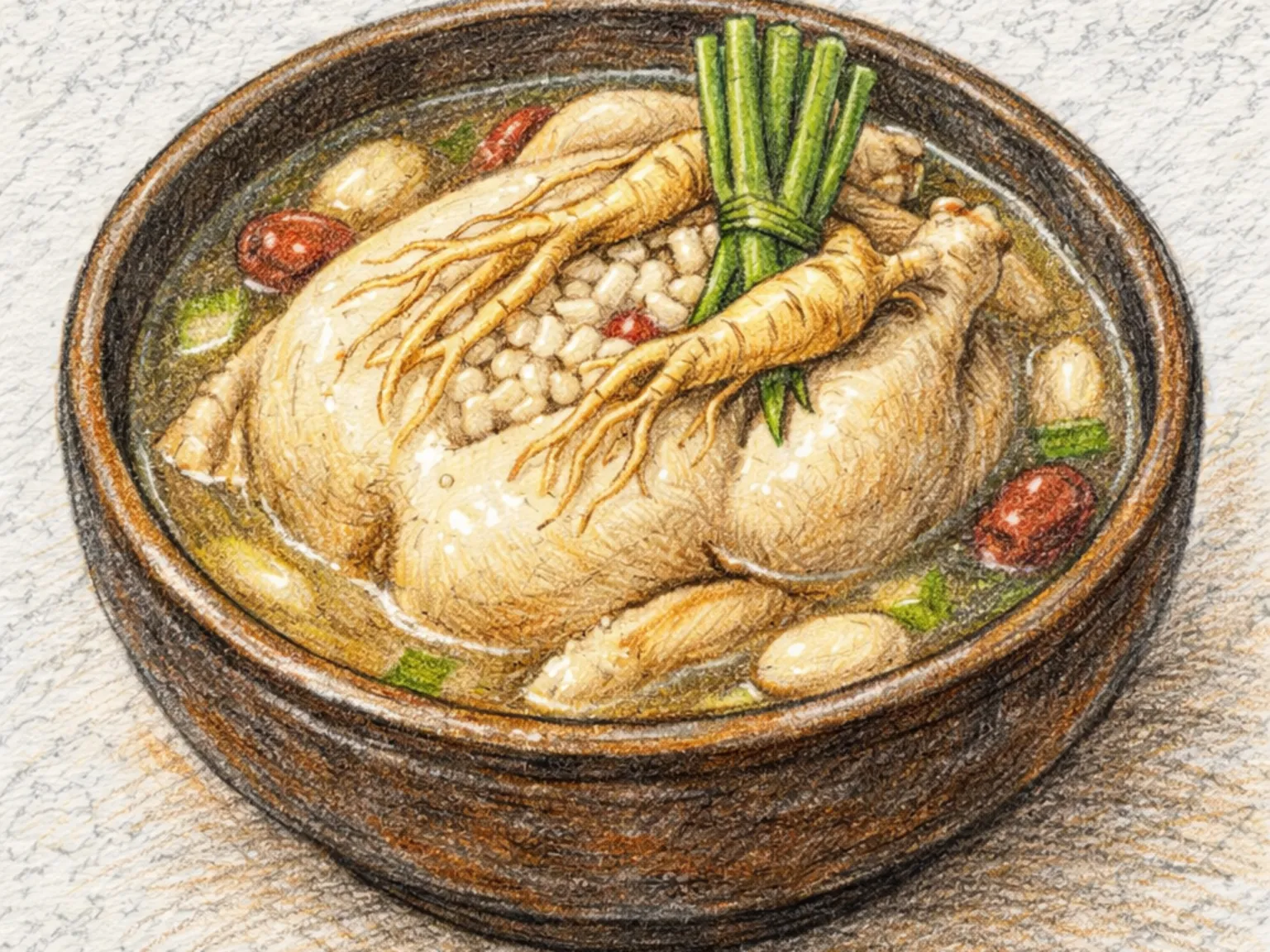
Samgyetang (Korean Ginseng Chicken Soup)
glutinous rice
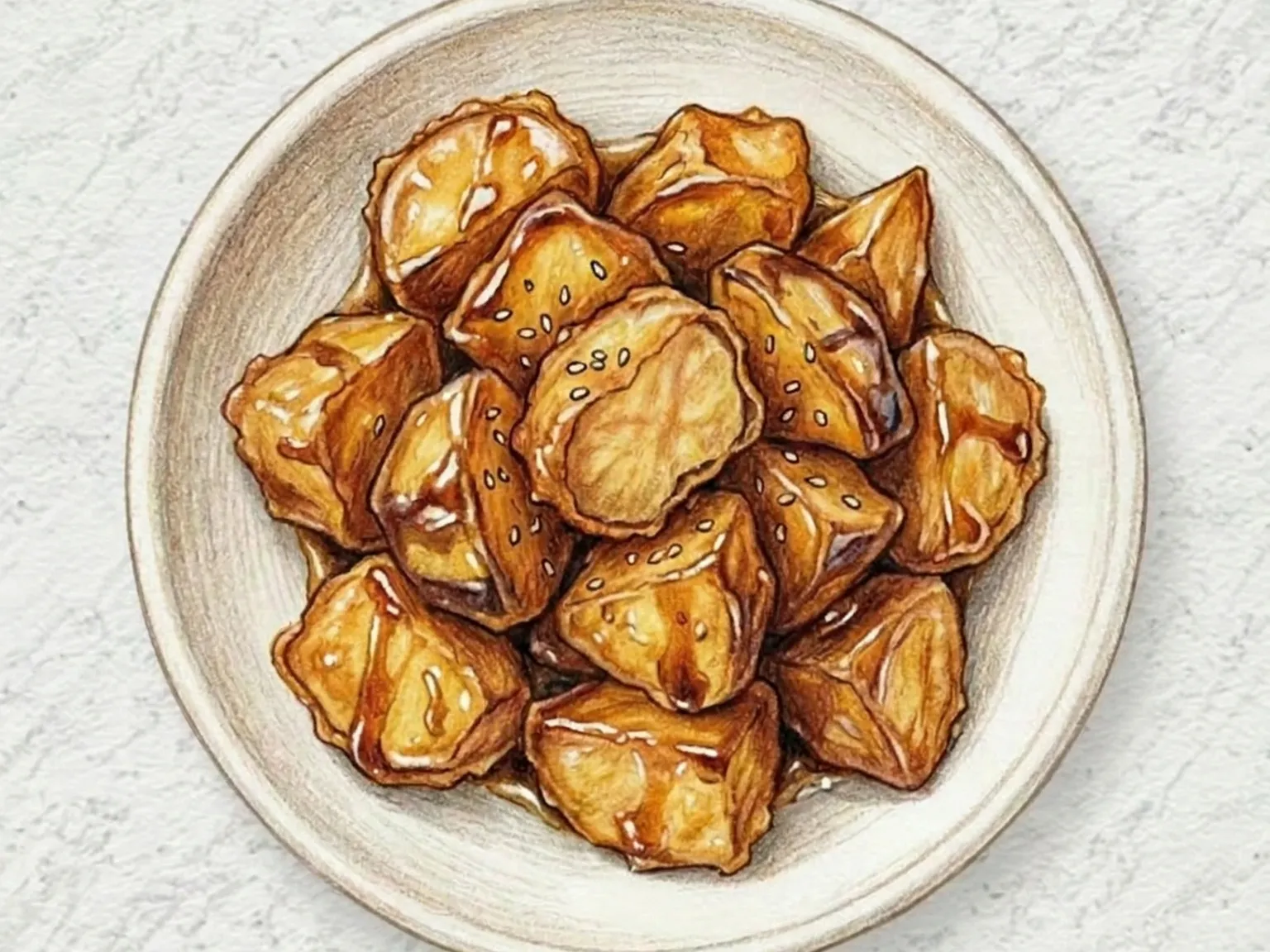
Candied Sweet Potato
black sesame seeds