Korean Ginseng Chicken Soup
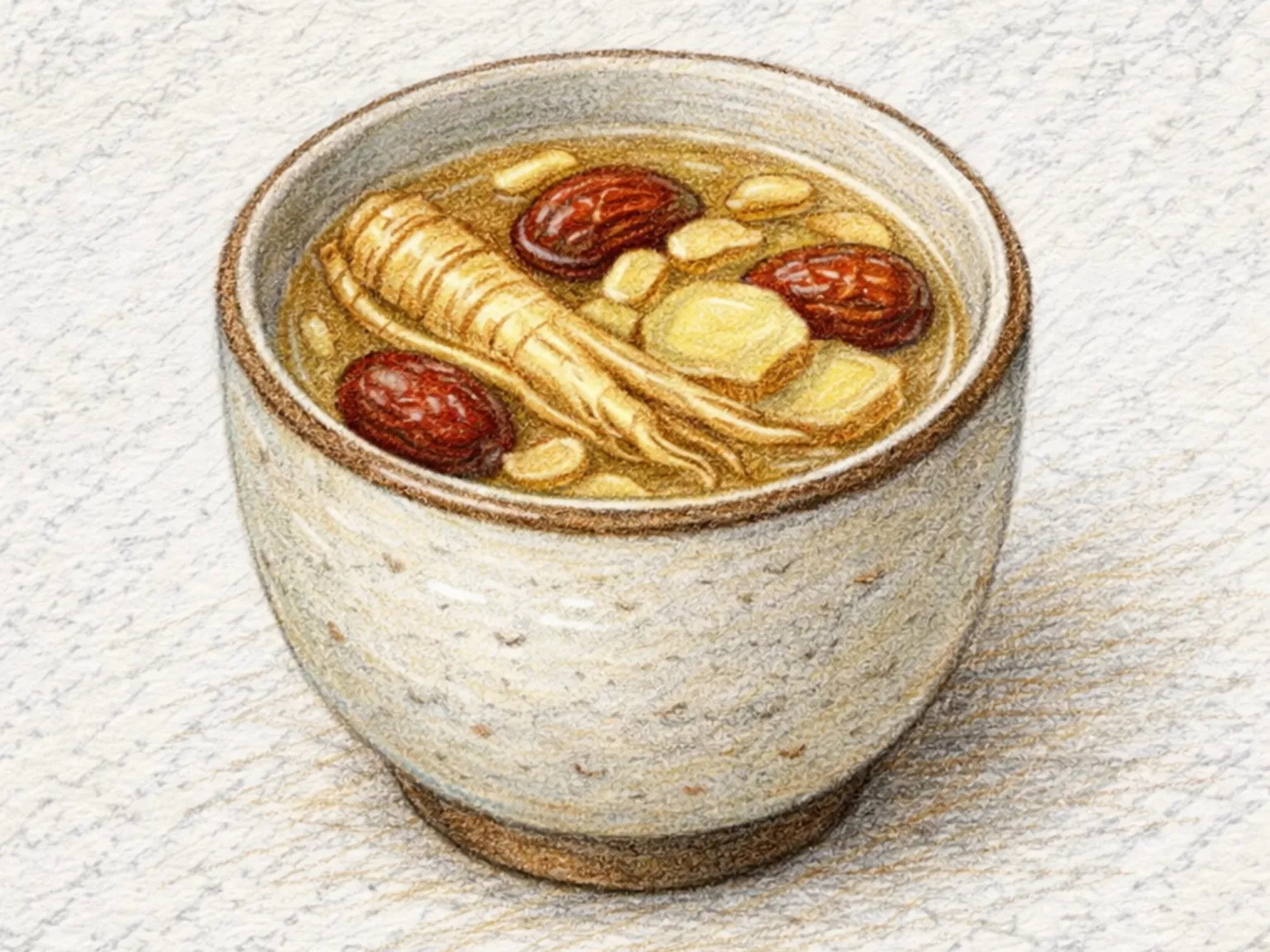
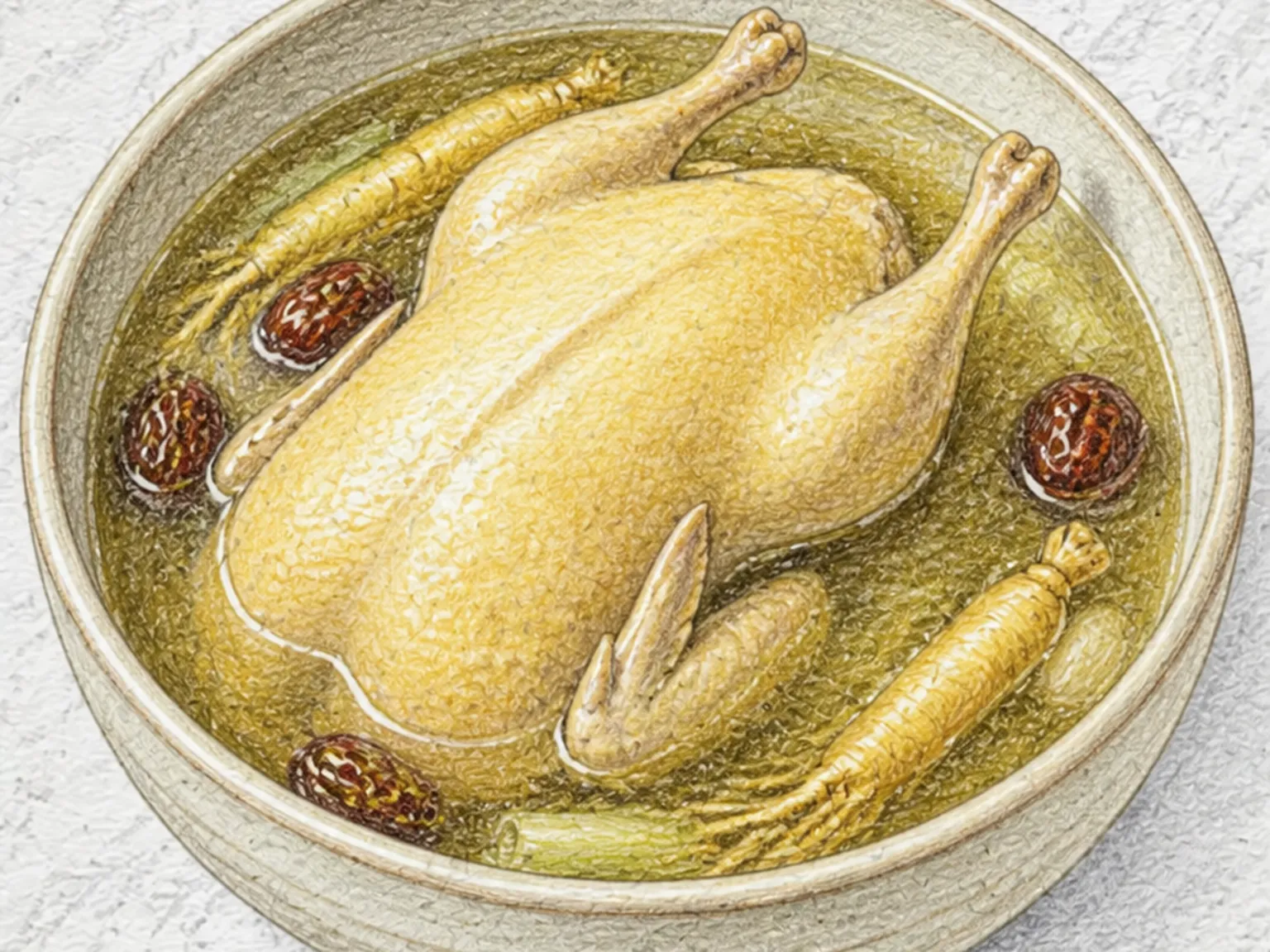
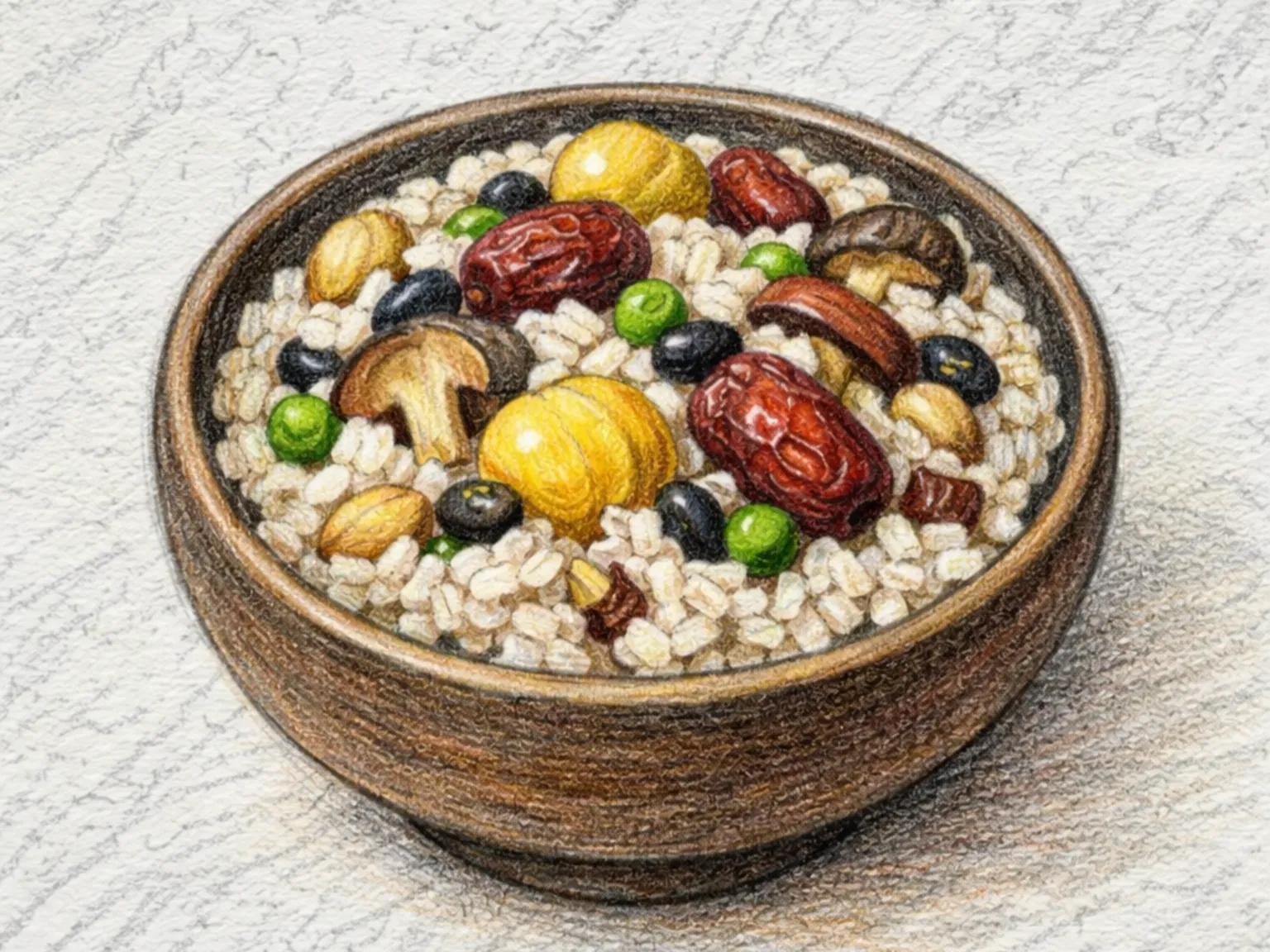
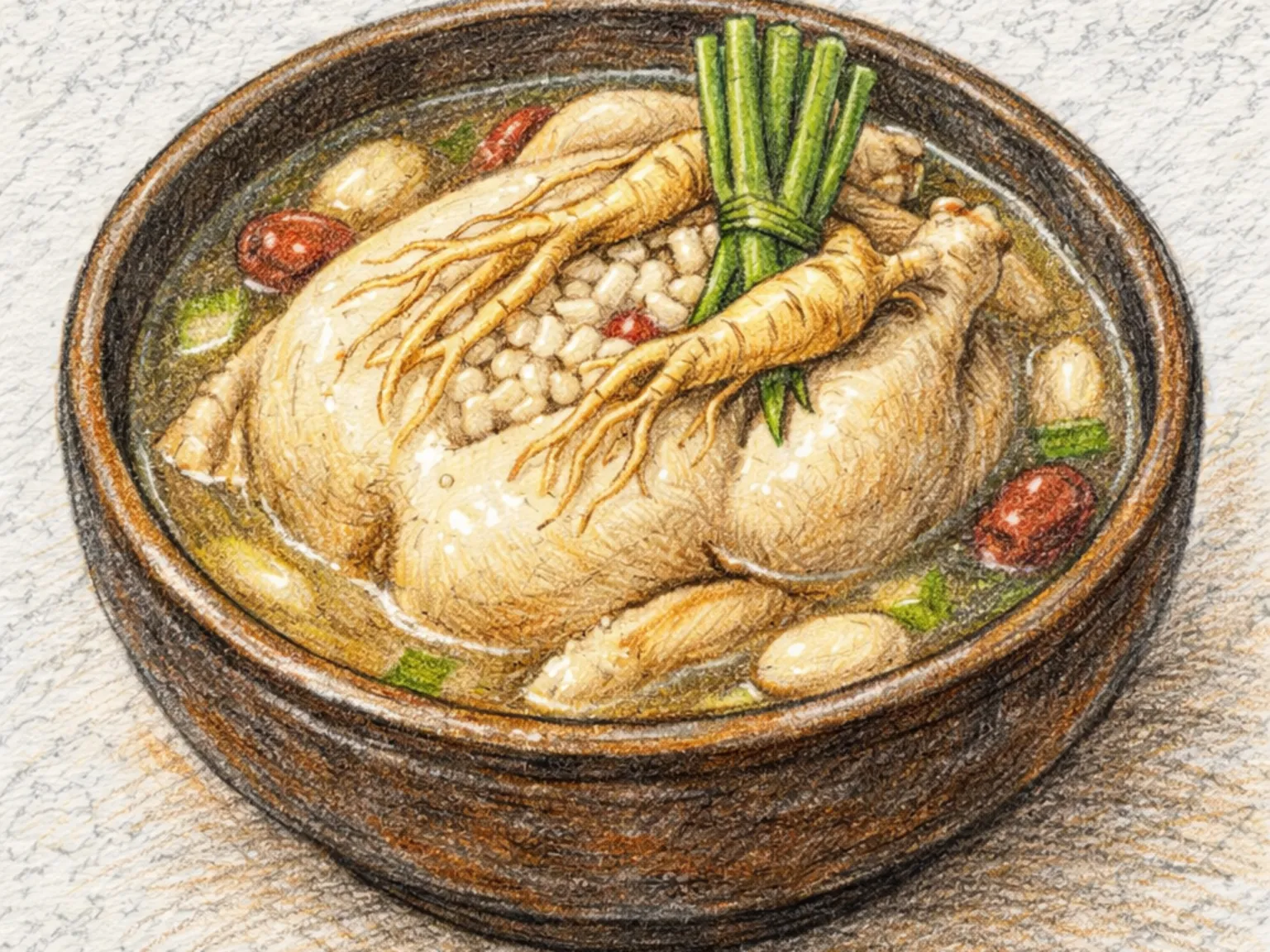
Samgyetang is Korea's iconic ginseng chicken soup, made by stuffing a small whole chicken with soaked glutinous rice, fresh ginseng, jujubes, and garlic, then simmering it for over an hour. The glutinous rice inside the cavity absorbs the chicken's juices as it cooks, turning into a thick, porridge-like filling that spills into the broth when the bird is broken open at the table. The ginseng lends a subtle bitterness and herbal depth that distinguishes this soup from plain chicken broth, while jujubes contribute a quiet fruity sweetness. The prolonged cooking dissolves collagen from the skin and joints, giving the broth a silky body despite its clear appearance. Seasoning is left to each diner, who dips the meat into salt and pepper on a side plate. Samgyetang is traditionally consumed during the three hottest days of the Korean summer - a practice rooted in the belief that fighting heat with heat restores depleted energy.
Adjust Servings
Instructions
- 1
Soak 100g glutinous rice in water for 30+ minutes. Clean 2 small chickens by removing fat and organs from the cavity.
- 2
Stuff each chicken with soaked rice, 1 ginseng root, 2 jujubes, and 4 garlic cloves. Cross the legs to seal.
- 3
Place chickens in a large pot, add 2L water, and bring to a boil on high heat.
- 4
Skim off foam, reduce to medium-low heat, and simmer for 1 hour to 1 hour 20 minutes.
- 5
The chicken is done when a drumstick comes off easily with chopsticks.
- 6
Serve in a stone pot, top with green onion and pepper. Dip meat in salt on a side plate.
As an Amazon Associate, we may earn from qualifying purchases.
Tips
Nutrition (per serving)
More Recipes

Korean Loach Soup (Blended Loach and Dried Radish Greens Tonic)
Chueo-tang is a southern Korean tonic soup made by blending blanched loach into a smooth puree, straining out bones and skin, then simmering the liquid with doenjang and gochujang for depth. Dried radish greens - siraegi - are added midway and cooked for twenty-five minutes, contributing a fibrous chew that contrasts the velvety broth. Perilla seed powder stirred in near the end thickens the soup to a creamy, pale consistency and layers in a pronounced nutty fragrance. A final pinch of ground sansho pepper leaves a tingling numbness on the tongue that cleanses any lingering earthiness from the freshwater fish.

Korean Cold Vinegar Mustard Chicken Soup
Chogye-tang is a chilled Korean chicken soup where boiled, shredded breast meat sits in an ice-cold broth sharpened with rice vinegar and hot mustard. The broth must be thoroughly refrigerated before seasoning - warmth dulls the mustard's bite and flattens the vinegar's acidity, collapsing the dish's defining tang. Shredding the chicken along its grain lets the cold, pungent broth soak into every fiber, and julienned cucumber layered on top provides a crisp, cooling crunch. The flavor logic mirrors that of Pyongyang-style cold noodles - sour, spicy, and bracingly cold - but replaces starch with lean protein.

Korean Chicken Radish Soup
Dak mu-guk is a Korean chicken and radish soup where blanched chicken thigh meat and thinly sliced radish simmer together into a clear, deeply flavored broth. Blanching the chicken for one minute before the main simmer removes impurities and is the key to keeping the broth transparent. Onion and ginger build the aromatic foundation over twenty minutes of gentle cooking, and the radish - cut into thin, flat squares rather than thick chunks - turns translucent quickly, releasing its natural sweetness into the liquid in just ten minutes. Soup soy sauce and diagonally sliced green onion finish the bowl, balancing the chicken's richness with a clean, vegetal note.

Korean Boiled Chicken Soup
Dak-baeksuk is a Korean whole-chicken soup simmered for over fifty minutes with whole garlic cloves, jujubes, green onion, and ginger in a large pot of water. Skimming fat and foam throughout the cooking process is essential to achieving the signature clear broth - neglecting this step leaves the soup greasy and cloudy when reheated. The jujubes lend a subtle sweetness and the garlic, softened to a paste after the long simmer, dissolves into the liquid to create a mellow depth that needs nothing more than salt and pepper. The chicken is shredded against the grain for the softest possible texture, then returned to the hot broth so every bite of meat is saturated with the clean, aromatic stock.

Korean Pork Bone Stew (Slow-Simmered Pork Spine & Potato)
Gamjatang is a robust pork spine stew simmered until the bones release a milky, collagen-rich broth. Potatoes cook until they nearly dissolve, while dried napa cabbage leaves add a chewy, vegetal dimension. Doenjang and gochugaru form the seasoning base, but the real signature comes from perilla seed powder, which lends a nutty creaminess to the soup. Traditionally enjoyed as a late-night meal or hangover remedy, the stew rewards those who pick the tender meat off the bones.

Korean Fish Cake Soup (Clear Anchovy Radish Broth)
Eomuk-tang is a Korean fish cake soup in which skewered fish cakes and thick radish slices simmer in a clear broth built from dried anchovies and kelp. The kelp is removed as soon as the water begins to boil to prevent the broth from becoming slimy, and the radish is cut thick so it releases natural sweetness over extended simmering. Rinsing the fish cakes in hot water before adding them removes surface oil and keeps the broth clean. Soup soy sauce adjusts the seasoning, and scallion and black pepper finish the bowl with a mild, savory depth.