Charim

2686 Korean & World Recipes

2686+ Korean recipes, clean and organized. Ingredients to instructions, all at a glance.

Korean Knife-Cut Noodles and Dough Flake Soup
Noodles Medium

Korean Knife-Cut Noodles and Dough Flake Soup

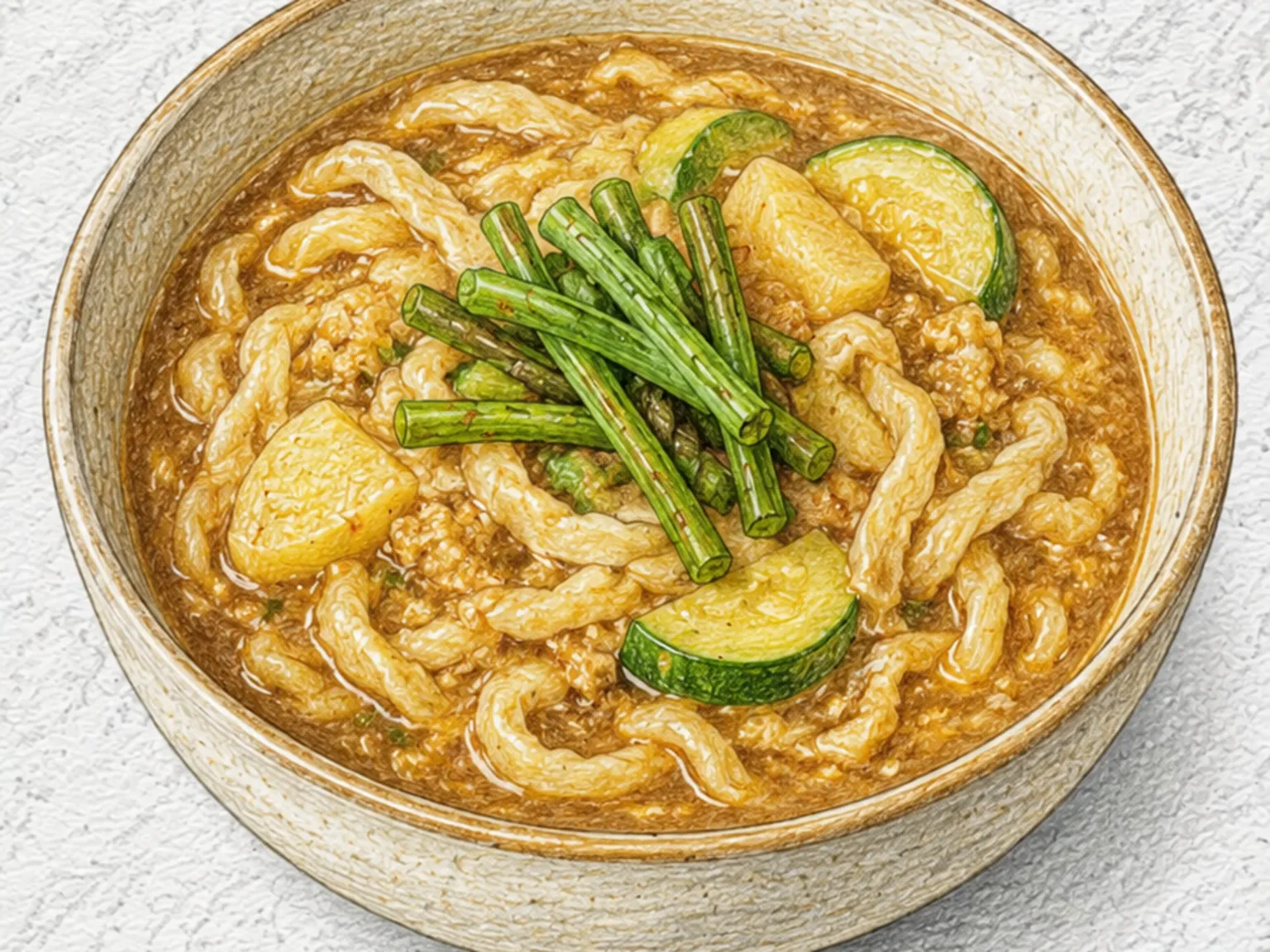
Kaljebi is a Korean home-style soup that cooks knife-cut noodles and hand-torn dough flakes together in a single pot of anchovy-kelp broth. Sliced potato goes in first, releasing starch that thickens the broth to a gentle, savory body without any additive. The dough flakes are pinched thin and dropped in well ahead of the knife-cut noodles - because they need more time to cook through - so both elements finish together. Every spoonful holds two distinct textures: the broad, pillowy sheets of sujebi alongside the chewy strands of kalguksu. Zucchini and green onion round out the flavor, and a light hand with soup soy sauce keeps the bowl clear and clean-tasting rather than heavy. This is weekday cooking at its most practical, requiring only a handful of pantry staples.

Prep 20min Cook 25min 2 servings

Adjust Servings

2servings
servings

Instructions

  1. 1

    Bring broth to a boil and cook potato for 6 minutes.

  2. 2

    Add zucchini, soup soy sauce, and minced garlic for base seasoning.

  3. 3

    Tear in dough flakes and simmer for 3 minutes.

  4. 4

    Add knife-cut noodles and stir to prevent sticking.

  5. 5

    Add green onion and simmer 4-5 more minutes.

  6. 6

    Adjust seasoning once both noodles and dough are fully cooked.

🛒Shop Ingredients on Amazon

As an Amazon Associate, we may earn from qualifying purchases.

Tips

Shake off excess flour from noodles for a clearer broth.
Add dough flakes first since they take longer than noodles.

Nutrition (per serving)

Calories
510
kcal
Protein
15
g
Carbs
96
g
Fat
8
g

Goes Well With

Korean Tofu and Bell Pepper Salad
Side dishesEasy

Korean Tofu and Bell Pepper Salad

Paprika-dubu-muchim combines 300 grams of blanched firm tofu, crumbled coarsely by hand, with julienned red and yellow bell peppers, cucumber, and onion in a soy-vinegar dressing. Blanching the tofu for just one minute removes any raw bean flavor while preserving a soft, creamy texture that contrasts with the crisp, sweet snap of the peppers. The onion is soaked in cold water for three minutes to tame its bite before joining the bowl. Sesame oil and minced garlic round out the dressing, adding depth without heaviness. Chilling the finished dish for 10 minutes before serving sharpens the vegetable flavors and makes the tofu firmer to the bite.

🥗 Light & Healthy🏠 Everyday
Prep 12minCook 3min2 servings
Korean Shiitake Tofu Pancake
PancakesEasy

Korean Shiitake Tofu Pancake

Shiitake-tofu jeon is a savory Korean pancake made by finely chopping fresh shiitake mushrooms and firm tofu, then mixing them into a batter of pancake mix, egg, and a touch of sesame oil before pan-frying. The shiitakes contribute a meaty chew and pronounced umami depth, while the tofu lightens the texture and keeps the interior moist. Carrot and chives are added for color contrast and a fresh, slightly pungent bite. The egg binds everything together, and the sesame oil in the batter gives a nutty fragrance. Cooked uncovered over medium-low heat until both sides are golden, the exterior crisps up while the inside stays tender. When using dried shiitakes, soaking them in water first is worthwhile because the soaking liquid can be reserved for use in soups or braising liquid. Served with a dipping sauce of soy sauce and vinegar, the salty acidity sharpens the overall savory flavor.

🏠 Everyday🍺 Bar Snacks
Prep 20minCook 14min2 servings
Korean Soy-Pickled Eggplant
KimchiEasy

Korean Soy-Pickled Eggplant

Gaji jangajji is a Korean-style pickled eggplant that starts by blanching the eggplant in boiling water for just over a minute to soften only the outer surface, leaving the inside intact. The briefly cooked eggplant is submerged in a pickling brine of soy sauce, vinegar, and sugar that has been brought to a boil and then cooled. The eggplant absorbs the brine rapidly and deeply, like a sponge, while holding a soft, yielding texture at its core. Vinegar sharpens the eggplant's otherwise flat flavor, and garlic together with cheongyang chili pressed into the brine build a low heat and quiet complexity that goes beyond basic preservation. Ready to eat after a single day in the refrigerator, this jangajji holds its texture for more than ten days when kept cold, which makes it a practical banchan to prepare in advance and pull out over multiple meals.

🏠 Everyday🍱 Lunchbox
Prep 20minCook 8min4 servings
Napa Cabbage Pear Black Sesame Salad
SaladsEasy

Napa Cabbage Pear Black Sesame Salad

Napa cabbage is shredded fine for maximum crunch, and Korean pear is cut to matching width so its clear sweetness merges seamlessly with the cabbage's mild crispness. Julienned carrot adds color throughout, while toasted black sesame seeds release a deep nuttiness with each bite. The dressing blends plain yogurt with rice vinegar and honey, staying creamy yet light enough to let the raw ingredients come through without being masked. Salt is kept minimal so the natural sweetness of pear and cabbage leads, making this salad a strong choice as a palate cleanser after a rich or oily main course. Scattering the black sesame seeds just before serving prevents them from absorbing moisture and ensures they retain their satisfying crunch against the soft, juicy pear and crisp cabbage.

🥗 Light & Healthy Quick
Prep 15min2 servings

More Recipes

Korean Knife-cut Noodle Soup
NoodlesMedium

Korean Knife-cut Noodle Soup

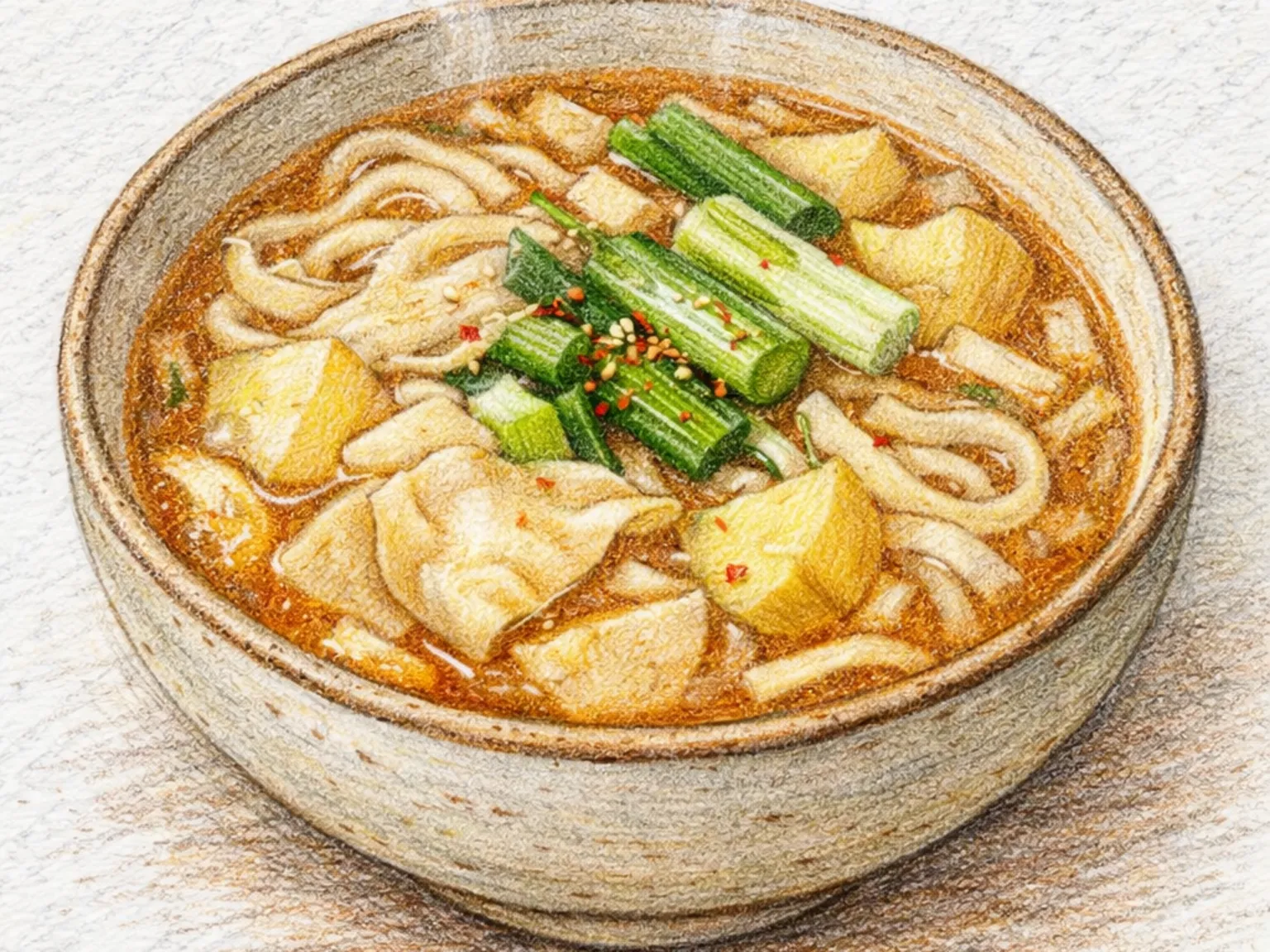
Kalguksu is a Korean noodle soup made with hand-cut wheat noodles simmered in anchovy-kelp broth. The noodles are rolled flat and sliced with a knife, giving them a rough surface that absorbs broth and a satisfying chew distinct from machine-made pasta. Sliced potato, half-moon zucchini, and onion go into the pot, with the potato releasing starch that naturally thickens the broth as it cooks. Seasoning stays minimal - soup soy sauce, salt, minced garlic, and green onion added at the end - so the clean, savory depth of the stock comes through clearly. The dish is traditionally associated with rainy days in Korea, and adding clams turns it into a popular seafood variation.

🏠 Everyday
Prep 15minCook 25min2 servings
Korean Clam Kalguksu (Hand-Cut Noodles in Clam Broth)
NoodlesMedium

Korean Clam Kalguksu (Hand-Cut Noodles in Clam Broth)

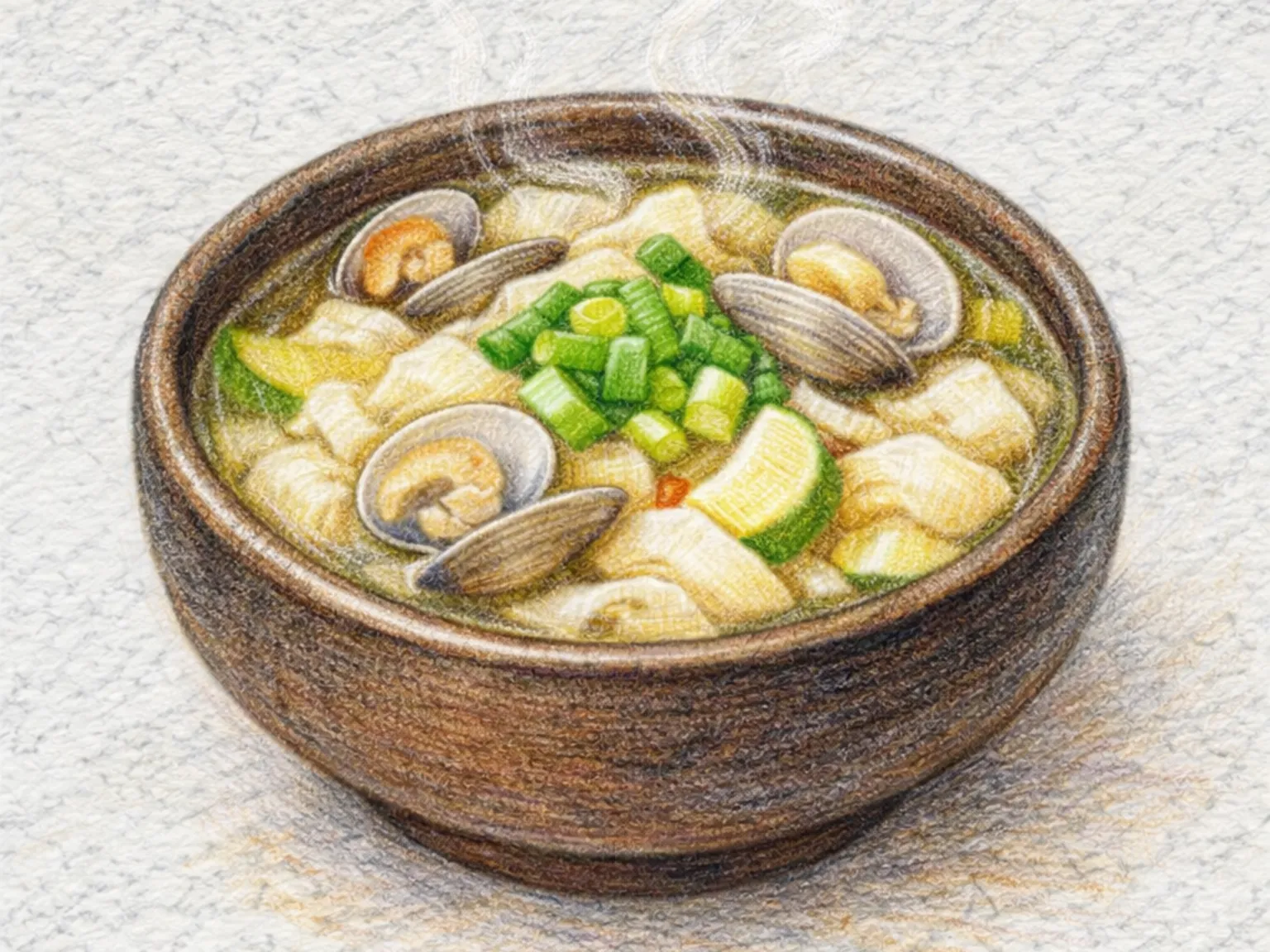
Baekhap kalguksu is a Korean knife-cut noodle soup in which the broth is derived entirely from hard clams rather than the more standard anchovy base. Purged clams are placed in cold water and brought to a boil; once the shells open, the clams are lifted out and the broth is strained through cheesecloth to remove any residual sand or shell fragments. Thinly sliced daikon radish and Korean zucchini cook in the strained broth for five minutes, contributing vegetal sweetness. The hand-cut noodles go in next and are boiled for six to seven minutes until they turn translucent; starch released from the noodles thickens the broth naturally into a lightly viscous, silky consistency without any additional thickener. Once the noodles are cooked, the reserved clam meat returns to the pot, and the soup is seasoned with minced garlic and guk-ganjang. Onion added with the vegetables deepens the broth's sweetness further. Because clam liquor rather than dried anchovy forms the base, the soup carries a distinctly marine, mineral character that permeates every strand of noodle, setting baekhap kalguksu apart from all other regional kalguksu variations. Along the coastal areas of South Chungcheong and Jeolla Provinces, this style of noodle soup has been a local specialty for generations, best in the seasons when clams are most abundant.

🎉 Special Occasion
Prep 20minCook 25min2 servings
Korean Spicy Gangwon Knife-Cut Noodles
NoodlesEasy

Korean Spicy Gangwon Knife-Cut Noodles

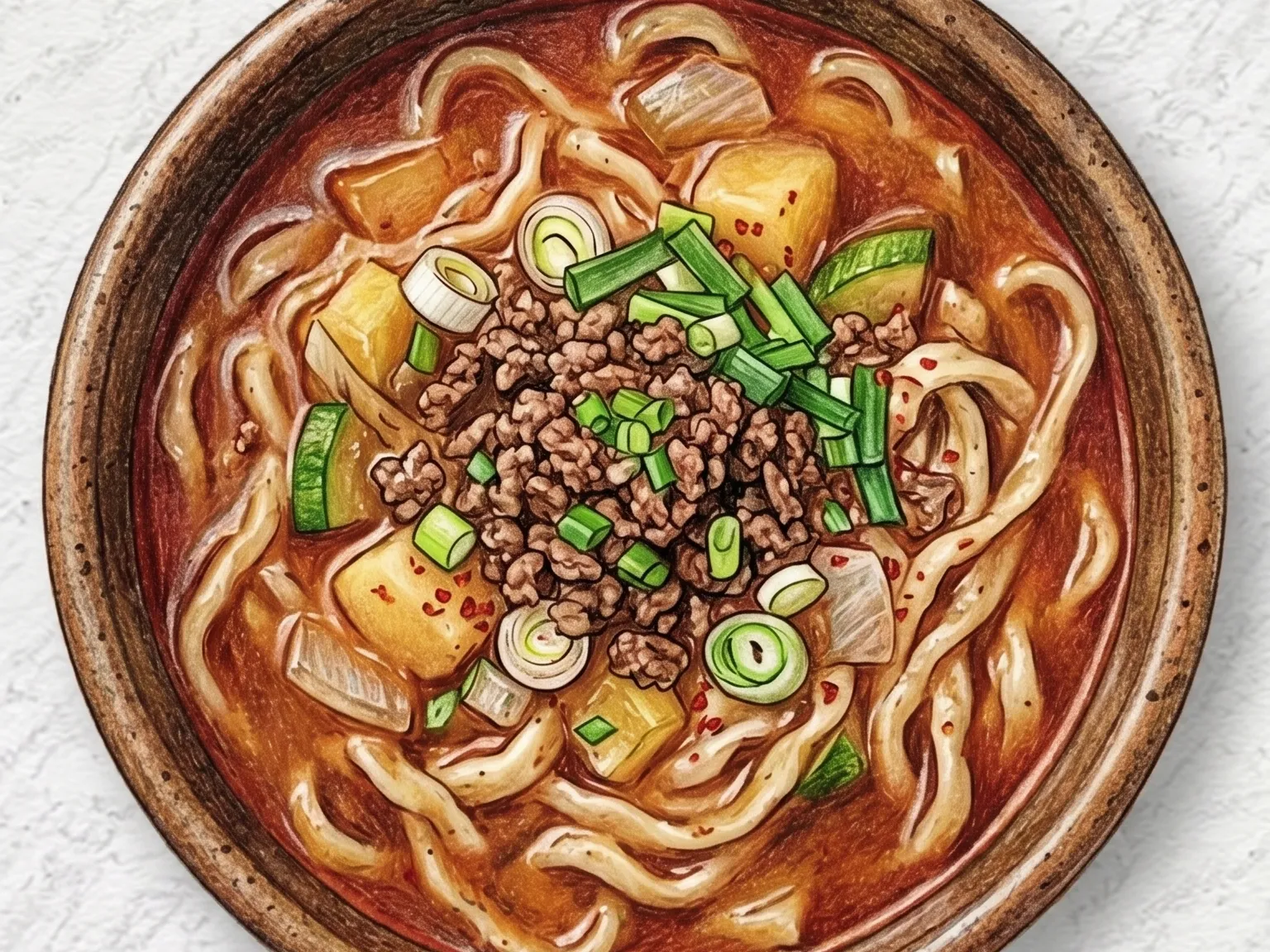
Jang kalguksu is a Gangwon Province style of knife-cut noodle soup defined by dissolving both gochujang and doenjang directly into an anchovy-kelp stock, a combination that sets it apart from standard kalguksu at a fundamental level. The fermented chili paste brings a spicy, rounded sweetness while the soybean paste contributes a dense, earthy richness, and together they build a broth with a complexity that neither ingredient could produce alone. An additional measure of gochugaru piles on a sharper chili heat, giving the soup its signature fiery edge. Potato breaks down as it simmers, naturally thickening the broth without any added starch, while zucchini releases sweetness, and onion and green onion round out the aromatics. Fresh-cut noodles have a smooth exterior and a springy, slightly resistant bite that clings well to the thick, rust-red broth. The dish originates from the mountainous interior of Gangwon Province, where it warmed workers through cold seasons, and the combination of deep umami and lingering heat still makes it one of the most satisfying one-bowl meals in Korean regional cooking.

🏠 Everyday
Prep 15minCook 20min2 servings
Korean Anchovy Broth Thin Noodle Soup
NoodlesEasy

Korean Anchovy Broth Thin Noodle Soup

Anchovy somyeon is the noodle soup Korean families fall back on when the kitchen offers little to work with - dried anchovies, a strip of dashima kelp, and a bundle of thin wheat noodles are enough. The broth starts with dried anchovies soaked briefly to cut any bitterness, then simmered with dashima for fifteen minutes before being strained to produce a clear liquid with a faint oceanic sweetness and deep umami. Somyeon - hair-thin wheat noodles - are cooked in a separate pot to keep their starch from clouding the broth, then rinsed repeatedly under cold water until every strand separates cleanly. The noodles go into a bowl of hot broth and are finished with sliced scallion, a small drop of sesame oil, and often a sheet of toasted gim. A few drops of soy sauce tune the salt level, and a soft-boiled egg or a few slices of tofu can round it into a full meal. The appeal of the dish is its restraint: no chili paste, no fermented base, just the clean savor of anchovy stock meeting springy noodles. Korean mothers have served this as a quick midday meal for generations, and it endures as comfort food in its most unadorned form.

🏠 Everyday
Prep 10minCook 15min2 servings
Korean Potato Hand-Torn Dough Soup
SoupsMedium

Korean Potato Hand-Torn Dough Soup

Gamja sujebi-guk is a Korean hand-torn dough soup in which pieces of wheat dough are pinched off and dropped into a simmering anchovy and kelp broth alongside potato and zucchini. The dough must be kneaded until it reaches the soft, elastic consistency of an earlobe - mixing to that point develops enough gluten to make the dough extensible and pliable, so that when pinched off it stretches thin rather than tearing in thick clumps. Resting the dough in the refrigerator for at least thirty minutes relaxes the gluten and makes it even more cooperative during tearing. When the dough is pulled apart, the technique matters: pressing the edges thin between the thumbs before tearing creates an irregular piece that is thick in the center and thin at the edges, so a single piece offers both the chewy resistance of the thick core and the delicate, almost noodle-like texture of the thin perimeter in the same bite. As the potatoes cook through and begin to soften, they release starch directly into the broth, building a naturally thickened, slightly viscous body without any roux or added thickener. Zucchini contributes mild sweetness and a soft texture that contrasts with the dense dough pieces. Soup soy sauce provides seasoning while keeping the broth's color clear and pale. Sliced green onion and cheongyang chili stirred in toward the end add depth and a gentle heat. A shower of roasted seaweed flakes on top finishes the bowl with a nutty, oceanic note.

🏠 Everyday
Prep 20minCook 25min4 servings
Korean Ginger Chicken Gomtang
SoupsMedium

Korean Ginger Chicken Gomtang

This ginger chicken gomtang is a clear, restorative Korean soup made by simmering a whole chicken low and slow with fresh ginger, onion, garlic, and green onion until the broth turns golden and develops a quietly complex flavor. Unlike beef-bone soups, which derive their richness from marrow and connective tissue, chicken gomtang achieves its depth through the prolonged extraction of collagen and gelatin from the bones and skin, resulting in a broth that coats the palate softly without feeling heavy. The ginger is added early so its sharp, warming oils can fully disperse through the liquid, while sliced onion gradually sweetens the broth as it cooks down. Once the broth is strained, it is remarkably clean-tasting despite its depth: a quality that Korean cooks describe as siwonhada, a coolness and clarity that settles the stomach while nourishing the body. The chicken is pulled from the bones and shredded along the grain into generous pieces before being returned to the bowl. Seasoning is kept minimal, a small pour of soup soy sauce, a pinch of salt, and a very generous amount of freshly cracked black pepper, whose heat amplifies the ginger and warms the whole dish. Korean households reach for this soup when someone is ill or recovering from fatigue, but it is equally at home as a restorative weekday dinner or a refined first course when served in small portions before a larger meal.

🏠 Everyday
Prep 20minCook 70min4 servings
More Noodles →