Kare-Kare (Filipino Peanut Oxtail Stew)
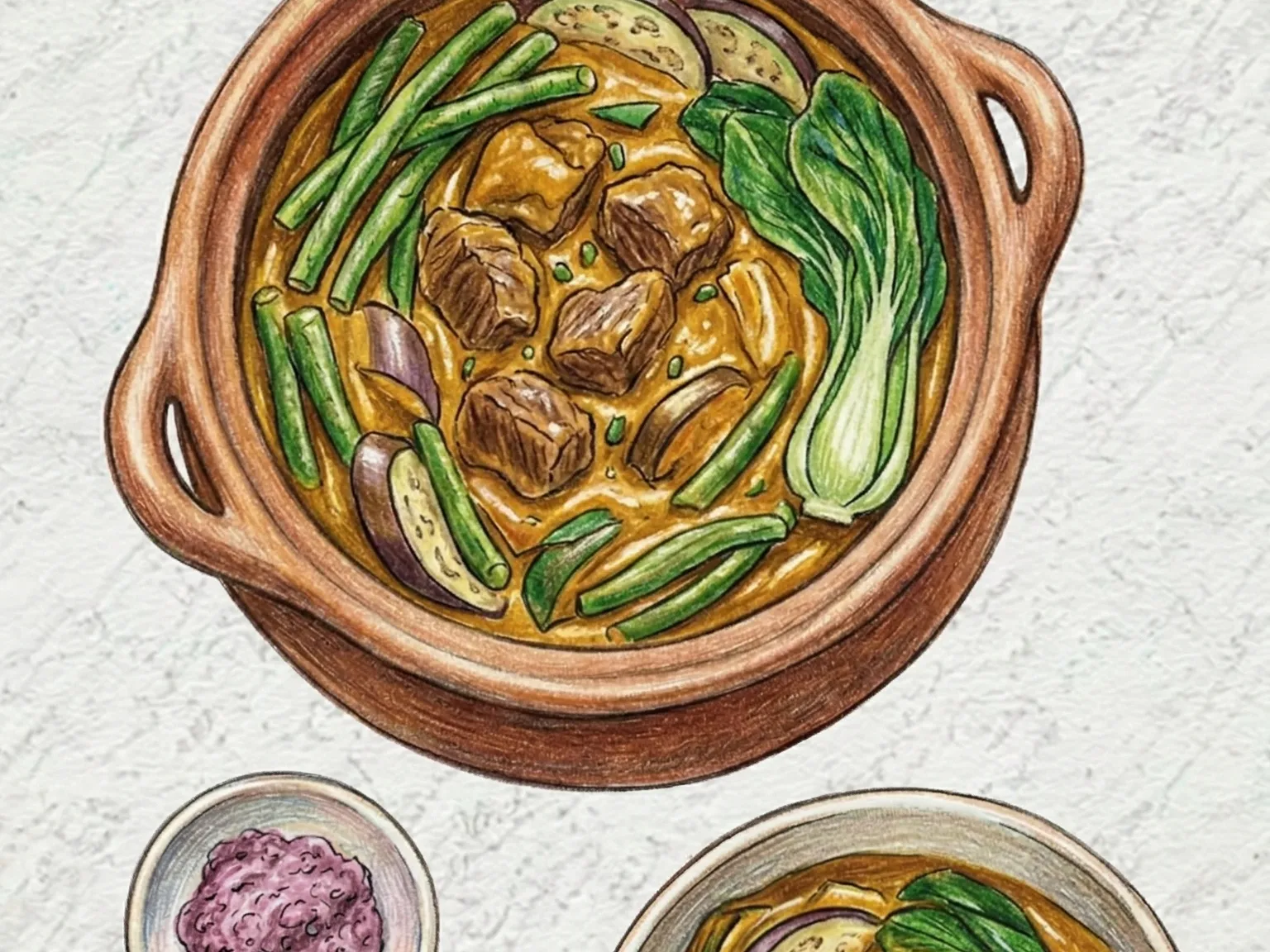
Kare-kare is a Filipino celebration stew where beef shank is braised until fork-tender and served in a thick peanut-based sauce with vegetables. The shank requires at least sixty minutes of simmering so that its abundant connective tissue breaks down into gelatin, yielding meat that falls apart at the touch of a spoon. Glutinous rice flour is dry-toasted in a pan until lightly golden, adding a nutty fragrance before it is whisked into the broth as a thickener. Peanut butter dissolved in the strained broth forms the sauce's rich, creamy foundation, and the toasted rice flour gives it body without the slickness of cornstarch. Eggplant, yardlong beans, and bok choy are added in the final five to seven minutes so they soften without turning mushy. The traditional accompaniment is bagoong, a fermented shrimp paste whose intense saltiness and funk contrast sharply with the mild, nutty sauce.
Adjust Servings
Instructions
- 1
Rinse beef shank, then simmer in a pot for 60 minutes until tender.
- 2
Toast glutinous rice flour lightly in a dry pan over low heat.
- 3
Remove and slice the cooked beef; strain the broth.
- 4
Saute garlic, then add broth and dissolve peanut butter.
- 5
Add toasted rice flour to thicken, then simmer with beef for 15 minutes.
- 6
Add eggplant, yardlong beans, and bok choy; cook 5-7 minutes to finish.
As an Amazon Associate, we may earn from qualifying purchases.
Tips
Nutrition (per serving)
More Recipes

Bistek Tagalog (Filipino Beef Steak with Calamansi Soy Sauce)
Bistek Tagalog - Filipino beef steak - adapts the Spanish bistec concept with a distinctly Philippine twist: calamansi citrus replaces wine or vinegar as the acid, producing a brighter, more tropical tang in the marinade. Thinly sliced beef sirloin soaks in a mixture of soy sauce, calamansi juice, garlic, and black pepper for at least thirty minutes, during which the acid tenderizes the fibers and the soy sauce penetrates deeply. The beef is seared quickly in a hot pan, then set aside while thick onion rings cook in the same drippings until softened and lightly caramelized. The marinade returns to the pan as a braising liquid, reducing into a dark, glossy sauce that coats the beef when everything is reunited. The finished dish has a pronounced salty-sour character - the soy provides depth while the calamansi lifts the heaviness of the meat fat. Piled high with the caramelized onion rings and always served over steamed white rice, it is one of the Philippines' most beloved weeknight meals.

Bicol Express (Filipino Pork Belly in Spicy Coconut Cream Stew)
Bicol Express is named after the railway line that once connected Manila to the Bicol region in southeastern Luzon - an area famous for its love of coconut and chili peppers. Thinly sliced pork belly simmers in a mixture of coconut milk and coconut cream with shrimp paste (bagoong), garlic, onion, and a generous amount of finger-length chilies and bird's eye chilies. The coconut milk reduces slowly over medium heat, splitting into oil as the liquid evaporates, at which point the pork begins to fry in the rendered coconut fat. The finished dish is nearly dry - the sauce has thickened into a creamy, oily coating that clings to the pork and chilies. The shrimp paste adds a deep, funky salinity beneath the coconut sweetness, and the chili heat builds over successive spoonfuls rather than hitting immediately. Despite its name suggesting a modern invention, the combination of coconut, chili, and fermented shrimp is an ancient Bicolano flavor profile. It pairs inseparably with steamed white rice, which absorbs the rich, spicy sauce.

Laing (Filipino Bicol Dried Taro Leaf Coconut Milk Stew)
Laing is a traditional dish from the Bicol region of the Philippines, made by slowly simmering dried taro leaves in coconut milk with chili, garlic, ginger, and shrimp paste. The leaves must be fully dried rather than fresh - fresh taro leaves contain calcium oxalate crystals that cause an intense itching sensation in the mouth and throat. Once the aromatics are sauteed in coconut milk, the dried leaves are layered in and the pot is left uncovered to reduce. A critical rule in traditional preparation is to never stir the pot; stirring releases the irritants from the leaves into the liquid. As the coconut milk reduces over low heat, it concentrates into a thick, oily sauce that clings to the softened leaves. Shrimp paste contributes a deep, funky salinity, while fresh or dried chilies bring the heat that Bicolano cuisine is known for. The result is rich, spicy, and intensely savory - meant to be eaten in modest spoonfuls alongside a generous mound of steamed rice.

Chicken Adobo (Filipino Vinegar Soy Braised Chicken)
Chicken adobo is the unofficial national dish of the Philippines, rooted in a pre-colonial preservation technique of braising meat in vinegar to extend its shelf life in tropical heat. Chicken simmers uncovered in soy sauce, cane vinegar, crushed garlic cloves, bay leaves, and whole black peppercorns until the sharp acidity of the vinegar mellows into a salty-sour sauce with caramelized depth. Once braised, the chicken is pan-fried until the skin turns golden and crisp, then reunited with the reduced sauce - the moment the crackling skin meets the thick, glossy liquid is the dish's defining pleasure. Every Filipino household has its own ratio of soy to vinegar, and the debate over whose mother makes the best adobo is a national pastime that never resolves. It is always served over steamed white rice, with extra sauce spooned over generously. Adobo famously tastes better on the second day, after the flavors have deepened overnight in the refrigerator.

Hungarian Goulash
Goulash is a traditional Hungarian stew where beef chuck is slow-cooked with generous amounts of paprika until the meat falls apart at the touch of a fork. Onions are fried until golden, then paprika powder and garlic are toasted briefly in the fat - this step dissolves the paprika's red pigment and smoky flavor into the oil, defining the color and taste of the entire stew. After browning the beef, tomato paste, beef broth, and caraway seeds are added, and the pot simmers on low heat for over an hour until the connective tissue in the chuck breaks down completely. Potatoes go in for the final thirty minutes, absorbing the paprika-infused broth while their starch naturally thickens the liquid into a rich, cohesive sauce.

Pancit Palabok (Filipino Rice Noodles with Annatto Shrimp Sauce)
Pancit palabok is a Filipino celebratory noodle dish built on thin rice noodles blanketed in an orange-hued shrimp sauce. The sauce gets its color from annatto powder and its backbone from shrimp-shell stock simmered with fish sauce. Boiled egg halves and a squeeze of lime are the traditional garnish, balancing richness with acidity. It is a staple at Filipino birthday parties and holiday gatherings, served family-style on a large platter.