Curry Udon
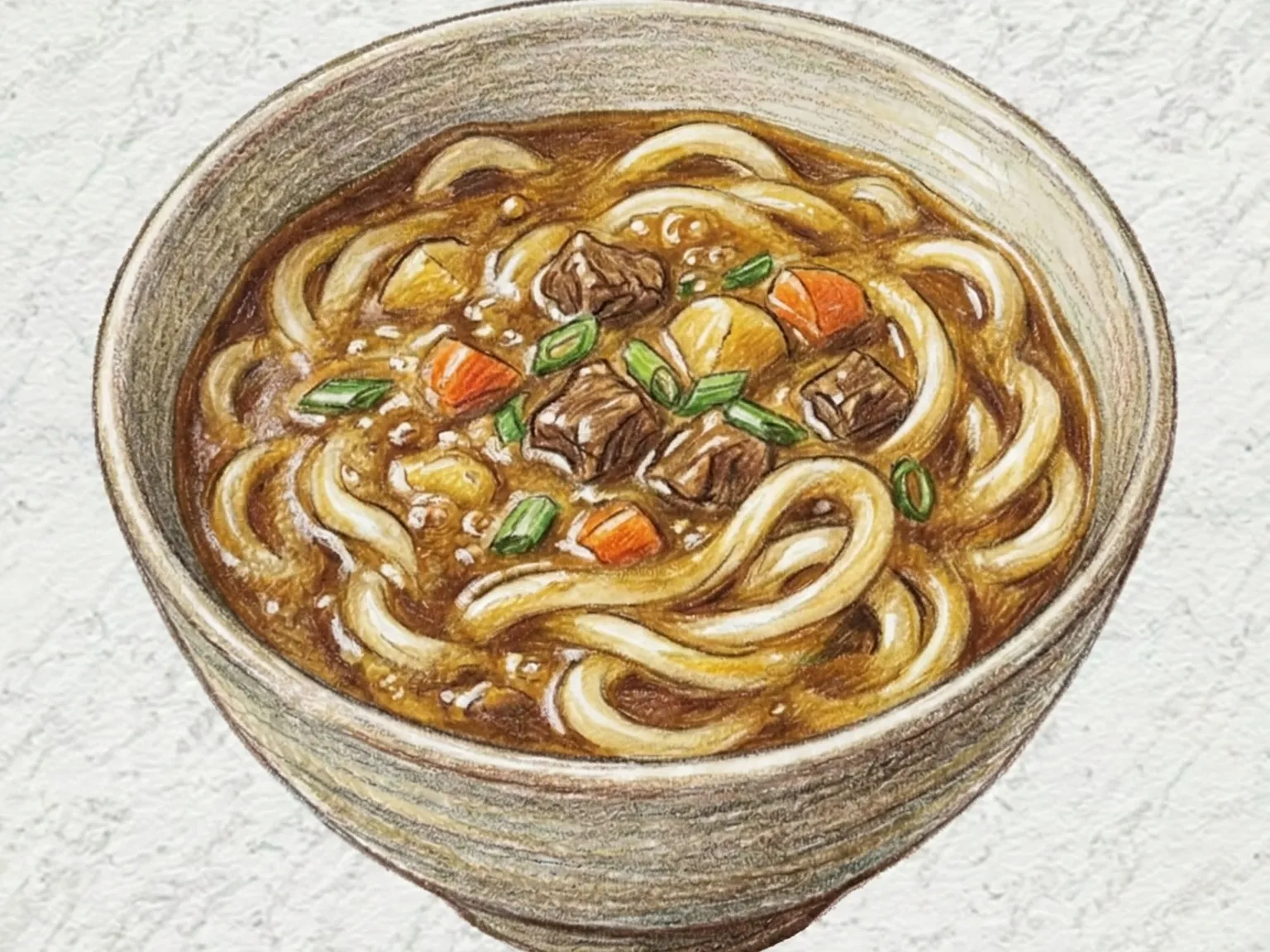
Kare udon is a Japanese curry noodle dish that takes the familiar Japanese curry and transforms it with dashi stock, creating a flavor profile distinct from curry rice. Thinly sliced pork and onion are stir-fried, then dashi stock is added and brought to a boil before curry roux blocks are dissolved into the liquid. The combination of dashi, with its katsuobushi and kombu depth, and the warm spice of the curry roux produces a broth more complex than either element alone. The thick sauce clings to the fat, chewy udon strands so that every bite carries the full flavor of the broth. Stirring on low heat after the roux dissolves prevents the starchy sauce from burning on the pot bottom. Despite using the same curry roux as kare raisu, the addition of dashi and the substitution of noodles for rice makes this a distinctly different eating experience.
Adjust Servings
Instructions
- 1
Stir-fry pork and onion until softened.
- 2
Add dashi stock and bring to a boil.
- 3
Dissolve curry roux into the broth and simmer until thickened.
- 4
Add udon noodles and cook through.
As an Amazon Associate, we may earn from qualifying purchases.
Tips
Nutrition (per serving)
More Recipes

Japanese Curry Rice
Kare raisu is one of the most frequently cooked meals in Japanese households, using commercially prepared curry roux blocks that produce a milder, thicker, and sweeter result than Indian curry. Beef or chicken is cut into bite-sized pieces and stir-fried with onion, potato, and carrot before water is added and the pot simmers until the potatoes turn tender. The heat is lowered and the curry roux blocks are broken in and stirred until fully dissolved; the roux contains flour and fat that thicken the liquid into a glossy, coating sauce. Keeping the heat low after adding the roux is critical because high heat causes the thick sauce to scorch on the bottom. The finished curry deepens in flavor if rested overnight, as the vegetables continue to release their sweetness into the sauce. Unlike Indian curry with its layered spice blends, Japanese curry draws its appeal from the consistent, approachable flavor that a single roux block delivers every time.

Miso Soup
Miso shiru is the soup that appears at nearly every Japanese meal, from a simple breakfast to an elaborate multi-course dinner. Its foundation is dashi - a stock made from kombu seaweed and bonito flakes - into which miso paste is dissolved just before serving so the living cultures in the paste are preserved. Cubed silken tofu and rehydrated wakame seaweed are the most common additions, finished with a scattering of sliced scallions. The soup is deliberately understated, its role being to complement rather than compete with the dishes around it. White miso yields a mild, slightly sweet version, while red miso produces a saltier, more assertive bowl. Every household and region has its own preferred combination of miso type and ingredients.

Chashu Pork (Japanese Rolled Braised Pork Belly for Ramen)
Chashu pork traces its roots to Cantonese char siu but evolved into a distinctly Japanese preparation - a rolled and braised pork belly rather than a roasted cut. A slab of pork belly is rolled into a tight cylinder, tied with kitchen twine, then simmered in soy sauce, mirin, sake, and sugar for one to two hours until the connective tissue dissolves into gelatin and the meat yields at the slightest pressure. The braising liquid reduces into a dark, syrupy glaze that coats the exterior in a deep amber sheen. When sliced, the cross-section reveals a spiral pattern of alternating fat and lean layers - a visual signature that signals proper rolling technique. Though most associated with ramen, where one or two slices crown the bowl, chashu is also served over rice as chashu-don or eaten cold as a drinking snack. The leftover braising liquid is never discarded - it becomes the base for ajitamago, the marinated soft-boiled egg that is chashu's inseparable companion.

Japanese Stir-Fried Udon
Yaki udon is a Japanese stir-fried noodle dish where thick udon noodles are tossed in a soy-based sauce over high heat with sliced pork or seafood and vegetables such as cabbage, carrot, and scallion. The high heat gives the noodles lightly charred edges while keeping their chewy center intact. Bonito flakes (katsuobushi) are often scattered on top just before serving, where they wave from the residual heat. The recipe takes about 25 minutes and depends on maintaining strong heat throughout the stir-fry to avoid steaming the noodles.

Mentaiko Yuzu Cream Udon
Myeongran yuja cream udon is a Japanese-style cream udon that layers salted pollock roe with yuzu marmalade in a sauce built from heavy cream, milk, and butter. Garlic is sauteed in butter first, then cream and milk simmer on low heat for two to three minutes to thicken before yuzu marmalade and black pepper are stirred in. Two-thirds of the roe goes in off heat so residual warmth cooks it gently without making it tough, while the remaining third is placed raw on top for bursts of briny texture. The yuzu is added gradually to control acidity, and its citrus fragrance lifts the heavy cream base, keeping the dish from feeling overly rich. Shredded nori on top provides a roasted, oceanic contrast.

Sapporo Miso Ramen (Hokkaido-Style Rich Miso Broth Ramen with Pork)
Sapporo miso ramen was born in Hokkaido's capital as a way to warm up against brutal northern winters, and everything about the bowl reflects that purpose. The broth starts with chicken stock fortified with a generous amount of miso paste, giving it a thick, opaque body and a deep fermented savoriness. Ground pork, cabbage, and bean sprouts are stir-fried in a wok before being added to the broth, which picks up smoky wok flavor in the process. Sweet corn kernels and a pat of butter melt into the surface, adding richness that feels earned rather than excessive. The noodles are thick and curly, engineered to trap the heavy broth in every coil. Garlic and chili oil variations are common in Sapporo's ramen shops.