Classic Katsudon (Pork Cutlet Egg Rice Bowl)
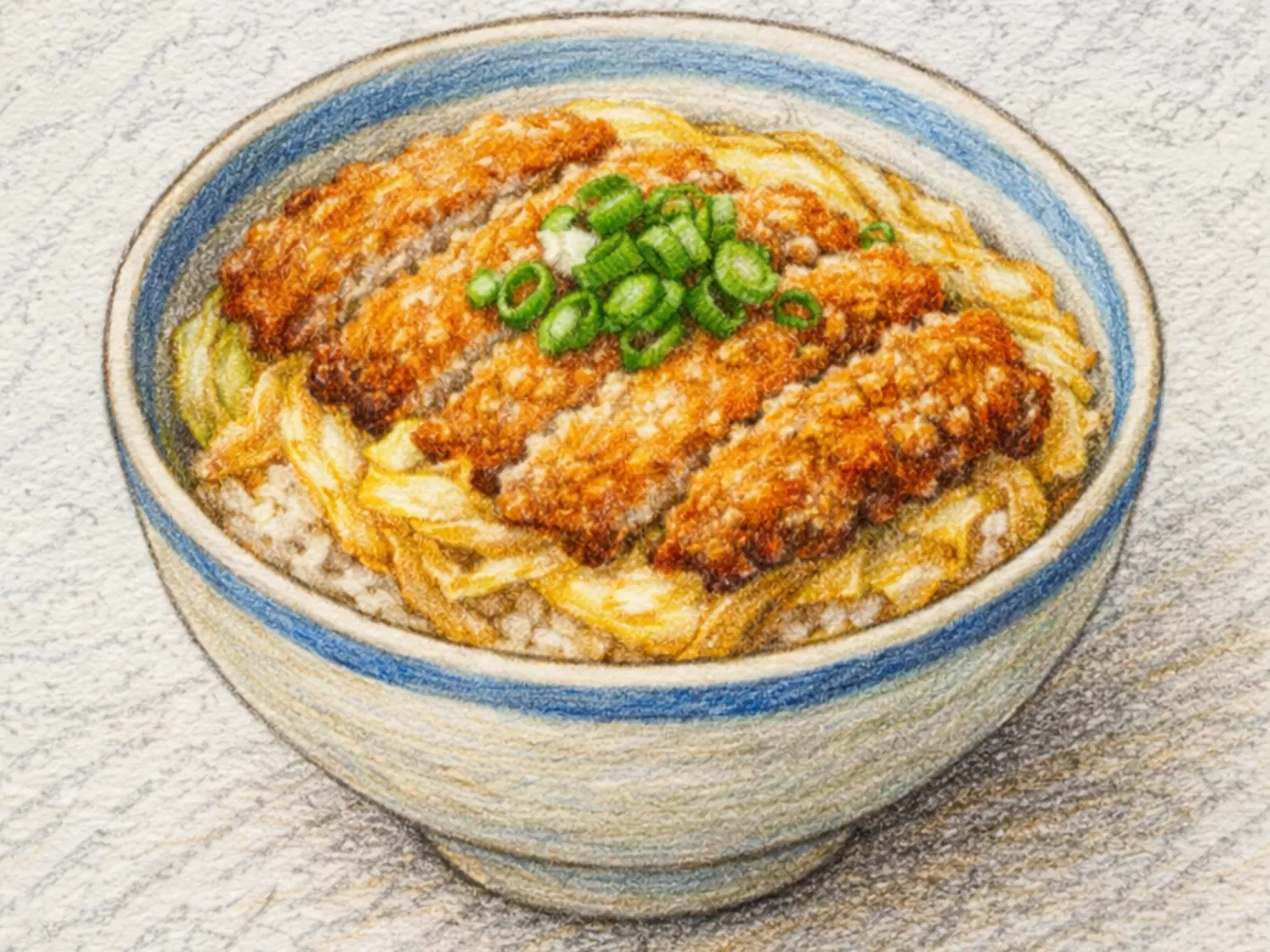
Classic katsudon is a Japanese rice bowl that transforms a crispy pork cutlet into something altogether different by simmering it briefly with onion, egg, and seasoned dashi broth. Thinly sliced onion cooks first in a shallow pan of tsuyu - a blend of soy sauce, mirin, and dashi - until soft and sweet. The fried cutlet, sliced into strips, is nestled into the onion broth, then lightly beaten egg is poured over the top and cooked just until it sets into a custard-like layer. This half-set egg clings to the panko crust, creating a contrast between the still-crunchy edges and the silky coating. The entire mixture is slid onto a bowl of steaming rice, where the savory broth soaks into the grains. In Japan, katsudon is traditionally eaten before exams or competitions as a good-luck ritual.
Adjust Servings
Instructions
- 1
Score pork cutlets lightly and season with salt and pepper.
- 2
Coat in flour, egg, then panko, and fry at 170C until golden.
- 3
Slice fried cutlets into 2 cm strips and rest briefly to keep crispness.
- 4
Simmer onion with tsuyu, water, and sugar for 3 minutes.
- 5
Place cutlet in the pan and pour over 2 beaten eggs, cooking to soft-set.
- 6
Serve over rice and repeat with remaining eggs for the second bowl.
As an Amazon Associate, we may earn from qualifying purchases.
Tips
Nutrition (per serving)
More Recipes

Katsu Curry
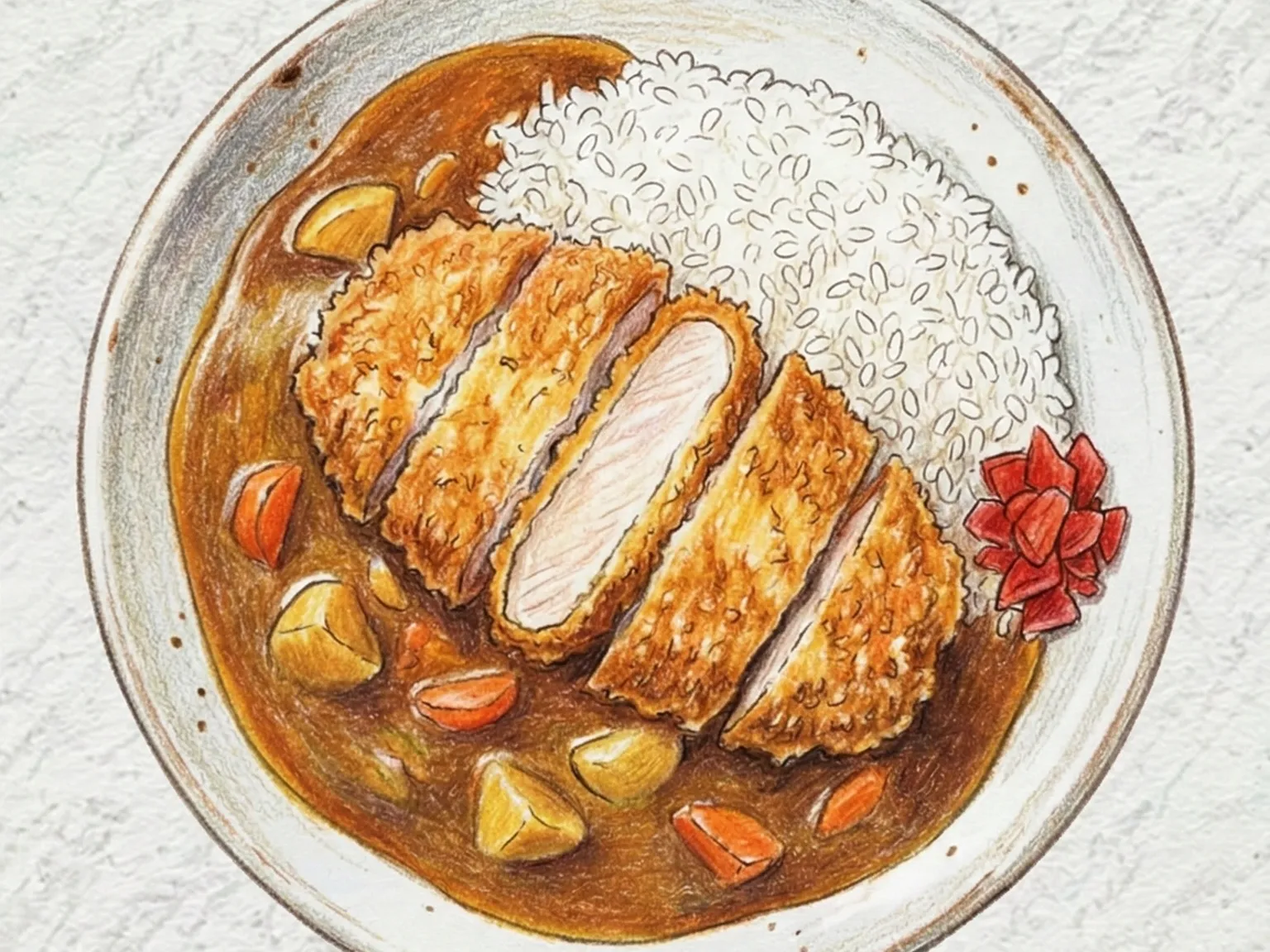
Katsu curry combines two Japanese comfort food staples on one plate: a thick, breaded pork cutlet and a smooth, glossy curry sauce over rice. The pork loin is seasoned with salt and pepper, then coated in flour, beaten egg, and panko breadcrumbs whose coarse, jagged flakes create a rougher surface that fries up crunchier than fine breadcrumbs. The cutlet deep-fries at 170 degrees Celsius for four to five minutes until deep golden, then rests for two minutes so the residual heat finishes cooking the center while the juices redistribute. The curry sauce is prepared separately by sauteing onion and carrot, simmering in water until soft, then dissolving the curry roux on low heat until thick. Resting the curry overnight intensifies its flavor as the vegetables break down further. When plated, the curry occupies one side and the sliced katsu the other, so the crust stays crisp until deliberately dipped into the sauce.

Katsu Sando (Japanese Crispy Pork Cutlet Sandwich)
Katsu sando is a Japanese sandwich built around a thick, crispy pork cutlet pressed between slices of soft milk bread. The pork loin is pounded thin, seasoned, then coated in flour, egg, and panko breadcrumbs before being deep-fried to a deep golden crust. Tonkatsu sauce - a thick, fruity condiment similar to Worcestershire - is spread on one side of the bread, while the other gets a thin layer of mayonnaise. Finely shredded cabbage sits beneath the cutlet, adding a fresh crunch that offsets the richness of the fried meat. The crusts are trimmed and the sandwich is pressed gently before being sliced in half, revealing the clean cross-section of bread, cabbage, and cutlet that defines the dish. Katsu sando works equally well as a quick lunch, a picnic item, or late-night comfort food.

Mitsuba Oyakodon (Japanese Chicken Egg Rice Bowl with Mitsuba Herb)
Mitsuba oyakodon is a variation of Japan's classic chicken-and-egg rice bowl that adds mitsuba - Japanese wild parsley - as a finishing herb. Chicken thigh and sliced onion are simmered in a sauce of dashi, soy sauce, and mirin until the chicken is cooked through, then beaten eggs are poured over and left to set into a soft, barely-set custard. Mitsuba leaves are scattered on top just before the lid goes on, wilting slightly in the residual heat and releasing a clean, celery-like fragrance that lifts the richness of the egg and chicken. The whole mixture is slid over a bowl of steamed rice. It is everyday home cooking in Japan - quick to prepare yet dependent on timing, since overcooking the egg by even a minute changes the texture entirely.

Nikujaga (Japanese Beef Potato Onion Soy-Sweet Stew)
Nikujaga is the quintessential Japanese home-cooked stew, often described as the dish that defines a mother's cooking in Japan. Thinly sliced beef, potatoes, onion, carrot, and shirataki noodles are simmered in a broth of dashi, soy sauce, mirin, and sugar. The dish traces its origins to the Meiji era, when a Japanese naval officer attempted to recreate British beef stew using local ingredients - resulting in a clear, soy-based braise rather than a thick, flour-bound stew. The potatoes absorb the seasoned liquid until soft at the edges but still holding shape, while shirataki noodles soak up flavor and add a springy contrast.

Japanese Rice Soup Porridge
Zosui is a Japanese rice porridge made by simmering leftover cooked rice in dashi broth and finishing with beaten egg. The broth soaks into the rice grains, giving the porridge a deep umami base, while the egg sets into soft ribbons throughout. Enoki mushrooms add thin, delicate strands of texture, and chopped scallions contribute a fresh finish. Seasoning is kept minimal with just soy sauce and salt to let the broth flavor come forward. It is often served as the closing dish after a nabe hot pot, using the remaining broth as the cooking liquid.

Pork Rice Bowl (Sweet-Salty Glazed Pork over Rice)
Butadon is a Japanese pork rice bowl originating from Obihiro, Hokkaido, where thin slices of pork are simmered with onion in a sauce of soy sauce, mirin, and sugar until the meat absorbs every drop of the sweet-salty glaze. The onion melts down during cooking, adding natural sweetness that deepens the sauce. Served over a mound of steamed rice, it is straightforward comfort food - no complex techniques, no long ingredient lists, just well-balanced flavors that come together quickly. The caramelized edges of the pork develop a slight char that adds dimension to the otherwise smooth, saucy topping. It makes an excellent weeknight dinner when time is short but satisfaction cannot be compromised.