Kaya Toast (Singaporean Coconut Jam Butter Toast)
Quick answer
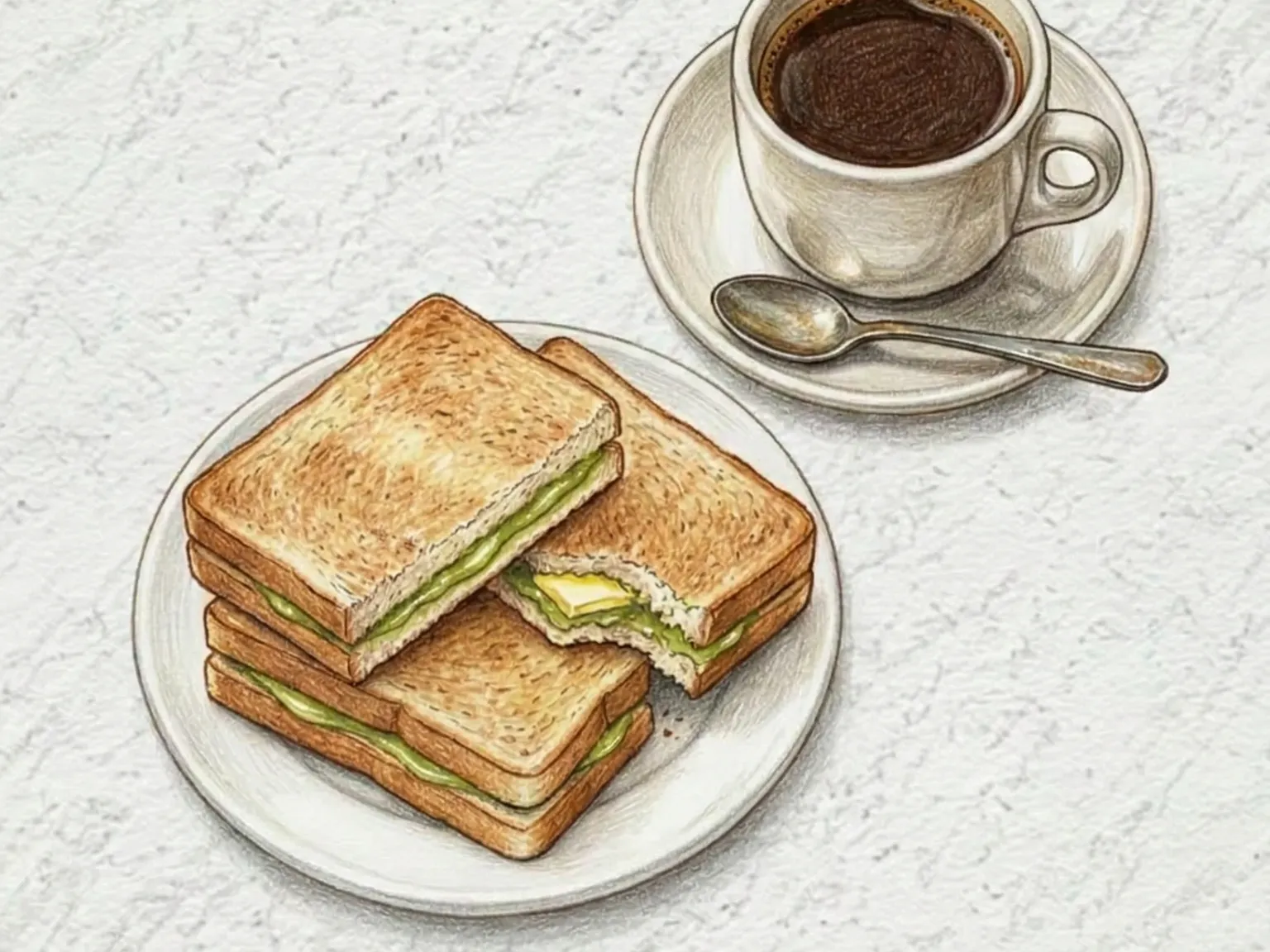
Kaya toast is the defining breakfast of Singaporean coffee shops, built from two slices of crisped white bread filled with kaya and a thick slab of cold butter.
What makes this special
- Cold butter on hot Kaya Toast melts slowly into pandan-scented coconut jam, layering salty against sweet.
- Pandan-scented kaya jam stirred on low heat gives a floral-coconut depth
- Cold butter placed on hot toast melts slowly, layering salty against sweet
Key ingredients
Core cooking flow
- 1 Trim the crusts from 4 slices of white bread in a thin, even line.
- 2 Heat a dry pan over medium low heat, then toast the bread for about 1 minute per side.
- 3 Spread the 4 tbsp kaya coconut jam evenly over 2 toasted slices, reaching close to the corners.
Kaya toast is the defining breakfast of Singaporean coffee shops, built from two slices of crisped white bread filled with kaya and a thick slab of cold butter. Kaya is a jam made by cooking coconut milk, eggs, sugar, and fresh pandan leaf over low heat with constant stirring until the mixture thickens into a pale green spread that smells of vanilla, coconut, and floral sweetness simultaneously. The bread is toasted directly over charcoal or in a grilling rack until it shatters at the edges. Cold butter placed inside the hot toast begins to soften immediately at the center while retaining its chill at the edges, so each bite delivers a different ratio of fat and sweetness. The traditional pairing is two soft-boiled eggs cracked into a shallow bowl, seasoned with dark soy sauce and a grind of white pepper, then loosely mixed into a thin custard for dipping or dunking. Alongside these, a glass of kopi - coffee brewed through a cloth sock filter and sweetened with condensed milk - completes the set. This breakfast combination has changed very little in decades and remains the first meal of the day for many Singaporeans, served at everything from old neighborhood kopitiams to national chains like Ya Kun Kaya Toast.
Instructions
Read the steps as a cooking flow: prep, heat, seasoning, doneness control, and finish.
- 1Season
Trim the crusts from 4 slices of white bread in a thin, even line.
Slice 30 g unsalted butter into thin pieces and keep it chilled until the toast is ready, so it softens slowly instead of disappearing into the bread.
- 2Control
Heat a dry pan over medium low heat, then toast the bread for about 1 minute per side.
Turn it when the edges look dry and lightly browned, keeping the heat moderate so the center stays soft and the outside crisps.
- 3Prep
Spread the 4 tbsp kaya coconut jam evenly over 2 toasted slices, reaching close to the corners.
Arrange the cold butter slices on the other 2 pieces without overlapping too much, so every bite has both jam and butter.
- 4Prep
Close each sandwich while the bread is still hot, placing the jam side against the butter side.
Let it sit for about 20 seconds, just until the center of the butter softens, then cut in half to show the layers.
- 5Heat
When the water in a small pot reaches a boil, lower in 2 eggs carefully and cook for 6 minutes 30 seconds.
The goal is a set white with a runny yolk, so avoid extending the time unless the eggs are very large.
- 6Finish
Chill the eggs in cold water for 30 seconds, then peel them and place them in small bowls.
Season with 1 tsp soy sauce and 0.25 tsp black pepper, then serve at once with the kaya toast for dipping.
After the steps
Pick a recipe that fits this dish.
Continue with shared ingredients, meal pairings, or a similar method.
Recipes That Go Well With This
More Asian →Based on shared ingredients and meal pairing
Korean Bacon Egg Toast (Buttery Griddle Bacon Egg Street Sandwich)
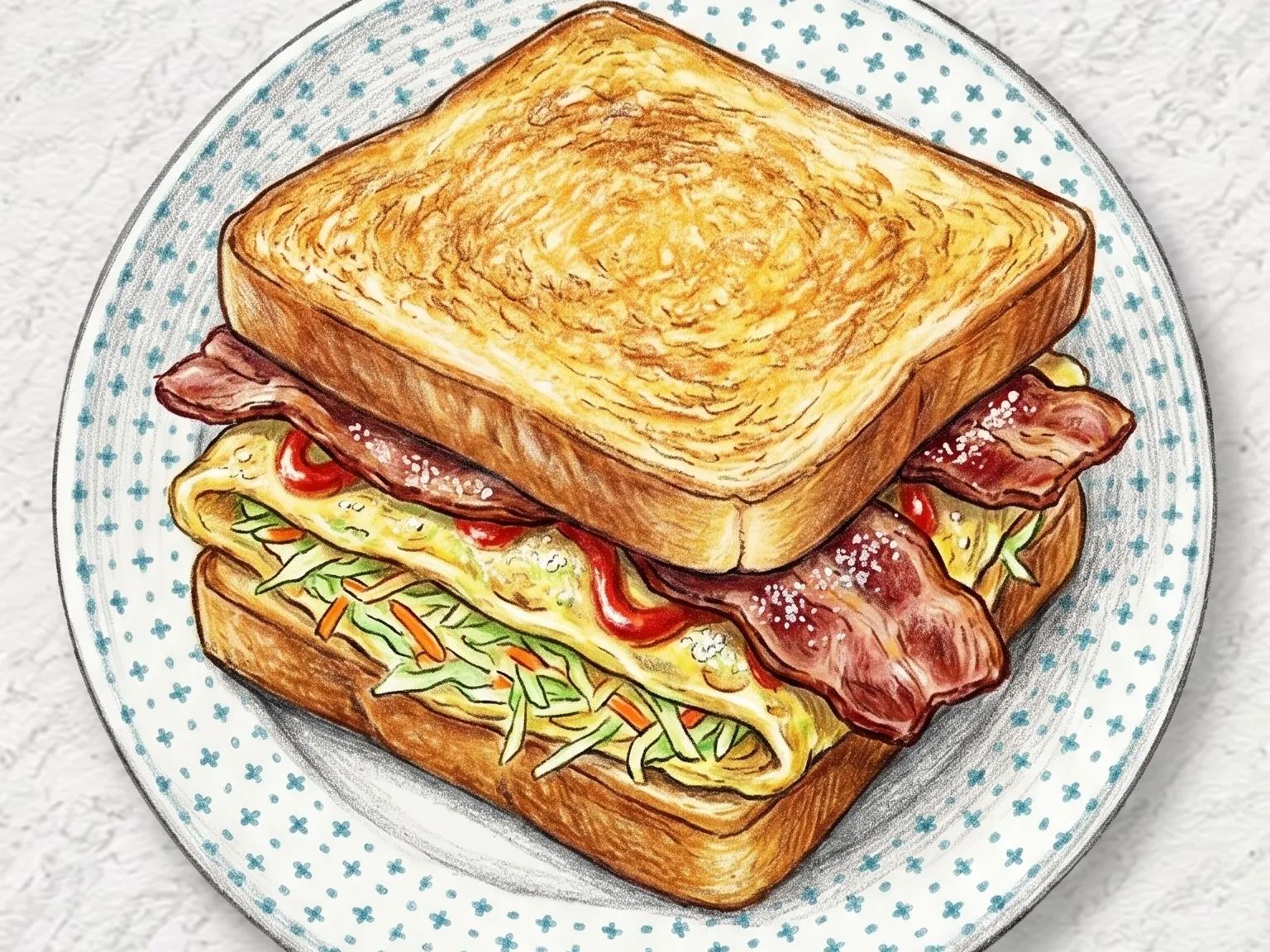
Bacon egg toast sits at the center of Korean street-toast culture - the gilgeori-toseuteu tradition that grew out of Seoul's pojangmacha stalls during the 1980s and 1990s and has since spread to carts and small storefronts across the country. Two slices of white sandwich bread are spread generously with butter and pressed onto a flat iron griddle until the surface caramelizes into something close to a fried crust - crisp, golden, and faintly sweet from the butter. The filling is built on the griddle in order: a thin omelet-style egg beaten with shredded cabbage and carrot is cooked flat and folded to fit the bread, then topped with crispy bacon strips and finished with ketchup and a small measure of sugar. That ketchup-and-sugar combination is the defining seasoning of the Korean street toast tradition - sweet and tangy in a ratio that surprises non-Korean eaters but has remained unchanged at Seoul's toast carts for decades. The bacon delivers smoky, salty contrast that prevents the sweetness from taking over. The finished sandwich is wrapped in wax paper and handed over to be eaten one-handed while walking. In busy districts like Hongdae and Myeongdong, morning lines form at the most popular carts, and the formula has not changed since the 1980s.
Korean Egg Mayo Toast
Egg mayo toast mashes three hard-boiled eggs with a fork, mixes them with mayonnaise, salt, and pepper, and piles the mixture onto freshly toasted bread. Crushing the eggs to uneven sizes -- some finely mashed, some left in larger pieces -- creates a textural variation between smooth sections and chunks in each bite, which is more interesting than a uniformly smooth paste. The mayonnaise binds the crumbly eggs into a cohesive, creamy spread, and placing the cool egg salad onto hot toast produces a temperature contrast that carries through the entire piece. Adding a small amount of mustard or finely chopped pickles introduces acidity that cuts through the richness of the mayonnaise and prevents the filling from tasting heavy. The eggs should be fully cooled before mashing -- adding mayonnaise to warm eggs causes it to thin out and can make the texture loose and uneven. With these adjustments, a simple combination of three ingredients becomes considerably more satisfying.
Apple Fennel Walnut Salad
This salad pairs three ingredients whose textures and flavors run in different directions - crisp apple, anise-scented fennel, and bitter walnuts - and unifies them with a honey-lemon dressing. Thinly sliced fennel bulb contributes a licorice-like fragrance that is more aromatic than sweet, while its celery-crisp texture holds a firm contrast against the apple's softer flesh. Toasted walnuts add a crunchy, tannic bitterness that anchors the lighter elements and keeps the salad from reading as merely sweet. The dressing is deliberately minimal - fresh lemon juice, honey, a small amount of olive oil, and a pinch of salt - so the ingredients carry the flavor rather than the sauce. Assembling just before serving prevents the apple from browning. Salads of this type appear on autumn and winter tables in France and Italy when local apples and fennel come into season together, and can be served as a standalone starter or alongside roasted poultry, where the anise note in the fennel cuts through the meat's richness. Fennel has a long association with digestive support in Mediterranean cooking, which is partly why it has traditionally been served alongside fatty meats, and this salad draws on the same pairing logic.
Fish Head Curry (Coconut Tamarind Curry)
Fish head curry was born in 1940s Singapore when M.J. Gomez, a Keralite immigrant, noticed his Chinese customers' preference for fish heads and merged it with a South Indian curry base, creating a dish that belongs to no single culture yet has become distinctly Singapore's own. A whole snapper head, sometimes weighing over a kilogram, simmers in a thick gravy of coconut milk, tamarind, curry leaves, fennel seeds, and fish curry powder. The collagen from the head dissolves into the broth and gives it a sticky, lip-coating richness. The cheek meat and the gelatinous flesh around the eyes absorb the most curry and are the most prized portions at the table, claimed first by Indian, Malay, and Chinese diners alike. Okra, eggplant, and tomato stew alongside, and each vegetable interacts with the gravy differently: okra thickens, eggplant absorbs like a sponge, and tomato contributes fruity acidity. The dish is traditionally served on a banana leaf with steamed rice at restaurants along Singapore's Little India, where the head arrives in a clay pot still bubbling from the kitchen.
Serve with this
Black Tea Milk Tea (British Condensed Milk Sweet Tea)
Milk tea is prepared by steeping black tea bags in boiling water for exactly four minutes to extract a strong, tannic base, then combining it with whole milk and condensed milk over low heat. Steeping shorter than four minutes leaves the tea pale and thin; longer than four minutes introduces bitterness and astringency that no amount of milk can fully mask. The milk rounds out the tea's sharpness and adds a creamy body, while condensed milk layers on a dense, caramel-like sweetness that sets this version apart from tea simply sweetened with sugar. Regular sugar dissolved early provides the baseline sweetness, and the condensed milk fine-tunes the richness and texture in the final moments. Warming the milk before combining it with the brewed tea helps both blend more smoothly. For an iced version, the mixture must be cooled completely before pouring over ice, since adding hot liquid directly to ice dilutes the drink and washes out the flavor.
Chinese Lo Mein
Lo mein is a Chinese noodle dish where boiled noodles are tossed gently with vegetables, protein, and a soy-based sauce, resulting in a soft, glossy finish that sets it apart from the crisper chow mein. The sauce - soy sauce, oyster sauce, and a small amount of sugar - is premixed so it coats evenly during the brief time in the pan. Shrimp is seared first until half-cooked, then broccoli and carrot are stir-fried just until they lose their raw crunch. The warm, drained noodles go in last, and everything is tossed together until the sauce is absorbed and the noodles gleam. The key is restraint: lo mein should stay moist and supple, not charred or dry. The protein can be swapped freely - chicken, beef, or tofu all work with the same sauce and technique.
Korean Wild Chive Soy Butter Rice
Dallae ganjang butter bap is a Korean one-bowl meal that comes together in under ten minutes by folding melted butter, soy sauce, and wild chives into warm rice. The butter coats each grain with richness, soy sauce provides a salty backbone, and the wild chives, called dallae, deliver a sharp, garlicky bite that lifts the bowl out of plainness. A raw egg yolk placed on top breaks into a golden sauce when stirred in, binding the ingredients into a velvety mixture. The chives are best in spring when their pungency is at its peak, and they need only twenty seconds in the buttered pan to release their aroma before the heat drives it off. With just a handful of pantry staples, this dish fills the gap on evenings when the refrigerator offers little else. Green onion or garlic chives can substitute for dallae, but the particular sharpness of wild chives is unique and worth seeking out when spring is in season.
Similar recipes
Hainanese Chicken Rice (Poached Chicken on Fragrant Rice)
Hainanese chicken rice is the signature dish of Singapore and Malaysia, built on the deceptively simple technique of poaching bone-in chicken thighs in water seasoned with ginger and scallion at a consistently gentle temperature, then using the resulting broth to cook the rice. The temperature during poaching is the defining variable: the water must stay at a bare tremble rather than a rolling boil to keep the muscle fibers relaxed and the meat silky rather than fibrous or dry. For the rice, garlic and ginger are sauteed in oil or rendered chicken fat until fragrant, then raw jasmine rice joins the pot and the strained poaching broth replaces plain water for cooking. A spoonful of additional chicken fat stirred in before the lid goes on gives the finished rice a glossy sheen and noticeably richer aroma. The poached chicken is cooled, sliced across the grain to show a smooth, tender cross-section, and arranged alongside fresh cucumber slices that add a crisp, refreshing contrast to the soft meat. Two condiments accompany the dish and define its character: a chili-ginger sauce that provides heat and brightness, and a thick, dark soy sauce that contributes deep, caramel-like sweetness. Despite relying on few ingredients, the dish rewards careful attention to poaching temperature and broth management at every stage.
Chwee Kueh (Steamed Rice Cake with Chai Poh)
Chwee kueh is a traditional steamed rice cake that is commonly eaten during breakfast in Singapore and Malaysia. The dish originated within the Teochew Chinese community and has been passed down through multiple generations of hawker vendors. These snacks are typically available during the earliest hours of the morning at specialized stalls that often do not sell any other types of food. The preparation involves pouring a batter made of rice flour into small, round ceramic molds. These molds are placed into a steamer until the batter solidifies into a soft and slightly concave cake. The natural indentation found in the center of the rice cake is designed to accommodate a spoonful of chai poh, which is a topping made from preserved radish. The radish is finely chopped and stir-fried with soy sauce and a small amount of sugar. This process creates a mixture that balances savory and sweet flavors while allowing some of the radish pieces to develop caramelized edges. The rice cake base is intentionally kept plain and carries only a very faint sweetness from the rice itself. As a result, the overall flavor of the dish is determined by the seasoned radish and the sambal chili that is provided on the side. The addition of sambal introduces a significant amount of heat and a savory element that sharpens the flavor profile of the entire combination. A typical order of chwee kueh consists of five or six individual cakes served at a very modest price. This affordability and consistent quality have helped the dish become a prominent symbol of daily breakfast culture in Singapore. Some hawker stalls have continued to operate and serve chwee kueh from the exact same location for over fifty years. The longevity of these establishments reflects how deeply this particular rice cake dish is integrated into the regional food history and the everyday lives of the local population.
Mee Siam (Singaporean Tangy Tamarind Shrimp Rice Vermicelli)
Mee siam is a rice vermicelli dish from Singapore and Malaysia defined by a tamarind-based sauce that balances sour, sweet, and spicy in one bowl. Thin rice noodles are stir-fried with a rempah, a pounded paste of dried shrimp, shallots, and chili, then finished with tamarind water, fish sauce, and sugar, with bean sprouts and tofu added near the end. A squeeze of fresh lime over the top introduces a bright acidity that cuts through the richness of the stir-fry. Despite the name referencing Siam, the dish is a distinctly Malay-Singaporean creation rather than Thai, most commonly eaten at breakfast or as a light meal at hawker centers. Soft-boiled eggs and whole shrimp are the standard toppings when the dish is served, and the heat level can be adjusted by varying the amount of chili in the rempah. Soaking the dried shrimp and pounding them finely before cooking deepens the umami in the rempah and spreads a consistent seafood richness throughout the sauce that whole or coarsely ground shrimp cannot achieve.