Keema Matar (Indian Spiced Minced Meat and Pea Curry)
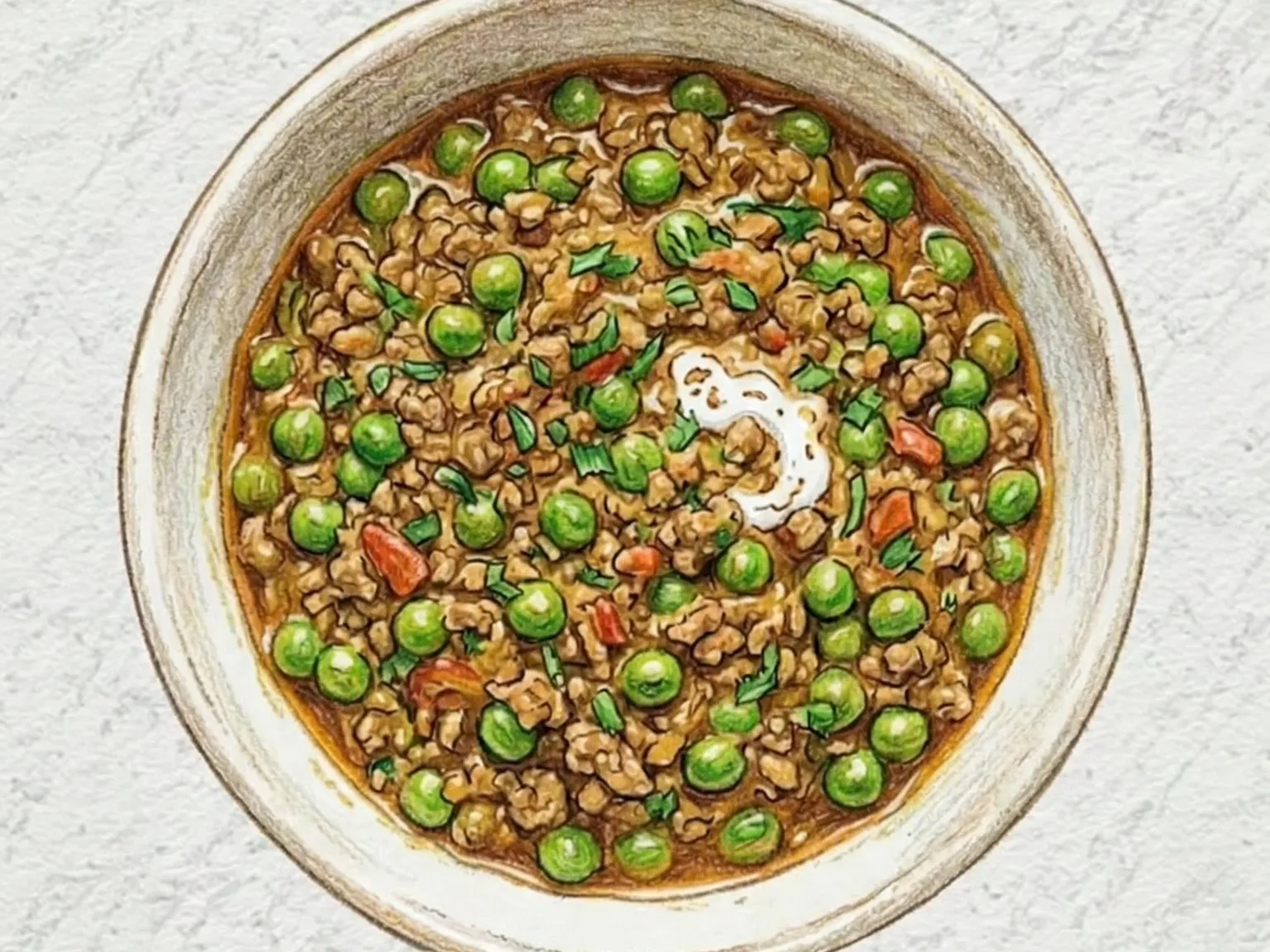
Keema matar is a North Indian curry of seasoned minced meat and green peas cooked down into a thick, almost dry gravy. Onions are fried until deep golden to form the sweet, caramelized base, followed by garlic and ginger that release their sharpness into the oil. Ground lamb or beef is added next and stirred continuously to break up clumps, then layered with turmeric, cumin, garam masala, and chili powder. Diced tomatoes provide acidity and moisture, allowing the spices to meld without burning. Green peas go in near the end, contributing small bursts of sweetness and a pop of color. Because the finished dish is relatively dry, it clings well to flatbreads like naan or chapati and also works as a topping over steamed rice. The entire preparation takes under forty-five minutes with minimal knife work, making it one of the more accessible Indian curries for weeknight cooking.
Adjust Servings
Instructions
- 1
Finely chop onion and cook until golden brown.
- 2
Add garlic and ginger, then cook ground meat while breaking it up.
- 3
Add turmeric, cumin, and garam masala to coat the meat evenly.
- 4
Add chopped tomato and peas, then simmer on medium heat.
- 5
Finish when the mixture thickens and excess moisture evaporates.
As an Amazon Associate, we may earn from qualifying purchases.
Tips
Nutrition (per serving)
More Recipes

Chana Masala (Punjabi Spiced Chickpea Tomato Curry)
Chana masala is a staple of Punjabi home cooking and one of North India's most widely eaten vegetarian dishes, found on the menus of dhabas, railway canteens, and five-star hotel restaurants alike. Dried chickpeas are soaked overnight and pressure-cooked until they hold their shape but yield when pressed - the texture of the chickpea is as important as the gravy. The sauce builds from a base of finely diced onions fried until deeply browned, which provides a natural sweetness and body without any cream. Tomatoes cook down with coriander, cumin, turmeric, garam masala, and amchur (dried mango powder) - the amchur contributing a tart, fruity acidity that is the signature note distinguishing chana masala from other chickpea curries. The gravy should be thick and clinging, not soupy - each chickpea wears a dark, spiced coating. Garnished with sliced raw onion, green chili, and a squeeze of lemon, it is served with bhatura (fried bread) as the iconic Punjabi street-food combination chole bhature, or scooped up with roti for a weeknight dinner that costs almost nothing to make but delivers deep satisfaction.

Rogan Josh (Kashmiri Slow-Braised Lamb Curry with Yogurt)
Rogan josh is a Kashmiri lamb curry whose name translates from Persian as 'heat in oil,' describing the way the fat separates and rises to the surface of the finished sauce. Bone-in lamb pieces are slow-braised with yogurt, fennel seeds, dry ginger powder, and Kashmiri red chilies - a variety that delivers vivid crimson color with moderate heat rather than scorching fire. Some traditional recipes use ratanjot, a tree bark that deepens the red hue without altering the flavor. The yogurt tenderizes the meat over the long cooking and lends a subtle tang to the gravy. When done properly, a layer of aromatic oil floats on top of the thick, rust-red sauce. The spice profile leans warm and fragrant rather than sharp, making rogan josh one of the more approachable Kashmiri dishes.

Pork Vindaloo (Goan Vinegar-Marinated Fiery Pork Curry)
Pork vindaloo is a Goan curry shaped by centuries of Portuguese colonial influence on India's western coast. The name descends from the Portuguese carne de vinha d'alhos - meat marinated in wine and garlic - though the Goan version swaps wine for palm or cane vinegar and adds a punchy chili paste. Pork shoulder is marinated overnight in a blend of vinegar, garlic, ginger, and Kashmiri chilies, then braised slowly until the meat yields to a fork. The sauce reduces into a thick, rust-colored gravy where acidity, heat, and garlic merge into a single bold flavor. Vindaloo is one of the few Indian curries where sourness leads rather than supports, and the dish tastes even better the next day after the flavors have had time to settle.

Baingan Bharta (Punjabi Flame-Roasted Smoky Eggplant Mash)
Baingan bharta traces its roots to Punjab, where eggplants are roasted directly over an open flame until the skin blackens and the flesh collapses into a smoky pulp. That charring is not a shortcut - it is the defining flavor of the dish, lending a campfire depth that no oven can replicate. The mashed pulp is then sauteed with onion, tomato, green chili, and ginger until the mixture thickens and the raw edges of the aromatics mellow out. The final texture is rough and chunky rather than smooth, with pockets of charred eggplant skin adding bitter contrast. It is traditionally scooped up with makki ki roti (cornmeal flatbread) during Punjab's winter months, though plain naan or rice work equally well.

Chicken Tikka Masala
Chicken tikka masala marinates chicken in yogurt, curry powder, garlic, and ginger, then grills or broils it before simmering in a sauce of tomato puree, garam masala, and heavy cream. The yogurt's lactic acid tenderizes the surface of the meat while carrying the spices deeper into the flesh. Sauteing onion in butter, then cooking tomato puree with garam masala for fifteen minutes rounds off the raw edges of the spices and builds the sauce's foundation. Heavy cream folded in at the end wraps the tomato acidity and spice heat in a smooth, rich body that balances the dish. Marinating overnight allows the spices to penetrate fully, producing noticeably more flavor than a short soak.

Butter Chicken
Butter chicken - murgh makhani - marinates chicken thighs in yogurt, garam masala, and cumin, grills or roasts them tandoori-style to build a smoky surface char, then simmers the pieces in a sauce of long-cooked tomato puree enriched with butter and heavy cream. The yogurt marinade tenderizes the meat by breaking down surface proteins, and the high-heat roasting adds a depth of flavor that plain poaching cannot achieve. The tomato base must cook down until its raw acidity mellows into a rounded sweetness before the dairy goes in. Butter and cream transform the spice blend's sharp edges into something velvety and rich, producing the mild, creamy character that sets this curry apart from hotter Indian preparations.