Charim

2686 Korean & World Recipes

2686+ Korean recipes, clean and organized. Ingredients to instructions, all at a glance.

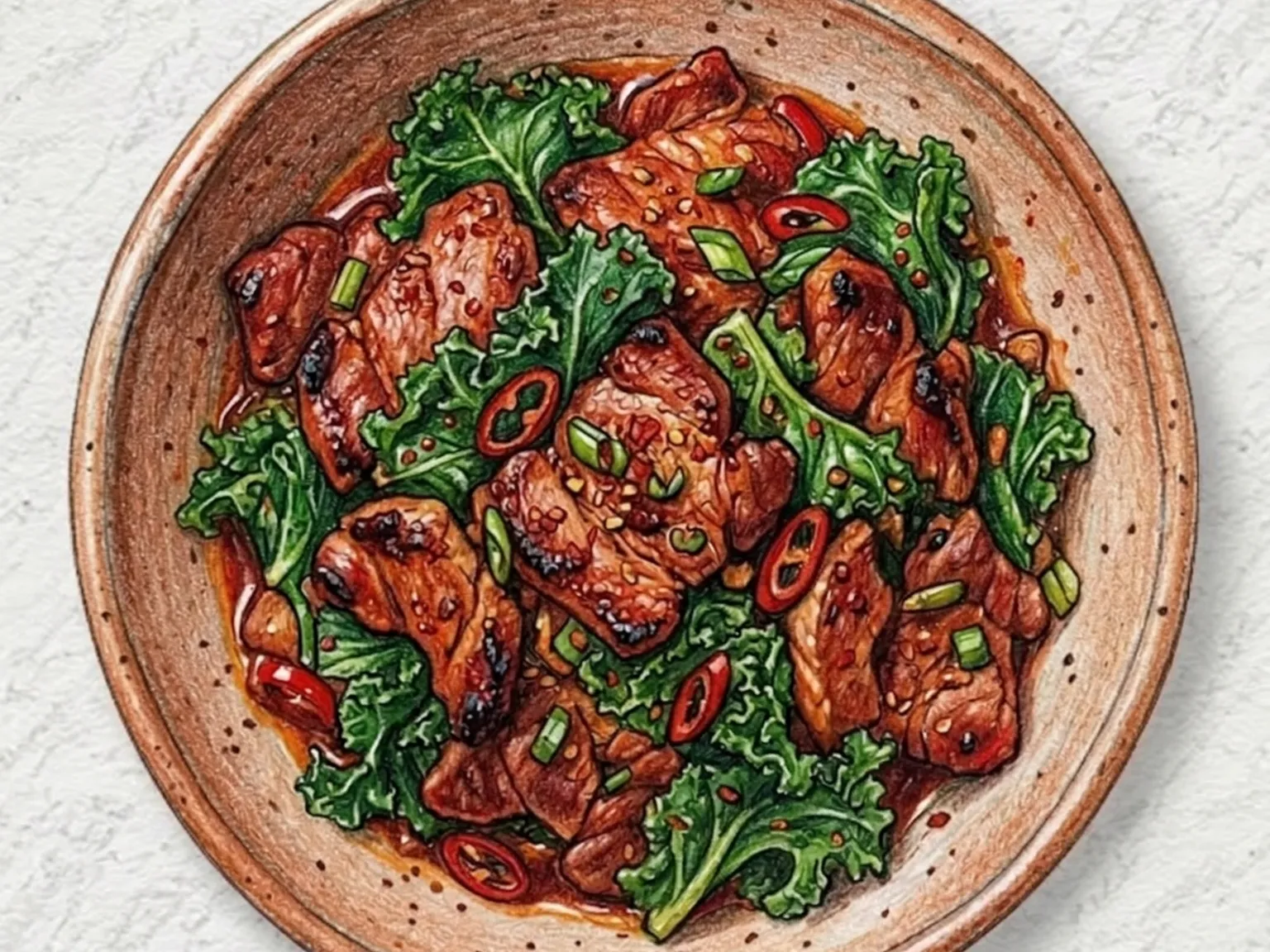
Korean Stir-Fried Kale and Pork with Gochugaru
Stir-fry Medium

Korean Stir-Fried Kale and Pork with Gochugaru

Keil-dwaeji-gochugaru-bokkeum stir-fries marinated pork shoulder with kale in a chili-forward gochugaru and gochujang sauce. The pork marinates to develop deep, spicy savoriness, then sears quickly at high heat for a lightly charred edge. Kale holds up to the heat better than most leafy greens, retaining a pleasant chew that contrasts with the tender pork and cuts through its richness. The dish works well wrapped in lettuce without any extra dipping sauce, or simply piled over a bowl of steamed rice.

Prep 18min Cook 14min 4 servings

Adjust Servings

2servings
servings

Instructions

  1. 1

    Cut pork into bite-size pieces and marinate 10 minutes with gochujang, gochugaru, soy sauce, garlic, and sugar.

  2. 2

    Remove tough kale stems and cut leaves into 4 cm pieces.

  3. 3

    Slice onion thinly and diagonally slice the green onion.

  4. 4

    Heat oil and stir-fry marinated pork over medium-high heat for 5 minutes.

  5. 5

    Add onion and green onion, cooking 2 minutes to build sweetness.

  6. 6

    Add kale and toss quickly for 2-3 minutes until just wilted, then turn off heat.

🛒Shop Ingredients on Amazon

As an Amazon Associate, we may earn from qualifying purchases.

Tips

Add kale near the end since overcooking can make it tough.
For a softer texture, blanch kale in salted water for 30 seconds first.

Nutrition (per serving)

Calories
395
kcal
Protein
29
g
Carbs
11
g
Fat
26
g

More Recipes

Korean Spicy Pork Stir-fry
Stir-fryEasy

Korean Spicy Pork Stir-fry

Jeyuk-bokkeum is a Korean spicy pork stir-fry where sliced pork is marinated in a blend of gochujang, soy sauce, sugar, and garlic, then wok-tossed with vegetables over high heat. The marinade sinks into the meat, combining chili heat with caramelized sweetness, while onions and scallions release moisture that balances the bold seasoning. Quick cooking at high temperature lets the pork develop a lightly charred exterior that adds another layer of flavor. It is commonly served over rice as a donbap or wrapped in lettuce leaves.

🏠 Everyday🍱 Lunchbox
Prep 15minCook 15min2 servings
Korean Stir-Fried Udon with Spicy Chicken
NoodlesMedium

Korean Stir-Fried Udon with Spicy Chicken

Gochujang-marinated chicken, cabbage, sweet potato, and rice cakes are stir-fried together before thick udon noodles join the pan and absorb the spicy-sweet sauce. The dakgalbi seasoning clings to the udon's broad surface, loading every bite with bold, smoky flavor. Cabbage and scallion wilt quickly in the high heat, releasing natural sugars that balance the chili paste's punch, while sweet potato chunks mellow the spice further with their starchy sweetness. Udon noodles, thicker than ramen or somyeon, stand up to the heavy sauce without going limp, delivering a satisfying chew throughout the meal. Melting a layer of cheese over the top just before serving adds a creamy, salty contrast to the heat. A sprinkle of sesame seeds and shredded seaweed finishes the dish. It scales well for groups sharing a large pan or griddle.

🌙 Late Night
Prep 20minCook 18min4 servings
Korean Pork and Asparagus Stir-fry
Stir-fryEasy

Korean Pork and Asparagus Stir-fry

A Korean weeknight stir-fry that pairs pork shoulder or belly with asparagus and red bell pepper in a soy-garlic sauce. The pork is sliced thin and marinated in soy sauce, minced garlic, and a pinch of sugar to coax out caramelization on the hot pan. Cooking the meat first over high heat renders out its fat, which becomes the medium for stir-frying the vegetables. Asparagus goes in next for barely a minute - just enough to turn its raw starchiness into a clean, grassy snap. Bell pepper adds pops of natural sweetness and color contrast. The sauce is restrained: soy, a touch of oyster sauce, and sesame oil, keeping the focus on the interplay between the pork's umami depth and the vegetables' brightness. The entire cook from cold pan to finished plate takes under twelve minutes, making it one of the fastest protein-and-vegetable banchan in the Korean home repertoire.

🏠 Everyday🍱 Lunchbox
Prep 12minCook 10min2 servings
Korean Spicy Gochujang Bulgogi
Stir-fryMedium

Korean Spicy Gochujang Bulgogi

This spicy gochujang pork bulgogi builds its bold flavor from a marinade of gochujang, Korean chili flakes, soy sauce, garlic, and corn syrup applied to thick-cut pork neck. Stir-frying on medium-high heat drives off moisture first, allowing the sauce to caramelize and develop depth rather than turn watery. Onion goes in next, contributing natural sweetness that tempers the chili heat, followed by green onion for a fresh aromatic lift. Scoring thicker slices helps the marinade penetrate more evenly. The generous four-serving yield makes it a practical centerpiece for family dinners.

🏠 Everyday🌙 Late Night
Prep 20minCook 14min4 servings
Korean Stir-Fried Bok Choy and Tofu with Doubanjiang
Stir-fryEasy

Korean Stir-Fried Bok Choy and Tofu with Doubanjiang

Firm tofu is patted completely dry and pan-seared in oil for three minutes until golden on each side, then set aside while green onion and garlic are stir-fried in the same pan to build an aromatic base. Doubanjiang, soy sauce, sugar, and water are combined into a sauce directly in the pan; the fermented chili bean paste brings both salt and heat in high concentration, so the soy sauce should be added sparingly and adjusted only after a final taste. Bok choy stems and leaves are separated and added at different stages: stems first for two minutes of direct heat, leaves last for just one minute, so the stalks remain firm while the greens wilt to a silky texture. One teaspoon of sugar softens the sharp salinity of the doubanjiang, rounding the finish into something warm rather than aggressive. When the seared tofu cubes return to the pan, their crisp exterior absorbs the sauce like a sponge, releasing a burst of spicy, fermented flavor with each bite. At 290 calories and 17 grams of protein, the dish proves that a satisfying protein intake does not require meat.

🏠 Everyday🍱 Lunchbox
Prep 12minCook 10min2 servings
Korean Spicy Stir-Fried Fish Cake
Side dishesEasy

Korean Spicy Stir-Fried Fish Cake

Square fish cake sheets are cut into bite-size pieces and stir-fried in a gochujang-based glaze that balances heat with sweetness. Blanching the fish cake briefly before cooking removes excess oil and opens the surface so the sauce adheres more evenly. Over high heat, the edges of each piece caramelize lightly, adding a subtle smoky note that deepens the overall flavor. The sauce combines gochujang, soy sauce, and oligodang, a Korean corn syrup that gives the glaze its glossy finish and tempers the chili paste's sharpness. Onion slices soften quickly in the pan, releasing moisture that deglazes the base and contributes their own natural sweetness to the sauce. Green onion added at the very end keeps its fresh bite, providing an aromatic counterpoint to the rich coating. Sesame seeds scattered on top round out the dish with a nutty finish. Because the glaze intensifies rather than deteriorates when cooled, this banchan holds up well in packed lunches.

🏠 Everyday🍱 Lunchbox
Prep 8minCook 10min4 servings
More Stir-fry →