Key Lime Pie
Quick answer
Key lime pie pairs the bold acidity of small Florida key limes with the thick sweetness of condensed milk in a chilled, custard-style filling set inside a buttery graham...
What makes this special
- Egg yolk protein sets the Key Lime Pie custard without gelatin, grounded in a pre-baked graham cracker crust.
- Egg yolk protein reacts with lime acid to set the custard without gelatin
- Key lime's floral acidity cuts cleanly through the condensed milk sweetness
Key ingredients
Core cooking flow
- 1 Preheat the oven to 175C and melt 70 g unsalted butter.
- 2 Mix the crumbs with the melted butter until every crumb looks lightly moistened.
- 3 Beat 320 g condensed milk with 4 egg yolks first until smooth and uniform.
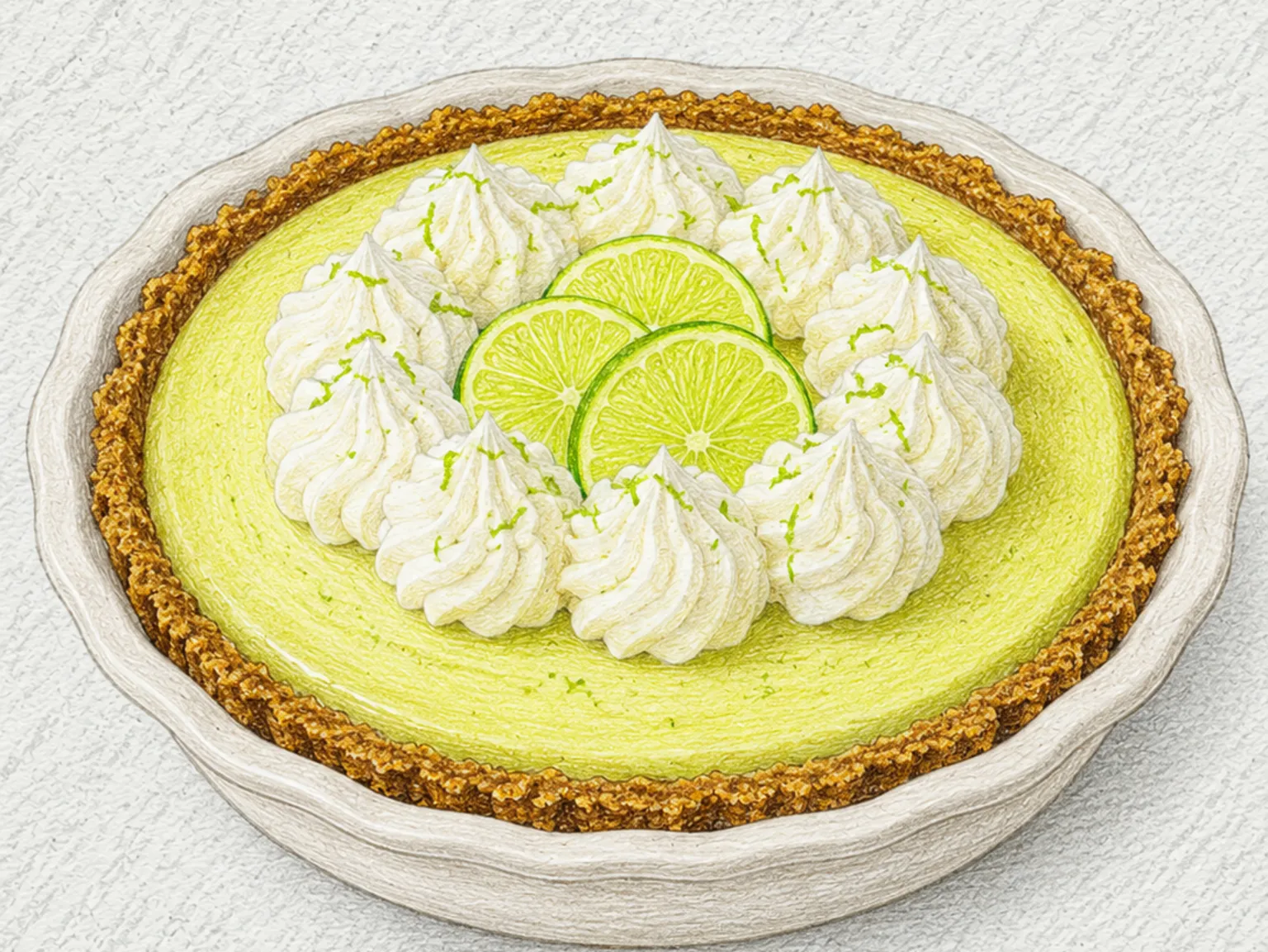
Key lime pie pairs the bold acidity of small Florida key limes with the thick sweetness of condensed milk in a chilled, custard-style filling set inside a buttery graham cracker crust. The crust is made by pressing crushed graham crackers bound with melted butter into a pie dish and pre-baking until firm. The filling requires only key lime juice, sweetened condensed milk, and egg yolks, which react with the citric acid to thicken naturally without gelatin, producing a smooth consistency once chilled. Key limes are smaller and more aromatic than Persian limes, lending a floral sharpness that cuts through the condensed milk's density so that each forkful oscillates between tart and sweet. A mound of whipped cream on top softens the acidity, and a fine grating of lime zest adds color and a burst of fragrant oil. Served cold, it makes a refreshing finish to a warm-weather meal.
Instructions
Read the steps as a cooking flow: prep, heat, seasoning, doneness control, and finish.
- 1Season
Preheat the oven to 175C and melt 70 g unsalted butter.
Crush 180 g graham crackers into fine crumbs, breaking up any large pieces so the crust presses evenly and does not crumble later.
- 2Heat
Mix the crumbs with the melted butter until every crumb looks lightly moistened.
Press firmly across the bottom and sides of the pie dish, bake for 8 minutes, then cool so the filling will not soak in.
- 3Prep
Beat 320 g condensed milk with 4 egg yolks first until smooth and uniform.
Add 120 ml lime juice and 1 tablespoon lime zest, then mix until the filling thickens slightly and looks glossy.
- 4Heat
Pour the filling slowly into the cooled crust and level the surface without scraping loose crumbs.
Bake again at 175C for about 10 minutes, removing it when the edges are just set and the center still trembles slightly.
- 5Control
Let the pie cool completely at room temperature so steam does not collect on top.
Cover loosely and refrigerate for at least 3 hours, or overnight if possible, until the custard slices cleanly.
- 6Prep
Whip 120 ml cold heavy cream until soft peaks form, then spread or spoon it over the chilled pie.
Slice while cold, wiping the knife between cuts so the custard and cream stay neat.
After the steps
Pick a recipe that fits this dish.
Continue with shared ingredients, meal pairings, or a similar method.
Recipes That Go Well With This
More Baking →Based on shared ingredients and meal pairing
Pecan Pie
A buttery pie crust holds a filling of pecans suspended in a dark, syrupy custard made from brown sugar, corn syrup, eggs, and melted butter. The filling bakes into a glossy, caramel-like layer that is sticky and dense beneath a top crust of whole pecans. The brown sugar gives a molasses depth that white sugar cannot match, while the corn syrup provides the characteristic gooey texture. When the pie comes out of the oven, the center should still wobble slightly; it firms as it cools to room temperature. If the top browns too quickly, a loose tent of foil placed halfway through baking protects the nuts from burning. Slicing is cleanest after the pie has cooled completely, and a scoop of vanilla ice cream alongside each piece rounds out the richness.
Classic Apple Pie
Apple pie has been baked in America since the colonial era, though its origins lie in 14th-century English and Dutch recipes where apples were enclosed in pastry as a way to cook fruit without a proper oven. The filling is built from tart baking apples - Granny Smith or Braeburn - tossed with sugar, cinnamon, nutmeg, a squeeze of lemon, and a spoonful of flour or cornstarch to thicken the juices as they cook. The double crust is made from cold butter cut into flour until the dough resembles wet sand, producing flaky, shattering layers when baked. As the pie bakes, the apples soften and release their juice, which the starch captures into a syrupy glaze that holds the filling together when sliced. The top crust turns deep golden and pulls away slightly from the filling, creating a hollow where steam escapes. Served warm with a scoop of vanilla ice cream - a la mode - or a slice of sharp cheddar in the New England tradition, apple pie is as much a cultural symbol as it is a dessert.
Real Pineapple Sherbet
This refreshing fruit dessert is prepared by scooping out the flesh of a mini pineapple and using its hollowed shell as a serving vessel. The fruit pulp is blended until smooth to prevent icy lumps, then mixed with sugar, lemon juice, and oligosaccharide syrup to achieve a sweet and tangy flavor. After pouring the mixture back into the shell and covering it with the top lid, it is frozen for at least four hours. Stirring the mixture occasionally during freezing breaks up ice crystals, resulting in a smoother texture. The active bromelain enzyme present in the fresh fruit provides a subtle tingly sensation on the tongue. Serving the sherbet directly inside the pineapple skin minimizes juice loss and keeps the dessert cold. Letting it stand for five minutes before scraping and topping with fresh apple mint leaves makes it ready to serve.
Classic Lemon Bars
Classic lemon bars layer a bright, tangy lemon curd over a buttery shortbread base, baked together in the same pan and chilled before slicing into clean rectangles. The base is made by pressing a mix of butter, powdered sugar, and flour evenly into the pan and blind-baking it until pale gold and firm enough to hold the filling without crumbling. The curd layer combines eggs, sugar, fresh lemon juice, and zest, which is poured directly over the hot crust and returned to the oven until just set: the edges firm up while the center still trembles gently when the pan is moved. Cutting before the bars are fully chilled causes the curd to run, so refrigeration is essential to achieve the characteristic sharp-edged rectangular slices. Lemon zest releases its citrus oils during baking and intensifies the fragrance well beyond what juice alone provides. A dusting of powdered sugar across the surface creates a white-on-yellow visual contrast and softens the tartness of the first bite. The defining pleasure of the bar is that the crisp, buttery shortbread and the cool, silky curd hit the palate simultaneously in each mouthful.
Serve with this
Buffalo Wings
Buffalo wings coat chicken wings in baking powder and roast them at high heat for forty-five minutes, producing a crisp skin without deep-frying. The baking powder raises the skin's pH to accelerate the Maillard reaction and drives out moisture faster, yielding a crunch that rivals the fryer. Straight from the oven, the wings are tossed in a sauce of melted butter and hot sauce - the butter tempers the vinegar-based heat into something that coats the tongue rather than burning it, and a touch of white vinegar at the end sharpens the finish. Blue cheese dipping sauce and celery sticks served alongside provide a cooling, creamy contrast and a crisp palate cleanser between bites.
Fruit Yogurt Salad
Apple, banana, strawberry, and blueberry are cut into bite-sized pieces and folded into plain yogurt for a fruit salad where the dressing serves as background rather than centerpiece. The yogurt provides gentle acidity that anchors the sweetness of the fruit without overwhelming it. Honey softens the sharper edge of the yogurt, and a squeeze of lemon juice does double duty: it slows the browning of cut apple and banana while leaving a clean citrus note on the finish. Roughly chopped walnuts scattered over the top introduce a crunchy, slightly bitter contrast to the soft fruit and smooth yogurt, breaking the monotony of texture. Swapping in seasonal fruit makes the recipe adaptable year-round without adjusting the base formula - peaches and melon in summer, persimmon and pear in autumn all work within the same yogurt, honey, and lemon framework. Light enough for a morning meal and refreshing enough after a heavy dinner, it sits comfortably in either role.
Citrus Espresso Tonic with Orange
Espresso tonic is a carbonated coffee drink built by slowly pouring espresso over chilled tonic water to form two distinct layers. The tonic must be thoroughly cold to maintain stable carbonation throughout; cooling the espresso for about thirty seconds before pouring it over a spoon produces a clean separation between the two liquids. The quinine bitterness in the tonic water meets the espresso's roast bitterness, creating a balanced interplay rather than one-note sharpness. Orange slices and lemon peel garnish the glass, releasing citrus oils that rise with the bubbles. Specialty espresso with pronounced fruit acidity works particularly well here, harmonizing with the tonic's effervescence and lending natural sweetness without added sugar. Pre-chilling the glass with ice before adding the tonic helps preserve carbonation. The drink gained popularity in Scandinavian coffee culture during the 2010s before spreading worldwide.
Similar recipes
Chess Pie
Chess pie is a custard pie from the American South made from the shortest possible list of pantry ingredients: butter, sugar, eggs, a small amount of flour, and cornmeal. The simplicity of the ingredients does not predict the complexity of what happens in the oven. As the pie bakes, the top surface splits and forms a thin, crackled crust that shatters underfoot of a fork, while beneath it sits a dense, moisture-heavy custard carrying a deep caramel note. Cornmeal introduces a subtle grittiness and the faint sweetness specific to corn, while a splash of vinegar or buttermilk adds just enough acidity to prevent the sugar from going flat. The filling should be pulled from the oven when the edges have set but the center still trembles slightly; it continues to firm as it cools, eventually reaching a texture close to fudge. Served at room temperature, the custard softens into a smooth, yielding consistency. A spoonful of unsweetened whipped cream alongside cuts the richness without dulling the flavor.
Sloppy Joe
Sloppy Joe is an American sandwich where ground beef is browned with diced onion until the moisture cooks off, then simmered in a sweet-savory sauce made from tomato paste, ketchup, Worcestershire sauce, and a small amount of sugar. Browning the beef thoroughly before adding the sauce ingredients is critical - residual moisture dilutes the sauce and prevents the meat from developing flavor. Tomato paste provides concentrated umami, ketchup adds sweetness and body, and Worcestershire contributes a fermented depth that ties the flavors together. The mixture is simmered on low heat for about eight minutes until thick enough that it holds its shape on a spoon rather than running off. Toasting the buns before assembly creates a barrier that slows the inevitable soaking, and pickles served alongside cut through the richness.
Bananas Foster
Bananas Foster is a New Orleans dessert invented in the 1950s at Brennan's Restaurant, built around the simple technique of caramelizing bananas in butter and brown sugar before serving them over vanilla ice cream. The sauce begins by melting butter in a skillet and stirring in brown sugar until the two combine into a thick, bubbling caramel. Halved bananas go in cut-side down and cook just long enough to absorb the syrup while holding their shape. Ground cinnamon folded into the sauce adds a warm spice layer that keeps the sweetness from reading as flat, and a squeeze of lemon juice sharpens the overall profile. Traditional preparation calls for igniting rum poured into the hot pan - the blue flame burns off the alcohol and concentrates the molasses notes in a few dramatic seconds. The step can be skipped at home without meaningfully altering the result. Spooning the hot caramelized bananas over cold ice cream generates immediate steam, and the contrast between molten caramel and frozen cream defines every bite. The entire dish takes roughly ten minutes.