Khua Kling (Southern Thai Dry-Fried Spiced Minced Pork Curry)
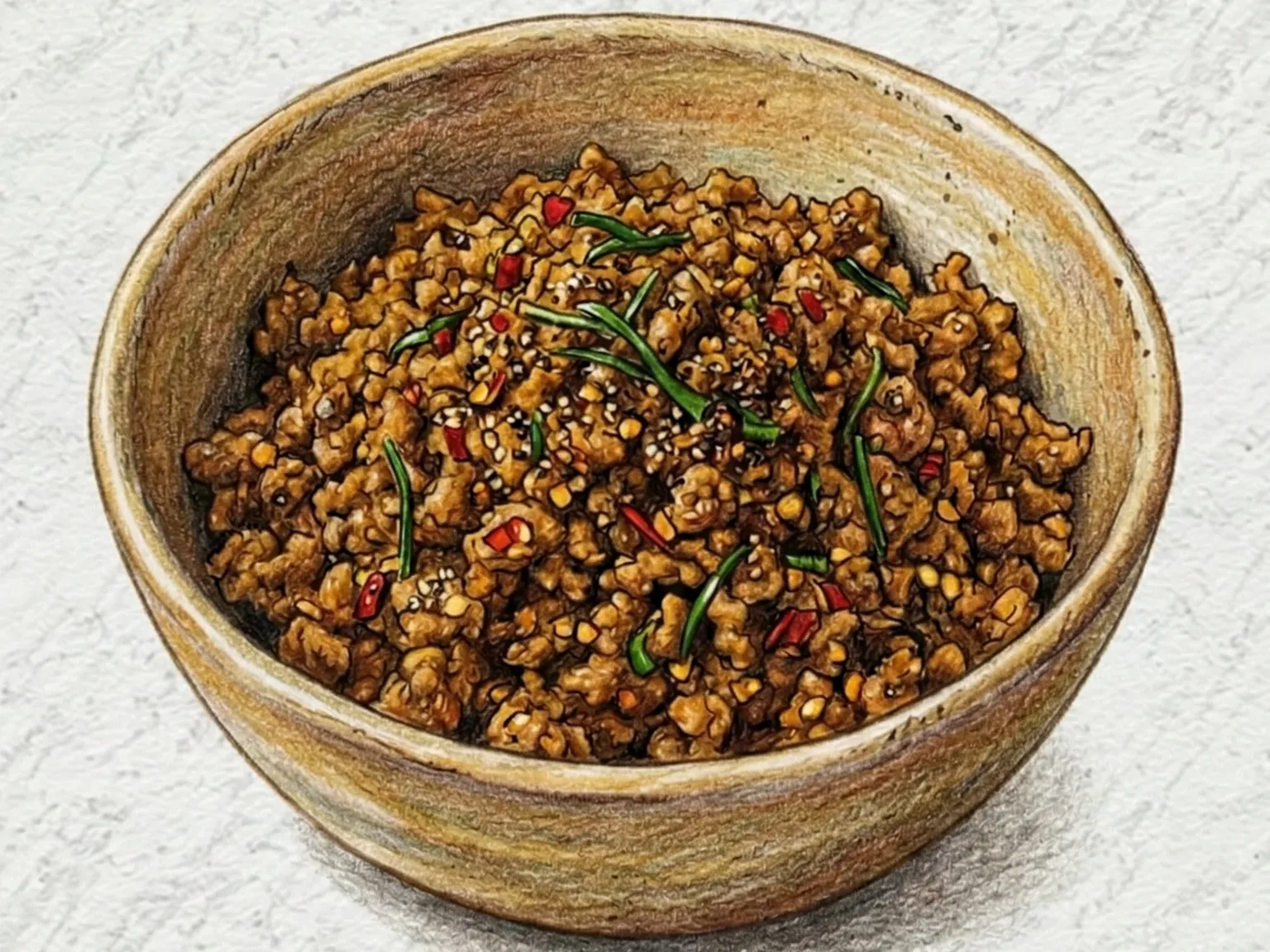
Khua kling is a dry-fried curry from southern Thailand, where minced meat is stir-fried with an intense curry paste until no liquid remains. The red curry paste hits the hot oil first, frying until its raw edge disappears and the kitchen fills with its aroma. Ground pork is added and cooked vigorously, the constant stirring driving off all moisture until the meat is dry and coated in a concentrated layer of spice. Fish sauce provides salt, a small amount of sugar tempers the heat, and finely shredded kaffir lime leaves release a citrus fragrance that weaves through the chili burn. Extra sliced red chilies are standard in the southern tradition, pushing the heat well beyond what most central Thai dishes offer. The finished dish has a crumbly, almost granular texture with no sauce at all, designed to be eaten in small portions alongside plain steamed rice. A single spoonful delivers enough flavor to carry several bites of rice.
Adjust Servings
Instructions
- 1
Thinly slice lime leaves and chop the chili.
- 2
Heat oil and fry curry paste on low until fragrant.
- 3
Add ground pork and stir-fry, breaking up lumps.
- 4
Season with fish sauce and sugar, cooking until mostly dry.
- 5
Add lime leaves and chili, then stir-fry 1 more minute.
- 6
Serve immediately with rice.
As an Amazon Associate, we may earn from qualifying purchases.
Tips
Nutrition (per serving)
More Recipes

Panang Curry (Thai Thick Peanut Coconut Curry)
Panang curry is the thickest and richest member of the Thai curry family, distinguished by its concentrated coconut base and the addition of ground peanuts. The cooking begins by splitting coconut cream in a hot pan until the fat separates, then frying the curry paste in that fat to bloom its aromatics. The remaining coconut milk is added gradually and simmered until the sauce reduces to a spoonable consistency. Peanut butter or finely ground roasted peanuts give it a subtle nuttiness that sets it apart from green or red curries. Fish sauce provides depth, palm sugar brings sweetness, and torn kaffir lime leaves contribute a bright citrus fragrance.

Drunken Noodles
Pad kee mao - drunken noodles - is a Thai stir-fried noodle dish whose name sparks competing origin stories: some say it was designed as drinking food, others that the chili heat itself is intoxicating. Wide sen lek rice noodles hit a smoking-hot wok with holy basil, fresh chilies, and garlic, and the key is letting the noodles char slightly where they press against the wok surface, developing a smoky sear that defines the dish. Thai holy basil (krapao) differs sharply from Italian basil - it carries a peppery, almost clove-like bite and a faint heat that blooms instantly when it meets the wok's flame. A dark sauce of oyster sauce, soy sauce, fish sauce, and sugar stains the noodles nearly black, layering salt, sweetness, and umami in every strand. In Thailand, the dish is typically made with seafood or pork and crowned with a crispy fried egg whose runny yolk is broken and mixed through the noodles at the table.

Thai Red Duck Curry (Thai Coconut Milk Red Curry with Crispy Duck)
Thai red duck curry marries the deep, fatty richness of duck breast with the pungent heat of red curry paste, all smoothed by coconut milk into a velvety, rust-colored sauce. The duck is cooked skin-side down first without any added oil, rendering its fat and crisping the skin before being sliced into bite-sized pieces. The curry paste is fried in a separate pot until fragrant, then coconut milk is added gradually and seasoned with fish sauce and palm sugar to achieve a balance of salty, sweet, and spicy. Bamboo shoots and red bell pepper are simmered in the sauce, the shoots providing a snappy crunch and the pepper a mild sweetness that complements the duck. Thai basil is stirred in at the very end, wilting just enough to release its distinctive aroma without losing its color. The finished curry is substantial and aromatic, with each serving delivering layers of flavor from the rendered duck fat, the fermented chili paste, and the coconut base.

Massaman Curry (Thai-Muslim Mild Chicken Potato Peanut Coconut Curry)
Massaman curry stands apart from other Thai curries with its mild, sweet-savory character and its roots in the Muslim communities of southern Thailand. The dish draws from Persian and Indian spice traditions - cinnamon sticks, cardamom pods, cloves, and star anise simmer alongside the coconut milk base, lending an aromatic warmth that has little to do with chili heat. Chicken thighs, whole shallots, potatoes, and roasted peanuts braise slowly until the potatoes begin to break down and thicken the sauce. Tamarind paste and palm sugar balance the richness with a gentle tang and sweetness. It is one of the most approachable Thai curries for those unaccustomed to spice, yet its layered aromatics make it anything but plain.

Thai Drunken Noodles
Pad kee mao, or drunken noodles, is a Thai stir-fried noodle dish where wide rice noodles are wok-tossed with chicken, garlic, fresh chili, and Thai basil over very high heat. The noodles are soaked briefly in lukewarm water until pliable but not soft. Garlic and chili go into the smoking-hot wok first to release their aroma, followed by sliced chicken thigh. Onion and bell pepper are added next and stir-fried quickly to keep them crisp. Fish sauce delivers briny umami while dark soy sauce darkens the noodles and adds a subtle sweetness. Thai basil is folded in only after the heat is turned off, so its anise-like fragrance stays intact rather than cooking away. Maintaining intense wok heat throughout is critical - too low and the noodles steam instead of sear.

Korean Spicy Pork Duruchigi
Duruchigi is a Korean spicy pork stir-fry made by flash-cooking sliced pork shoulder with onions and scallions in a gochujang-based sauce over high heat. The intense heat sears the meat, imparting a smoky wok flavor that elevates the dish beyond its simple ingredients. Gochujang provides fermented chili heat while sugar balances with sweetness, and scallions add a sharp, fresh finish. It is one of the most popular everyday pork dishes in Korean restaurants and home kitchens alike.