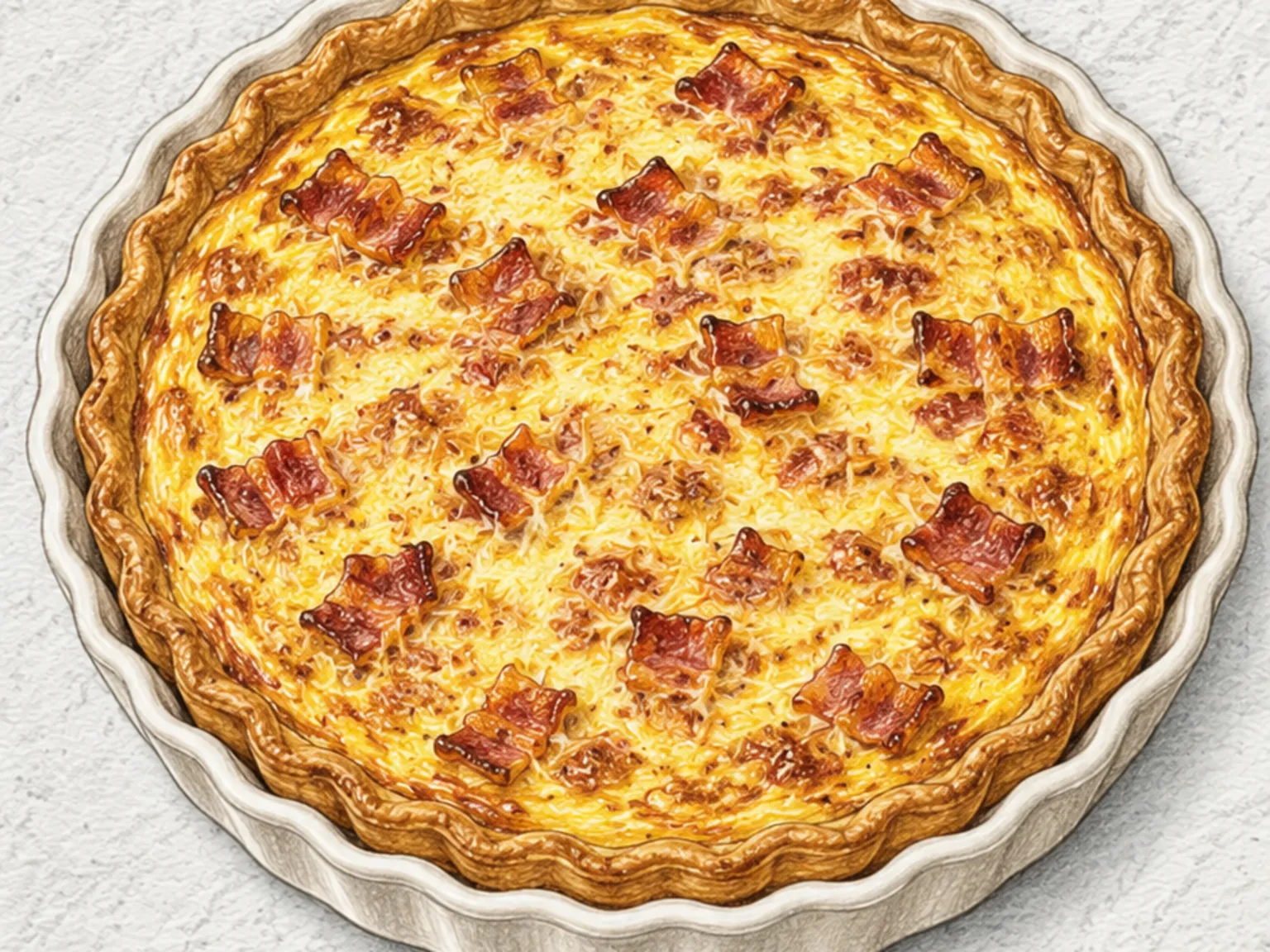
Kimchi Bacon Quiche (Fermented Kimchi Egg Custard Pie)
This fusion quiche traps the sharp tang of well-fermented kimchi and the smoky depth of bacon inside a silky egg custard. Squeezing the kimchi dry before adding it concentrates its fermented intensity while preventing a soggy filling. Bacon and onion are sauteed until their moisture evaporates, then combined with a custard of eggs, heavy cream, and milk. When sliced, each wedge reveals a mosaic of red kimchi shreds and bacon bits suspended in the golden custard. Melted mozzarella weaves through the filling, binding every layer, while the buttery pie crust provides a crisp, flaky foundation. A two-stage bake, starting at 190 degrees Celsius and dropping to 175, browns the surface while keeping the interior creamy rather than rubbery. Black pepper is the only seasoning needed, since the bacon and kimchi supply all the salt and heat. Served warm from the oven, a single slice makes a complete brunch plate.
Adjust Servings
Instructions
- 1
Preheat the oven to 190C, fit the crust into a tart pan, and dock the base with a fork.
- 2
Squeeze and chop kimchi, then saute bacon and onion until lightly browned and moisture is reduced.
- 3
Whisk eggs, cream, milk, and pepper in a bowl to make the quiche custard.
- 4
Spread the kimchi-bacon mixture over the crust, add cheese, then pour in the custard.
- 5
Bake at 190C for 15 minutes, then at 175C for 20-25 minutes until the center is just set.
- 6
Rest for 10 minutes before slicing for clean, stable pieces.
As an Amazon Associate, we may earn from qualifying purchases.
Tips
Nutrition (per serving)
More Recipes

Kimchi Cheddar Savory Scone
Cold butter rubbed into flour creates the flaky, crumbly layers of a classic scone, but here the dough takes a savory turn with the addition of squeezed kimchi and sharp cheddar cheese. As the butter melts in the oven, it releases steam that puffs the layers apart, and between those layers the kimchi's spicy acidity and the cheddar's salty richness emerge in alternating waves. Removing moisture from the kimchi before mixing is critical; wet kimchi produces a dense, heavy dough instead of the light texture that defines a good scone. Overworking the dough develops gluten and sacrifices that crumbly snap, so the ingredients are combined just until they hold together. A brief bake at 200 degrees Celsius sets the crust golden while the interior stays tender. Eaten warm with a pat of butter, the scone delivers a pronounced sweet-salty-tangy interplay that works as well at breakfast as it does alongside a bowl of soup.

Hobak-bokkeum Savory Galette (Korean Zucchini Galette)
This savory galette fills a free-form butter pastry shell with Korean-style stir-fried zucchini, bridging French rustic baking and Korean home cooking. The dough is a simple mixture of flour and cold butter rubbed together until shaggy, then folded loosely around the filling with no need for a precise edge. The zucchini is sauteed in sesame oil until it softens and releases its moisture, concentrating its natural sweetness. Spread across the dough and baked, the filling melds with the buttery, flaky crust in a combination that is both earthy and rich. Seasoning is kept minimal, with just garlic and salt, so the zucchini flavor stays at the forefront. A sprinkle of sesame seeds before baking adds a Korean accent. Served for brunch alongside a fried egg, the galette becomes a full meal, and it pairs just as well with a glass of wine as an appetizer.

Kimchi Tofu Alfredo Farfalle (Creamy Kimchi Bow-Tie Pasta)
Kimchi tofu Alfredo farfalle offsets a rich cream-and-Parmesan Alfredo sauce with the lactic tang of well-fermented kimchi. Garlic is bloomed in butter before cream, milk, and Parmigiano are combined into the classic Alfredo base, then chopped kimchi is stirred in to inject acidity and fermented complexity. Firm tofu, cut into cubes and pan-fried until golden on each side, adds a mild protein element with textural contrast against the smooth sauce. Farfalle's pinched center traps pockets of sauce, and black pepper provides a sharp finish. The entire dish takes about 15 minutes from pot to plate.

Black Sesame Miso Cornbread
This fusion cornbread weaves roasted black sesame and doenjang into a classic American quick bread. Folding ground heukimja into the cornmeal batter tints it a striking grey and contributes a deep, toasted-nut richness that ordinary cornbread lacks. A small measure of doenjang dissolved into the wet ingredients spreads a subtle fermented savoriness throughout, adding complexity without making the bread taste overtly like soybean paste. The coarse cornmeal preserves a grainy chew, while butter and buttermilk keep the crumb moist. Doenjang's salt tempers the sugar, landing the flavor in an ambiguous zone between sweet and savory that invites another bite. A drizzle of honey or a pat of butter on a warm slice amplifies the nuttiness. The bread pairs well with soups, stews, and even Korean jjigae, serving as an unexpected but harmonious side.

Korean Kimchi Bulgogi Udon
Kimchi bulgogi udon is a Korean stir-fried noodle dish that combines fermented kimchi's sharp tang with thinly sliced beef marinated in a sweet soy-based bulgogi seasoning. The beef is seared quickly over high heat, then onion and kimchi join the pan and cook until their moisture evaporates, concentrating flavor. A sauce of soy sauce, gochujang, and sugar goes in next, followed by briefly blanched udon noodles that get tossed on high heat for one to two minutes until every strand is coated. The thick, round udon holds the bold sauce well, and a final burst of heat gives the dish a hint of smoky wok char. If the kimchi runs very sour, an extra half-teaspoon of sugar brings the flavor back into balance.

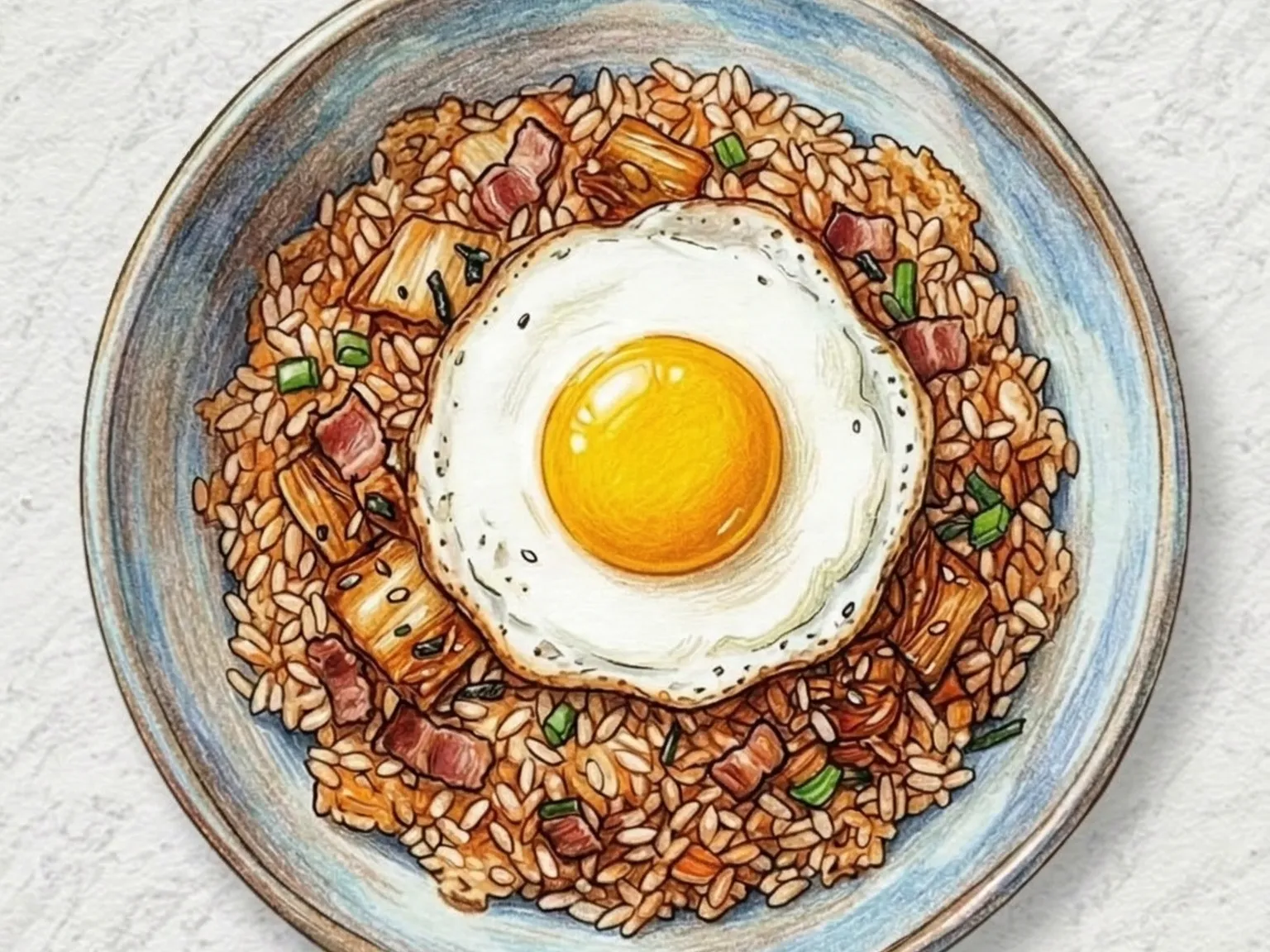
Korean Bacon Kimchi Fried Rice
Bacon kimchi fried rice takes the most common Korean leftover combination - cold rice and aging kimchi - and adds rendered bacon fat as a Western-inflected upgrade to the traditional sesame oil base. The bacon goes into a cold pan, cooking slowly so the fat renders out completely before the meat crisps, creating a pool of smoky drippings that replace cooking oil entirely. Well-fermented kimchi, squeezed of excess juice and chopped coarsely, hits the hot fat and sizzles until its edges caramelize and the sharp lactic tang mellows into a deeper, roasted sourness. Day-old rice is pressed flat against the pan to develop a crust - the nurungji-like layer that fried rice fanatics chase. Soy sauce and a pinch of sugar season without overwhelming the interplay between the bacon's smokiness and the kimchi's fermented bite. A fried egg on top, its yolk still runny, becomes the sauce when broken and mixed through. This dish became a staple of Korean home cooking in the 2000s as bacon became a standard Korean grocery item.