Charim

2686 Korean & World Recipes

2686+ Korean recipes, clean and organized. Ingredients to instructions, all at a glance.

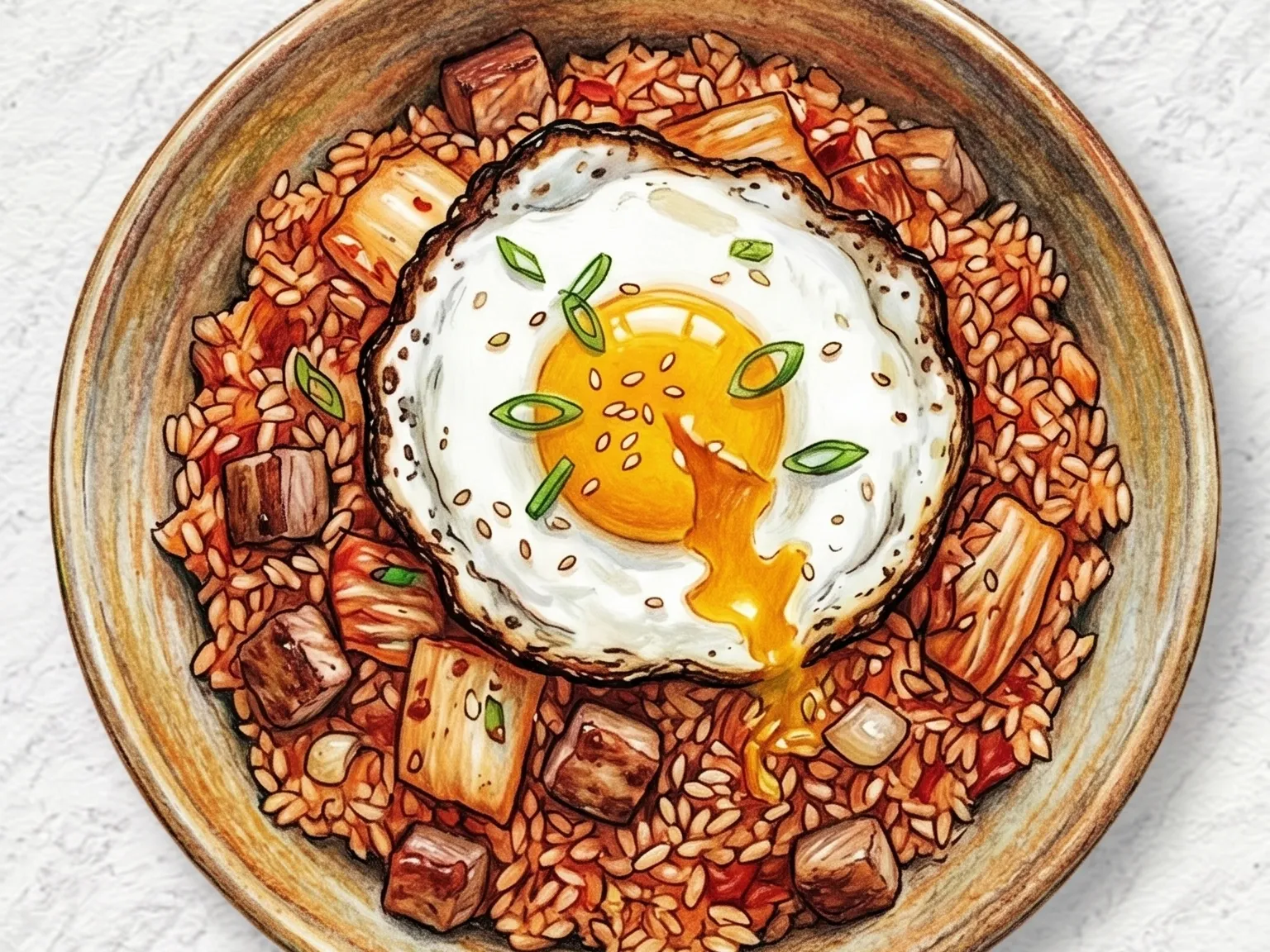
Korean Bunsik Kimchi Bokkeumbap (Kimchi Fried Rice)

Korean Bunsik Kimchi Bokkeumbap (Kimchi Fried Rice)

Bunsik-style kimchi fried rice starts by making scallion oil from green onions, then stir-frying well-fermented kimchi to drive off moisture before seasoning with gochujang and soy sauce and tossing in day-old rice. The scallion oil lays a nutty base across the rice, and the aged kimchi's sharp acidity layers with the gochujang's heat to build depth. Cold leftover rice fries without turning mushy, keeping individual grains distinct, and the dish is topped with seaweed flakes and a runny fried egg. A small amount of sugar can be added if the kimchi's sourness is overpowering.

Prep 10min Cook 15min 2 servings

Adjust Servings

2servings
servings

Instructions

  1. 1

    Finely chop kimchi and slice green onion thinly.

  2. 2

    Heat oil, sauté green onion to make scallion oil, then stir-fry kimchi for 2 minutes.

  3. 3

    Add gochujang, soy sauce, and sugar, cooking until the seasoning is fragrant.

  4. 4

    Add rice and stir while pressing lightly so seasoning coats all grains evenly.

  5. 5

    Fry eggs sunny-side up to soft yolk and place on top of the rice.

  6. 6

    Finish with seaweed flakes and serve hot immediately.

🛒Shop Ingredients on Amazon

As an Amazon Associate, we may earn from qualifying purchases.

Tips

Cold rice works best because it fries up drier and fluffier.
If kimchi is very sour, add an extra 0.5 tsp sugar.

Nutrition (per serving)

Calories
560
kcal
Protein
16
g
Carbs
82
g
Fat
18
g

More Recipes

Korean Kimchi Fried Rice (Kimchi Bokkeumbap)
RiceEasy

Korean Kimchi Fried Rice (Kimchi Bokkeumbap)

Finely chopped aged kimchi is stir-fried with ground pork, and the fermentation tang meets rendered pork fat to build a deep, layered umami. Kimchi juice goes into the pan along with gochujang and a touch of sugar, coating the rice in a spicy-sweet glaze. High heat is critical - quick tossing keeps each grain separate and slightly crisp rather than mushy. A soft-fried egg on top lets the runny yolk temper the heat, and using well-fermented kimchi dramatically deepens the flavor profile. Variations with spam or canned tuna are equally popular across Korean home kitchens.

🏠 Everyday🍱 Lunchbox
Prep 10minCook 10min2 servings
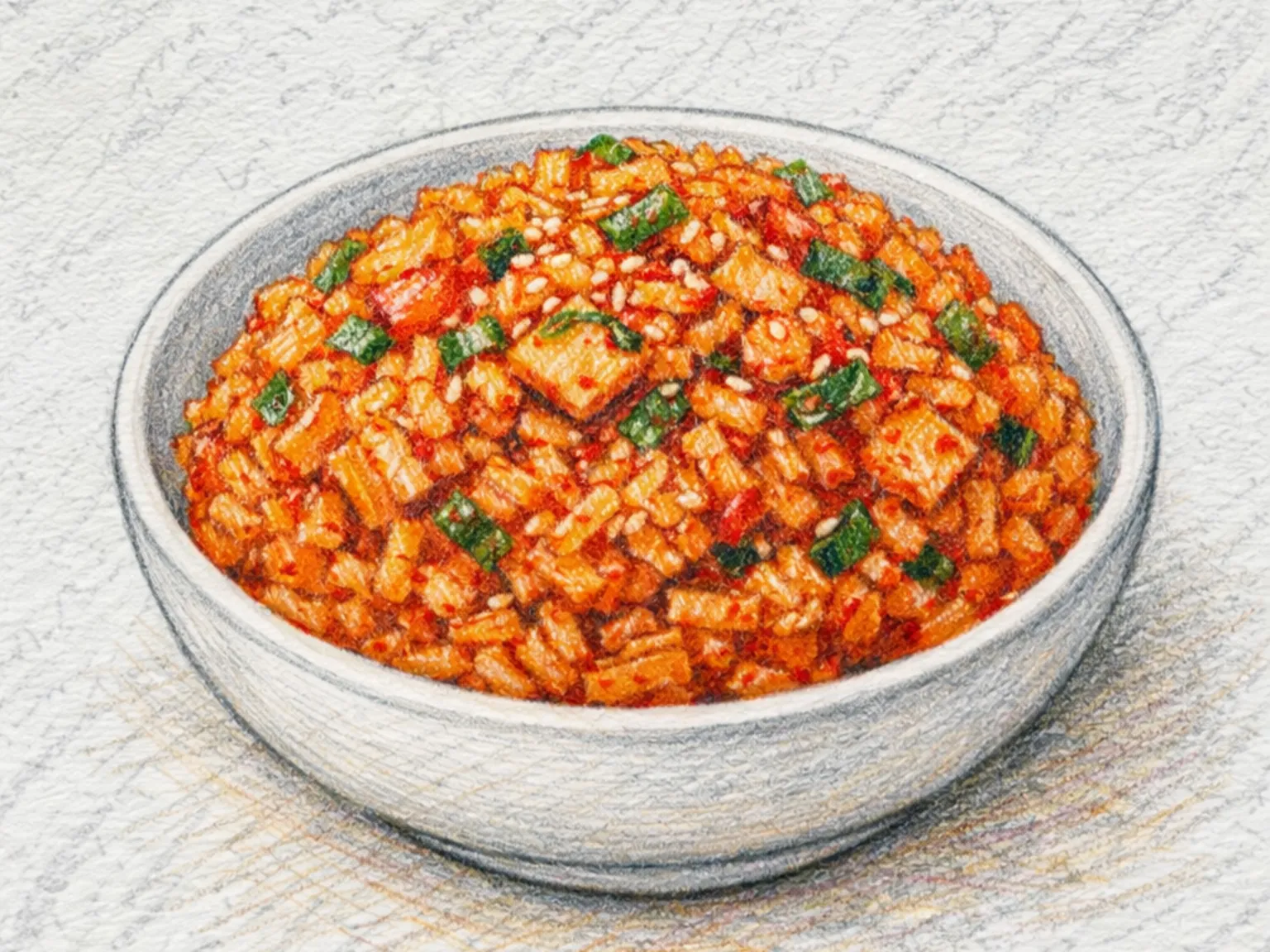
Korean Spicy Rice Cakes (Gochujang Braised Chewy Tteok with Fish Cake)
Street foodEasy

Korean Spicy Rice Cakes (Gochujang Braised Chewy Tteok with Fish Cake)

Tteokbokki is Korea's signature street-food dish, made by simmering cylindrical rice cakes and flat fish cake in a sauce of gochujang, gochugaru, sugar, and soy sauce. As the broth reduces, starch from the rice cakes thickens the liquid into a glossy, clinging glaze that coats every piece. The fish cake absorbs the surrounding spice while contributing its own subtle seafood depth to the pot. A scattering of green onion added at the last moment introduces a bright, herbal note that cuts through the sweet heat.

🍺 Bar Snacks🧒 Kid-Friendly
Prep 5minCook 20min2 servings
Korean Tuna Kimchi Gimbap
Street foodEasy

Korean Tuna Kimchi Gimbap

Tuna-kimchi gimbap rolls together drained canned tuna, stir-fried kimchi, and mayonnaise inside seasoned rice and roasted seaweed sheets. Stir-frying the kimchi for two minutes drives off excess liquid and concentrates its fermented tang into a deeper, more savory flavor. Perilla leaves layered directly on the rice add an herbal, slightly minty fragrance that offsets the richness of the tuna-mayo filling. A light brush of sesame oil on the finished roll preserves the seaweed's crispness while adding a final nutty aroma to every slice.

🍱 Lunchbox
Prep 20minCook 10min2 servings
Korean Kimchi Cheese Gimbap
Street foodEasy

Korean Kimchi Cheese Gimbap

Kimchi cheese gimbap rolls seasoned rice, stir-fried kimchi, mozzarella cheese, and pickled radish in seaweed sheets. Stir-frying the kimchi concentrates its tangy flavor and removes excess moisture that would otherwise make the roll soggy and prone to tearing. The cheese's mild fat wraps around the kimchi's spice, and the pickled radish adds a sweet-tart crunch that breaks up the richness. Keeping the cheese in a single line along the center is key to rolling the gimbap tightly without splitting.

🧒 Kid-Friendly
Prep 20minCook 10min2 servings
Korean Spicy Pork Rice Cup
Street foodEasy

Korean Spicy Pork Rice Cup

Jeyuk cupbap is a Korean street-style rice cup topped with pork shoulder stir-fried in a sauce of gochujang, soy sauce, sugar, and garlic, along with onion and cabbage. The gochujang-sugar combination creates a spicy-sweet glaze on the pork, which picks up smoky notes from high-heat cooking. Cabbage is added late to keep its crunch, and the onion's natural sweetness offsets the chili heat. Slightly cooled rice is used in the cup to prevent the dish from turning soggy.

🧒 Kid-Friendly🌙 Late Night
Prep 18minCook 14min2 servings
Korean Pork Belly Kimchi Fried Rice
RiceEasy

Korean Pork Belly Kimchi Fried Rice

Pork belly is diced small and rendered in a hot pan until golden, producing enough fat to cook the entire dish without additional oil. Aged kimchi and onion go into that rendered fat, where the kimchi's sharp tang softens into the pork's richness. Gochujang and soy sauce season the rice as it joins the pan, and aggressive high-heat stir-frying keeps each grain distinct rather than clumpy. Day-old cold rice works best because its lower moisture content yields a drier, crispier result, and a fried egg on top provides a creamy counterpoint when the yolk breaks.

🏠 Everyday🍱 Lunchbox
Prep 15minCook 12min2 servings
More Street food →