Korean Kimchi Bulgogi (Kimchi Stir-Fried Marinated Beef)
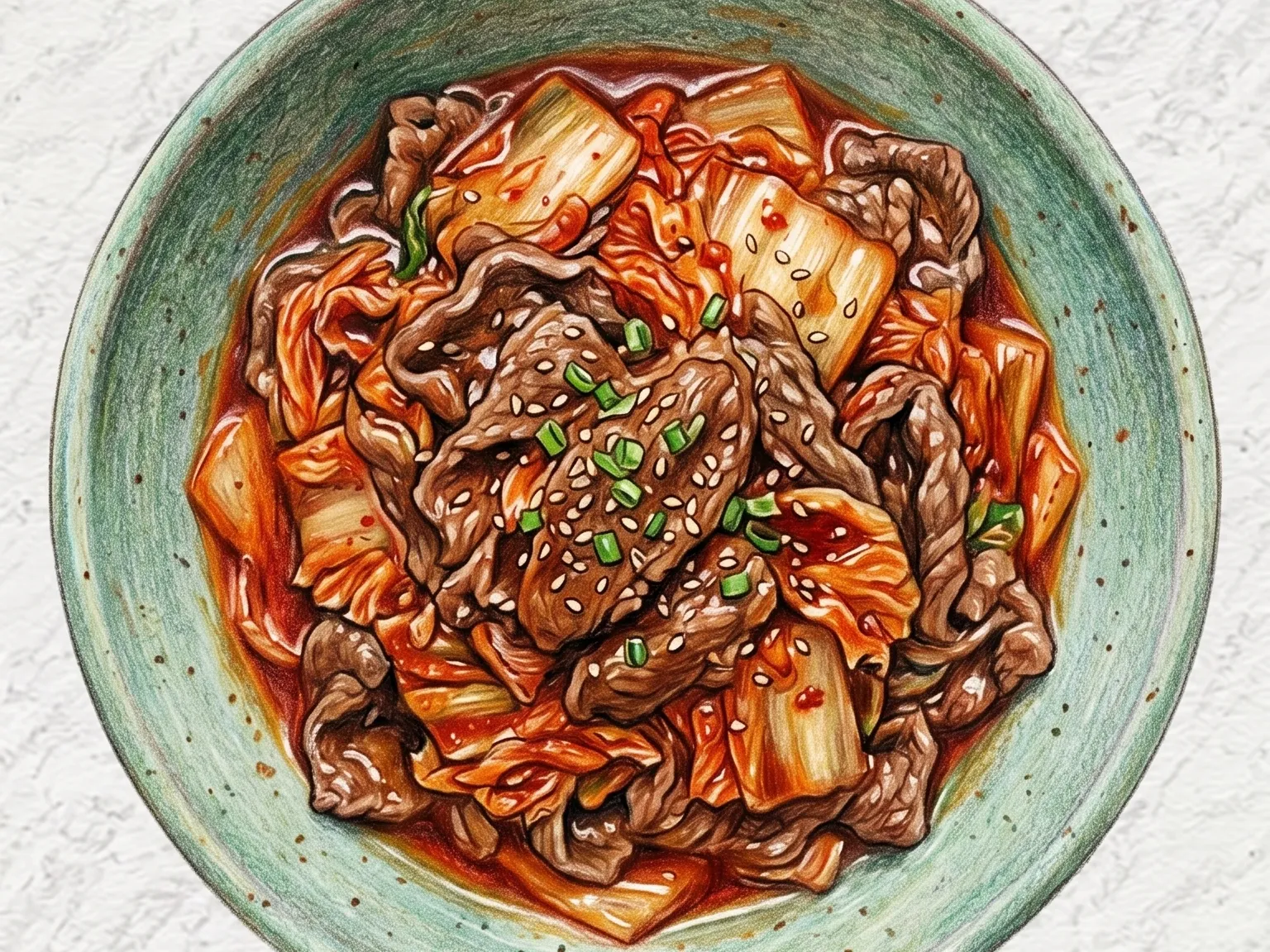
Kimchi bulgogi combines soy-and-pear-marinated beef slices with aged napa kimchi, stir-fried together over high heat. The pear juice tenderizes the meat and adds a subtle sweetness that the kimchi's sharp acidity and salt cut through, creating a layered seasoning. As the two cook together, kimchi liquid seeps into the beef and builds a more complex umami than standard bulgogi alone. A finishing drizzle of sesame oil rounds out the dish, which pairs best with plain steamed rice to absorb the pan juices.
Adjust Servings
Instructions
- 1
Mix soy sauce, sugar, pear juice, and garlic; marinate beef for 20 minutes.
- 2
Heat oil and stir-fry marinated beef.
- 3
Add kimchi and stir-fry together.
- 4
Finish with sesame oil.
As an Amazon Associate, we may earn from qualifying purchases.
Tips
Nutrition (per serving)
More Recipes

Korean Beef Brisket Kimchi Stir-Fry
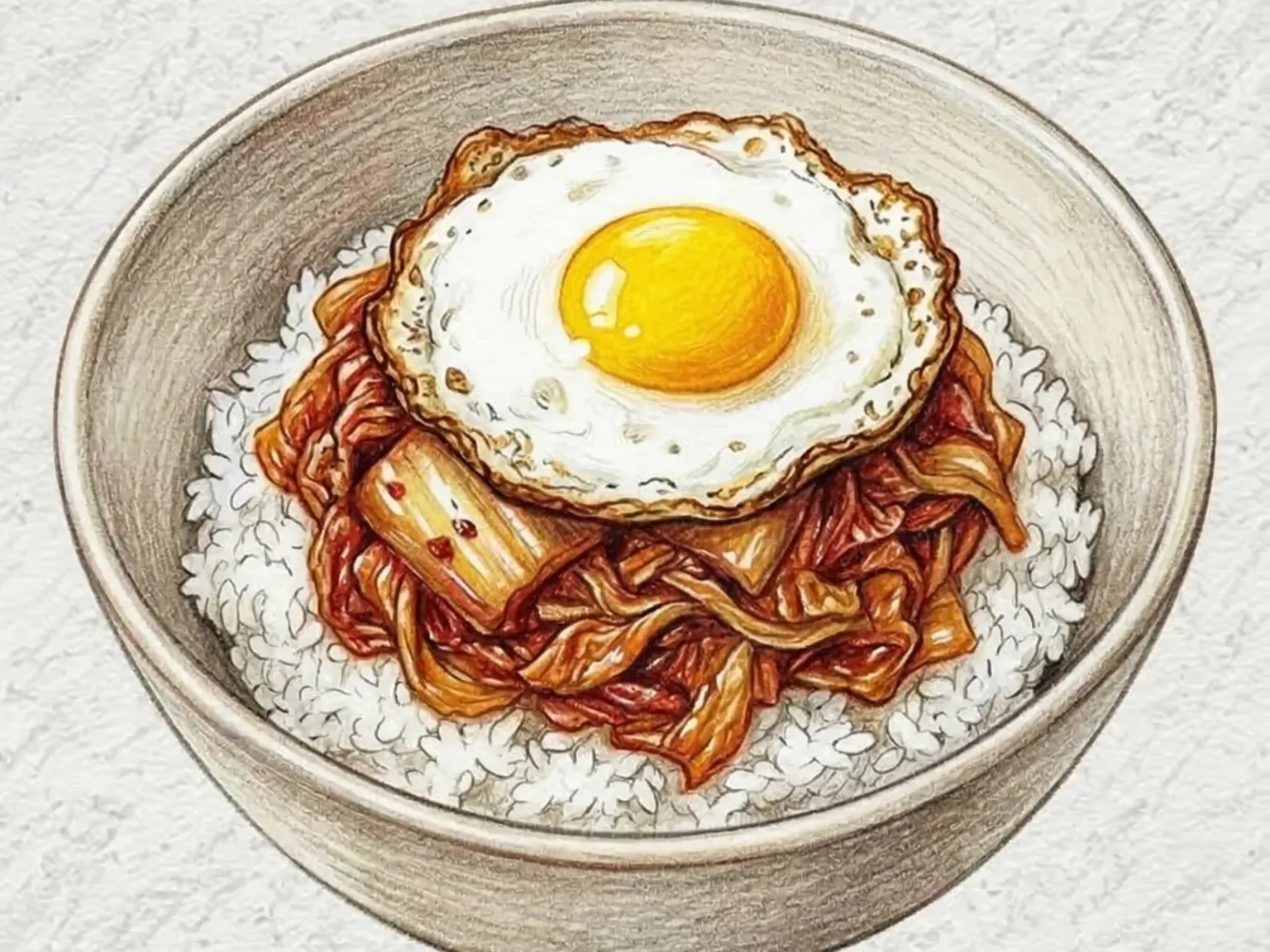
Paper-thin slices of beef brisket are laid in a dry pan and cooked until their marbled fat renders out completely, then squeezed aged kimchi is stir-fried in that rendered beef fat without a single drop of added oil. The beef tallow replaces cooking oil entirely, coating the kimchi in a rich, beefy fragrance that vegetable oil cannot replicate. Aged kimchi carries a pronounced sourness from deep fermentation, and half a teaspoon of sugar is enough to round off that acidity and bring the sweet-salty balance into focus. High heat and a short cook time keep the kimchi from going mushy; low and slow turns the entire pan into a soft, porridge-like mass where individual textures disappear. Half a tablespoon of sesame oil swirled in after the flame is off lifts the aroma, and finely sliced green onion scattered on top adds a clean, fresh counterpoint to the heavy richness underneath. Five ingredients and under fifteen minutes of cooking produce a dish that can carry an entire bowl of rice.

Korean Gangwon-Style Soy Bulgogi
Gangwon-style soy bulgogi marinates thin-sliced beef in a blend of soy sauce, pear juice, sugar, and garlic before stir-frying over high heat. The pear juice tenderizes the meat while lending a gentle fruit sweetness that balances the salty soy base. Shiitake mushrooms and onion cook alongside the beef, absorbing the marinade and building layers of umami. A final toss of diagonally sliced green onion adds a bright, fresh note. This regional take on bulgogi is lighter and cleaner in flavor compared to many other versions.

Korean Spicy Beef Stir-Fry
Sogogi gochujang-bokkeum marinates thin-sliced beef in a paste of gochujang, soy sauce, sugar, and minced garlic, then stir-fries it over high heat. The chili paste's spiciness and the sugar caramelize together on the meat's surface, building a dark, sticky glaze with layered heat. Onion cooked alongside the beef releases moisture that helps the seasoning distribute evenly across every slice. A finish of sesame oil adds a roasted nuttiness on top of the bold, spicy-sweet profile -- intensely flavored enough that a small portion carries a full bowl of rice.

Korean Pork and Kimchi Stir-Fry
Dwaejigogi-kimchi-bokkeum is a Korean stir-fry of pork and well-aged napa cabbage kimchi, one of the country's most common home-cooked dishes. The deep acidity of fermented kimchi meets the richness of pork fat, intensifying in flavor the longer they cook together. A touch of Korean chili flakes is added to deepen the color and build an extra layer of heat. It requires no special technique and is a staple side dish found in nearly every Korean set-meal restaurant.

Korean Kimchi Glass Noodle Stir-Fry
Kimchi japchae is a variation on the classic Korean glass noodle stir-fry, distinguished by the addition of well-fermented aged kimchi. Glass noodles are boiled, rinsed in cold water, and pre-seasoned with soy sauce. Julienned pork shoulder is stir-fried first, then the kimchi - squeezed dry to remove excess liquid - goes in with sliced onion and cooks until the flavors concentrate. The noodles are tossed in with a bit more soy sauce and sugar, and sesame oil is added off-heat to preserve its aroma. The result is a tangy, spicy twist on japchae where the kimchi's funky acidity permeates each slippery strand of sweet potato noodle, giving the dish a punch that the traditional vegetable-only version lacks.

Kimchi Soegogi-guk (Fermented Kimchi Beef Soup)
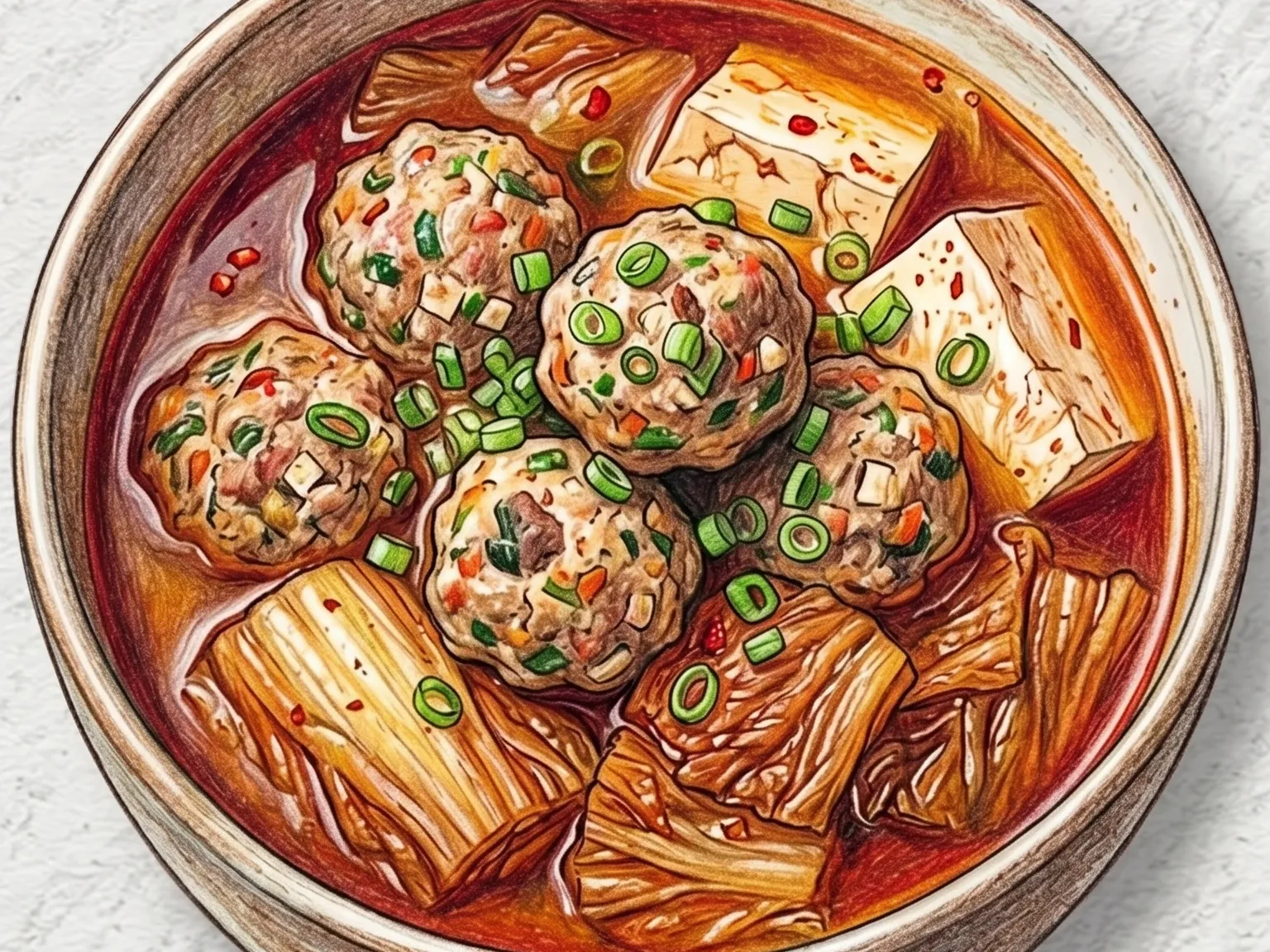
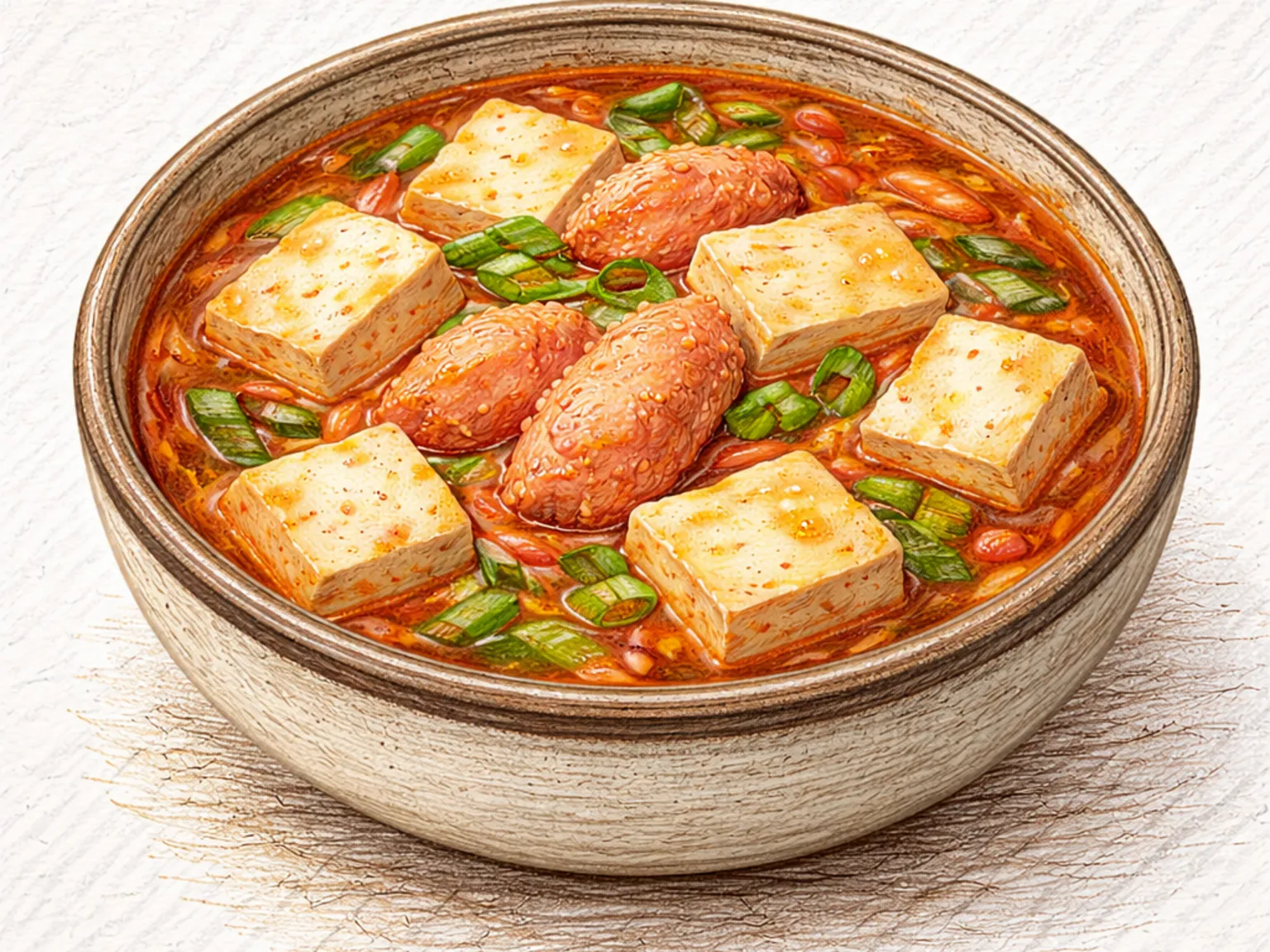
Kimchi-soegogi-guk is a Korean soup that unites two powerhouse ingredients-well-fermented kimchi and beef-in a ruddy, aromatic broth. The beef is stir-fried in sesame oil first, building a savory foundation, then chopped kimchi joins the pan and cooks until its acidity mellows and merges with the rendered fat. Water is added, and as the pot simmers, the kimchi continues to break down, thickening the liquid and staining it a deep red. Soup soy sauce and garlic adjust the seasoning, while blocks of tofu absorb the surrounding flavors and provide a soft counterpoint to the chewy beef. The finished soup is robust and warming, with the tangy complexity of aged kimchi meeting the clean savoriness of beef in every spoonful. It pairs inseparably with a bowl of steamed rice, which soaks up the broth and balances the heat.