Kimchi Dwaejigogi-guk (Kimchi Pork Tofu Soup)
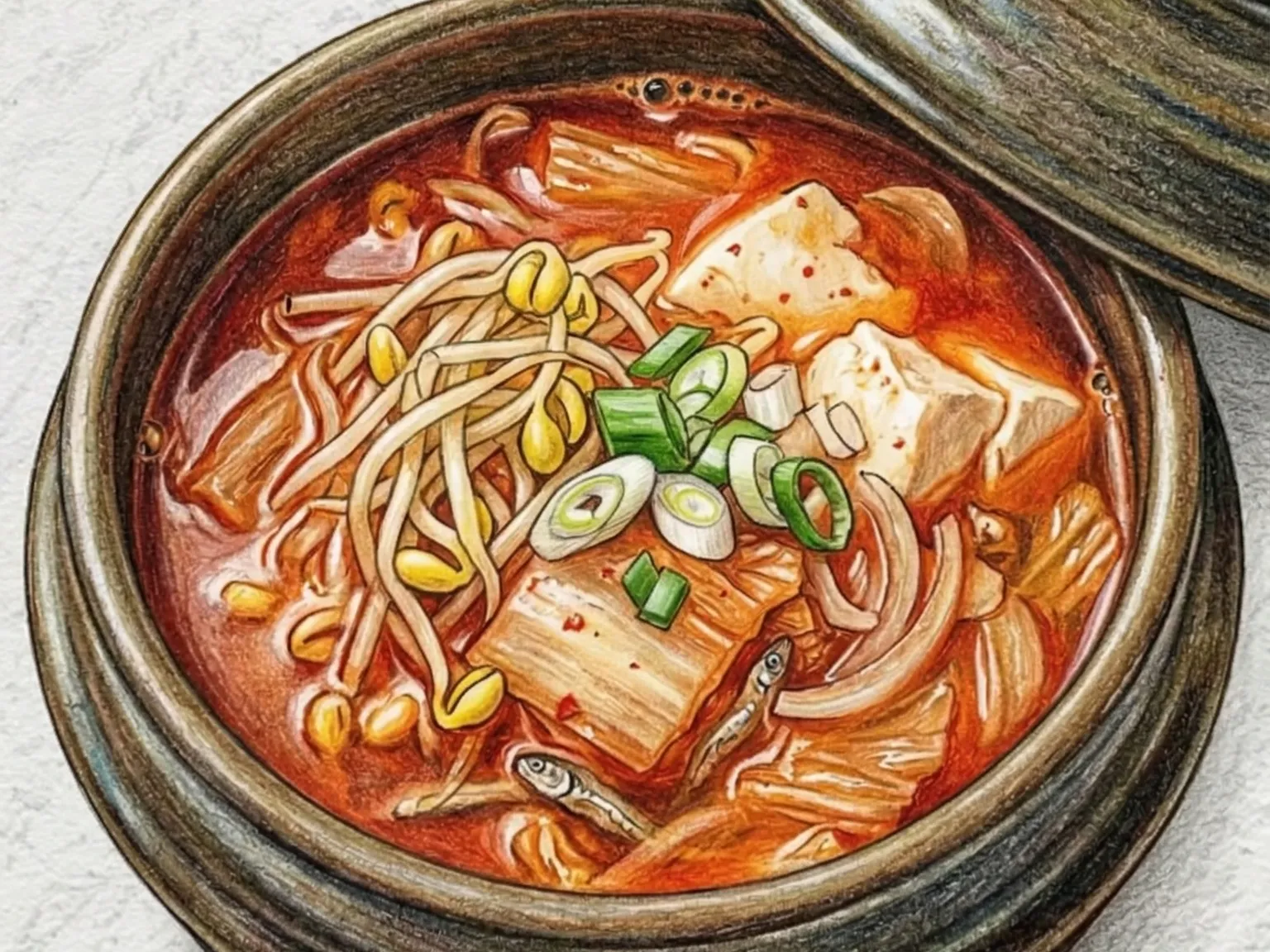
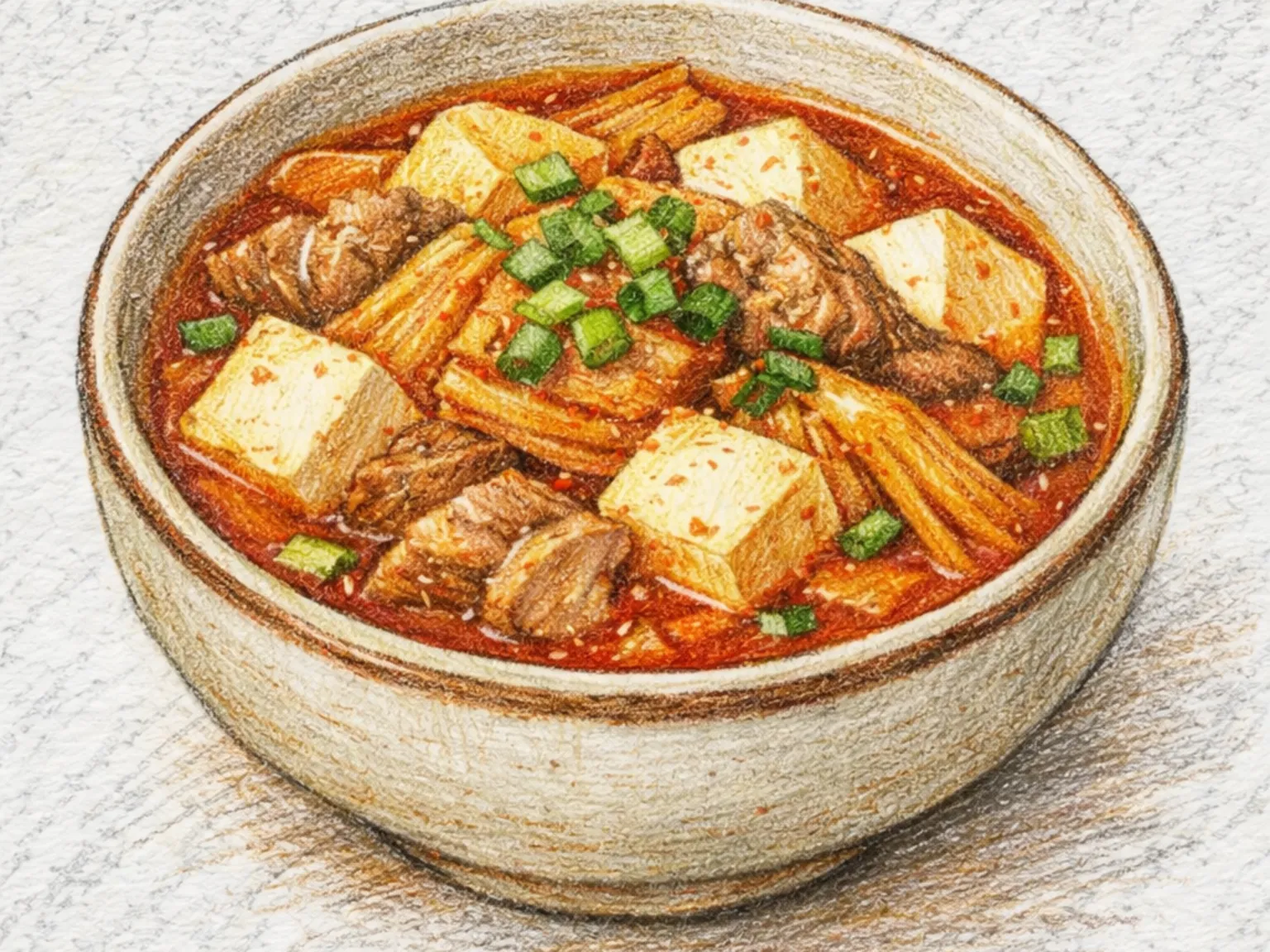
Kimchi-dwaejigogi-guk begins by stir-frying pork shoulder in perilla oil until the fat renders, then well-fermented kimchi and chili flakes join the pot for three more minutes of cooking. This initial step melds the tangy acidity of the kimchi with the pork drippings, creating a base that carries the entire soup. Water and sliced onion simmer for fifteen minutes, and blocks of firm tofu go in near the end, absorbing the ruddy, peppery broth. The result has more liquid than a typical jjigae, making it well suited for spooning over a bowl of rice.
Adjust Servings
Instructions
- 1
Cut kimchi and pork into bite-size pieces.
- 2
Heat perilla oil in a pot and stir-fry pork with garlic for 2 minutes.
- 3
Add kimchi and red pepper flakes, then cook 3 more minutes.
- 4
Add water and onion, then simmer over medium heat for 15 minutes.
- 5
Season with soup soy sauce, add tofu, and simmer 5 more minutes.
As an Amazon Associate, we may earn from qualifying purchases.
Tips
Nutrition (per serving)
More Recipes

Yukgaejang (Fiery Shredded Beef and Vegetable Soup)
Yukgaejang is a fiery Korean beef soup that starts with brisket simmered until it can be pulled apart along the grain into long, thin shreds. The shredded meat is then hand-mixed with red pepper flakes, soup soy sauce, sesame oil, and minced garlic so the seasoning penetrates each strand before the final cook. Bracken fern, bean sprouts, and generous lengths of green onion join the pot, and everything boils together for thirty minutes in the brisket stock, which turns a deep red from the chili. The fern contributes an earthy chew, the sprouts add a clean crunch, and the green onion breaks down into the broth, lending natural sweetness that tempers the heat.

Kimchi Soegogi-guk (Fermented Kimchi Beef Soup)
Kimchi-soegogi-guk is a Korean soup that unites two powerhouse ingredients-well-fermented kimchi and beef-in a ruddy, aromatic broth. The beef is stir-fried in sesame oil first, building a savory foundation, then chopped kimchi joins the pan and cooks until its acidity mellows and merges with the rendered fat. Water is added, and as the pot simmers, the kimchi continues to break down, thickening the liquid and staining it a deep red. Soup soy sauce and garlic adjust the seasoning, while blocks of tofu absorb the surrounding flavors and provide a soft counterpoint to the chewy beef. The finished soup is robust and warming, with the tangy complexity of aged kimchi meeting the clean savoriness of beef in every spoonful. It pairs inseparably with a bowl of steamed rice, which soaks up the broth and balances the heat.

Korean Spicy Fish Roe Stew
Altang is a Korean stew built around pollock roe - the egg sacs prized in Korean coastal cooking for their briny, concentrated marine flavor. The dish has long been associated with Korea's east coast fishing towns, where fresh roe is available during winter spawning season and needs to be used quickly. Anchovy-kelp stock simmers first with radish to establish a clean, sweet base before the roe and tofu go in. The roe sacs release their eggs into the broth as they cook, turning the liquid cloudy and giving it a rich, oceanic body. Gochugaru and doenjang season the stew with a spicy-fermented edge that cuts through the fishiness. Crown daisy greens - ssukgat - are dropped in at the last moment, contributing a sharp, herbaceous perfume. A popular hangover remedy in Korean drinking culture, altang is often ordered steaming hot at the end of a long evening.

Korean Kimchi Jjigae (Kimchi Stew)
Kimchi jjigae is the quintessential Korean home-cooked stew, built on well-fermented kimchi and pork belly simmered together until the flavors fully meld. The kimchi's sharp acidity breaks down the richness of the pork fat, producing a broth that is simultaneously tangy, spicy, and deeply savory. A spoonful of doenjang adds another layer of fermented complexity, while tofu blocks absorb the fiery liquid. Finished with a drizzle of sesame oil, it is the definitive comfort food served with steamed rice.

Korean Pork Kimchi Stew (Fermented Kimchi & Pork Shoulder)
Pork kimchi jjigae is one of the most beloved home-cooked Korean stews, built on aged kimchi and pork shoulder. The marbled fat from the pork shoulder melts into the broth, balancing the kimchi's sharp acidity with richness. Tofu and onion bulk up the pot, while soup soy sauce and chili flakes season the liquid. The riper and more sour the kimchi, the better this stew tastes - it is the ideal use for old kimchi.

Korean Kimchi Soy Milk Tantan Noodles
Kimchi duyu tantan myeon adapts the Chinese dandan noodle format using Korean pantry staples. Ground pork is browned in chili oil with garlic and green onion, then doenjang and soy sauce go in to build a fermented base layer. Finely chopped kimchi is added and cooked for two minutes to soften its raw acidity. Unsweetened soy milk replaces the traditional sesame paste broth - it is poured in and heated gently, never brought to a full boil, so it stays smooth and emulsified. Fresh ramen noodles are boiled separately and placed in the bowl before the broth is ladled over. A spoonful of ground peanuts on top adds a nutty finish, and the combination of spicy kimchi-pork and creamy soy milk creates a layered richness without heaviness.