Korean Crispy Kimchi Fried Dumplings
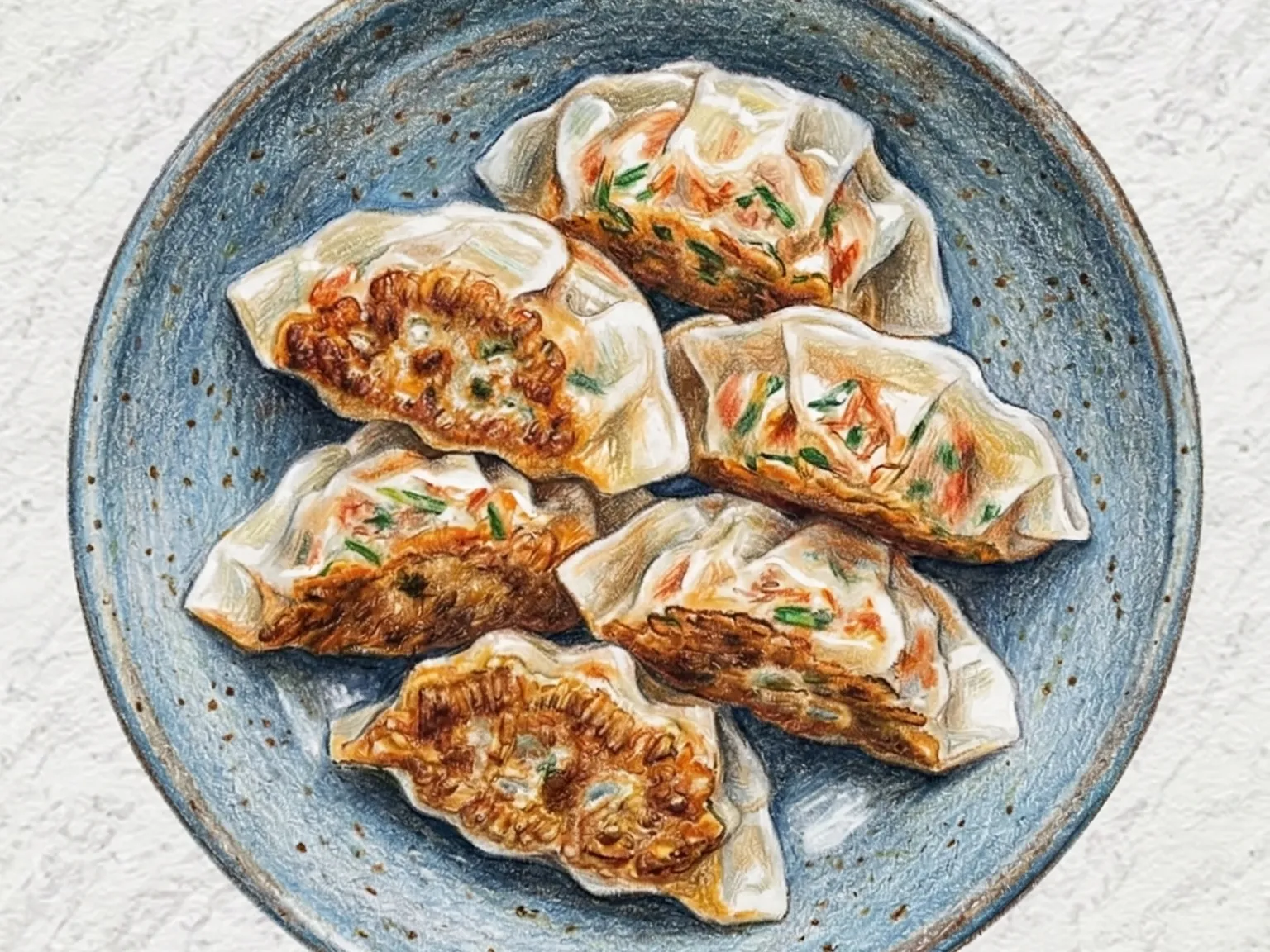
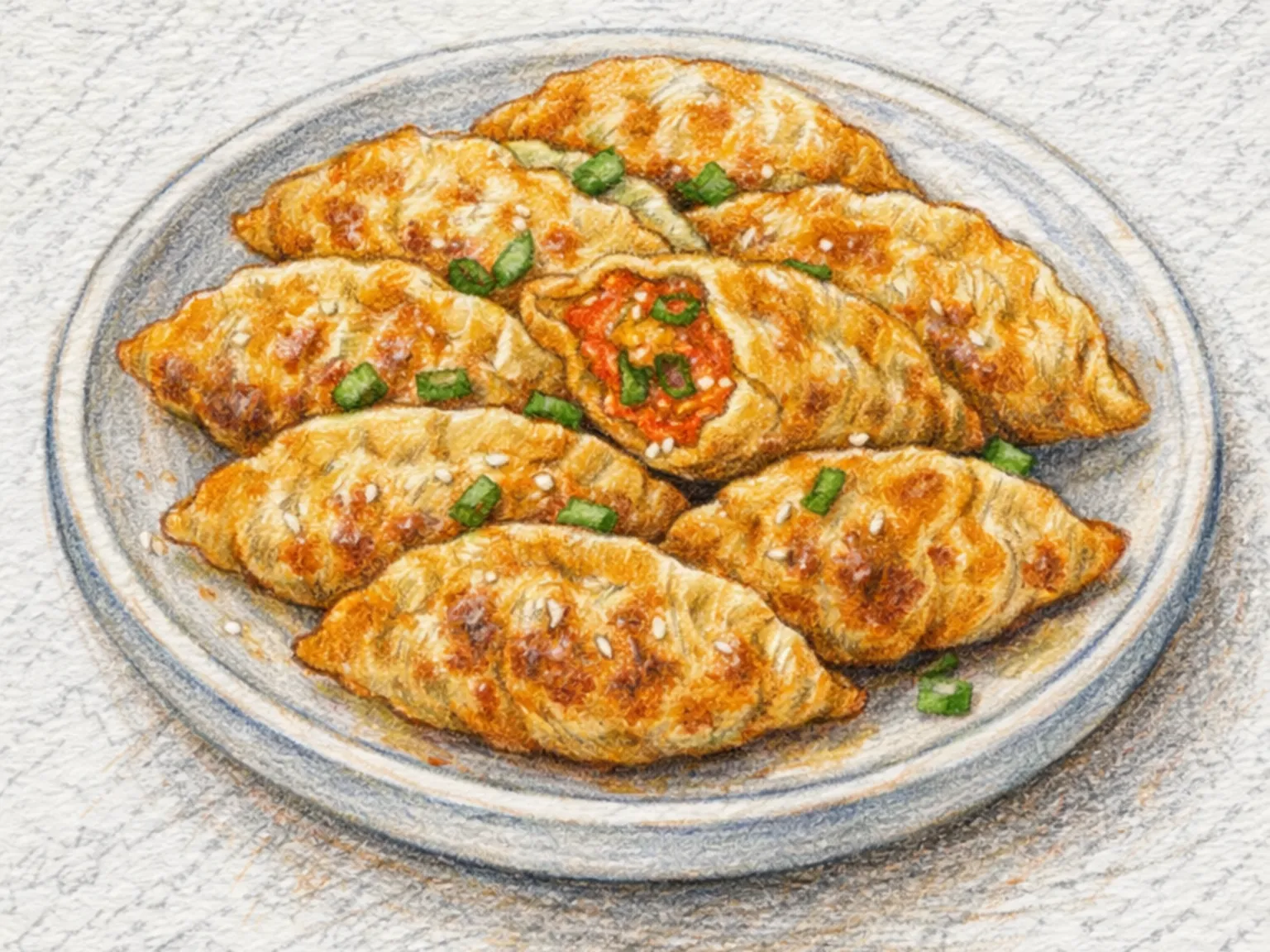
Kimchi gun mandu are pan-fried dumplings filled with finely chopped kimchi, squeezed tofu, ground pork, and green onion seasoned with soy sauce and garlic, shaped into half-moons. The bottoms are first crisped in oil, then water is added and the pan is covered for four minutes to steam the tops, achieving a contrast of crunchy base and moist upper wrapper. The kimchi's acidity and heat permeate the pork fat to create a more assertive umami than plain dumplings, and the tofu smooths out the filling's texture. A splash of vinegar in the soy dipping sauce cuts any greasiness.
Adjust Servings
Instructions
- 1
Squeeze out moisture from kimchi and tofu, then finely chop.
- 2
Mix pork, kimchi, tofu, green onion, soy sauce, and garlic for filling.
- 3
Fill wrappers, moisten edges with water, and seal into half-moon dumplings.
- 4
Pan-fry dumplings in oil until bottoms turn golden.
- 5
Add water, cover, steam for 4 minutes, then uncover to evaporate moisture.
- 6
Serve immediately when crisp.
As an Amazon Associate, we may earn from qualifying purchases.
Tips
Nutrition (per serving)
More Recipes

Korean Kimchi Pork Crispy Dumplings
Kimchi pork gunmandu are pan-fried dumplings with a filling of ground pork, well-drained kimchi, garlic chives, firm tofu, soy sauce, garlic, and sesame oil. The near-equal ratio of 180g pork to 150g kimchi puts the kimchi's fermented tang front and center. Garlic chives add a sharp, onion-like depth, and the tofu absorbs excess moisture from the filling to prevent wrapper breakage. The dumplings are first pan-fried to crisp the bottoms, then steamed with a splash of water, and finished uncovered to evaporate remaining liquid.

Korean Steamed Mandu (Pork and Tofu Dumplings Steamed in Half-Moon Shape)
Jjin mandu are Korean steamed dumplings filled with a mixture of ground pork, squeezed tofu, soaked glass noodles, garlic chives, and onion seasoned with soy sauce and sesame oil, folded into half-moon shapes and steamed for 12 to 15 minutes. Cooking by steam rather than oil keeps the wrapper moist and supple while letting the filling's own flavors come through cleanly. Tofu absorbs excess moisture and softens the texture of the filling, while garlic chives add a pungent bite that tempers the pork. They are served with a dipping sauce of soy sauce, vinegar, and red chili flakes.

Korean Crispy Pan-Fried Dumplings
Crispy gunmandu uses a two-stage pan-frying method: frozen dumplings are first seared in oil until the bottoms turn golden, then water is added and the lid goes on to steam the filling through. Once the water evaporates, the lid comes off so the base crisps up a second time. Adding a thin flour-water slurry instead of plain water creates a lacy, connected crust across the bottom of all the dumplings. Dipped in a sauce of soy, vinegar, and gochugaru, the nutty browned crust contrasts with the moist, seasoned filling inside.

Korean Kimchi Ramen Pancake
Kimchi ramyeon jeon is a Korean pancake made by mixing slightly undercooked ramen noodles (boiled for only two minutes) with chopped fermented kimchi, green onion, red chili flakes, and pancake-mix batter, then pan-frying until golden on both sides. Undercooking the noodles keeps them firm so they do not fall apart in the pan, maintaining a chewy bite. The kimchi's sourness and the chili flakes' heat layer over the batter's mild flavor, and spreading the mixture thinly ensures the edges fry to a crisp. The curly ramen strands create an uneven surface that produces pockets of extra crunch.

Korean Kimchi Pancake
Well-fermented kimchi is chopped fine and mixed into a batter of Korean pancake mix, kimchi brine, and chili flakes, then fried in oil until both sides turn golden. Adding the kimchi brine directly into the batter is the key step, as its lactic acid tang brings depth that plain water cannot. Cooking four minutes on the first side and three on the second produces a crisp exterior while the interior stays moist from the kimchi moisture.

Korean Kimchi Fried Rice (Kimchi Bokkeumbap)
Finely chopped aged kimchi is stir-fried with ground pork, and the fermentation tang meets rendered pork fat to build a deep, layered umami. Kimchi juice goes into the pan along with gochujang and a touch of sugar, coating the rice in a spicy-sweet glaze. High heat is critical - quick tossing keeps each grain separate and slightly crisp rather than mushy. A soft-fried egg on top lets the runny yolk temper the heat, and using well-fermented kimchi dramatically deepens the flavor profile. Variations with spam or canned tuna are equally popular across Korean home kitchens.