Korean Kimchi Glass Noodle Stir-Fry
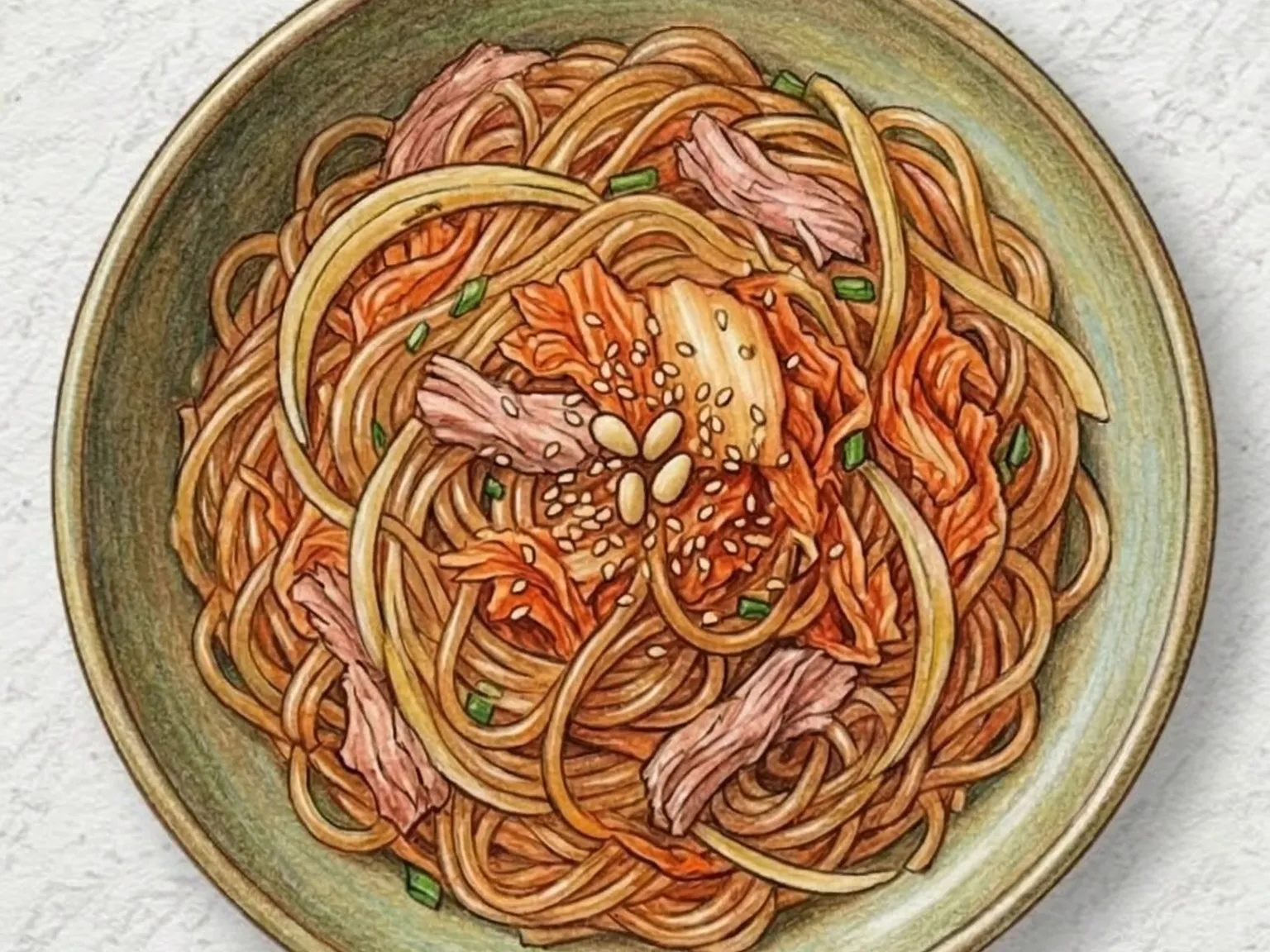
Kimchi japchae is a variation on the classic Korean glass noodle stir-fry, distinguished by the addition of well-fermented aged kimchi. Glass noodles are boiled, rinsed in cold water, and pre-seasoned with soy sauce. Julienned pork shoulder is stir-fried first, then the kimchi - squeezed dry to remove excess liquid - goes in with sliced onion and cooks until the flavors concentrate. The noodles are tossed in with a bit more soy sauce and sugar, and sesame oil is added off-heat to preserve its aroma. The result is a tangy, spicy twist on japchae where the kimchi's funky acidity permeates each slippery strand of sweet potato noodle, giving the dish a punch that the traditional vegetable-only version lacks.
Adjust Servings
Instructions
- 1
Boil glass noodles 6 minutes, rinse cold, and season with 1 tbsp soy sauce.
- 2
Squeeze excess liquid from kimchi and chop; julienne the pork.
- 3
Stir-fry pork in oil, then add kimchi and onion and cook until softened.
- 4
Add noodles and season with soy sauce and sugar, tossing everything together.
- 5
Remove from heat, finish with sesame oil and green onion.
As an Amazon Associate, we may earn from qualifying purchases.
Tips
Nutrition (per serving)
More Recipes

Korean Squid Glass Noodle Stir-Fry
Ojingeo japchae is a Korean glass noodle stir-fry that substitutes squid for the traditional beef, combining chewy dangmyeon with spinach, carrot, and onion in a soy-sugar sauce. Scoring the inner surface of the squid before cutting it into bite-sized pieces allows the seasoning to penetrate and softens the texture. Stir-frying the squid briefly with garlic prevents it from turning rubbery. The glass noodles are boiled for no more than six minutes to maintain their elastic chew, and the spinach is blanched and squeezed dry separately so it does not release moisture into the stir-fry. Soy sauce and sugar form a sweet-salty base, and a final drizzle of sesame oil with sesame seeds brings nuttiness that ties the seafood umami and vegetables together.

Korean Glass Noodle Stir-fry
Japchae is a signature Korean noodle dish made by stir-frying glass noodles with beef, spinach, carrots, and onions in soy sauce and sesame oil. The sweet potato starch noodles turn translucent as they cook, absorbing the seasoning to become glossy and springy. Traditionally, each ingredient is stir-fried separately before being combined, which lets every vegetable keep its own texture while the flavors merge into a cohesive whole. Japchae is a fixture at celebrations including holidays, birthdays, and feasts.

Korean Beef Japchae (Soy-Marinated Beef Glass Noodle Stir-Fry)
Sogogi japchae is a Korean stir-fried noodle dish made with sweet potato glass noodles, soy-marinated beef strips, and an assortment of individually prepared vegetables. Spinach is blanched, carrots and onions are julienned and stir-fried separately, and each component is combined at the end to preserve its distinct color and texture. The noodles are soaked rather than fully boiled, then finished in the pan so they stay chewy instead of mushy. Soy sauce, sugar, and sesame oil form the seasoning base, giving the dish its characteristic sweet-savory balance.

Korean Chicken Japchae (Glass Noodles with Chicken Breast and Vegetables)
Dak-japchae is a variation of the classic Korean glass noodle stir-fry that uses chicken breast instead of beef. The chicken keeps the dish lean and light in flavor. Spinach, carrot, shiitake mushroom, and onion each bring a different texture and color, building multiple layers of taste in a single plate. Soy sauce and sugar strike the sweet-salty balance, and sesame oil coats the chewy glass noodles with a nutty richness. It delivers satisfying fullness with fewer calories than pork or beef versions of japchae.

Korean Vegetable Japchae (Glass Noodle Mixed Vegetable Stir-Fry)
Yachae japchae is a vegetarian version of the classic Korean glass noodle dish, made entirely with sweet potato noodles and mixed vegetables - spinach, carrot, shiitake mushrooms, bell pepper, and onion. Each vegetable is stir-fried separately to maintain its color and distinct texture, then combined with pre-seasoned noodles dressed in soy sauce and sesame oil. The varied sweetness and crunch of each vegetable layer together under the soy-sugar seasoning, while the noodles absorb the sauce and turn glossy and chewy. Without meat, the vegetables take center stage, making this equally suitable for everyday meals and celebration spreads.

Korean Kimchi Bulgogi (Kimchi Stir-Fried Marinated Beef)
Kimchi bulgogi combines soy-and-pear-marinated beef slices with aged napa kimchi, stir-fried together over high heat. The pear juice tenderizes the meat and adds a subtle sweetness that the kimchi's sharp acidity and salt cut through, creating a layered seasoning. As the two cook together, kimchi liquid seeps into the beef and builds a more complex umami than standard bulgogi alone. A finishing drizzle of sesame oil rounds out the dish, which pairs best with plain steamed rice to absorb the pan juices.