Korean Kimchi Jeon Cup (Kimchi Pancake Cups)
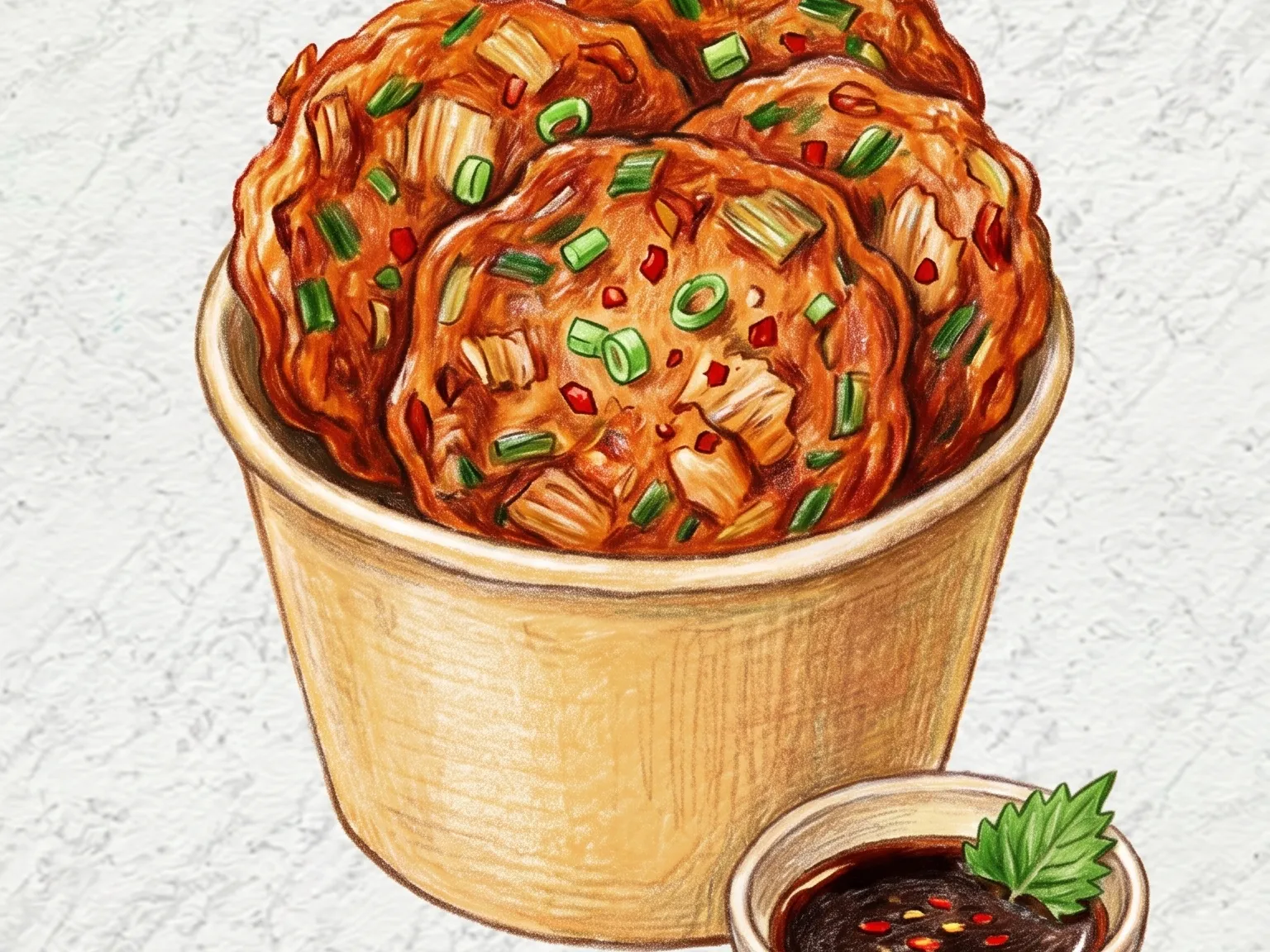
Kimchi jeon cups are small Korean pancakes made from a batter of pancake mix, water, kimchi brine, finely chopped aged kimchi, green onion, and Cheongyang chili, pan-fried in rounds and served standing upright in cups. Adding kimchi brine to the batter spreads fermented umami throughout, making the flavor more intense than standard kimchi pancakes. Generous oil and medium heat crisp the edges into a fried shell, and the Cheongyang chili adds a sharp heat on top of the kimchi's sourness. A thick batter consistency is essential so the pancakes hold their shape when stood in cups.
Adjust Servings
Instructions
- 1
Chop kimchi finely and slice green onion and chili.
- 2
Mix pancake mix, water, kimchi brine, and sugar until smooth.
- 3
Add chopped kimchi and vegetables to finish the batter.
- 4
Add enough oil and ladle small rounds, about coaster size, onto the pan.
- 5
Cook each side 3-4 minutes over medium heat until edges are crisp.
- 6
Stand 2-3 mini pancakes in a cup and serve street-style.
As an Amazon Associate, we may earn from qualifying purchases.
Tips
Nutrition (per serving)
More Recipes

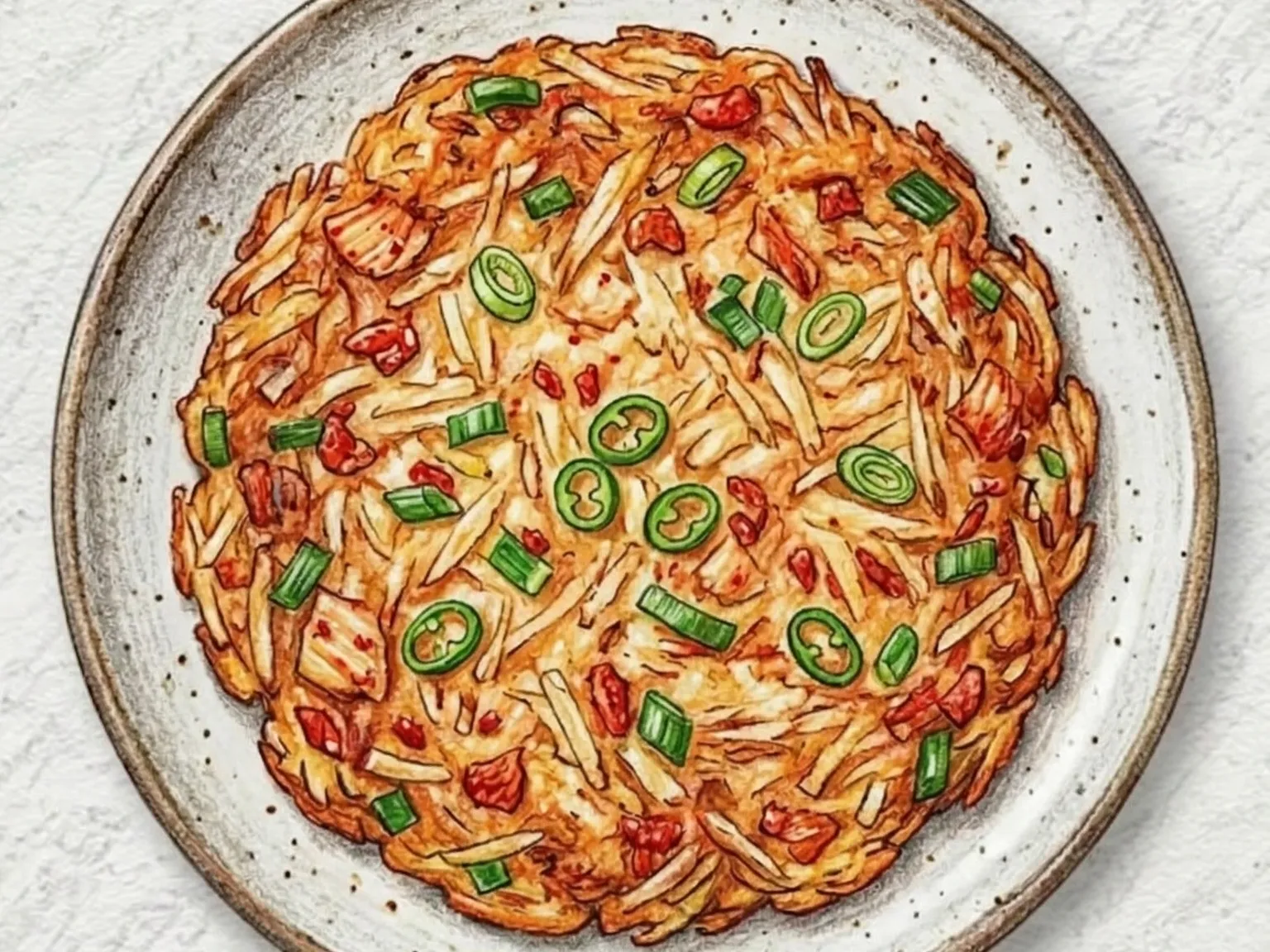
Korean Kimchi Cheese Gamja Jeon Cup (Kimchi Cheese Potato Cup)
Kimchi cheese gamja jeon cups are made by mixing julienned potato and chopped kimchi with Korean pancake mix and egg, pressing the batter into cup shapes in a pan, then filling the center with mozzarella and green onion and covering to melt. The potato starch acts as a natural binder that holds the cup shape, and the bottom develops a golden, crispy crust. Under the lid, the cheese melts and mingles with the spicy kimchi while the potato provides a mild, starchy base. Squeezing excess liquid from the kimchi before mixing is essential to prevent the cups from collapsing.

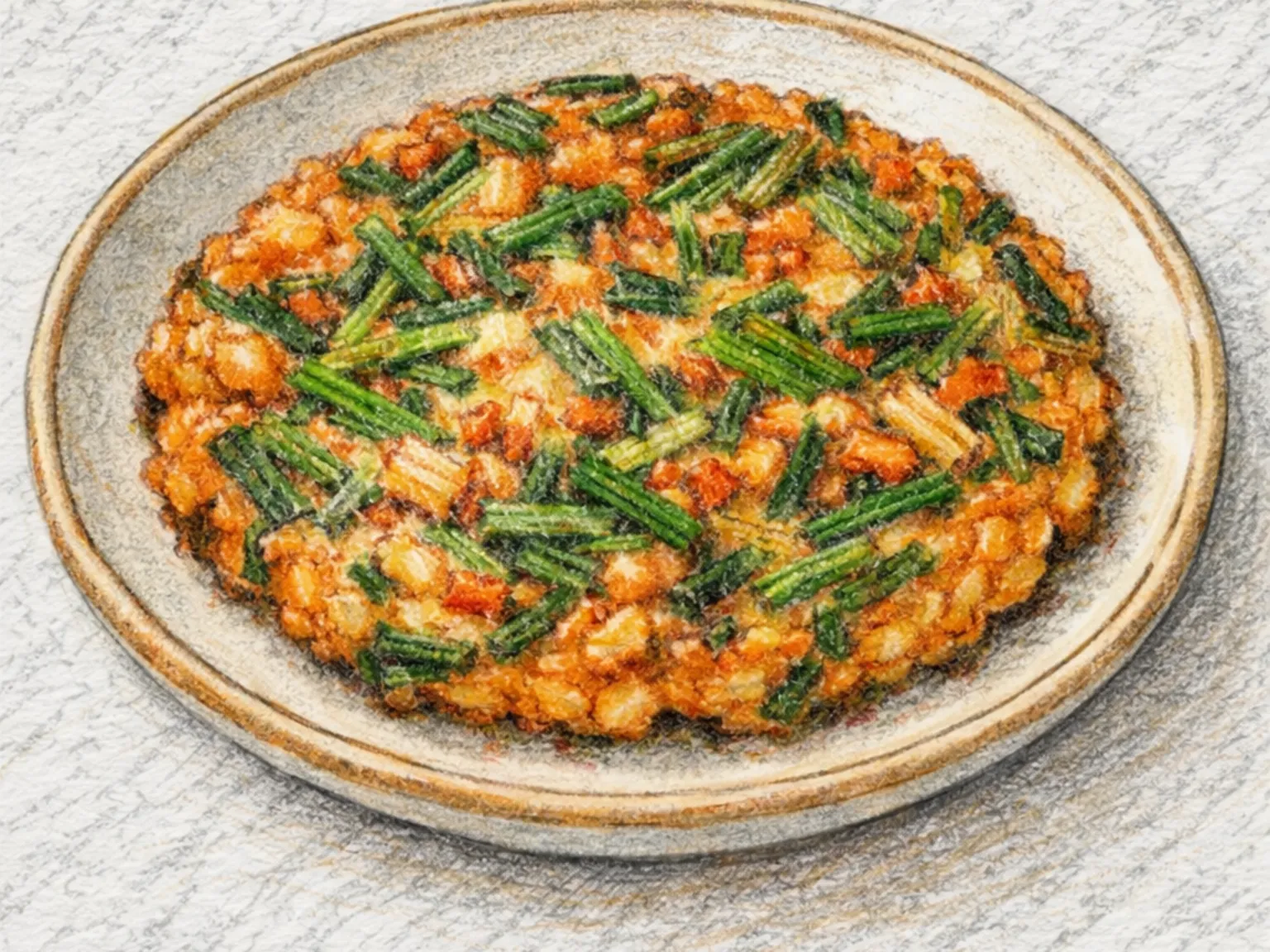
Korean Kimchi Ramen Pancake
Kimchi ramyeon jeon is a Korean pancake made by mixing slightly undercooked ramen noodles (boiled for only two minutes) with chopped fermented kimchi, green onion, red chili flakes, and pancake-mix batter, then pan-frying until golden on both sides. Undercooking the noodles keeps them firm so they do not fall apart in the pan, maintaining a chewy bite. The kimchi's sourness and the chili flakes' heat layer over the batter's mild flavor, and spreading the mixture thinly ensures the edges fry to a crisp. The curly ramen strands create an uneven surface that produces pockets of extra crunch.

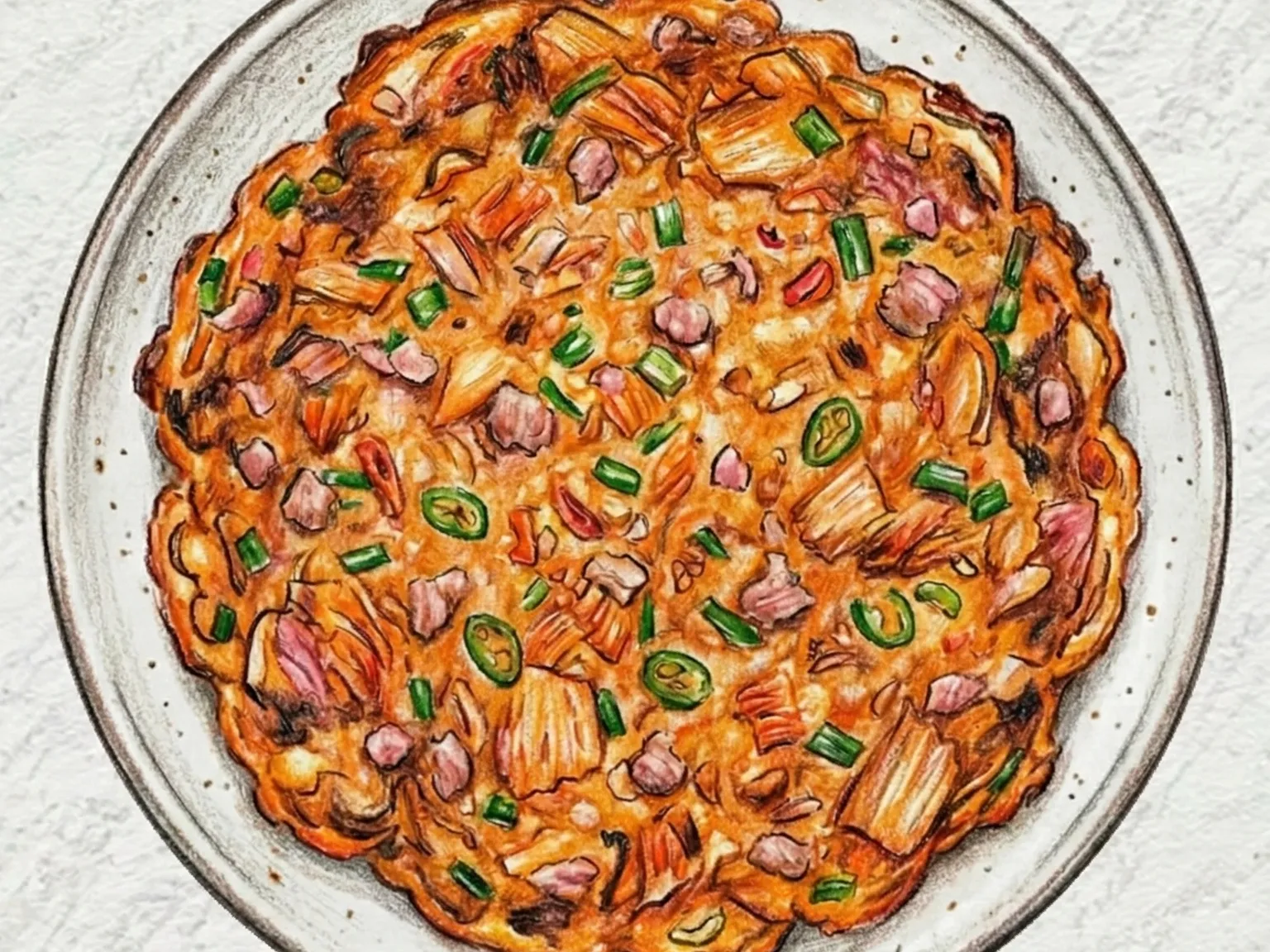
Korean Kimchi Pork Jeon (Fermented Kimchi and Pork Crispy Pancake)
Well-fermented kimchi and pork shoulder are the backbone of this hearty Korean pancake. Kimchi brine is mixed directly into the batter, intensifying both the color and the tangy, fermented depth of flavor. A small amount of sugar balances the acidity, while green onion and onion add texture throughout. Pressing the pancake flat in a generously oiled pan over high heat produces deeply caramelized, crispy edges that contrast with the soft, savory interior.

Korean Mala Cup Tteokbokki
This cup-style tteokbokki combines gochujang with mala sauce to deliver both Korean chili heat and the numbing tingle of Sichuan peppercorn. Rice cakes and fish cake are simmered for six to seven minutes, stirring constantly, until the broth reduces into a thick, clinging glaze, then finished with sliced green onion. Because mala sauce saltiness varies widely between brands, starting with one tablespoon and adjusting upward is the safest approach.

Korean Kimchi Pancake
Well-fermented kimchi is chopped fine and mixed into a batter of Korean pancake mix, kimchi brine, and chili flakes, then fried in oil until both sides turn golden. Adding the kimchi brine directly into the batter is the key step, as its lactic acid tang brings depth that plain water cannot. Cooking four minutes on the first side and three on the second produces a crisp exterior while the interior stays moist from the kimchi moisture.

Korean Sausage Skewers
Sosiji-kkochi are Korean sausage skewers made by scoring Vienna sausages and threading two or three onto wooden sticks, then pan-frying until golden brown on all sides. The score marks open up during cooking, allowing heat to penetrate evenly and creating slightly caramelized, crispy edges. Ketchup and mustard are served alongside, with the tomato sweetness and sharp mustard bite complementing the salty sausage. The dish takes under 15 minutes from start to finish, and threading rice cakes between the sausages turns it into a sotteok-sotteok variation.