Korean Kimchi Pork Stir-fry
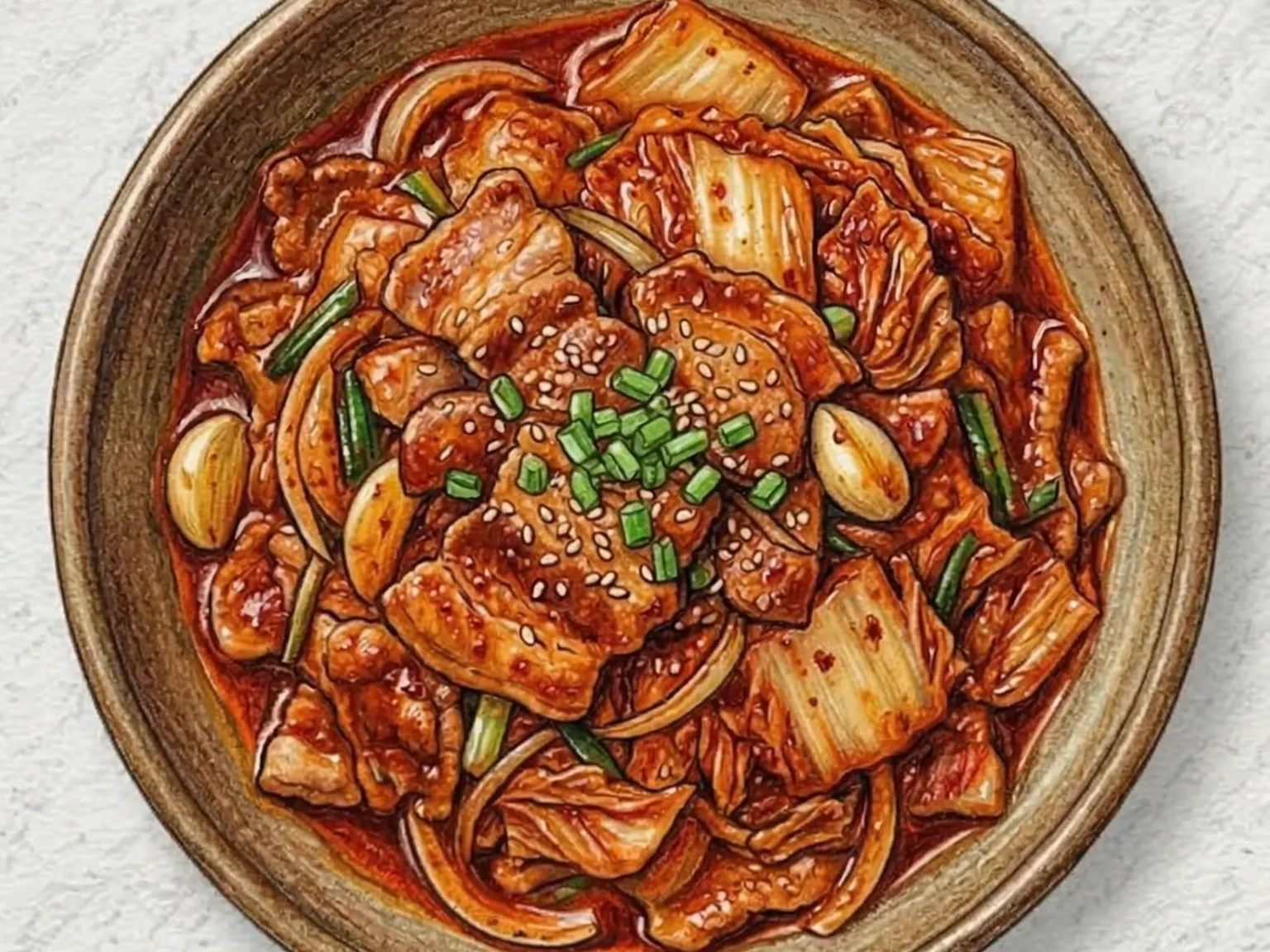
Kimchi jeyuk bokkeum is a Korean stir-fry of pork shoulder seasoned with gochujang, gochugaru, and soy sauce, then cooked over high heat with well-fermented aged kimchi. The kimchi's deep acidity tempers the pork fat while amplifying the spicy kick of the chili paste. Searing the pork first builds caramelized edges, and adding kimchi and onion afterward lets the sauce reduce into a concentrated glaze. Scallion and sesame oil finish the dish, and wrapping portions in lettuce leaves softens the heat.
Adjust Servings
Instructions
- 1
Cut pork and coat with half of the sauce ingredients first.
- 2
Slice kimchi, onion, and green onion.
- 3
Sear pork over high heat, spreading it out in the pan.
- 4
Add kimchi and onion with the remaining sauce, then stir-fry together.
- 5
When liquid appears, raise heat to reduce and thicken.
- 6
Add green onion and sesame oil, cook 1 more minute, and finish.
As an Amazon Associate, we may earn from qualifying purchases.
Tips
Nutrition (per serving)
More Recipes

Korean Spicy Pork Duruchigi
Duruchigi is a Korean spicy pork stir-fry made by flash-cooking sliced pork shoulder with onions and scallions in a gochujang-based sauce over high heat. The intense heat sears the meat, imparting a smoky wok flavor that elevates the dish beyond its simple ingredients. Gochujang provides fermented chili heat while sugar balances with sweetness, and scallions add a sharp, fresh finish. It is one of the most popular everyday pork dishes in Korean restaurants and home kitchens alike.

Korean Gaji Dwaejigogi Bokkeum (Eggplant Pork Stir-fry)
Gaji-dwaejigogi-bokkeum is a Korean stir-fry of eggplant and thinly sliced pork seasoned with garlic and fresh chili. The eggplant absorbs oil and sauce as it cooks, turning silky and melding seamlessly with the pork. Garlic infuses the dish with an intense aroma while the chili adds a clean, sharp heat throughout. It is especially flavorful in summer when eggplant is at its seasonal peak.

Korean Young Radish Pork Stir-fry
Yeolmu-dwaejigogi-bokkeum is a spicy Korean stir-fry of pork shoulder marinated in gochujang, gochugaru, and soy sauce, cooked together with young radish greens (yeolmu). The pork is seared first over high heat for four minutes, then the greens are added on medium heat for another four minutes - just long enough to wilt without losing their fresh bite. The gochujang heat contrasts with the crisp, slightly grassy stems of the yeolmu, and sesame oil ties the flavors together at the end. It is a seasonal dish best made when young radish greens are in peak supply during summer.

Korean Spicy Pork Bean Sprout Stir-fry (Kongbul)
Kongbul is a fiery Korean stir-fry of pork shoulder tossed in a gochujang-gochugaru-soy sauce blend and cooked over high heat, with bean sprouts added at the very end to preserve their crunch. The gochujang's thick spiciness combines with rendered pork fat for an intense, mouth-coating savoriness, while the bean sprouts release just enough moisture to keep the sauce from scorching. The sprouts must be stir-fried only until barely wilted to maintain their snap. Chopped scallion goes in last, and mixing the whole thing into a bowl of rice stretches this into a full, hearty meal.

Korean Spicy Stir-Fried Squid Rice Bowl
Scored squid is stir-fried with onion, cabbage, and scallion in a gochujang-based sauce over high heat, then served on steamed rice. The squid's chewy texture and smoky wok char pair with the sweet-salty-spicy glaze, while the vegetables bring natural sweetness that tempers the heat. Vegetables go into the pan first to drive off moisture, then the squid cooks quickly for just 3 to 4 minutes to stay tender. Leaving a little sauce in the pan lets it soak into the rice when mixed, coating every grain.

Korean Pork Belly Kimchi Fried Rice
Pork belly is diced small and rendered in a hot pan until golden, producing enough fat to cook the entire dish without additional oil. Aged kimchi and onion go into that rendered fat, where the kimchi's sharp tang softens into the pork's richness. Gochujang and soy sauce season the rice as it joins the pan, and aggressive high-heat stir-frying keeps each grain distinct rather than clumpy. Day-old cold rice works best because its lower moisture content yields a drier, crispier result, and a fried egg on top provides a creamy counterpoint when the yolk breaks.