Korean Kimchi Jjigae (Kimchi Stew)
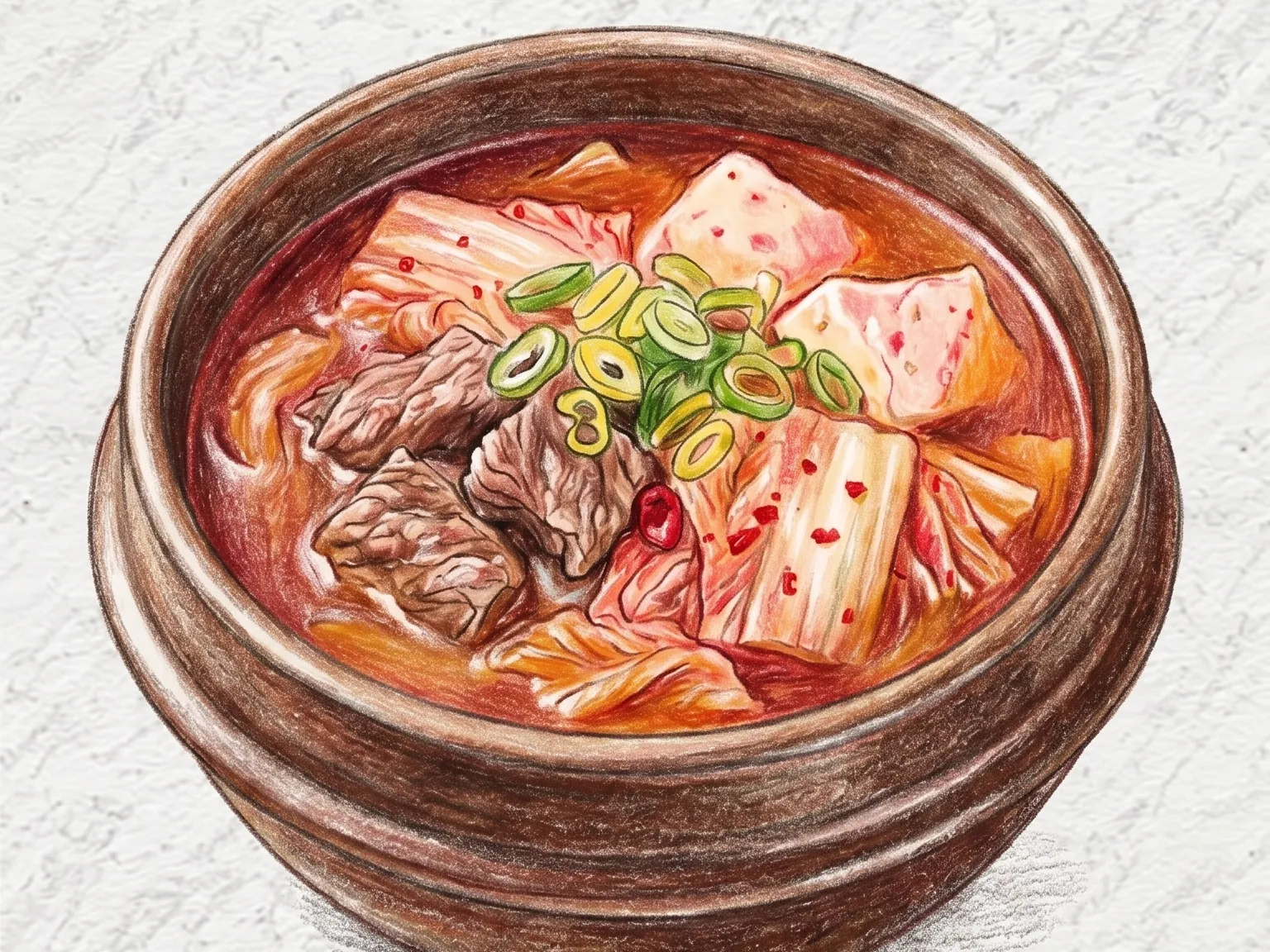
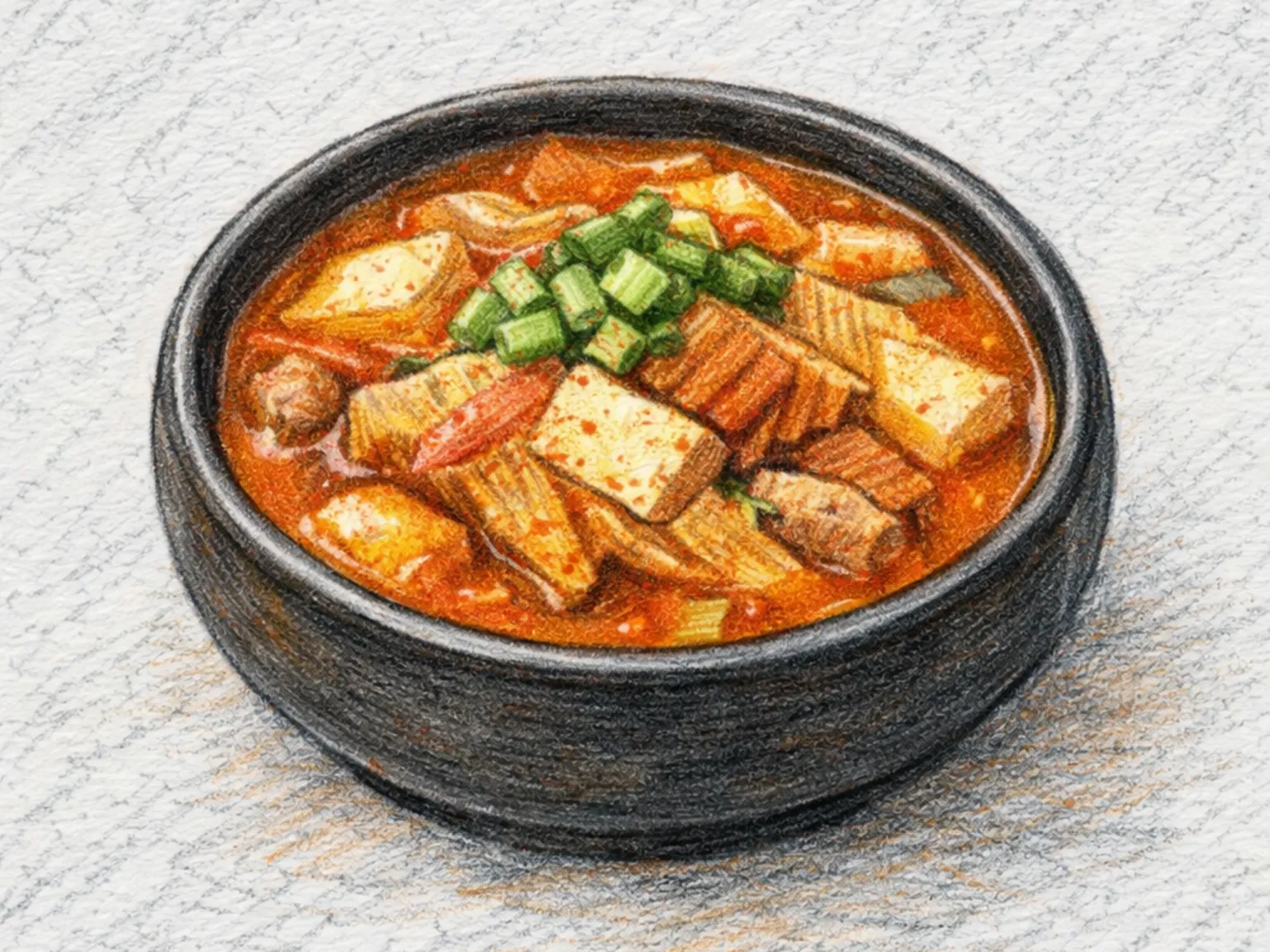
Kimchi jjigae is the quintessential Korean home-cooked stew, built on well-fermented kimchi and pork belly simmered together until the flavors fully meld. The kimchi's sharp acidity breaks down the richness of the pork fat, producing a broth that is simultaneously tangy, spicy, and deeply savory. A spoonful of doenjang adds another layer of fermented complexity, while tofu blocks absorb the fiery liquid. Finished with a drizzle of sesame oil, it is the definitive comfort food served with steamed rice.
Adjust Servings
Instructions
- 1
Cut 600g aged kimchi into bite-size pieces and slice 300g pork shoulder or belly into small pieces. Prepare 1 green onion, 1/2 onion, and 1 block tofu.
- 2
Heat 1 tbsp sesame oil in a pot, stir-fry pork for 2–3 minutes until the surface turns pale, then add kimchi and cook 4 more minutes to deepen flavor.
- 3
Add 1 tbsp gochugaru and 1 tbsp minced garlic, stir for 30 seconds, then pour in 1.2L rice-rinse water (or water) and 150ml kimchi brine.
- 4
Once boiling, reduce to medium heat and simmer for 15 minutes. Add onion during this stage for sweetness and umami.
- 5
Season with 1 tbsp soup soy sauce and 1 tsp salted shrimp (or salt), then add tofu and simmer 5 more minutes.
- 6
Add green onion at the end and cook for 1 minute. Adjust heat with fresh chili if you want it spicier.
As an Amazon Associate, we may earn from qualifying purchases.
Tips
Nutrition (per serving)
Variations
Pork Kimchi Jjigae
Pork kimchi jjigae delivers deep, bold flavor from aged kimchi and pork. Tangy acidity and rich meatiness create a classic balance.
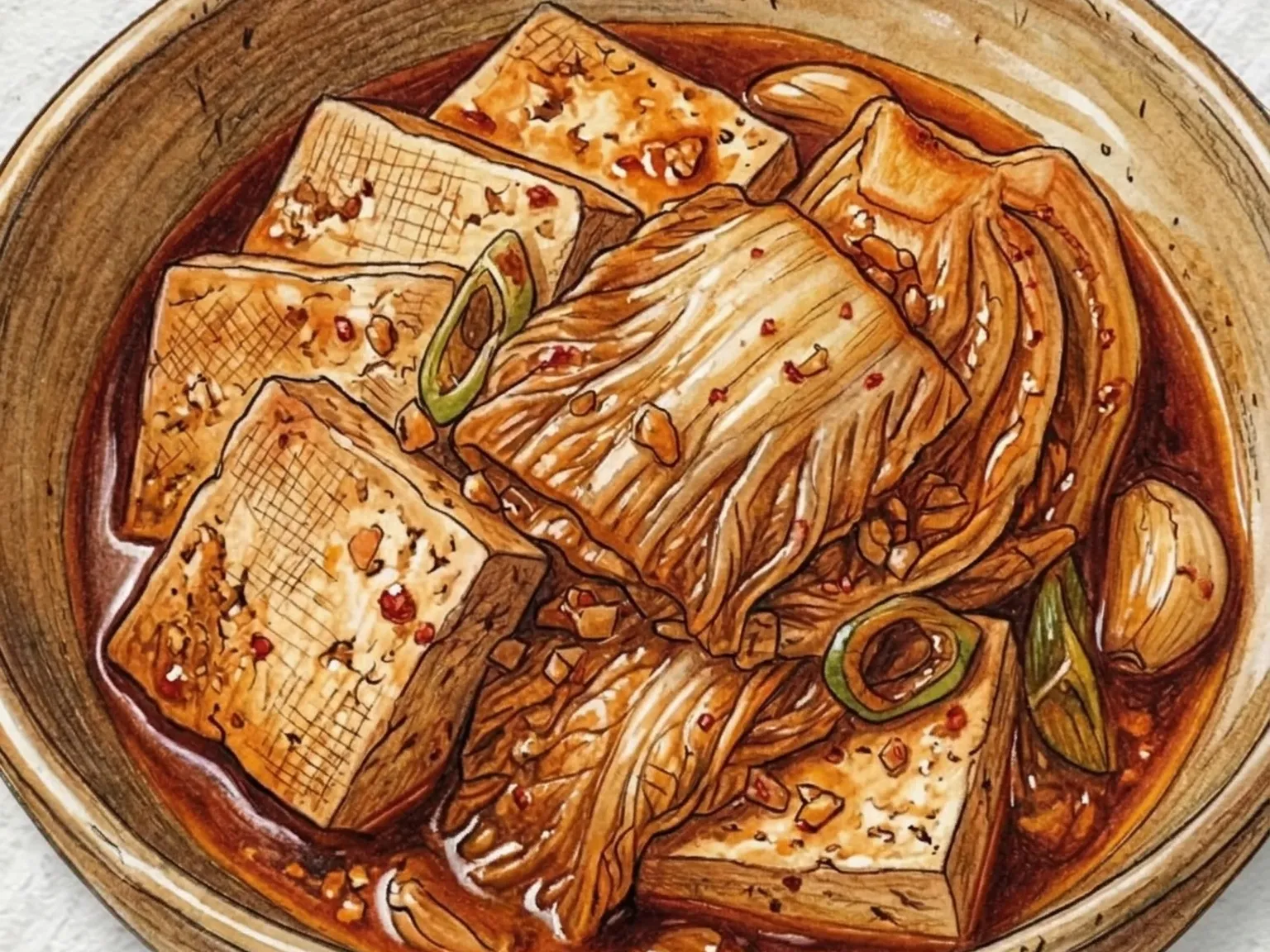
Tofu and Kimchi Stew
Kimchi stew loaded with tofu and pork. The tofu soaks up the spicy, fermented broth and becomes irresistibly flavorful.
More Recipes

Korean Pork Kimchi Stew (Fermented Kimchi & Pork Shoulder)
Pork kimchi jjigae is one of the most beloved home-cooked Korean stews, built on aged kimchi and pork shoulder. The marbled fat from the pork shoulder melts into the broth, balancing the kimchi's sharp acidity with richness. Tofu and onion bulk up the pot, while soup soy sauce and chili flakes season the liquid. The riper and more sour the kimchi, the better this stew tastes - it is the ideal use for old kimchi.

Korean Zucchini Pork Stew
Aehobak-jjigae is a home-style Korean stew that builds bold flavor from modest ingredients - pork, zucchini, and a spoonful each of gochujang and gochugaru. The pork is stir-fried first with garlic to render fat and build a savory fond at the bottom of the pot, then the chili paste is toasted into the fat before anchovy broth goes in. This layering technique gives the broth a depth that plain boiling cannot achieve. The zucchini cooks in the simmering liquid for just six minutes, softening into the stew while keeping enough structure to hold its half-moon shape. The broth finishes spicy and slightly sweet from the pork fat and vegetable sugars, with enough body to soak into a bowl of rice. A reliable weeknight meal that requires no special ingredients beyond a basic Korean pantry.

Korean Tuna Kimchi Stew
Aged kimchi and canned tuna replace the more traditional pork in this streamlined kimchi jjigae. The tuna's oil enriches the broth quickly without a long simmer, while the well-fermented kimchi provides a deep sourness that anchors the stew's flavor. Firm tofu, onion, and green onion fill out the pot, and a spoonful of chili flakes keeps the heat level assertive.

Korean Young Radish Kimchi Stew
This kimchi jjigae uses chonggak kimchi - small, whole ponytail radishes fermented in chili paste - instead of the usual napa cabbage kimchi. The radish pieces retain a crisp, crunchy bite even after simmering, giving the stew a texture that sets it apart. Pork shoulder and a generous pour of kimchi brine build a robust, tangy broth, with tofu added to balance the bold flavors.

Kimchi Dwaejigogi-guk (Kimchi Pork Tofu Soup)
Kimchi-dwaejigogi-guk begins by stir-frying pork shoulder in perilla oil until the fat renders, then well-fermented kimchi and chili flakes join the pot for three more minutes of cooking. This initial step melds the tangy acidity of the kimchi with the pork drippings, creating a base that carries the entire soup. Water and sliced onion simmer for fifteen minutes, and blocks of firm tofu go in near the end, absorbing the ruddy, peppery broth. The result has more liquid than a typical jjigae, making it well suited for spooning over a bowl of rice.

Korean Bean Sprout Kimchi Soup
This soup builds its flavor in two stages: first, aged kimchi and its juice simmer in anchovy stock for eight minutes until the broth turns deeply tangy and red. Then bean sprouts, garlic, chili flakes, and soup soy sauce are added uncovered for five minutes, preserving the sprouts' crunch while letting any raw smell dissipate. Sliced green onion finishes the pot with a minute of gentle boiling. The combination of fermented kimchi acidity and the natural freshness of bean sprouts makes this soup sharp and reviving, especially effective as a quick hangover remedy or a cold-weather pick-me-up.