Kimchi Lentil Ragu Tagliatelle
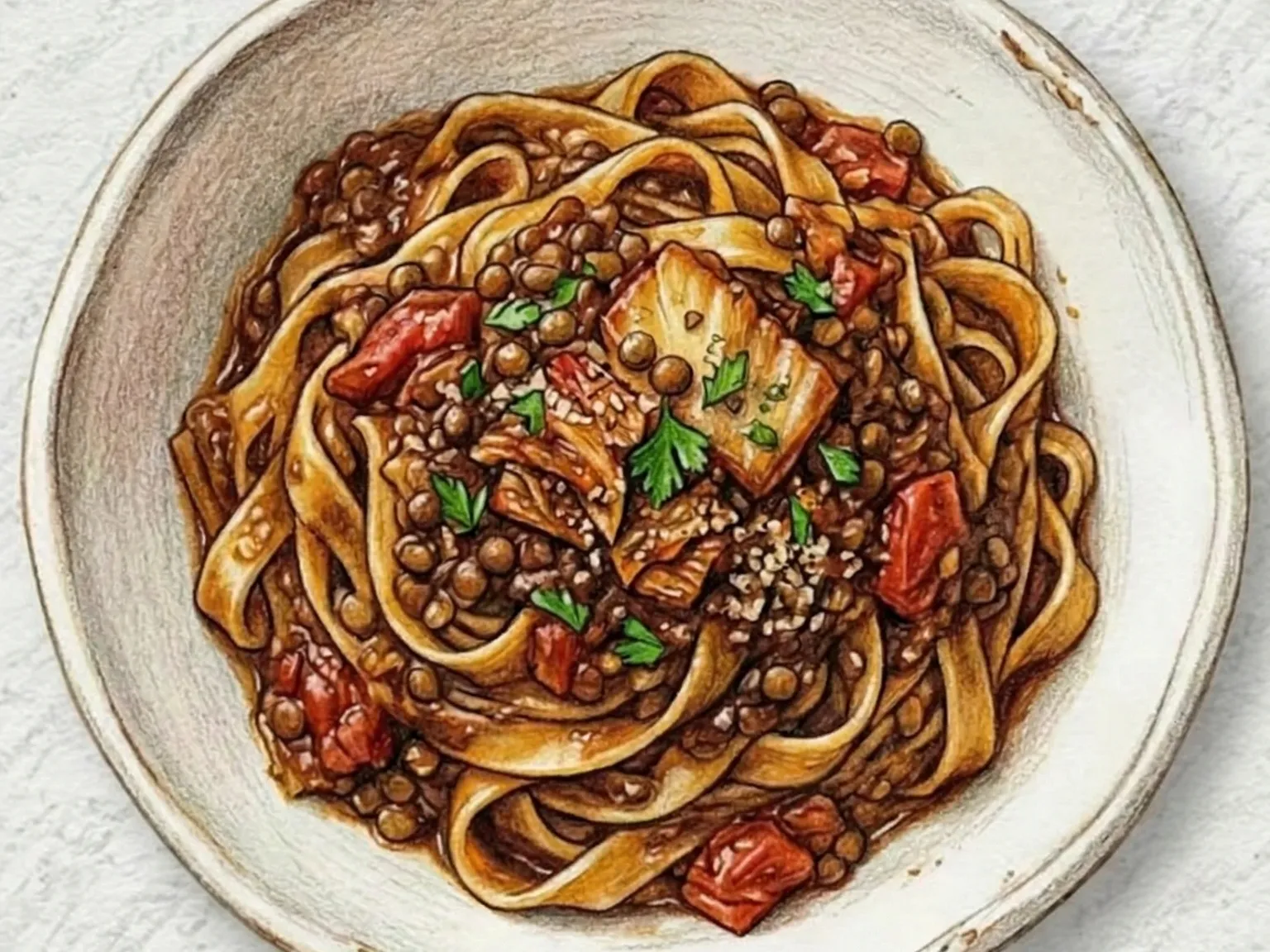
Kimchi lentil ragu tagliatelle is a plant-forward pasta where lentils simmer with tomato purée and aromatics for 35 minutes, then fermented kimchi is folded in near the end to add sharp acidity and depth. A base of finely diced onion, carrot, and celery - a Korean-inflected soffritto - builds the foundation. As the lentils cook, they release starch and break down into a thick, meaty-textured sauce without any actual meat. The kimchi enters late in the process to preserve its tangy bite and keep the fermented flavor distinct rather than cooked out. A small amount of sugar smooths the combined acidity of tomato and kimchi, and the wide tagliatelle ribbons carry the heavy ragu well.
Adjust Servings
Instructions
- 1
Rinse lentils and soak for 15 minutes; finely chop kimchi and reserve 2 tbsp kimchi juice.
- 2
Heat oil and cook onion, carrot, celery, and garlic over low heat for 6 minutes.
- 3
Add kimchi and cook 3 minutes to mellow acidity, then add lentils and cook 1 more minute.
- 4
Add tomato puree, stock, kimchi juice, and sugar; simmer on low for 20 minutes into a ragu.
- 5
Cook tagliatelle, then toss with ragu for 2 minutes, adding pasta water if needed.
- 6
Serve once the sauce clings evenly to the pasta.
As an Amazon Associate, we may earn from qualifying purchases.
Tips
Nutrition (per serving)
More Recipes

Soy Galbi Ragu Pappardelle
Soy galbi ragu pappardelle braises seared short rib with aromatics, red wine, and soy sauce for 90 minutes until the meat falls apart into a rich, gelatinous ragu. The long braise dissolves the collagen in the short rib, giving the sauce a silky body that clings to the wide pappardelle ribbons. A soffritto of onion, carrot, and celery provides the sweet base, while canned whole tomatoes and tomato paste add acidity and thickness. Soy sauce - rather than just salt - introduces fermented depth that distinguishes this from a standard Bolognese, and red wine contributes tannin and fruit complexity. Parmigiano-Reggiano grated on top ties the Italian and Korean elements together. This is a weekend dish, with most of the 90-minute cook time being passive braising.

Chunjang Beef Ragu Tagliatelle
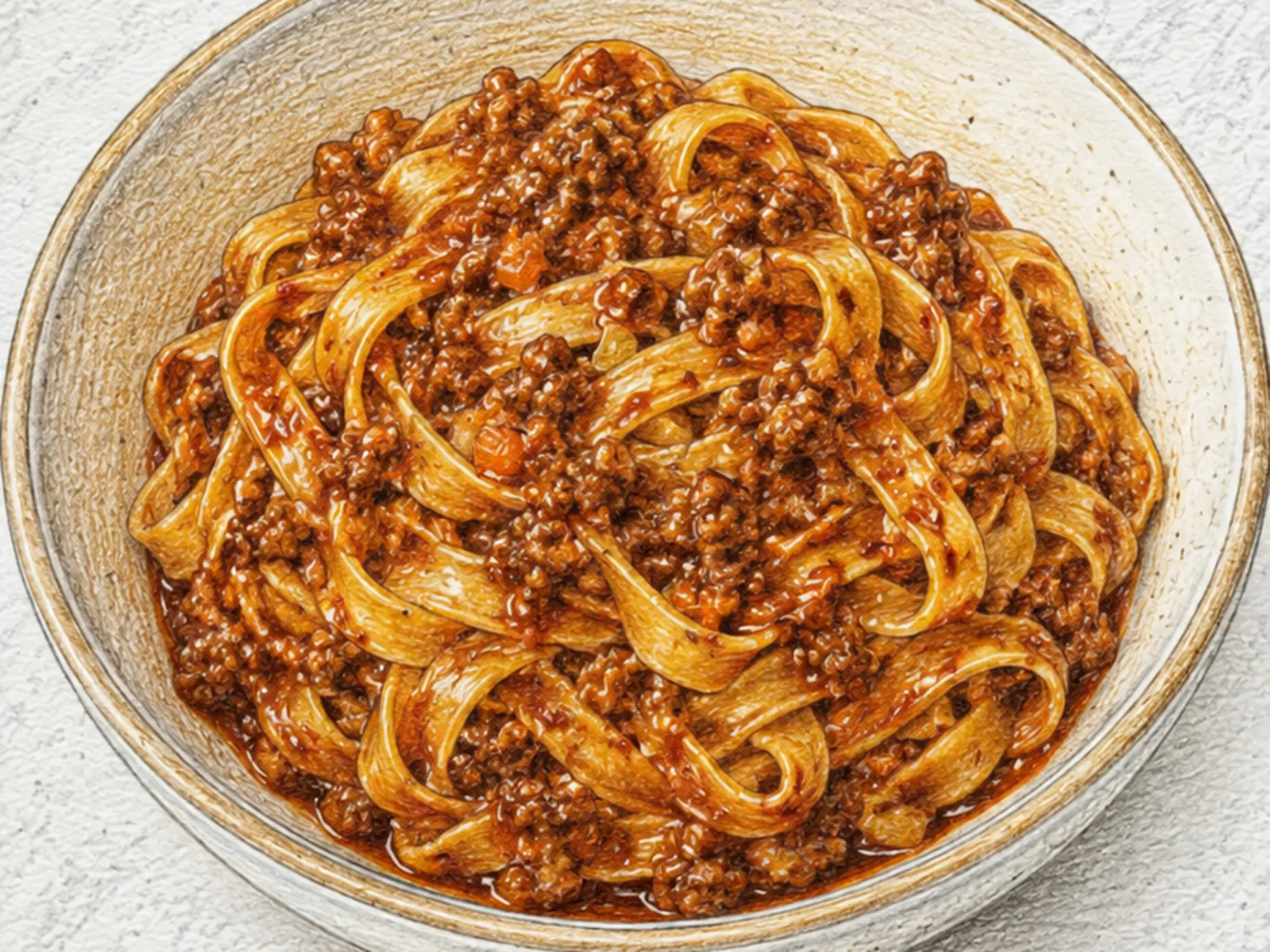
Chunjang beef ragu tagliatelle combines a slow-cooked ground beef ragu with Korean black bean paste and tomato passata, tossed through wide tagliatelle ribbons. Chunjang is a fermented black soybean paste that, when fried, releases a deep roasted umami that adds a flavor dimension absent from standard Italian ragus. Browning the ground beef hard over high heat before adding liquids develops a strong Maillard crust that intensifies the overall meatiness. The sauce then simmers on low heat until it reduces into a thick, glossy coating. Wide tagliatelle catches the dense ragu across its broad surface, ensuring each forkful carries both the tomato-chunjang depth and bits of seasoned beef.

Doenjang Clam Spinach Orzo
Doenjang clam spinach orzo cooks orzo pasta in a doenjang-seasoned vegetable stock with clams, building a risotto-like one-bowl dish. The clams are purged in salt water, then steamed open with white wine to release their briny liquid, which merges with the fermented depth of doenjang to form a layered savory base. Toasting the orzo briefly in oil before adding stock coats the starch surface, and ladling the stock in two or three additions while stirring draws out enough starch to thicken the sauce into a creamy consistency without actual cream. Spinach goes in at the very end, wilting just enough to stay bright green and tender. A knob of butter stirred in at the finish adds gloss and rounds out the salty-savory flavors.

Kimchi Tofu Alfredo Farfalle (Creamy Kimchi Bow-Tie Pasta)
Kimchi tofu Alfredo farfalle offsets a rich cream-and-Parmesan Alfredo sauce with the lactic tang of well-fermented kimchi. Garlic is bloomed in butter before cream, milk, and Parmigiano are combined into the classic Alfredo base, then chopped kimchi is stirred in to inject acidity and fermented complexity. Firm tofu, cut into cubes and pan-fried until golden on each side, adds a mild protein element with textural contrast against the smooth sauce. Farfalle's pinched center traps pockets of sauce, and black pepper provides a sharp finish. The entire dish takes about 15 minutes from pot to plate.

Korean Kimchi Porridge (Fermented Kimchi Pork Rice Porridge)
Well-fermented napa kimchi is chopped, stir-fried with ground pork in sesame oil, then slow-simmered with soaked rice and water for thirty minutes. Extended cooking softens the raw heat of the chili while spreading the fermentation tang evenly through the porridge, and the pork builds a savory backbone. Soup soy sauce adjusts the salt, and a scatter of sesame seeds adds a final nutty note. The more sour the kimchi, the more complex the finished juk becomes - a traditional Korean porridge meant to warm and soothe when appetite or digestion needs a gentle reset.

Korean Grilled Aged Kimchi
Well-aged napa kimchi is shaken free of excess marinade and grilled over medium-high heat until the edges char. The longer the kimchi has fermented, the more its pronounced sourness converts to a caramel-like sweetness when exposed to direct flame. A light dusting of sugar accelerates this reaction. Sesame oil and sesame seeds are the only garnish, making this one of the simplest Korean grilled dishes with just four ingredients.