Kkaennip Mushroom Cream Farfalle
Quick answer
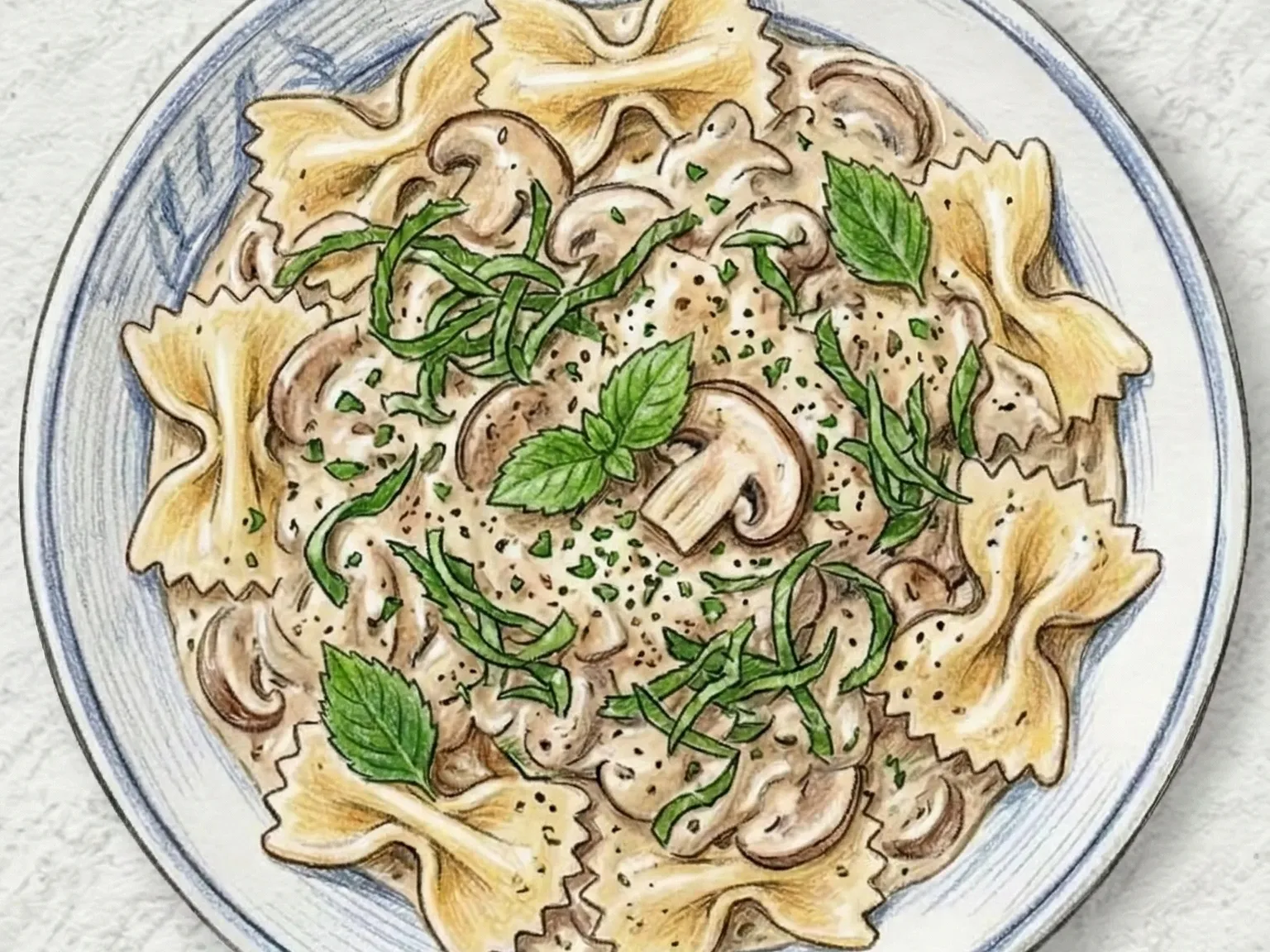
Kkaennip mushroom cream farfalle combines sliced button mushrooms and fresh perilla leaves in a cream sauce over bow-tie pasta.
What makes this special
- Fragrant perilla leaves and sauteed mushrooms provide herbal depth to this creamy farfalle.
- Mushrooms sauteed until moisture evaporates, concentrating umami
- Perilla added last; green rawness fades, herbal depth stays
Key ingredients
Core cooking flow
- 1 Cook 180g farfalle in salted boiling water for 1 minute less than the package time.
- 2 Heat 1.5 tablespoons olive oil over medium-low heat.
- 3 Add 150g thickly sliced cremini mushrooms and cook over medium-high heat for...
Kkaennip mushroom cream farfalle combines sliced button mushrooms and fresh perilla leaves in a cream sauce over bow-tie pasta. The mushrooms are sauteed in olive oil until their moisture cooks off and their flavor concentrates, with onion and garlic building the aromatic base. Heavy cream is then added to form the sauce, and shredded perilla goes in at the end so the leaves wilt just enough to release their fragrance without losing it to the heat. Parmesan contributes salt and a nutty underpinning, while farfalle's ridged and folded surface holds the sauce across every piece. The defining quality of the dish is the perilla itself, whose scent belongs to the sesame family and sits in entirely different territory from basil or mint - grassy, faintly resinous, and unmistakably Korean. Few other herbs could give a cream pasta this specific character.
Instructions
Read the steps as a cooking flow: prep, heat, seasoning, doneness control, and finish.
- 1Finish
Cook 180g farfalle in salted boiling water for 1 minute less than the package time.
Reserve 1 cup pasta water.
- 2Control
Heat 1.5 tablespoons olive oil over medium-low heat.
Saute 80g diced onion and 3 sliced garlic cloves for 2 minutes until softened and sweet.
- 3Control
Add 150g thickly sliced cremini mushrooms and cook over medium-high heat for 4 minutes until all the moisture has evaporated.
- 4Control
Add 200ml heavy cream and 8 thinly sliced perilla leaves.
Simmer over medium heat for 2 minutes, then season with 0.75 teaspoon salt.
- 5Season
Add the cooked farfalle and 3-4 tablespoons pasta water.
Toss for 1 minute until the sauce fills every fold of the bow-tie pasta.
- 6Finish
Turn off the heat, stir in 25g grated Parmesan, then julienne the remaining 4 perilla leaves and scatter on top.
Serve immediately.
After the steps
Pick a recipe that fits this dish.
Continue with shared ingredients, meal pairings, or a similar method.
Recipes That Go Well With This
More Pasta →Based on shared ingredients and meal pairing
Kimchi Tofu Alfredo Farfalle (Creamy Kimchi Bow-Tie Pasta)
Kimchi tofu Alfredo farfalle is a fusion pasta that counters the richness of a cream-and-Parmesan Alfredo sauce with the lactic acidity of well-fermented kimchi. Garlic bloomed in butter forms the aromatic base, then cream, milk, and Parmigiano are combined into the classic Alfredo sauce, after which chopped kimchi is folded in to introduce fermented tang and a layer of umami that a standard Alfredo lacks. Firm tofu cut into cubes and pan-fried until each side is golden provides a mild, neutral protein element with direct textural contrast against the smooth sauce. Farfalle's pinched center holds pockets of sauce against each piece of pasta, delivering a consistent hit of creaminess in every bite, and freshly ground black pepper draws a sharp line through the richness at the finish. The entire dish moves from pan to plate in about 15 minutes.
Soy Galbi Ragu Pappardelle
Soy galbi ragu pappardelle starts with short rib seared hard on both sides, then braised low and slow with aromatics, red wine, and soy sauce for ninety minutes until the meat pulls apart into thick shreds. The extended braise renders out the collagen in the short rib, building a sauce with a genuinely silky, gelatinous body that clings to wide pappardelle ribbons. A soffritto of onion, carrot, and celery forms the sweet foundation; canned whole tomatoes and tomato paste add body and acidity. Soy sauce replaces plain salt and contributes fermented depth that sets this apart from standard Bolognese - the difference is noticeable. Red wine adds tannin and fruit complexity. Grated Parmigiano-Reggiano finishes the bowl. Most of the ninety-minute cook time is hands-off braising.
Chicken Breast Salad (Poached Chicken & Yogurt Dressing)
Chicken breast is poached slowly at low temperature until fully tender through the center, then pulled apart along the grain and layered over crisp romaine. Bell pepper brings mild sweetness and hard-boiled egg adds substantial richness to the bowl. The dressing combines plain yogurt, mustard, and honey into a coating that sits lightly on the lean chicken while contributing a steady tartness. Corn kernels scatter throughout, releasing a gentle sweetness with each bite and keeping the overall balance from tipping too sharp or too rich. A high-protein, clean-tasting salad that satisfies without heaviness.
Myeongran Lemon Cream Fettuccine
Myeongran lemon cream fettuccine wraps wide pasta ribbons in a sauce made from salted pollock roe, heavy cream, butter, and lemon zest. The small eggs of the roe are left intact and stirred into the sauce off the heat so they stay soft and burst with briny flavor when bitten rather than turning granular or hard. Garlic bloomed in butter forms the aromatic base, and a mixture of heavy cream with milk tempers the roe's saltiness into a smooth, balanced coating. Using lemon zest rather than juice adds a bright citrus fragrance without diluting the sauce or introducing acidity that would curdle the cream. Parmigiano-Reggiano deepens the savory foundation, and fettuccine's broad, flat surface holds the thick cream more effectively than thinner pasta shapes. The entire dish takes about twenty minutes from start to plate, making it a practical weeknight option that does not sacrifice depth of flavor for speed. The critical technique -- incorporating the roe off the heat -- keeps the texture creamy throughout and prevents the eggs from cooking into tough, unpleasant morsels.
Serve with this
Korean Chestnut Latte
Bam latte is a Korean autumn drink made by blending boiled chestnuts into a smooth paste and warming it with milk. The chestnuts are pureed with water until the mixture is completely smooth, then combined with milk and heated gently on the stovetop over low heat. Maple syrup introduces a caramel sweetness over the mild, starchy flavor of the chestnuts. Ground cinnamon adds warmth, and a small amount of vanilla extract gives the overall aroma more depth. Blending the chestnuts longer yields a silkier drink; leaving some texture produces a thicker, more porridge-like consistency. The full preparation takes about twenty minutes, making it a practical homemade version of the seasonal chestnut lattes that appear in Korean cafes each autumn.
Gyeongdan (Chewy Rice Balls with Sweet Coating)
Gyeongdan are Korean glutinous rice balls, each one shaped by hand into a small sphere, boiled until it floats, then rolled in a dry coating while still warm. The dough is made by kneading glutinous rice flour with hot water rather than cold, a technique that partially gelatinizes the starch and gives the finished rice ball its characteristic chewy spring. Rinsing the cooked balls immediately in cold water stops them from sticking together and firms the surface enough for the coating to cling evenly. Traditional coatings include roasted soybean powder, which is mild and nutty, ground black sesame, which adds deep toasted bitterness, and sweetened red bean crumbles. Some versions are filled with sweet red bean paste before shaping, so the filling bursts as you bite through. Gyeongdan appear on ceremonial tables at seasonal holidays and as everyday snacks, often presented as a trio of colors arranged side by side on a single plate.
Croque Monsieur (Béchamel Ham and Cheese Melt)
Croque monsieur is a Parisian café classic built on a smooth béchamel sauce made from a butter-flour roux whisked with warm milk. One slice of white bread is spread with Dijon mustard before being layered with sliced ham and grated Gruyère cheese. The second slice tops the sandwich, which then gets a generous coat of béchamel and more cheese on the upper surface. Baking at 200 degrees Celsius for ten minutes melts the interior filling, and a brief three-minute broil creates a golden, bubbling crust on top. The mustard's pungent sharpness balances the salty richness of ham and cheese, keeping the overall flavor clean.
Similar recipes
Soy-Garlic Chicken Parmesan Spaghetti
Soy garlic chicken Parmesan spaghetti represents a fusion of culinary traditions, integrating a marinade rooted in Korean flavors with the structural framework of a classic Italian pasta dish. For the protein component, chicken thigh pieces undergo a marination process involving a mixture of soy sauce, finely minced garlic, and honey. During the subsequent cooking phase, these ingredients are pan seared at a high temperature. This heat causes the natural sugars found in both the honey and the soy sauce to undergo caramelization, resulting in the formation of a dark and sticky glaze that coats the exterior of the meat. Garlic serves as a recurring element in the preparation, being used first within the initial marinade and then again when it is sauteed directly into the tomato sauce base. This repetition ensures that a consistent aromatic quality is maintained throughout the various layers of the meal from the start of cooking to the final assembly. The acidity inherent in the tomato sauce introduces a bright fruit character to the profile. This sharpness functions to balance the density of the sweet and salty glaze on the chicken, preventing the richness of the marinade from becoming overwhelming. A generous amount of grated Parmesan cheese is applied over the dish to introduce a nutty and salty depth. This cheese layer acts as a bridge between the Korean seasoning applied to the chicken and the Italian pasta that serves as the foundation of the plate. The choice of chicken thigh is intentional because this specific cut retains its internal moisture even during a hard sear. It remains succulent in a way that chicken breast meat often does not when subjected to similar levels of heat. The final preparation is completed with a garnish of thinly sliced scallions, which provides a clean green finish to the presentation.
Korean Cream Tteokbokki (Chewy Rice Cake in Cream Butter Sauce)
Cooking rice cakes in a mixture of heavy cream, milk, and butter offers a mild alternative to the spicy gochujang-based version. The process begins with sauteing onions in butter over low heat for at least ten minutes, which converts onion starches into sugar for a natural sweetness without added sugar. Once the cream and milk are added to the softened onions, the rice cakes simmer for seven to eight minutes over medium-low heat. This allows the cakes to absorb the liquid while maintaining their characteristic dense chewiness. A final addition of parmesan cheese provides a salty contrast to the heavy cream base. Because the flavor profile resembles a cream pasta, it serves as a common entry point for people avoiding chili heat. Maintaining a steady medium-low temperature prevents the sauce from separating during cooking. Adding bacon or shrimp introduces extra protein and savory elements to the pan. The sauce consistency thickens quickly as its temperature drops, making immediate service from the pan the best way to maintain the intended texture. Swapping the parmesan for cheddar or mozzarella changes the character of the finished sauce and provides a different eating experience.
Charred Daepa Gamja Doenjang Salad (Charred Leek Potato Salad)
Charred daepa gamja doenjang salad combines boiled potatoes with large green onion segments that have been seared until deeply caramelized and smoky. The high heat strips away the raw onion bite and replaces it with a concentrated sweetness and char aroma. A dressing made from doenjang, lemon juice, honey, and olive oil layers fermented depth with bright acidity and a touch of sweetness, drawing out the mild flavor of the potato. Tossing the potatoes while still warm allows the dressing to absorb into the starchy flesh rather than sitting on the surface. Red chard adds color and a faint bitterness that gives the bowl a sense of direction, while black sesame seeds contribute a final nutty accent.