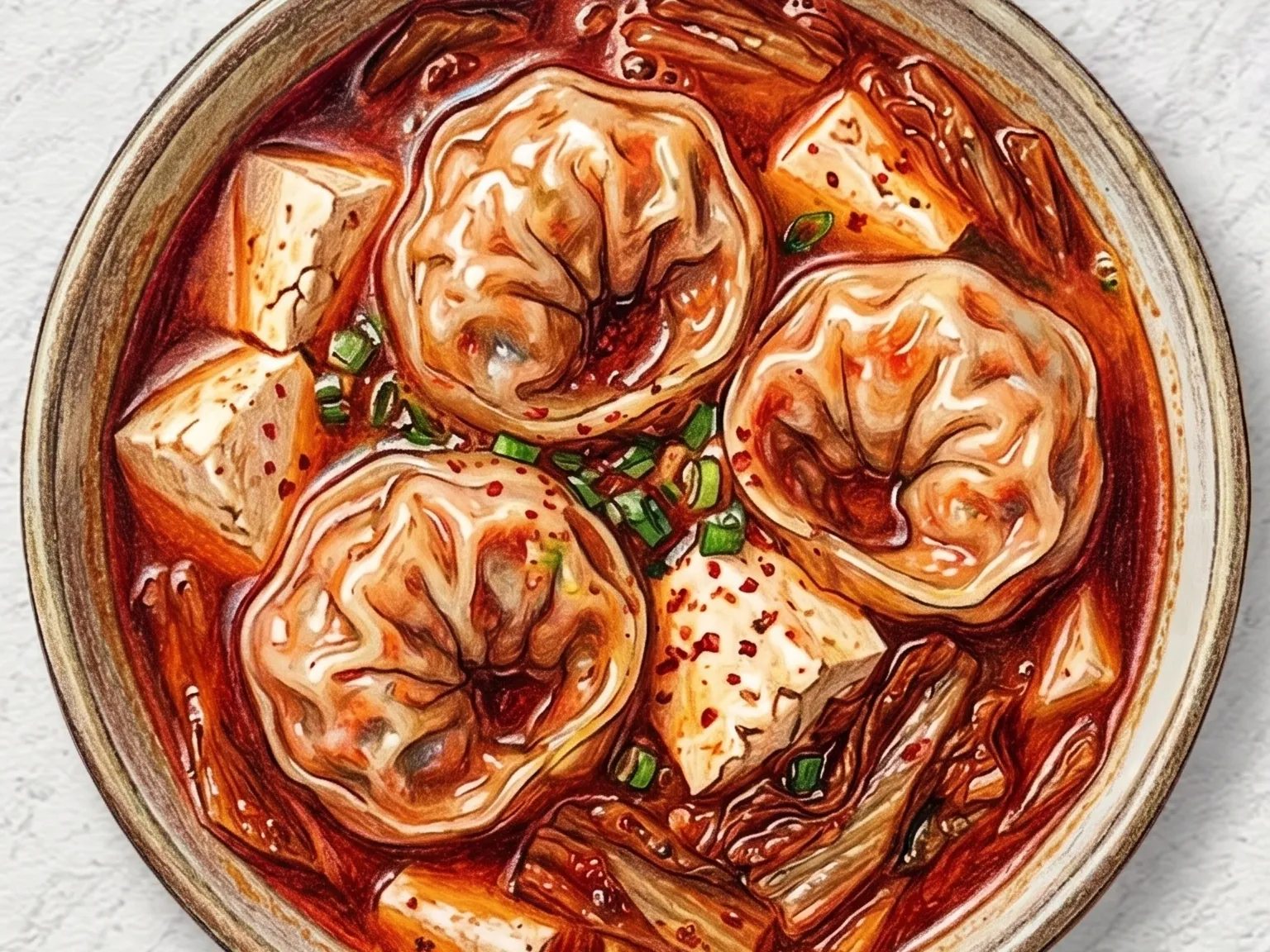
Korean Kimchi Mandu Jjigae (Kimchi Dumpling Stew)
Kimchi mandu jjigae drops eight frozen kimchi dumplings straight into a simmering pot of aged kimchi, tofu, and anchovy stock. The dumpling wrappers absorb the broth and turn plump, while the kimchi filling inside echoes the stew's tangy base, doubling the fermented depth. Korean chili flakes and soup soy sauce season the liquid with a straightforward heat. It is a filling, no-fuss meal that needs nothing beyond a bowl of rice.
Adjust Servings
Instructions
- 1
Cut kimchi bite-size and slice tofu and scallion.
- 2
Stir-fry kimchi with chili flakes for 1 minute.
- 3
Add stock and garlic; simmer 5 minutes to infuse flavor.
- 4
Add frozen dumplings and cook over medium heat for 6 minutes.
- 5
Add tofu and scallion, season with soup soy sauce, and simmer 2 more minutes.
As an Amazon Associate, we may earn from qualifying purchases.
Tips
Nutrition (per serving)
More Recipes

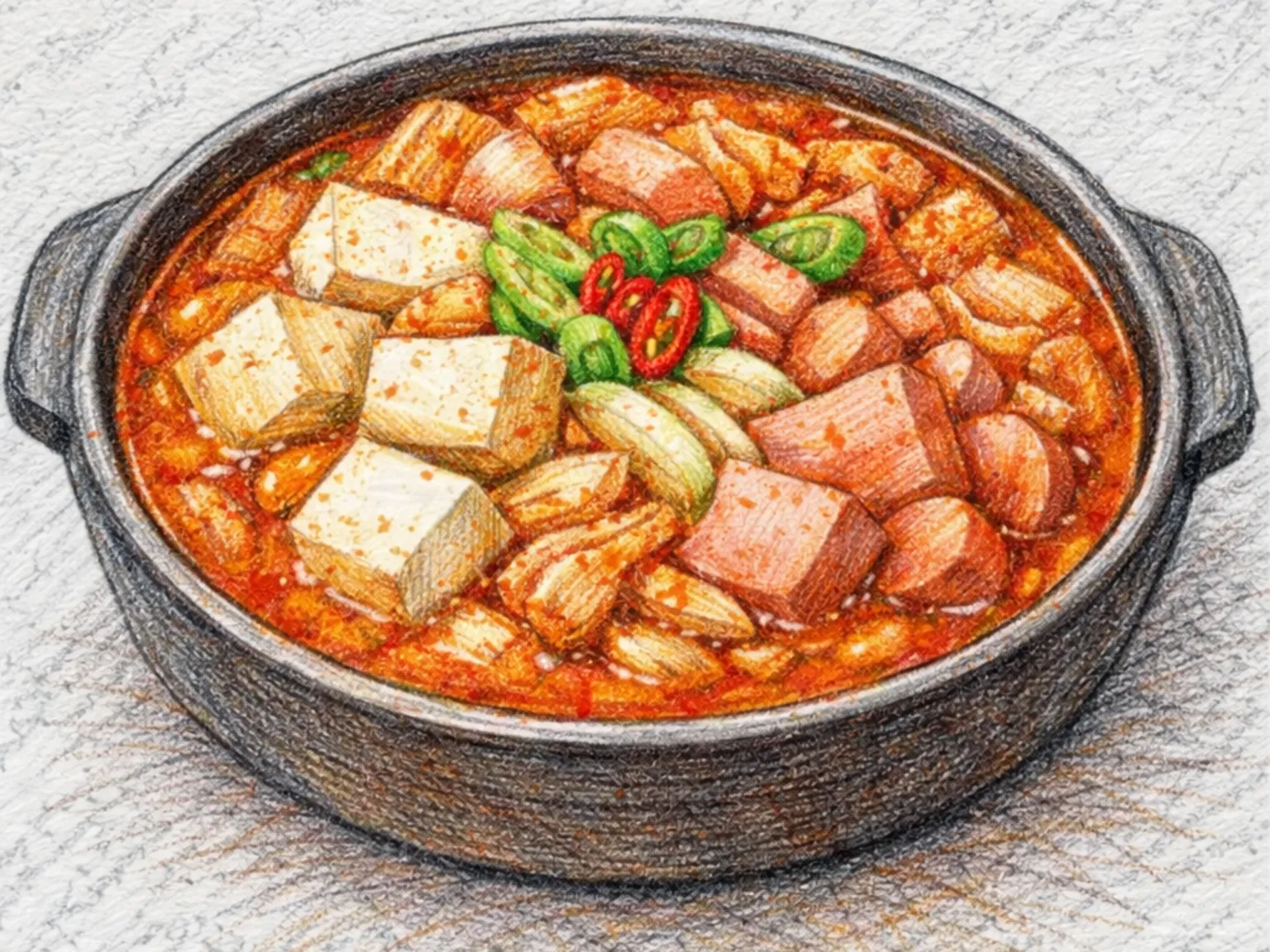
Korean Pork Kimchi Stew (Fermented Kimchi & Pork Shoulder)
Pork kimchi jjigae is one of the most beloved home-cooked Korean stews, built on aged kimchi and pork shoulder. The marbled fat from the pork shoulder melts into the broth, balancing the kimchi's sharp acidity with richness. Tofu and onion bulk up the pot, while soup soy sauce and chili flakes season the liquid. The riper and more sour the kimchi, the better this stew tastes - it is the ideal use for old kimchi.

Korean Pork Gochujang Jjigae
This pork-focused gochujang stew blends chili paste with a half-tablespoon of doenjang, balancing the heat with fermented soybean depth. A full tablespoon of gochugaru intensifies the color and spice level. The 180 grams of pork shoulder render their juices into 700ml of broth, while potato, zucchini, onion, and tofu ensure variety in every bite. The combination of two fermented pastes gives this version a more complex flavor than a pure gochujang stew.

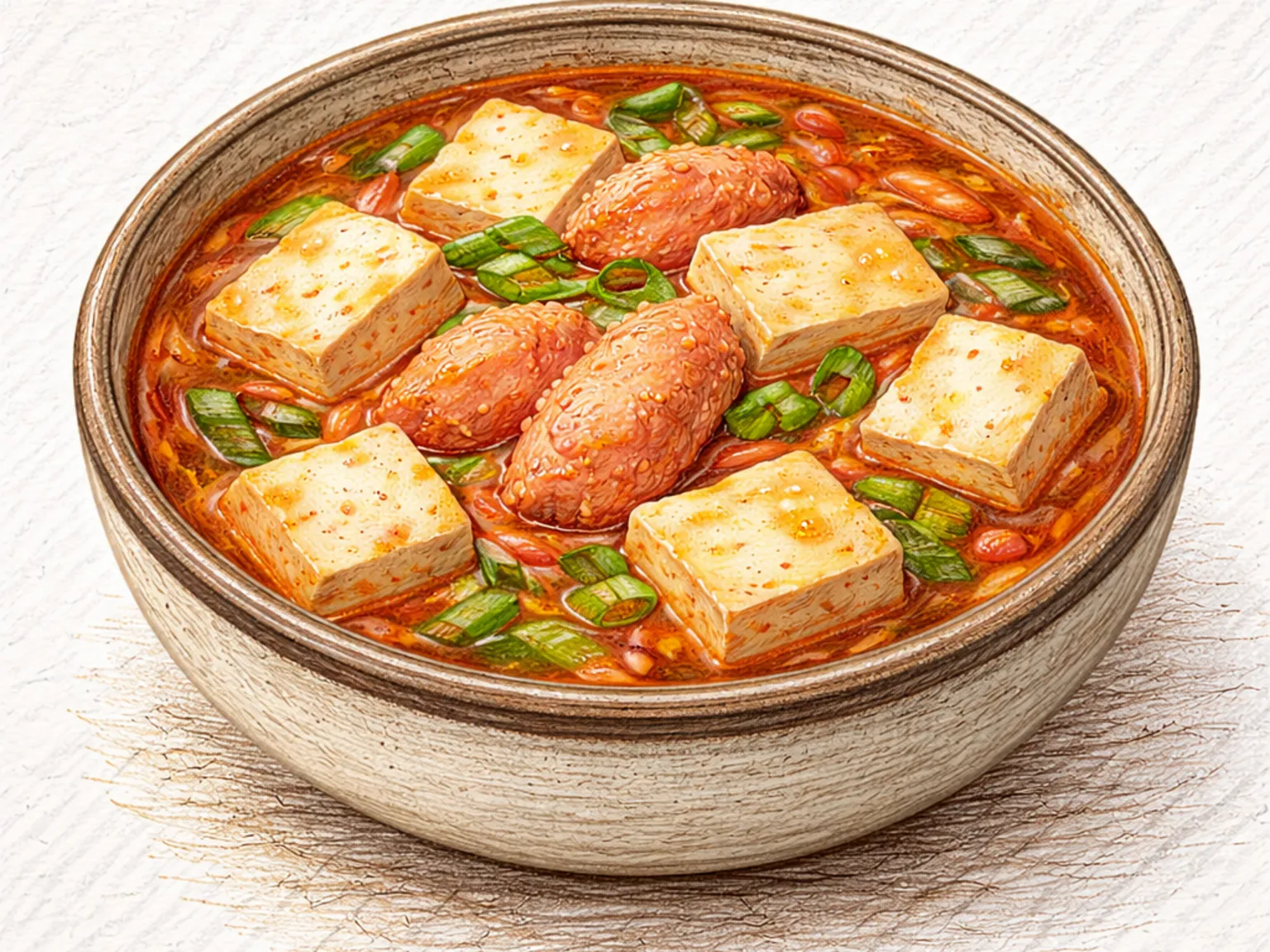
Korean Kimchi Jjigae (Kimchi Stew)
Kimchi jjigae is the quintessential Korean home-cooked stew, built on well-fermented kimchi and pork belly simmered together until the flavors fully meld. The kimchi's sharp acidity breaks down the richness of the pork fat, producing a broth that is simultaneously tangy, spicy, and deeply savory. A spoonful of doenjang adds another layer of fermented complexity, while tofu blocks absorb the fiery liquid. Finished with a drizzle of sesame oil, it is the definitive comfort food served with steamed rice.

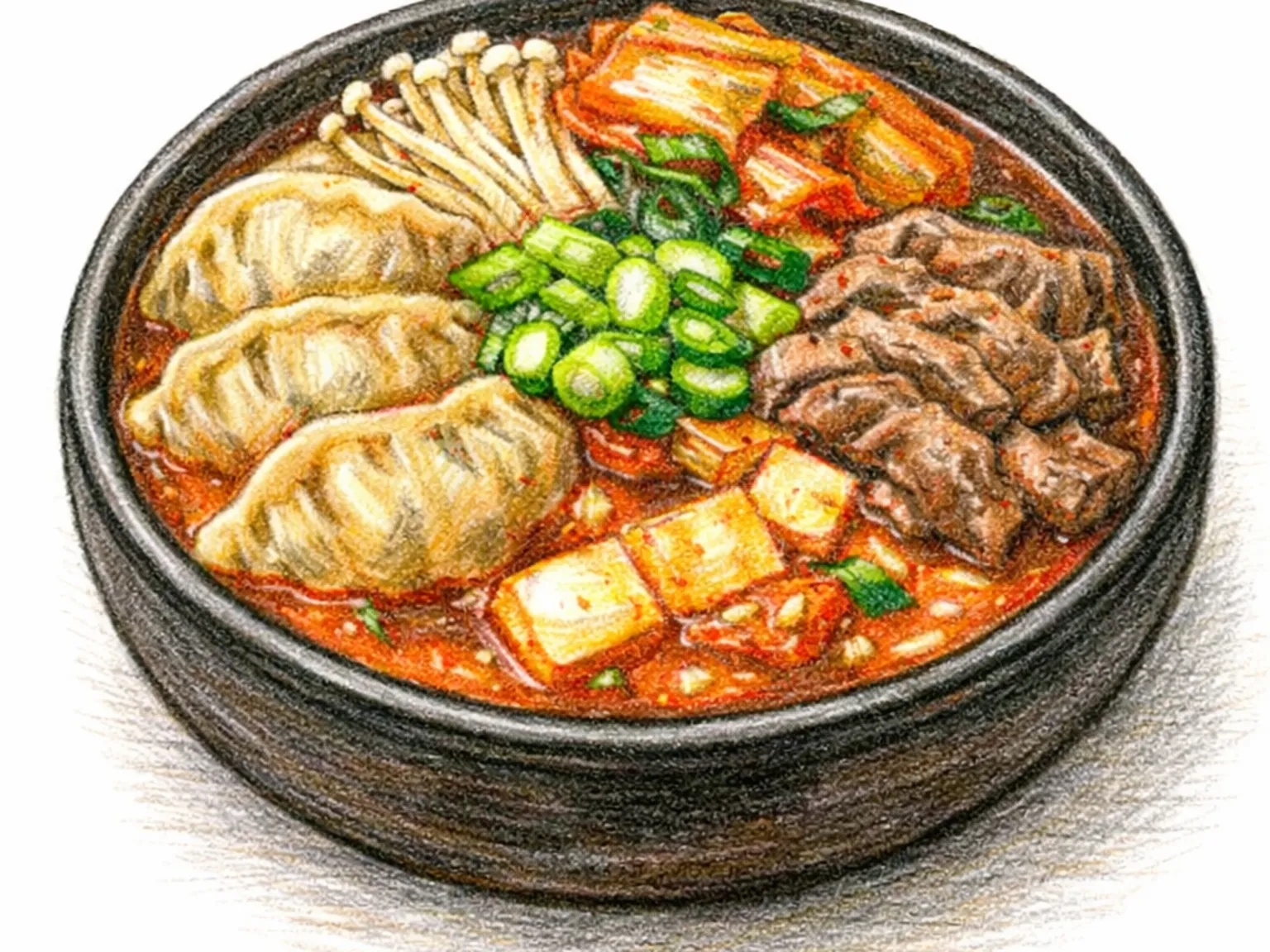
Korean Kimchi Beef Dumpling Hot Pot
This hearty hot pot combines frozen dumplings, sliced beef, and kimchi simmered together in anchovy stock seasoned with gochujang and soup soy sauce. Napa cabbage, enoki mushrooms, and tofu add layers of texture to the bubbling broth. The umami from the dumpling filling mingles with the tangy, spicy kimchi to create a deeply flavored soup that warms from the inside out.

Korean Warm Noodles with Kimchi Dumplings
Kimchi mandu onmyeon is a Korean warm noodle soup that pairs thin wheat noodles with kimchi-filled dumplings in a light anchovy-kelp broth. The dumplings are simmered directly in the broth for six to seven minutes, during which their kimchi-and-pork filling releases flavor into the surrounding liquid. Somyeon noodles are boiled in a separate pot and rinsed in cold water to keep the main broth clear and the noodles smooth. Julienned zucchini and a thin stream of beaten egg go into the simmering broth near the end, adding color and gentle texture. Seasoning is kept simple - soup soy sauce and minced garlic - so the dumpling filling does most of the heavy lifting on flavor. Since commercial kimchi dumplings vary in saltiness, the soy sauce is best added gradually at the end.

Korean Egg Dumpling Pancakes
Gyeran-mandu is a Korean market-style egg dumpling pancake, made by mixing finely chopped cabbage, scallion, and soaked glass noodles into beaten egg and pan-frying into flat rounds. Instead of a traditional dumpling wrapper, the egg itself forms the outer shell, cooked slowly over medium-low heat until lightly golden outside and moist inside. Squeezing excess moisture from the vegetables is critical - too much water and the patties lose their shape. The glass noodles must be cut short to make flipping manageable, and a soy sauce dip brings a salty contrast to the egg's mild flavor.