Korean Kimchi Tofu Nabe Udon
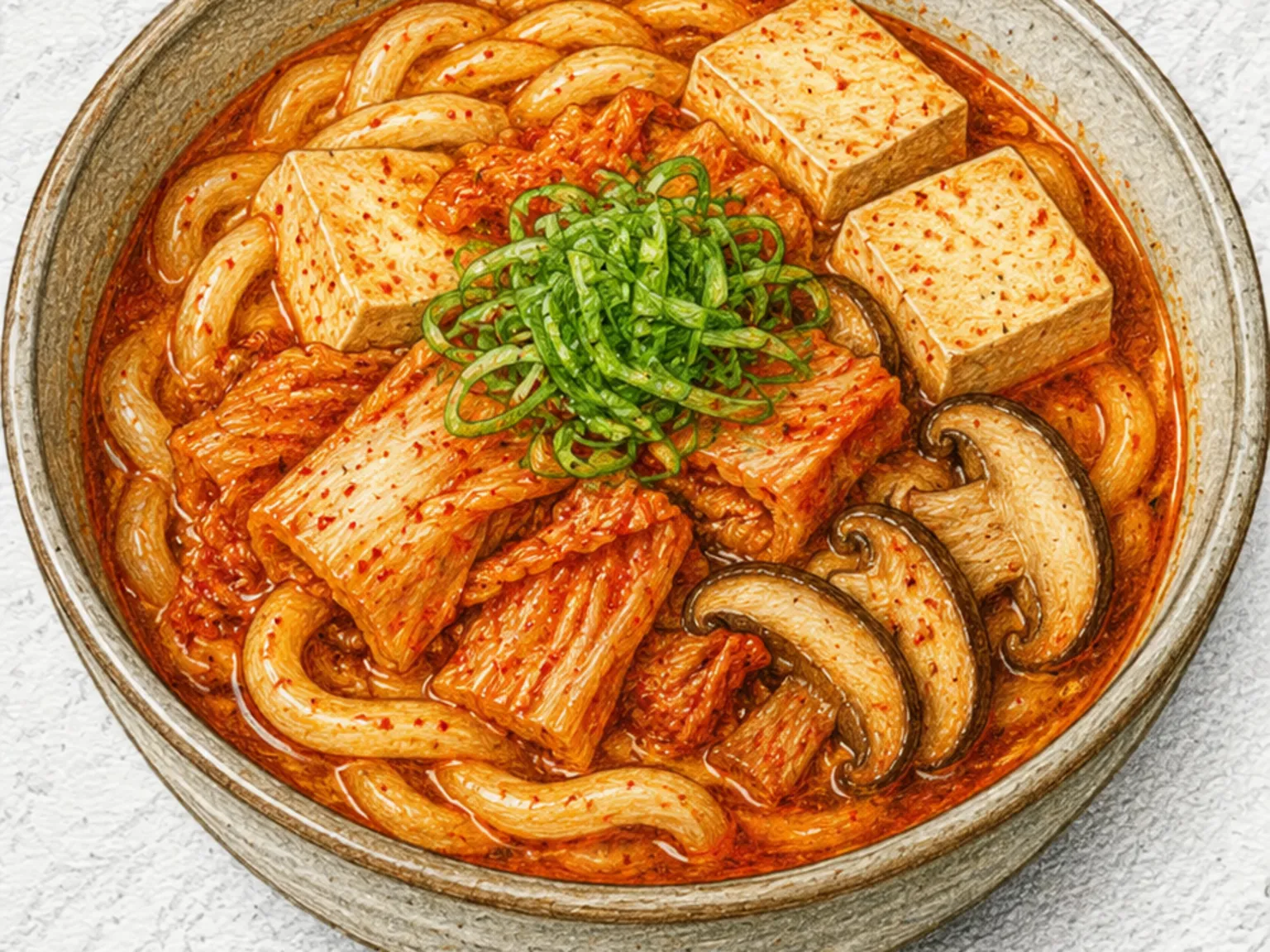
Kimchi tofu nabe udon is a Japanese-Korean hybrid hot pot noodle built on anchovy-kelp stock. Aged kimchi is sauteed in sesame oil for two minutes to tame its sharp acidity, then the stock goes in along with Korean chili flakes and soup soy sauce to form the broth base. Firm tofu cut into thick slabs and sliced shiitake mushrooms simmer for four minutes, absorbing the spicy-savory broth before thick udon noodles are added for a final two to three minutes. The udon's heft soaks up the surrounding liquid, making each bite intensely flavored. Since kimchi saltiness varies widely, the soy sauce is best added in small increments at the end. Patting the tofu dry before it goes in helps keep the broth from turning cloudy.
Adjust Servings
Instructions
- 1
Cut kimchi into bite-size pieces, slice tofu to 1 cm, and slice shiitake mushrooms.
- 2
Heat sesame oil and saute kimchi for 2 minutes to mellow sharp acidity.
- 3
Add stock, chili flakes, and soup soy sauce, then simmer 5 minutes.
- 4
Add tofu and mushrooms and simmer 4 more minutes so flavors soak in.
- 5
Add udon and cook 2-3 minutes until heated through, then adjust final seasoning.
- 6
Serve in bowls, garnish with scallion, and enjoy hot.
As an Amazon Associate, we may earn from qualifying purchases.
Tips
Nutrition (per serving)
More Recipes

Korean Tofu Kimchi Bibim Myeon
Dubu kimchi bibim myeon is a Korean mixed noodle dish where ripe kimchi is stir-fried in perilla oil to deepen its fermented flavor, then combined with gochugaru and gochujang into a spicy dressing that coats each strand of boiled noodles. Pan-frying the kimchi tames its raw acidity and pushes the umami forward. The tofu is pressed dry and seared until golden-crisp on the outside while staying soft inside, creating a clean counterpoint to the bold noodles. Half a boiled egg on top is a common finishing touch - when the yolk mixes into the dressing, it adds a creamy richness that rounds out the heat.

Korean Spicy Beef Soup Noodles
Yukgaejang guksu starts with a deep broth made by simmering beef brisket until the liquid turns rich and full-bodied. The meat is shredded along the grain and returned to the pot alongside fernbrake, bean sprouts, and green onion that have been seasoned with gochugaru, sesame oil, and garlic before a brief stir-fry. This pre-seasoning step lets the chili heat dissolve into the oil, producing a rounded spiciness rather than raw powder burn. Korean soup soy sauce adjusts the salt level without clouding the broth's color. Thin wheat somyeon noodles are boiled separately and added at the end so they absorb the broth without turning mushy. Swapping in glass noodles changes the texture to a chewier, more slippery bite that holds onto the soup longer.

Korean Spicy Seafood Noodle Soup
Jjamppong is a fiery Korean-Chinese noodle soup where squid, mussels, and vegetables are stir-fried in chili-infused oil before being flooded with chicken stock and brought to a rolling boil. The high-heat frying step blooms the gochugaru in oil, embedding a smoky, roasted spice into the broth that raw chili powder alone cannot achieve. Cabbage, onion, and green onion soften into the liquid and release their natural sugars, while soy sauce ties the seasoning together. Springy fresh wheat noodles absorb the vivid red broth, delivering intense heat and deep seafood flavor in every mouthful.

Korean Kimchi Bulgogi Udon
Kimchi bulgogi udon is a Korean stir-fried noodle dish that combines fermented kimchi's sharp tang with thinly sliced beef marinated in a sweet soy-based bulgogi seasoning. The beef is seared quickly over high heat, then onion and kimchi join the pan and cook until their moisture evaporates, concentrating flavor. A sauce of soy sauce, gochujang, and sugar goes in next, followed by briefly blanched udon noodles that get tossed on high heat for one to two minutes until every strand is coated. The thick, round udon holds the bold sauce well, and a final burst of heat gives the dish a hint of smoky wok char. If the kimchi runs very sour, an extra half-teaspoon of sugar brings the flavor back into balance.

Korean Kimchi Bean Sprout Stew
This stew brings together fermented kimchi and soybean sprouts in an anchovy stock base for a broth that is both refreshing and spicy. The sprouts retain a slight crunch and release a clean flavor that tempers the kimchi's sharp tang. Soft tofu melts into the stew, providing creaminess, while onion and green onion add background sweetness. Seasoned with soup soy sauce and gochugaru, it is a lighter-style jjigae often enjoyed as a morning-after remedy.

Korean Soft Tofu Stew (Silken Tofu in Spicy Clam Broth)
Sundubu-jjigae is one of Korea's most iconic stews, featuring silken soft tofu in a fiery broth with clams, ground pork, and gochugaru. Sesame oil, chili flakes, and garlic are fried together first to create a fragrant base, then the liquid is added and brought to a rolling boil. Two eggs are cracked on top and left to set softly in the bubbling stew. The clams contribute a clean brininess while the pork grounds the dish with meaty depth, and it is traditionally served still boiling in an earthenware pot.