Korean Kimchi Tempura (Crispy Battered Deep-Fried Fermented Kimchi)
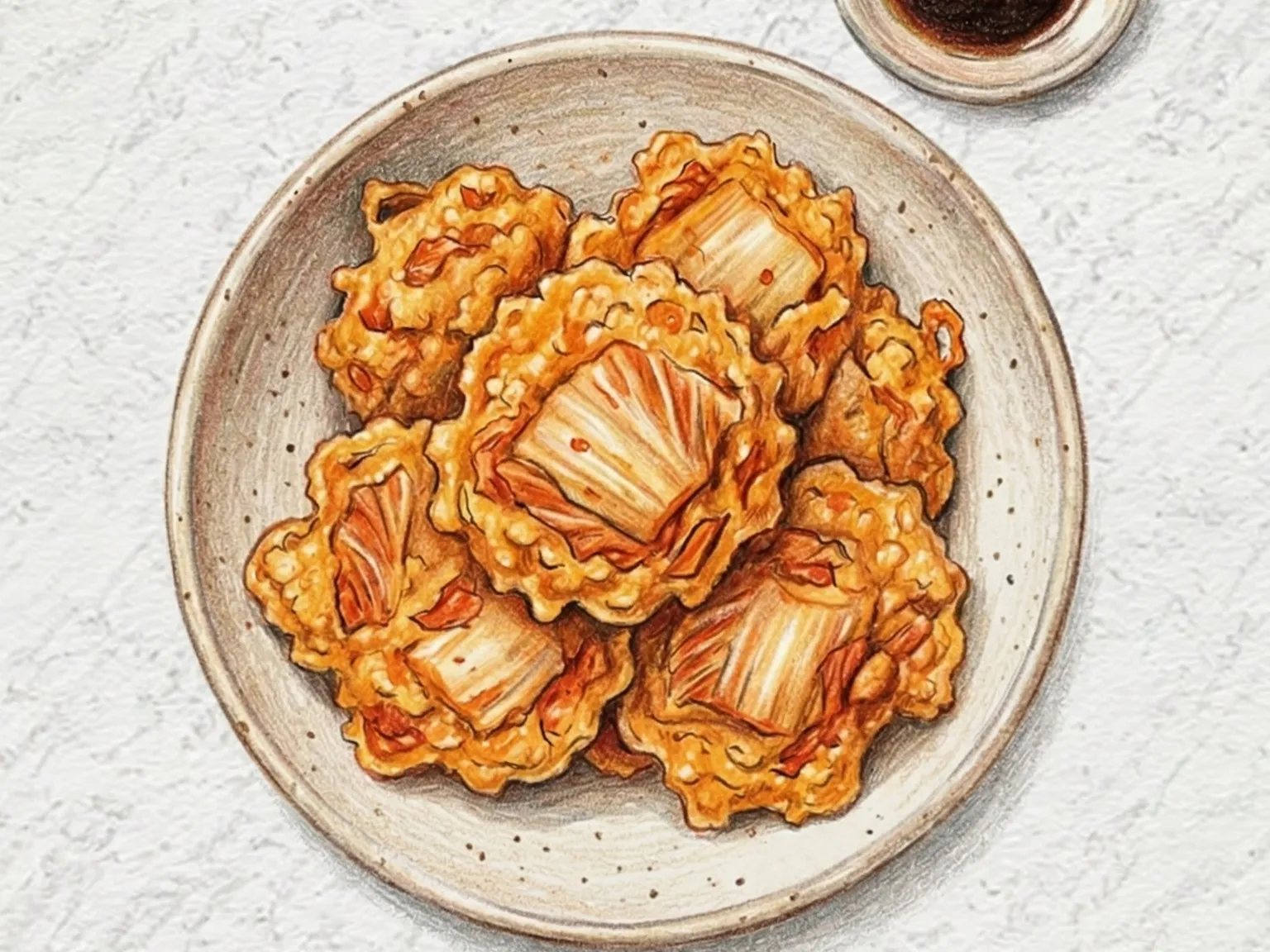
Kimchi twigim is made by cutting well-fermented napa kimchi into large pieces, lightly squeezing out moisture, dipping in a batter of frying mix and cold water, and deep-frying at 170C until crispy. Cold water in the batter creates a sharper temperature differential in the hot oil, producing a crunchier coating. The kimchi's fermented acidity and spice layer against the batter's mild savoriness, and using deeply aged kimchi intensifies the tang that counterbalances the frying oil. Squeezing the kimchi too dry removes its umami-rich juices, so moderate draining is the key.
Adjust Servings
Instructions
- 1
Cut kimchi into pieces and squeeze out some moisture.
- 2
Mix frying powder with cold water.
- 3
Coat kimchi in batter and deep-fry at 170C until crispy.
- 4
Drain oil and serve.
As an Amazon Associate, we may earn from qualifying purchases.
Tips
Nutrition (per serving)
More Recipes

Korean Fried Squid
Cleaned squid is cut into 1 cm-thick rings, dipped in a light batter of frying mix, cold water, and egg, then deep-fried at 170 degrees Celsius for three to four minutes. Mixing the batter loosely so a few lumps remain creates an uneven coating that fries up extra crispy. The contrast between the chewy squid and the thin, airy shell is the defining feature, and the rings are served with a sprinkle of salt or a soy-vinegar dip.

Mixed Korean Tempura
Modeum twigim is an assorted Korean tempura platter featuring sweet potato, squid, shrimp, onion, and carrot dipped in a light batter of frying powder mixed with cold water, then deep-fried at 170 degrees Celsius. Keeping the water cold and mixing minimally prevents gluten development, yielding a thin, shattering crust rather than a heavy coating. Each ingredient brings its own character to the plate: sweet potato offers starchy sweetness, squid and shrimp contribute oceanic umami, and onion and carrot release aromatic moisture as they fry. Served with soy sauce for dipping, the assortment lets the clean frying flavor and natural taste of each ingredient stand on their own.

Korean Curry Flavored Tempura
Curry twigim mixes curry powder directly into the frying batter, giving it a vivid golden color and built-in spice flavor before any dipping sauce. Sweet potato, carrot, and onion slices are coated in this batter and deep-fried at 170 degrees Celsius until crisp. Using ice-cold water in the batter inhibits gluten development, producing a thin, shatteringly light crust. Compared to standard Korean vegetable tempura, the turmeric, cumin, and coriander notes from the curry powder give each piece a distinctly aromatic, warm-spiced character.

Korean Potato Fritters
Gamja twigim coats sliced or shredded potatoes in a batter of frying mix and cold water, then deep-fries them until golden and crisp. Soaking the cut potatoes in cold water to wash off surface starch results in a crunchier finish after frying, and keeping the batter coat thin lets the potato's own starchy sweetness come through. Thick-cut slices yield a fluffy interior beneath the crust, while shredded potatoes tangle together into a chip-like, airy cluster. A simple dusting of salt is enough to bring out the potato flavor, and Korean fritter shops typically serve these alongside chili pepper and perilla leaf tempura as part of a mixed platter.

Korean Kimchi Pork Jeon (Fermented Kimchi and Pork Crispy Pancake)
Well-fermented kimchi and pork shoulder are the backbone of this hearty Korean pancake. Kimchi brine is mixed directly into the batter, intensifying both the color and the tangy, fermented depth of flavor. A small amount of sugar balances the acidity, while green onion and onion add texture throughout. Pressing the pancake flat in a generously oiled pan over high heat produces deeply caramelized, crispy edges that contrast with the soft, savory interior.

Korean Grilled Chicken Skewers
Dak-kkochi-gui is a Korean grilled chicken skewer inspired by street-stall cooking, made by threading bite-sized pieces of chicken breast or thigh onto bamboo sticks and brushing them with a sauce of gochujang, soy sauce, honey, and minced garlic. Thigh meat works best because its higher fat content resists drying out over direct heat, and applying the glaze in two or three separate coats builds up a thick, sticky, caramelized layer. Cutting the chicken into uniform cubes ensures every piece finishes cooking at the same time, and alternating with slices of green onion or bell pepper between the meat adds moisture and color. The interplay of gochujang's fermented heat and honey's sweetness against charcoal smoke captures the unmistakable flavor of Korean street food.