Kimchi Stir-Fried Udon (Pork Belly Kimchi Wok-Fried Noodles)

Kimchi Stir-Fried Udon (Pork Belly Kimchi Wok-Fried Noodles)

Quick answer

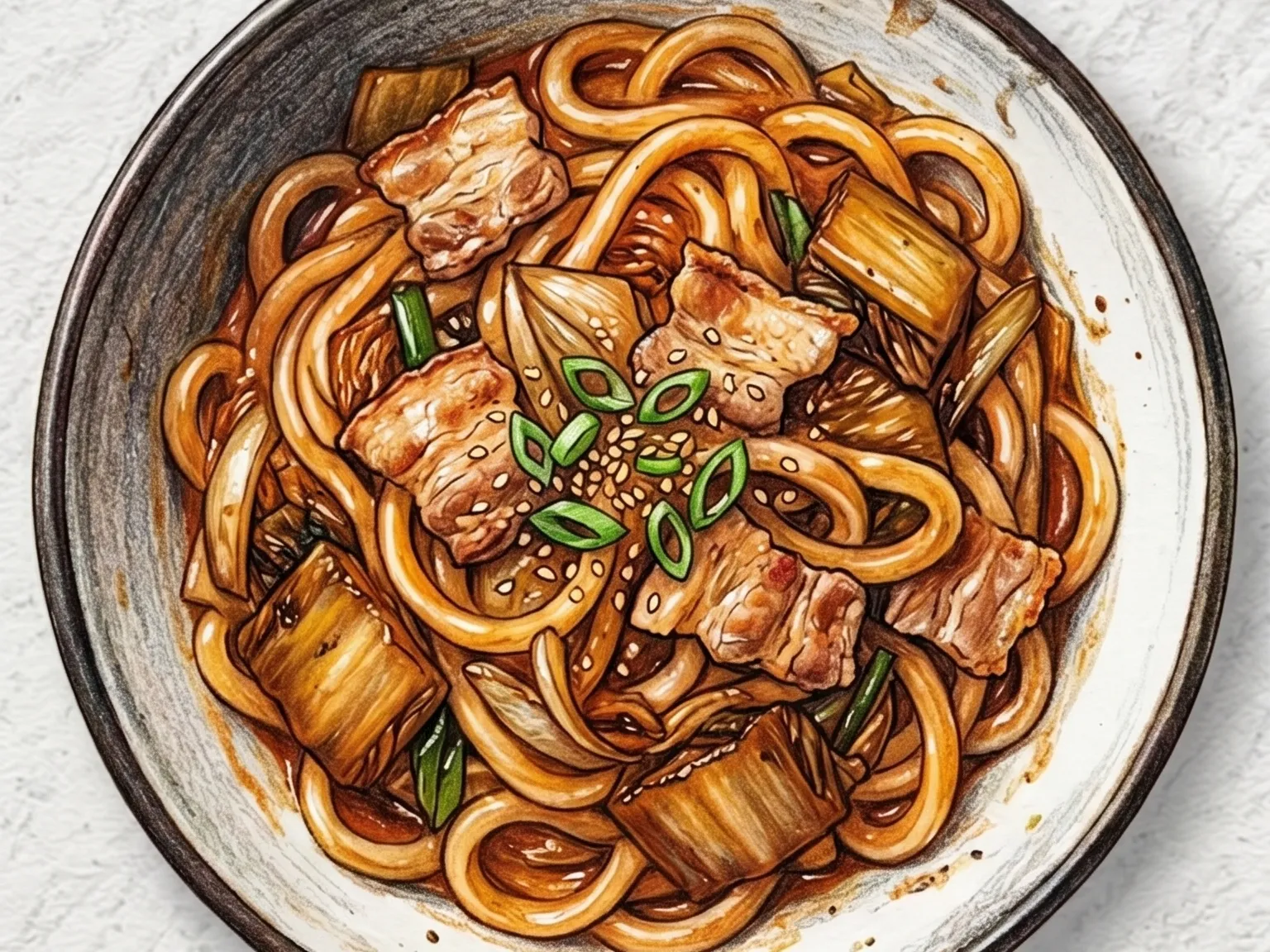
Kimchi udon stir-fry is a Korean-Japanese fusion noodle dish that brings together paper-thin pork belly, aged kimchi, and thick udon noodles over intense, unbroken high heat.

What makes this special

  • Pork belly and aged kimchi are wok-fried at high heat with thick, springy udon noodles.
  • High heat throughout for wok char aroma and firm noodle texture
  • Thinly sliced pork belly fat heats the pan to fully evaporate kimchi moisture
Total time
22 min
Level
Easy
Servings
2 servings
Ingredients
9
Calories
690 kcal
Protein
23 g

Key ingredients

udon noodleskimchithin-sliced pork bellyoniongreen onion

Core cooking flow

  1. 1 Loosen 2 packs of udon noodles in hot water for only 1 minute, then drain well.
  2. 2 Mix 1 tablespoon gochujang, 1 tablespoon soy sauce, and 1 teaspoon sugar before cooking.
  3. 3 Heat the pan over high heat, then add 1 tablespoon cooking oil and 160 g thin-sliced pork belly.

Kimchi udon stir-fry is a Korean-Japanese fusion noodle dish that brings together paper-thin pork belly, aged kimchi, and thick udon noodles over intense, unbroken high heat. The pork belly goes into the pan first, searing until the edges crisp and enough fat renders out to carry the aromatics that follow. Onion and green onion go in next to build fragrance, and kimchi is added last among the aromatics and stir-fried hard until every drop of its moisture has evaporated and the flavor has concentrated into the solids. A sauce of gochujang, soy sauce, and sugar is poured over, and blanched udon noodles are tossed in and moved constantly so the coating reaches every noodle strand. Dropping the heat at any point causes the udon to soften and lose its bounce, so full high heat from start to finish is essential. A spoonful of kimchi juice added mid-cook deepens the umami without making the sauce watery, and a small knob of butter stirred in just before plating rounds the sharp edges of the seasoning. The more fermented and sour the kimchi, the more complex the finished noodle becomes.

Prep 10min Cook 12min 2 servings

Instructions

Read the steps as a cooking flow: prep, heat, seasoning, doneness control, and finish.

6 steps
  1. 1
    Step

    Loosen 2 packs of udon noodles in hot water for only 1 minute, then drain well.

    Keep them separate and dry enough so they do not turn watery when they hit the hot pan later.

  2. 2
    Season

    Mix 1 tablespoon gochujang, 1 tablespoon soy sauce, and 1 teaspoon sugar before cooking.

    Have the onion, green onion, kimchi, and drained udon ready because the stir-fry should stay fast and hot.

  3. 3
    Control

    Heat the pan over high heat, then add 1 tablespoon cooking oil and 160 g thin-sliced pork belly.

    Stir-fry until the edges turn golden and enough fat renders to coat the bottom of the pan.

  4. 4
    Heat

    Add 100 g onion and 40 g green onion, then stir-fry for about 1 minute.

    When the onion softens slightly and the green onion smells fragrant, move on before the vegetables release too much water.

  5. 5
    Heat

    Add 180 g kimchi and keep the heat high.

    Stir-fry until most liquid disappears and the kimchi edges look slightly darker, concentrating the flavor instead of letting the noodles steam later.

  6. 6
    Finish

    Add the mixed sauce and udon noodles, then toss quickly for about 1 minute.

    If needed, add only 1 tablespoon kimchi juice; serve as soon as the noodles look glossy and evenly coated.

After the steps

Pick a recipe that fits this dish.

Continue with shared ingredients, meal pairings, or a similar method.

Recipes That Go Well With This

More Noodles →

Based on shared ingredients and meal pairing

Kimchi Butter Udon (Tangy Kimchi Stir-Fried in Butter)
Shared ingredient: udon noodles Noodles

Kimchi Butter Udon (Tangy Kimchi Stir-Fried in Butter)

Kimchi butter udon is a fusion stir-fried noodle that pairs the tangy, spicy acidity of well-fermented kimchi with the deep richness of butter. The first half of the butter goes into the pan to saute onion and garlic until they release their sweetness, then chopped kimchi is added and stir-fried for two minutes to cook off the moisture, which concentrates the flavor and mellows the sharp sourness. Blanched udon noodles and soy sauce are tossed in over high heat so the seasoning coats every strand evenly, and the remaining butter is added off-heat immediately after, keeping its aroma intact while lending a glossy sheen and fuller depth to the noodles. A soft-cooked egg placed on top breaks into a creamy sauce when stirred in, while seaweed flakes and sliced scallion contribute crunch and a fresh herbal lift. If the kimchi leans salty, reducing the soy sauce to one tablespoon keeps the balance in check. The whole dish, including prep, comes together in about twelve minutes.

Korean Kimchi Bulgogi Udon
Shared ingredient: udon noodles Noodles

Korean Kimchi Bulgogi Udon

Kimchi bulgogi udon is a Korean stir-fried noodle dish that brings together the sharp acidity of well-fermented kimchi and the sweet, savory depth of thinly sliced bulgogi beef, all coating thick, round udon strands. The beef is seared quickly over high heat to develop browning on the surface before onion and kimchi join the pan and cook until nearly all their moisture evaporates, concentrating both flavor and color. A sauce of soy sauce, gochujang, and sugar goes in next, followed by briefly blanched udon noodles that get tossed on maximum heat for about one minute so every strand absorbs the sauce while retaining a firm bite. The thick cross-section of udon holds bold, clingy sauces better than thinner noodles and creates a satisfying, filling meal without any broth. When kimchi is especially sour, a small addition of sugar or a quick rinse of the kimchi before cooking brings the acidity back into proportion. Finishing with sliced scallion and toasted sesame seeds adds color and a nutty lift that completes the dish.

Wafu Daikon Salad (Shredded Radish with Japanese Soy Dressing)
Serve together Salads

Wafu Daikon Salad (Shredded Radish with Japanese Soy Dressing)

Wafu daikon salad shreds daikon radish into very fine julienne strips and dresses them with a Japanese wafu dressing made from soy sauce, rice vinegar, and sesame oil, finished with bonito flakes and torn nori. Soaking the shredded daikon in cold water for five minutes draws out excess starch and maximizes its crisp, snappy texture - draining and drying thoroughly afterward prevents the dressing from becoming diluted. The dressing layers soy salt over the gentle acidity of rice vinegar and the nuttiness of sesame oil, giving depth to the otherwise neutral radish. Bonito flakes placed on top wave gently in the residual heat and release a smoky umami that permeates the salad. Shredded nori adds a briny crunch that creates textural contrast throughout the bowl.

Japanese Stir-Fried Udon
Similar recipe Noodles

Japanese Stir-Fried Udon

Yaki udon is a Japanese stir-fried noodle dish where thick udon noodles are tossed in a soy-based sauce over high heat with sliced pork or seafood and vegetables such as cabbage, carrot, and scallion. The high heat gives the noodles lightly charred edges while keeping their chewy center intact. Bonito flakes (katsuobushi) are often scattered on top just before serving, where they wave from the residual heat. The recipe takes about 25 minutes and depends on maintaining strong heat throughout the stir-fry to avoid steaming the noodles.

Serve with this

Korean Chwinamul with Doenjang
Side dishes Easy

Korean Chwinamul with Doenjang

This banchan brings together chwinamul, a foraged spring green with a pronounced bitter edge, and doenjang, Korea's pungent fermented soybean paste, producing a side dish where two assertive flavors push against each other and settle into something deeper than either alone. The greens are blanched for two minutes, squeezed firmly to remove excess water, and cut to an even length before seasoning. Doenjang, soup soy sauce, minced garlic, sesame oil, and perilla powder are added and worked in by hand, pressing the thick paste into the porous leaf tissue so that the salty, fermented depth clings to every strand and the seasoning does not slide off during plating. The natural bitterness of the chwinamul does not disappear under the doenjang but transforms instead, losing its sharpness and becoming layered and rounded. Letting the dressed greens rest for five minutes before serving allows the seasoning to penetrate fully, which sharpens and deepens the overall flavor in a way that is noticeable even from the first resting period. In winter months, dried chwinamul soaked overnight in cold water is used instead of fresh; the texture is softer and less fibrous but the compatibility with doenjang holds completely.

🏠 Everyday 🍱 Lunchbox
Prep 18min Cook 7min 4 servings
Korean Dried Radish Greens Pancake
Pancakes Easy

Korean Dried Radish Greens Pancake

Boiled dried radish greens are combined with doenjang and pan-fried into a dense, rustic jeon with deep fermented character. The fibrous texture of the radish greens gives the pancake a satisfying chew, and the soybean paste saturates the batter so thoroughly that no dipping sauce is necessary. Buckwheat flour adds an earthy coarseness that suits the greens well. Cheongyang chili provides a spicy accent throughout. Minced garlic benefits from a brief saute in oil before being mixed into the batter-the raw edge cooks off and the garlic's savory depth integrates fully into the finished pancake. Cooking over low heat lets the inside set without burning the outside, producing a crisp surface and a tender, flavorful center.

🍺 Bar Snacks ⚡ Quick
Prep 18min Cook 10min 2 servings
Korean Pickled Radish Wraps
Kimchi Easy

Korean Pickled Radish Wraps

Ssam-mu is a Korean sweet-and-sour pickled radish made by slicing Korean radish into very thin two-millimeter rounds and submerging them in a warm brine of water, vinegar, sugar, salt, and bay leaves. The slices must be thin enough to wrap around grilled meat without tearing, and the brine is cooled to lukewarm before pouring - boiling hot liquid would cook the radish and destroy its crunch. Ready after one day of refrigeration, the pickle reaches its peak on day three when the vinegar tang and sugar sweetness have fully penetrated each slice. Adding a lemon slice to the jar introduces a fresh citrus note. Wrapped around a piece of grilled pork belly or fried chicken, the sweet-sour radish provides an immediate contrast that lifts the fatty richness of each bite.

🍱 Lunchbox ⚡ Quick
Prep 15min Cook 5min 4 servings

Similar recipes

Korean Stir-Fried Udon with Spicy Chicken
Noodles Medium

Korean Stir-Fried Udon with Spicy Chicken

Dakgalbi udon bokkeum is a Korean stir-fried noodle dish where gochujang-marinated chicken, cabbage, sweet potato, and rice cakes cook together in a wide pan before thick udon noodles are added and tossed through the spicy-sweet sauce. The dakgalbi seasoning is assertive and clingy, coating every broad surface of the udon so that each bite carries the full weight of the marinade. Cabbage and scallion wilt fast under high heat, releasing sugars that moderate the chili paste and prevent the sauce from tasting sharp or one-dimensional. Sweet potato contributes starch that slightly thickens the sauce while cushioning its spice. Udon, being considerably thicker than ramen or somyeon, holds up under the heavy coating without turning mushy, and delivers a satisfying, bouncy chew throughout the meal. Managing the heat is important: keeping the pan at high temperature drives off excess moisture and produces the lightly charred, smoky edge that separates a good stir-fry from a steamed mess. Melting cheese over the top just before serving adds a creamy, fatty layer that offsets the heat. Sesame seeds and shredded seaweed finish the dish. It is well suited to group cooking on a large griddle or electric pan.

🌙 Late Night 🏠 Everyday
Prep 20min Cook 18min 4 servings
Korean Pork Belly Kimchi Fried Rice
Rice Easy

Korean Pork Belly Kimchi Fried Rice

Pork belly is diced small and rendered in a hot pan until golden, producing enough fat to cook the entire dish without additional oil. Aged kimchi and onion go into that rendered fat, where the kimchi's sharp tang softens into the pork's richness. Gochujang and soy sauce season the rice as it joins the pan, and aggressive high-heat stir-frying keeps each grain distinct rather than clumpy. Day-old cold rice works best because its lower moisture content yields a drier, crispier result, and a fried egg on top provides a creamy counterpoint when the yolk breaks.

🏠 Everyday 🍱 Lunchbox
Prep 15min Cook 12min 2 servings
Korean Spicy Stir-Fried Squid Rice Bowl
Rice Medium

Korean Spicy Stir-Fried Squid Rice Bowl

Scored squid, onion, cabbage, and scallion are stir-fried together in a gochujang-based sauce over high heat and served on a bowl of steamed rice. Cutting a crosshatch pattern into the squid before cooking causes each piece to curl into a compact cylinder as it hits the heat, producing a thick, bouncy texture while giving the sauce more surface area to cling to. Because squid turns rubbery in a matter of minutes if left on the heat too long, the vegetables go into the pan first to drive off their moisture, and the squid is added only for the final three to four minutes over maximum heat. The sauce, built from gochujang, gochugaru, soy sauce, sugar, and sesame oil, caramelizes quickly against the hot pan and coats both the vegetables and the squid in a glossy, deep-red glaze. The natural sweetness of the onion and cabbage tempers the chili heat and keeps the dish balanced rather than one-dimensionally spicy. Leaving a small pool of sauce in the pan when plating allows it to soak into the rice, making the whole bowl worth mixing together before eating.

🏠 Everyday 🍺 Bar Snacks
Prep 15min Cook 12min 2 servings

Tips

A spoon of kimchi juice boosts umami.
Short high-heat stir-frying keeps udon bouncy.

Nutrition (per serving)

Calories
690
kcal
Protein
23
g
Carbs
76
g
Fat
31
g