Korean Stuffed Perilla Leaf Pancakes
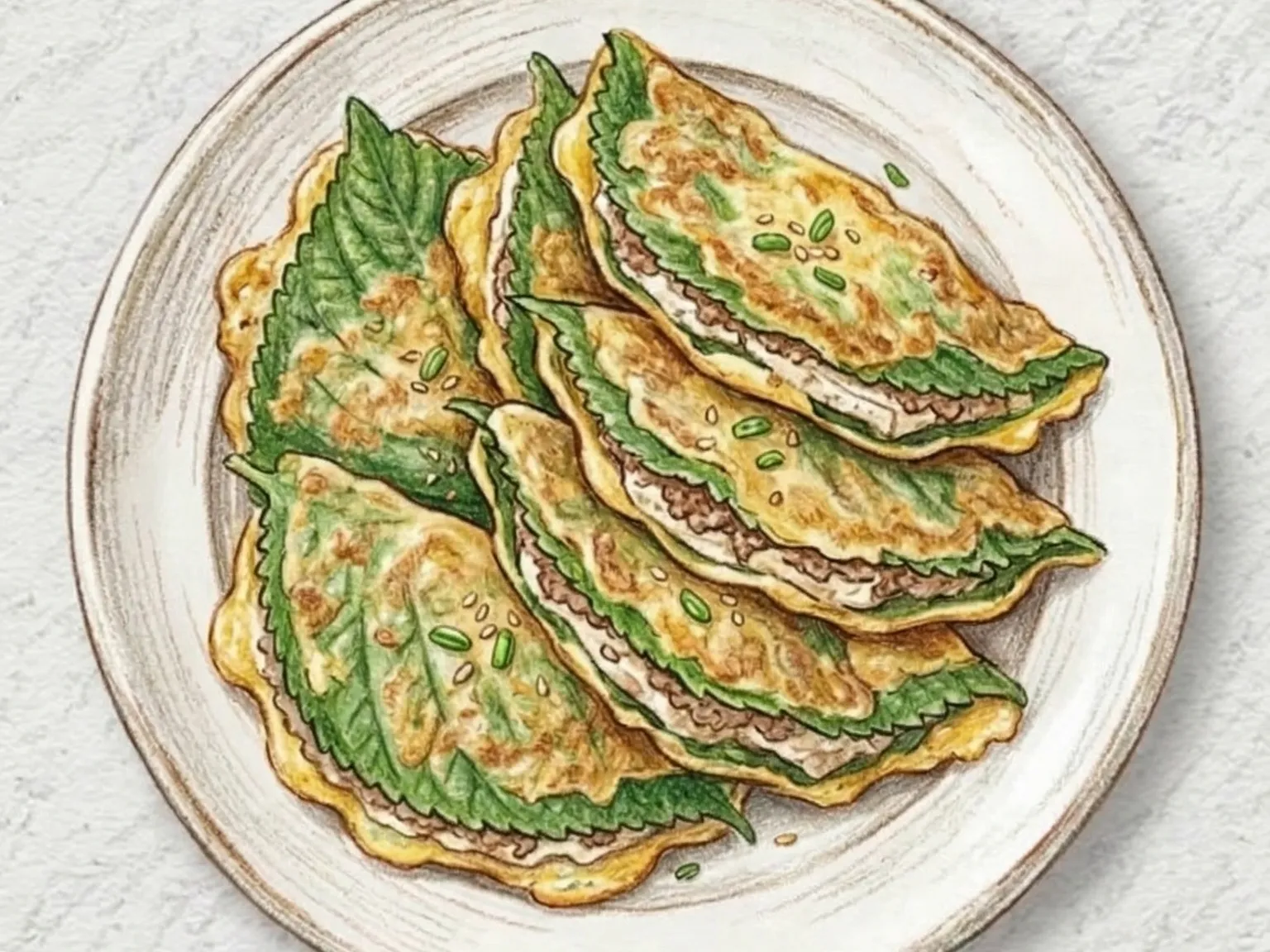
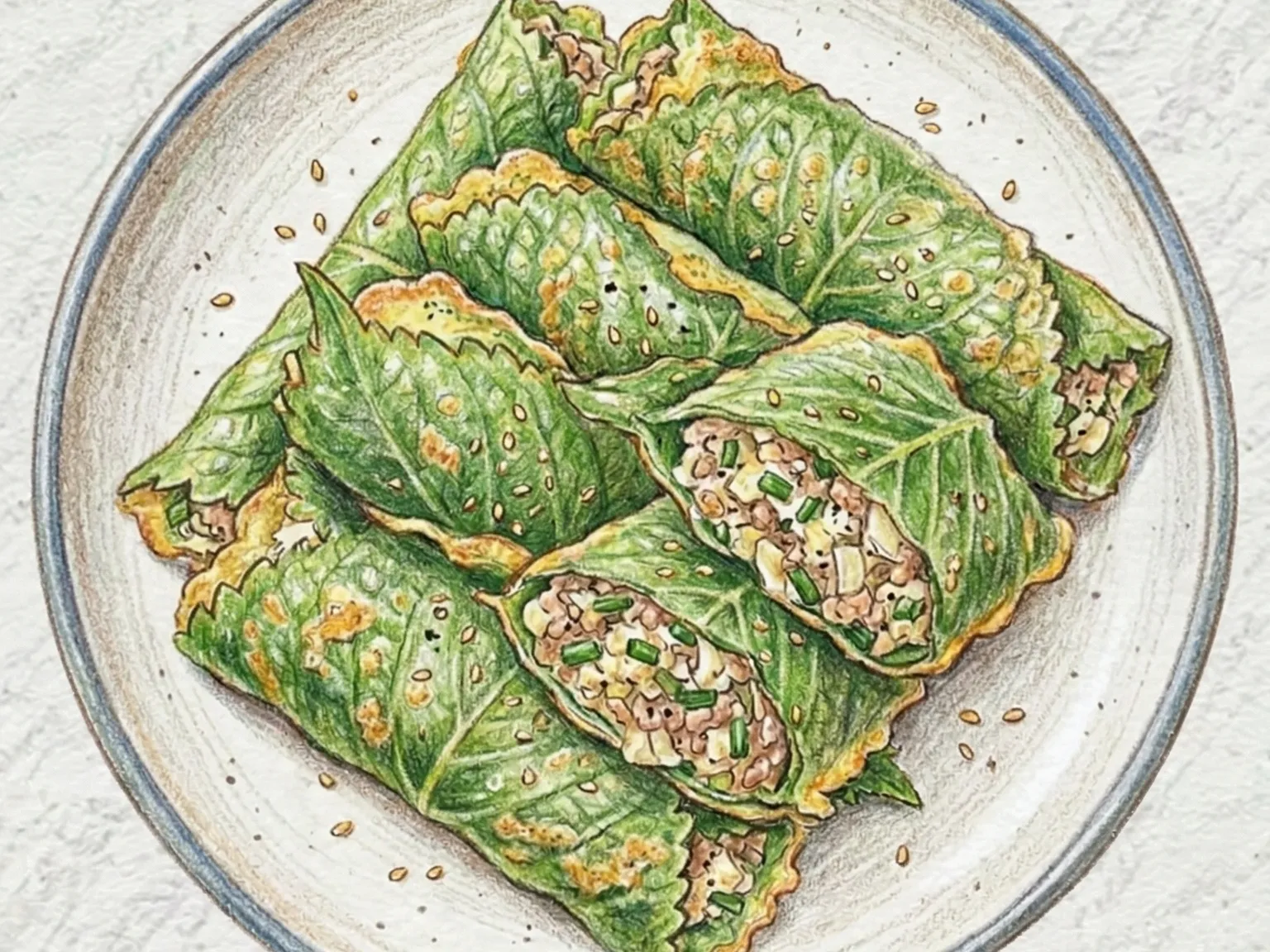
Perilla leaves are stuffed with a filling of ground pork and crumbled firm tofu, then dredged in flour, dipped in egg, and pan-fried. The tofu lightens the pork filling, creating a tender texture that is not too heavy. Garlic chives and onion are mixed into the filling for added crunch and fragrance. Each leaf wraps around the seasoned meat mixture, and the perilla's bold herbal aroma permeates every bite.
Adjust Servings
Instructions
- 1
Wash and dry perilla leaves, and squeeze moisture out of tofu.
- 2
Mix pork, tofu, chopped chives, onion, garlic, soy sauce, and pepper for filling.
- 3
Spread a thin layer of filling inside each leaf and fold in half.
- 4
Dust folded leaves with flour, then coat with beaten egg.
- 5
Pan-fry over medium heat in oil until both sides are golden.
- 6
Once filling is fully cooked, rest briefly, then slice into bite-sized pieces.
As an Amazon Associate, we may earn from qualifying purchases.
Tips
Nutrition (per serving)
More Recipes

Korean Perilla Beef Jeon (Perilla-Wrapped Beef Tofu Pancake)
A thin layer of seasoned ground beef mixed with pressed tofu is spread on the underside of each perilla leaf, which is then folded in half, coated in flour, dipped in beaten egg, and pan-fried over medium heat. Keeping the filling thin is essential so the herbal fragrance of the perilla comes through clearly. Squeezing moisture from the tofu beforehand ensures the jeon holds its shape during frying. The result layers the grassy aroma of perilla with soy-seasoned beef in every bite.

Korean Perilla Leaf Chicken Jeon
Perilla leaves are stuffed with a mixture of ground chicken and firm tofu, dusted in flour, dipped in egg, and pan-fried. The chicken keeps the filling lean and light, while the tofu adds a soft, creamy texture without heaviness. Perilla's robust herbal scent complements the mild chicken, and minced green onion and garlic round out the seasoning. Each piece is bite-sized and holds up well even after cooling, making it suitable for packed meals.

Korean Tuna & Perilla Leaf Fritters
This jeon brings together canned tuna, perilla leaves, onion, and carrot in a pancake-mix batter bound with egg. The tuna provides a briny, savory base while the perilla leaves contribute their characteristic herbal fragrance. Finely diced carrot and onion add natural sweetness that balances the saltiness of the tuna. It comes together quickly and holds up well at room temperature, making it a practical choice for lunchboxes or a quick snack.

Korean Stuffed Chili Pepper Pancake
Gochu-jeon is a Korean holiday pancake made by splitting mild green chili peppers lengthwise, removing the seeds, stuffing them with a filling of ground pork mixed with pressed tofu and garlic, then coating in flour and egg before pan-frying. The pepper's gentle heat wraps around the pork filling's savory richness and the tofu's silky softness, creating a layered contrast in every bite. Filling each pepper to about seventy percent capacity prevents bursting during cooking, and using cucumber peppers instead of regular green chilies eliminates nearly all spiciness for milder palates. This jeon is a fixture on Seollal and Chuseok tables, and it tastes best served warm with a soy-vinegar dipping sauce that brightens the meat filling's umami.

Korean Mung Bean Pancake (Traditional Bindaetteok with Pork and Kimchi)
Nokdu-jeon is a traditional Korean mung bean pancake made by soaking dried mung beans for at least six hours, grinding them into a thick, starchy batter, and mixing in ground pork, mung bean sprouts, squeezed kimchi, and scallions before pan-frying in oil. The extended soaking is critical-undersoaked beans leave gritty particles that no amount of blending will smooth out, and the natural starch in the batter holds the pancake together without flour or egg. Kimchi must be thoroughly squeezed of its liquid before chopping fine, or the excess moisture thins the batter and prevents crisping. Cooking over medium heat for three to four minutes per side caramelizes the mung bean starch into a crackly golden crust, while inside the pork juices mingle with kimchi's tang and the earthy, slightly sweet flavor of the bean itself.

Korean Braised Perilla Leaves
Kkaennip jorim layers fresh perilla leaves with a soy-based sauce and simmers them gently - a banchan built for make-ahead storage. Kkaennip (perilla) is a distinctly Korean herb with an aromatic intensity comparable to basil or mint, yet it is rarely found outside Korean cuisine. The technique stacks five to six leaves at a time, spooning sauce between each layer so every leaf seasons evenly. Simmering on medium-low heat for eight to ten minutes wilts the leaves into soft, pliable sheets that wrap neatly around a mound of rice. The sauce combines soy sauce, gochugaru, sugar, garlic, and sesame oil - the last adding a nutty richness that complements the herb's own perfume. Refrigerated in an airtight container, kkaennip jorim lasts up to two weeks, making it one of the most economical banchan to batch-prepare.