Korean Kkaennip Gamja Bokkeum (Perilla Potato Stir-fry)
Quick answer
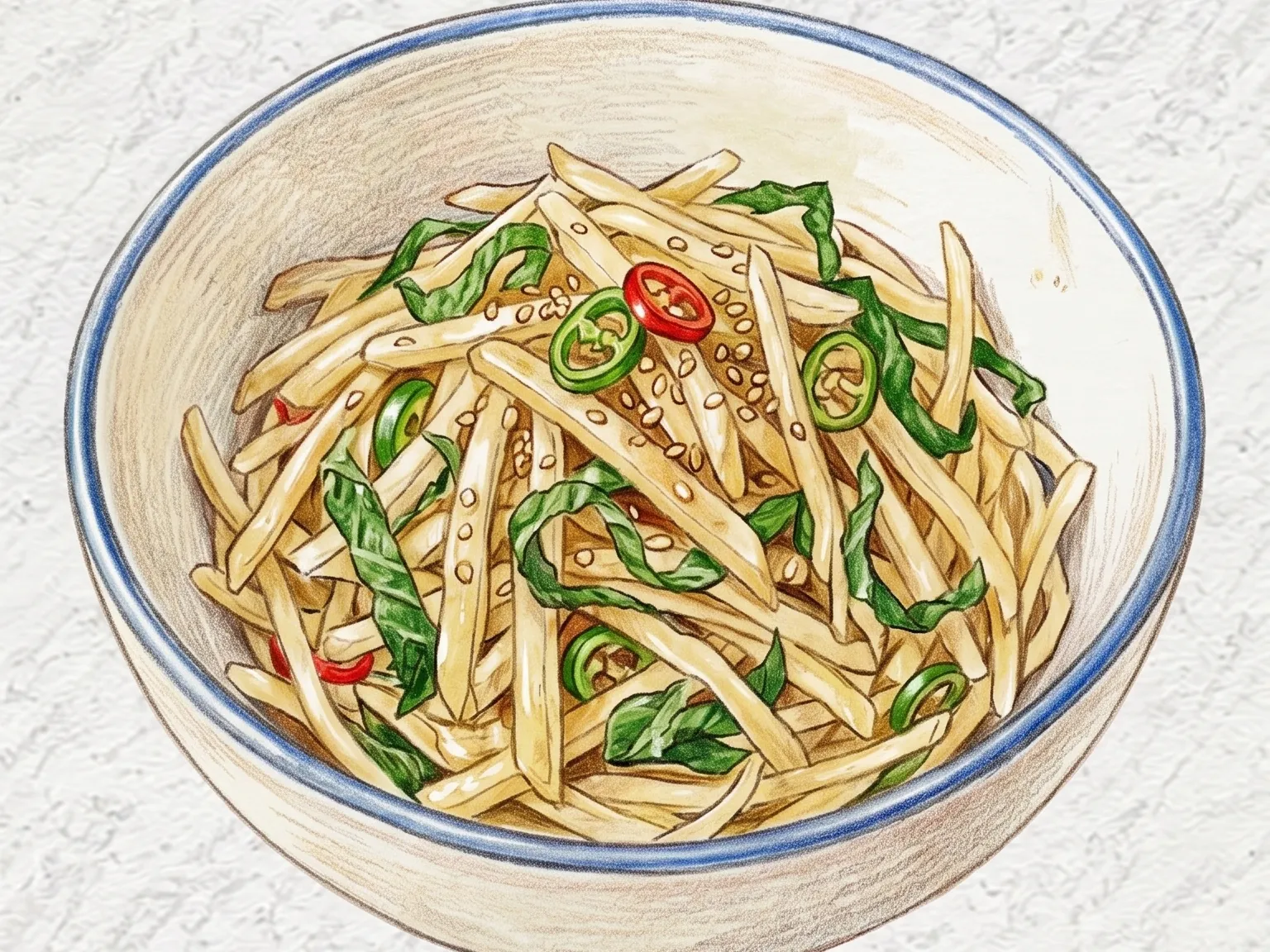
High heat and a well-preheated pan are the keys to achieving the distinct texture of these stir-fried potato matchsticks.
What makes this special
- Kkaennip gamja bokkeum offers crisp potato matchsticks stir-fried with herbal perilla leaf notes.
- Cold-water soak for 5 minutes removes starch to prevent sticking
- Soy sauce poured onto the hot pan surface before mixing
Key ingredients
Core cooking flow
- 1 Cut 300 g potato into 0.5 cm matchsticks and soak them in cold water for 5 minutes.
- 2 Drain the potatoes well, then remove moisture from the surface as thoroughly as possible.
- 3 Roll 10 perilla leaves tightly and slice them thinly, then thinly slice 80 g onion and 30 g green onion.
High heat and a well-preheated pan are the keys to achieving the distinct texture of these stir-fried potato matchsticks. Before cooking, soaking the cut potatoes in cold water is a critical step to remove surface starch, ensuring the pieces stay separate and do not stick to the pan. Once thoroughly dried to prevent oil splattering, the potatoes are tossed quickly until the edges become translucent while the centers retain a subtle firmness. Overcooking results in a mushy consistency that lacks the intended character of the dish. Pouring the soy sauce around the perimeter of the pan allows it to caramelize against the hot surface before it is incorporated into the vegetables, adding a layer of savory complexity. Fresh perilla leaves should be tossed in just before the heat is turned off to preserve their bright green color and herbal fragrance. A final drizzle of perilla oil complements the leaves with its toasted scent, and a sprinkle of sesame seeds provides a light crunch. Sliced Cheongyang chilies can be included during the initial sautéing for a gentle heat. This combination pairs the carbohydrates of potatoes with the vitamin K and calcium found in perilla leaves, creating a nutritionally rounded side dish that tastes even better the next day after the flavors have settled.
Instructions
Read the steps as a cooking flow: prep, heat, seasoning, doneness control, and finish.
- 1Prep
Cut 300 g potato into 0.5 cm matchsticks and soak them in cold water for 5 minutes.
If the water looks cloudy, rinse once more so excess surface starch does not make the potatoes stick.
- 2Heat
Drain the potatoes well, then remove moisture from the surface as thoroughly as possible.
Remaining water can make the oil splatter and can also encourage the potato strips to stick to the pan while stir-frying.
- 3Season
Roll 10 perilla leaves tightly and slice them thinly, then thinly slice 80 g onion and 30 g green onion.
Keep the minced garlic and soy sauce ready so the hot stir-fry can move quickly.
- 4Control
Preheat the pan well, add 1 tbsp cooking oil, then add the drained potatoes.
Stir-fry over medium-high heat for about 4 minutes, tossing often, until the edges turn translucent but the centers still hold shape.
- 5Season
Add the onion, green onion, and 1 tbsp minced garlic, then stir-fry for 2 more minutes.
Push the vegetables aside, pour 1.5 tbsp soy sauce onto the hot pan surface, let it bubble briefly, then toss together.
- 6Finish
Lower the heat, add the sliced perilla leaves and 1 tbsp perilla oil, and toss for only 1 minute.
When the leaves just soften but stay green, turn off the heat and finish with 1 tsp sesame seeds.
After the steps
Pick a recipe that fits this dish.
Continue with shared ingredients, meal pairings, or a similar method.
Recipes That Go Well With This
More Stir-fry →Based on shared ingredients and meal pairing
Korean Stir-fried Potato Strips
Gamja-bokkeum is a fundamental Korean side dish made by stir-frying julienned potatoes until they are just tender with a remaining crunch, and it belongs on almost any Korean table regardless of what else is being served. Soaking the julienned potatoes in cold water for five to ten minutes removes the surface starch that would otherwise cause the pieces to stick together in the pan and clump into a mass. The drained potatoes go into an oiled pan over medium heat with garlic, which provides a gentle aromatic backdrop without competing with the potato's mild natural flavor, and salt is the only seasoning needed to let that flavor come through. The key to the right texture is restraint: the potatoes are ready when they have turned translucent and the edges have picked up a faint golden color, and cooking past that point makes them soft rather than crisp. A finishing drizzle of sesame oil and a scattering of sesame seeds add a warm nuttiness that elevates the simple seasoning into a complete flavor. Thinly sliced cheongyang chili added during cooking produces a spicier variation, and a small amount of bell pepper or carrot adds color without changing the character of the dish. It is the kind of banchan that disappears from the table quickly despite its simplicity.
Korean Perilla Leaf Tofu Stir-fry
Kkaennip dubu bokkeum is a side dish of firm tofu cubes pan-fried until golden, then seasoned with soy sauce, onion, and garlic before being tossed with chiffonaded perilla leaves and ground perilla seeds at the end. The tofu develops a lightly crisp shell that absorbs the soy seasoning while the interior stays soft. Perilla leaves contribute a distinctive herbal fragrance, and the ground perilla seeds add a nutty depth that elevates the dish beyond a basic tofu stir-fry. A final touch of sesame oil brightens the aroma.
Deodeok Butter Rice Bowl (Korean Mountain Root)
Deodeok butter bap is a rice bowl of peeled, pounded deodeok pan-fried in butter until golden, then reduced in soy sauce and oligosaccharide syrup until each strip is coated in a thin, glossy glaze. The root's natural bittersweet aroma, assertive when raw, softens in the butter without disappearing - it stays present and clean throughout the bowl. Soy sauce and the mild sweetness of the syrup build a savory-sweet glaze that clings to the root's rough-pounded surface. A second knob of butter stirred into the sauce just before plating melts into the reduction and adds a final layer of richness. The glazed deodeok is spooned over warm rice with the pan sauce, then scattered with sliced scallion and sesame seeds. The dish is best in spring when fresh deodeok is in season and its fragrance is at its most pronounced. It works as a standalone donburi or as a strong side dish alongside plain rice.
Korean Garlic Scape Bacon Stir-fry
Maneuljjong bacon bokkeum is a side dish built around rendered bacon fat. Bacon goes into the pan first over low heat until the white fat turns translucent and releases its fragrant, smoky oil, and that rendered fat then becomes the cooking medium for the garlic scapes and onion that follow. No additional cooking oil is needed, and the depth of flavor that results from this single step makes the dish taste far more complex than its short ingredient list suggests. Garlic scapes bring a sharp, grassy bite and a satisfying crunch that disappears quickly if they sit on the heat too long, so the pan temperature is turned up at the end for a fast, high-heat finish. Soy sauce sets the salty foundation, and a drizzle of oligosaccharide syrup coats every piece in a thin, glossy lacquer that softens the salt with restrained sweetness. Because bacon is already heavily seasoned, the soy sauce should be added gradually and tasted as you go rather than measured out in advance. A scatter of toasted sesame seeds over the finished dish adds one more layer of nutty fragrance.
Serve with this
Manduguk (Korean Dumpling Clear Broth Soup)
Manduguk is a Korean dumpling soup in which hand-folded dumplings stuffed with ground pork, tofu, scallion, and garlic are dropped into a clear, simmering broth, typically anchovy-kelp stock or beef broth, and cooked until they float. As the dumplings cook, their thin wheat-flour wrappers release a subtle starch that gives the broth a barely perceptible body, while the filling leaks savory juices that enrich the liquid gradually. A thin drizzle of beaten egg stirred in near the finish creates silken wisps on the surface of the broth and gives the bowl a more finished appearance. Shredded egg strips and crumbled dried seaweed scattered on top add a pleasant contrast in color and a faint oceanic note to the flavor. Many Korean households serve manduguk on Lunar New Year as an alternative to tteokguk, and some combine the two by adding sliced rice cakes alongside the dumplings. Dumplings can be made in large batches and frozen raw, which means this soup can be pulled together quickly on weeknights without sacrificing any of the flavor that comes from homemade filling. A small dish of soy-vinegar dipping sauce served alongside lets each person adjust the seasoning at the table, and the light acidity of the sauce cuts through the mild broth in a way that makes the contrast between the two worth trying.
Korean Blanched Young Napa with Doenjang
Eolgari is young napa cabbage cut before the head has formed a tight ball, leaving it with thinner leaves and more tender ribs than fully mature baechu. A quick blanch of about one minute wilts the leaf while the pale ribs retain a gentle crunch that holds even after seasoning. After blanching, the cabbage is squeezed firmly to remove water, then dressed with doenjang, soup soy sauce, minced garlic, and sesame oil. The fermented paste penetrates the tender leaves quickly, spreading a salty, earthy coating evenly through each piece. The flavor profile is mild and round with no sharp edges, making it one of the most approachable doenjang-based namul dishes for people who are new to Korean fermented seasonings. The dish comes from the Korean countryside tradition of turning whatever young greens were growing between major kimchi-making seasons into simple dressed vegetables. Eolgari is a seasonal green, available at Korean markets from late spring through early autumn.
Korean Kimchi Mandu Jjigae (Kimchi Dumpling Stew)
Kimchi mandu jjigae drops whole frozen kimchi dumplings straight into a simmering pot of aged kimchi, tofu, and anchovy stock. The dumpling wrappers absorb the broth as they cook, swelling plump and moist, while the kimchi filling inside echoes the stew's tangy base and doubles the fermented depth. Gochugaru and soup soy sauce add a clean chili heat, and firm tofu cubes absorb the spiced broth for a softer textural contrast. Because the dumplings themselves carry seasoning, it is better to start with less sauce and adjust after tasting the broth. This is a filling, no-fuss meal that needs nothing more than a bowl of steamed rice alongside it.
Similar recipes
Korean Tomato Dalgyal Bokkeum (Tomato Egg Stir-fry)
Tomato-dalgyal-bokkeum uses a two-stage cooking method: eggs are scrambled to about 70% doneness and set aside, then returned to the pan with seared tomatoes for a final quick toss. The tomatoes release a small amount of juice when cooked briefly with oyster sauce and sugar, and the partially set eggs absorb this liquid to stay soft and moist. Bright tomato acidity, mild egg richness, and oyster sauce umami layer together without any single flavor dominating. Sharing roots with Chinese tomato egg stir-fry (xihongshi chaodan), it crosses easily into Korean home cooking.
Korean King Oyster Mushroom Stir-fry with Perilla
This stir-fry combines 250 grams of julienned king oyster mushrooms with onion, cooked rapidly over high heat in perilla oil and cooking oil to prevent the mushrooms from releasing too much water. Garlic is sauteed for 20 seconds first to infuse the oil, followed by onion for one minute to draw out its natural sweetness. The mushrooms then go in for a quick two-minute toss before soup soy sauce and a splash of water are added to create a light braising liquid. One and a half tablespoons of ground perilla seeds are stirred in during the final minute, thickening the sauce into a creamy coating without becoming pasty. Scallion is added off heat for a finishing touch of color and freshness.
Korean Stir-fried Julienne Potatoes
Gamja-chae-bokkeum is a stir-fried julienned potato banchan where the cutting technique determines the outcome more than any seasoning. Potatoes are julienned into matchstick-thin strips, then soaked in cold water for at least ten minutes to rinse away surface starch - a step that is not optional. Skipping it means the strips clump together in the pan, glueing themselves into a starchy mass that cannot be salvaged. After draining and drying thoroughly, the strips hit a hot, lightly oiled pan and cook for just three to four minutes, stirred and tossed frequently to prevent browning. The target is a strip that is fully cooked through but retains an audible crunch when bitten, a narrow window between underdone rawness and mushy softness that takes practice to hit consistently. The seasoning is deliberately minimal - salt and a small splash of vinegar, occasionally a little sesame oil - to let the potato's clean, starchy sweetness remain the central flavor. Sliced cheongyang chili stirred in at the end adds a sharp heat without muddying the clean taste profile. This banchan has been a fixture of Korean school lunches and company cafeterias for decades precisely because it is vegetarian, inexpensive, and universally acceptable to even the most selective eaters.