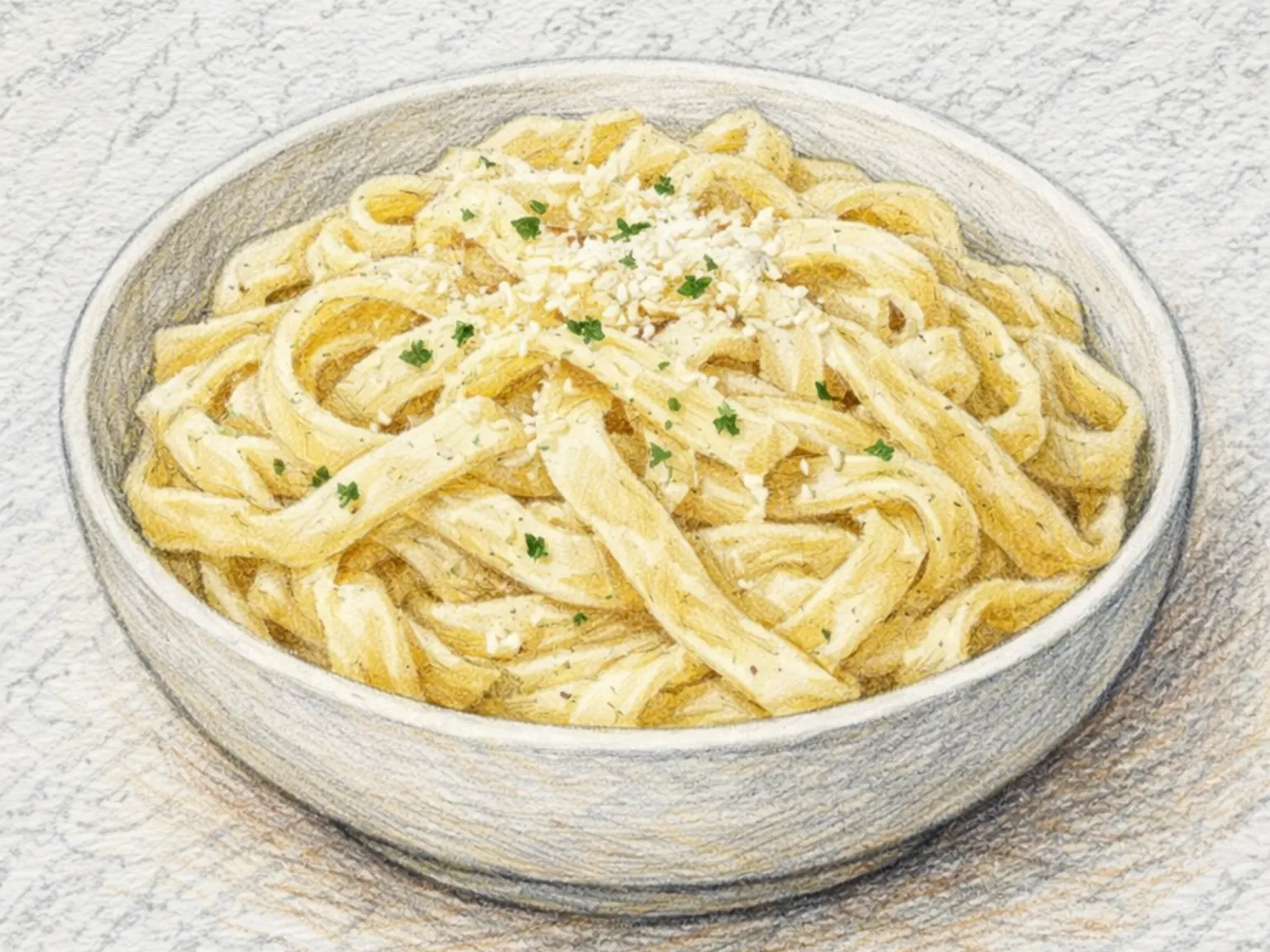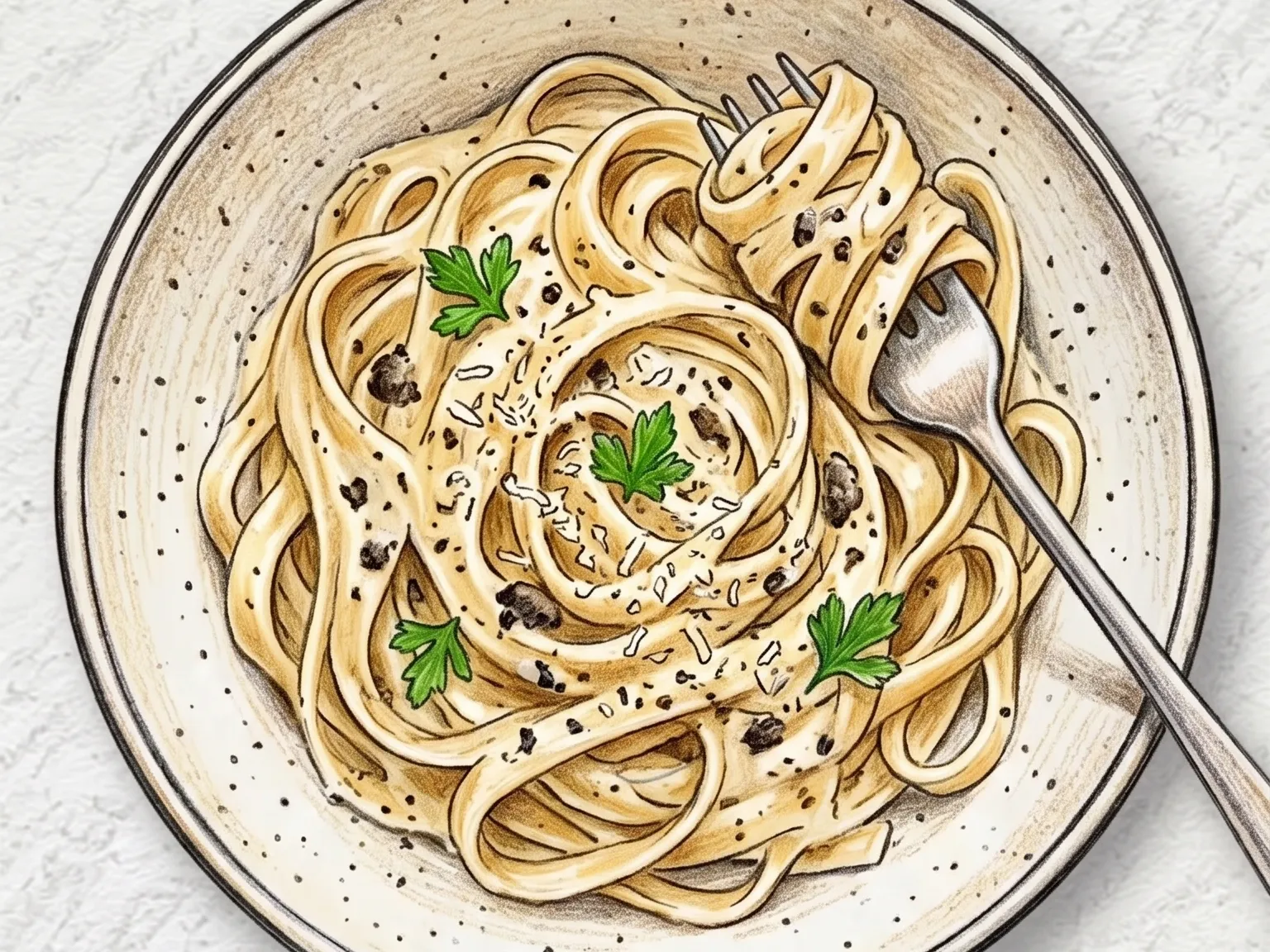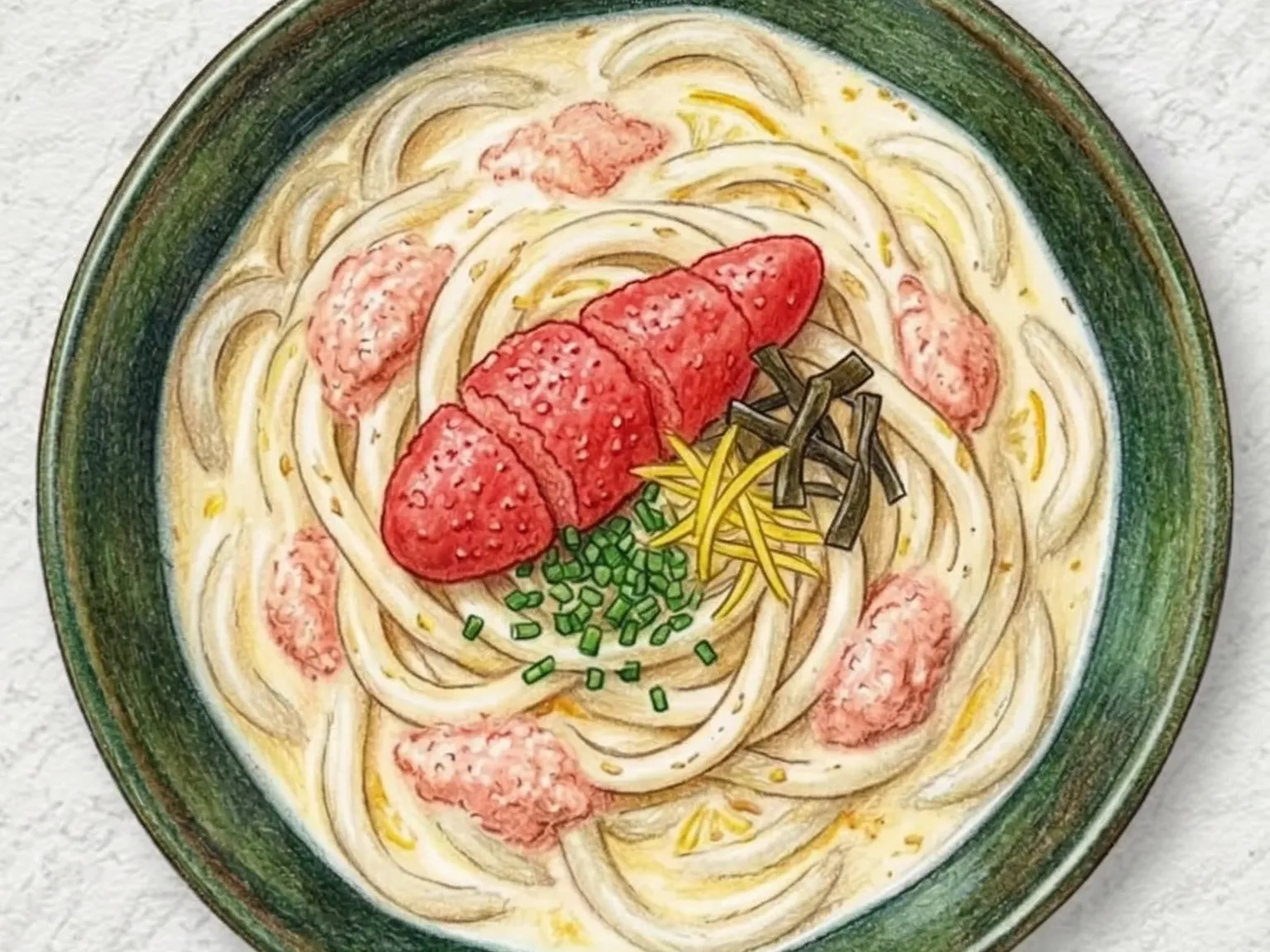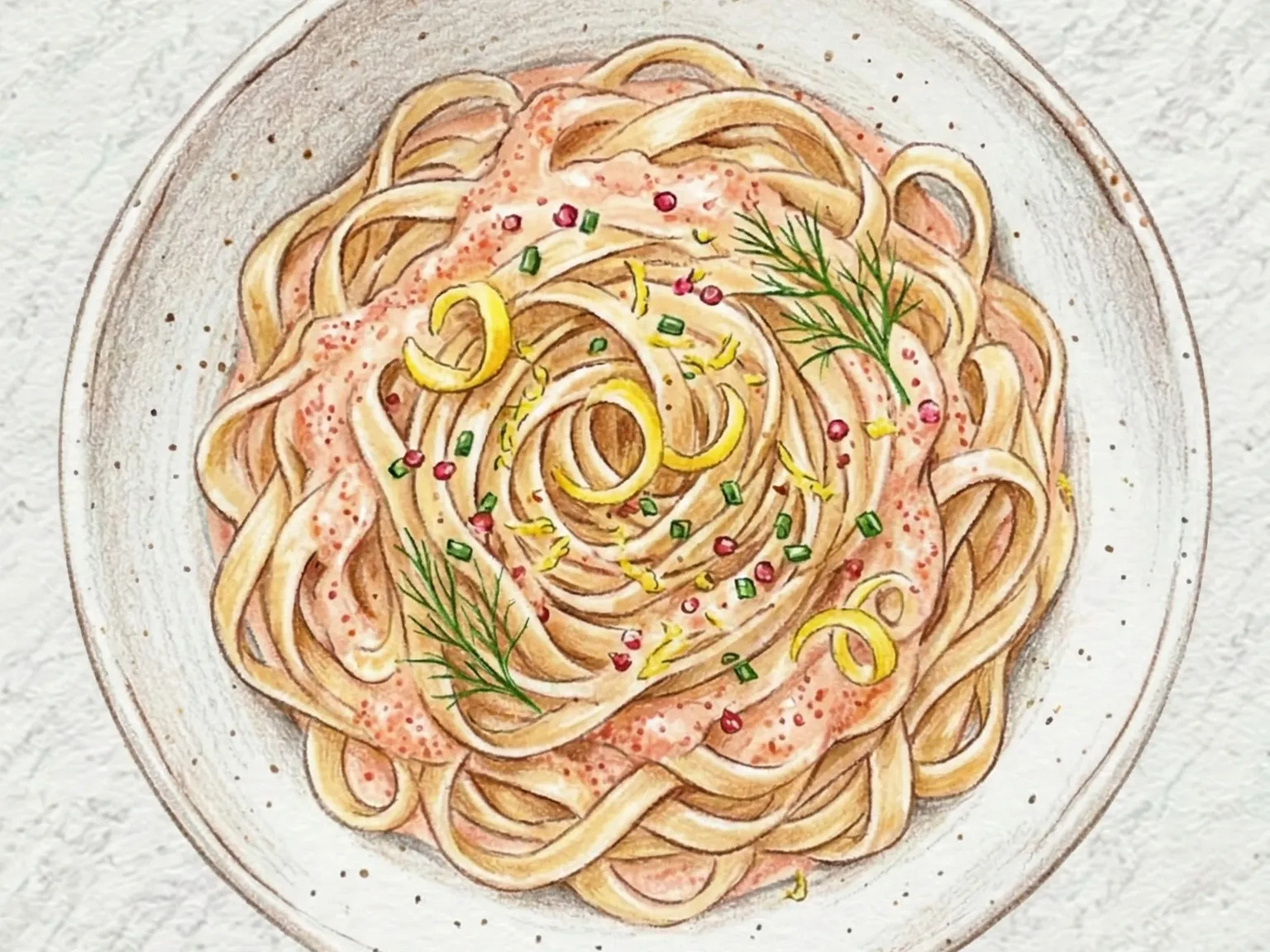
Myeongran Lemon Cream Fettuccine
Pasta Medium

Myeongran Lemon Cream Fettuccine

Quick answer

Myeongran lemon cream fettuccine wraps wide pasta ribbons in a sauce made from salted pollock roe, heavy cream, butter, and lemon zest.

What makes this special

  • Salted pollock roe and lemon zest wrap wide fettuccine in a savory, citrus-scented cream.
  • Mentaiko stirred off-heat so roe stays tender, not grainy
  • Lemon zest layers citrus fragrance over the briny roe base
Total time
35 min
Level
Medium
Servings
2 servings
Ingredients
10
Calories
680 kcal
Protein
28 g

Key ingredients

fettuccinesalted pollock roeheavy creammilkunsalted butter

Core cooking flow

  1. 1 Slit the sac of 80g mentaiko lengthwise and scrape out the roe.
  2. 2 Cook 180g fettuccine in salted boiling water for 1 minute less than the package time.
  3. 3 Melt 20g unsalted butter in a pan. Cook the minced garlic over low heat for...

Myeongran lemon cream fettuccine wraps wide pasta ribbons in a sauce made from salted pollock roe, heavy cream, butter, and lemon zest. The small eggs of the roe are left intact and stirred into the sauce off the heat so they stay soft and burst with briny flavor when bitten rather than turning granular or hard. Garlic bloomed in butter forms the aromatic base, and a mixture of heavy cream with milk tempers the roe's saltiness into a smooth, balanced coating. Using lemon zest rather than juice adds a bright citrus fragrance without diluting the sauce or introducing acidity that would curdle the cream. Parmigiano-Reggiano deepens the savory foundation, and fettuccine's broad, flat surface holds the thick cream more effectively than thinner pasta shapes. The entire dish takes about twenty minutes from start to plate, making it a practical weeknight option that does not sacrifice depth of flavor for speed. The critical technique -- incorporating the roe off the heat -- keeps the texture creamy throughout and prevents the eggs from cooking into tough, unpleasant morsels.

Prep 15min Cook 20min 2 servings

Instructions

Read the steps as a cooking flow: prep, heat, seasoning, doneness control, and finish.

6 steps
  1. 1
    Step

    Slit the sac of 80g mentaiko lengthwise and scrape out the roe.

    Finely mince 2 garlic cloves.

  2. 2
    Finish

    Cook 180g fettuccine in salted boiling water for 1 minute less than the package time.

    Reserve 1 cup pasta water.

  3. 3
    Control

    Melt 20g unsalted butter in a pan.

    Cook the minced garlic over low heat for 30-40 seconds until fragrant but not browned.

  4. 4
    Control

    Add 180ml heavy cream and 80ml milk and heat over low heat until just below simmering.

    Add 40g of the roe and stir until dissolved into the sauce.

  5. 5
    Heat

    Add the cooked fettuccine, 30g Parmigiano, and 1 teaspoon lemon zest.

    Toss gently while adding pasta water to adjust consistency.

  6. 6
    Finish

    Turn off the heat and place the remaining 40g roe on top.

    Season with 0.5 teaspoon salt and 0.5 teaspoon pepper and serve immediately.

After the steps

Pick a recipe that fits this dish.

Continue with shared ingredients, meal pairings, or a similar method.

Recipes That Go Well With This

More Pasta →

Based on shared ingredients and meal pairing

Kimchi Tofu Alfredo Farfalle (Creamy Kimchi Bow-Tie Pasta)
Shared ingredient: heavy cream Pasta

Kimchi Tofu Alfredo Farfalle (Creamy Kimchi Bow-Tie Pasta)

Kimchi tofu Alfredo farfalle is a fusion pasta that counters the richness of a cream-and-Parmesan Alfredo sauce with the lactic acidity of well-fermented kimchi. Garlic bloomed in butter forms the aromatic base, then cream, milk, and Parmigiano are combined into the classic Alfredo sauce, after which chopped kimchi is folded in to introduce fermented tang and a layer of umami that a standard Alfredo lacks. Firm tofu cut into cubes and pan-fried until each side is golden provides a mild, neutral protein element with direct textural contrast against the smooth sauce. Farfalle's pinched center holds pockets of sauce against each piece of pasta, delivering a consistent hit of creaminess in every bite, and freshly ground black pepper draws a sharp line through the richness at the finish. The entire dish moves from pan to plate in about 15 minutes.

Korean Cream Tteokbokki (Chewy Rice Cake in Cream Butter Sauce)
Shared ingredient: heavy cream Street food

Korean Cream Tteokbokki (Chewy Rice Cake in Cream Butter Sauce)

Cooking rice cakes in a mixture of heavy cream, milk, and butter offers a mild alternative to the spicy gochujang-based version. The process begins with sauteing onions in butter over low heat for at least ten minutes, which converts onion starches into sugar for a natural sweetness without added sugar. Once the cream and milk are added to the softened onions, the rice cakes simmer for seven to eight minutes over medium-low heat. This allows the cakes to absorb the liquid while maintaining their characteristic dense chewiness. A final addition of parmesan cheese provides a salty contrast to the heavy cream base. Because the flavor profile resembles a cream pasta, it serves as a common entry point for people avoiding chili heat. Maintaining a steady medium-low temperature prevents the sauce from separating during cooking. Adding bacon or shrimp introduces extra protein and savory elements to the pan. The sauce consistency thickens quickly as its temperature drops, making immediate service from the pan the best way to maintain the intended texture. Swapping the parmesan for cheddar or mozzarella changes the character of the finished sauce and provides a different eating experience.

Korean Bokbunja Wine (Black Raspberry Soju-Infused Fruit Wine)
Serve together Drinks

Korean Bokbunja Wine (Black Raspberry Soju-Infused Fruit Wine)

Bokbunja-ju is a deep ruby Korean fruit wine made by layering fresh black raspberries and sugar in a sterilized jar, then covering them with soju along with a strip of lemon peel and a cinnamon stick. At 1.2 kg of fresh fruit per batch, the berry flavor comes through with real concentration. The jar rests in a cool place for at least thirty days and is shaken gently once a week to dissolve the sugar evenly throughout the liquid. After straining through fine cloth, additional bottle aging softens the acidity and rounds out the berry aroma, producing a wine where the warm spice undertones from the cinnamon balance the tartness of the raspberries.

Kkaennip Mushroom Cream Farfalle
Similar recipe Pasta

Kkaennip Mushroom Cream Farfalle

Kkaennip mushroom cream farfalle combines sliced button mushrooms and fresh perilla leaves in a cream sauce over bow-tie pasta. The mushrooms are sauteed in olive oil until their moisture cooks off and their flavor concentrates, with onion and garlic building the aromatic base. Heavy cream is then added to form the sauce, and shredded perilla goes in at the end so the leaves wilt just enough to release their fragrance without losing it to the heat. Parmesan contributes salt and a nutty underpinning, while farfalle's ridged and folded surface holds the sauce across every piece. The defining quality of the dish is the perilla itself, whose scent belongs to the sesame family and sits in entirely different territory from basil or mint - grassy, faintly resinous, and unmistakably Korean. Few other herbs could give a cream pasta this specific character.

Serve with this

Pork Bossam Apple Mustard Salad
Salads Medium

Pork Bossam Apple Mustard Salad

Bossam apple mustard salad uses thinly sliced cold boiled pork belly as its main component, arranged over shredded cabbage, cucumber, and crisp apple slices, then finished with a sharp mustard-soy vinaigrette. Chilling the boiled pork completely before slicing is not optional: warm pork crumbles under the knife, while cold pork yields clean, even cuts that hold their shape on the plate. Cabbage and cucumber provide a firm, crunchy base whose texture directly contrasts with the soft, fatty pork, and the apple slices introduce a cool sweetness along with a welcome burst of moisture. Korean hot mustard, dissolved generously into a soy-vinegar dressing, releases a nasal, sinus-clearing heat with each bite that cuts through the richness of the pork fat without the acidity becoming the dominant note. Perilla leaves placed underneath the pork act as both a flavoring layer and a suppressor of any residual pork odor, their herbal intensity complementing the mustard without competing with it. The salad works equally well as a standalone meal and as a second-day use for leftover bossam from the previous night, which is one reason it appears in Korean home kitchens as often as it does.

🥗 Light & Healthy 🎉 Special Occasion
Prep 22min Cook 8min 4 servings
Doenjang Maple Pull-Apart Bread
Baking Hard

Doenjang Maple Pull-Apart Bread

Enriched yeast dough is rolled thin, spread with a mixture of doenjang and maple syrup, then stacked and packed into a loaf pan so that each layer bakes into a tearable, fluffy sheet loaded with flavor. The doenjang contributes a fermented saltiness that deepens the bread's own yeast character, while the maple syrup caramelizes during baking and pools at the bottom of the pan, forming a sticky glaze that coats the loaf when inverted. Butter in the dough provides a rich, tender crumb that pulls apart in long, soft strands. The interplay between salty fermented paste and sweet caramel sits in a zone that is neither strictly dessert nor savory bread, making it versatile enough to accompany a meal or stand on its own as an afternoon snack. Eating it warm, when the layers separate most easily, is the best way to experience the full range of textures.

🎉 Special Occasion 🧒 Kid-Friendly
Prep 35min Cook 30min 4 servings
Chicken Kyiv
Western Hard

Chicken Kyiv

Chicken Kyiv is an Eastern European preparation of pounded chicken breast wrapped tightly around a log of compound butter mixed with parsley and garlic, triple-breaded in flour, egg wash, and breadcrumbs, pan-seared to set the crust, then finished in the oven. The butter must be frozen firm before assembly so it holds its shape during pan-searing and the early stage of oven cooking, melting only gradually inside the chicken where it functions as an internal basting sauce. The triple breading creates a crisp outer shell that also seals the butter inside, and repeating the breadcrumb coating a second time improves both the seal and the crunch of the finished piece. The defining moment of the dish is cutting in and releasing a flow of melted herb butter; a three-minute rest after removing from the oven stabilizes the interior temperature so the butter flows cleanly rather than all at once. Chilling the breaded rolls in the refrigerator for at least thirty minutes before cooking keeps the breadcrumbs firmly attached through the high-heat sear, and the two-stage cooking method of pan-searing followed by oven finishing achieves a crisp exterior and fully cooked, juicy interior at the same time.

🎉 Special Occasion 🍺 Bar Snacks
Prep 25min Cook 20min 2 servings

Similar recipes

Soy Galbi Ragu Pappardelle
Pasta Hard

Soy Galbi Ragu Pappardelle

Soy galbi ragu pappardelle starts with short rib seared hard on both sides, then braised low and slow with aromatics, red wine, and soy sauce for ninety minutes until the meat pulls apart into thick shreds. The extended braise renders out the collagen in the short rib, building a sauce with a genuinely silky, gelatinous body that clings to wide pappardelle ribbons. A soffritto of onion, carrot, and celery forms the sweet foundation; canned whole tomatoes and tomato paste add body and acidity. Soy sauce replaces plain salt and contributes fermented depth that sets this apart from standard Bolognese - the difference is noticeable. Red wine adds tannin and fruit complexity. Grated Parmigiano-Reggiano finishes the bowl. Most of the ninety-minute cook time is hands-off braising.

🎉 Special Occasion 🍺 Bar Snacks
Prep 25min Cook 90min 4 servings
Soy-Garlic Chicken Parmesan Spaghetti
Pasta Medium

Soy-Garlic Chicken Parmesan Spaghetti

Soy garlic chicken Parmesan spaghetti represents a fusion of culinary traditions, integrating a marinade rooted in Korean flavors with the structural framework of a classic Italian pasta dish. For the protein component, chicken thigh pieces undergo a marination process involving a mixture of soy sauce, finely minced garlic, and honey. During the subsequent cooking phase, these ingredients are pan seared at a high temperature. This heat causes the natural sugars found in both the honey and the soy sauce to undergo caramelization, resulting in the formation of a dark and sticky glaze that coats the exterior of the meat. Garlic serves as a recurring element in the preparation, being used first within the initial marinade and then again when it is sauteed directly into the tomato sauce base. This repetition ensures that a consistent aromatic quality is maintained throughout the various layers of the meal from the start of cooking to the final assembly. The acidity inherent in the tomato sauce introduces a bright fruit character to the profile. This sharpness functions to balance the density of the sweet and salty glaze on the chicken, preventing the richness of the marinade from becoming overwhelming. A generous amount of grated Parmesan cheese is applied over the dish to introduce a nutty and salty depth. This cheese layer acts as a bridge between the Korean seasoning applied to the chicken and the Italian pasta that serves as the foundation of the plate. The choice of chicken thigh is intentional because this specific cut retains its internal moisture even during a hard sear. It remains succulent in a way that chicken breast meat often does not when subjected to similar levels of heat. The final preparation is completed with a garnish of thinly sliced scallions, which provides a clean green finish to the presentation.

🎉 Special Occasion 🧒 Kid-Friendly
Prep 20min Cook 25min 4 servings
Korean Cream Chicken Rice Bowl
Rice Easy

Korean Cream Chicken Rice Bowl

Cream chicken deopbap is a Korean fusion rice bowl where bite-sized chicken breast pieces are seared in butter to develop color and a light crust, then simmered in heavy cream and garlic until the sauce reduces into a glossy, velvety coating. Searing the chicken in butter first builds a Maillard layer that gives the final dish more depth than if the cream were added at the start. As the garlic cooks down in the cream, it loses its raw sharpness and releases a mild sweetness that permeates the entire sauce. A straightforward seasoning of salt and pepper is all the dish needs to come together. The concept takes the richness of a Western cream pasta sauce and serves it over steamed rice instead of noodles, letting the grains absorb the sauce and carry the flavor all the way through. A sprinkle of flat-leaf parsley or coarsely cracked black pepper over the top sharpens the finish.

🏠 Everyday 🧒 Kid-Friendly
Prep 15min Cook 20min 2 servings

Tips

Reserve some roe for topping to keep both salinity and texture balanced.
Adjust salt at the end after accounting for the saltiness of cheese and roe.

Nutrition (per serving)

Calories
680
kcal
Protein
28
g
Carbs
62
g
Fat
35
g