Korean Perilla Leaf Beef Stew
Stews Easy

Korean Perilla Leaf Beef Stew

Quick answer

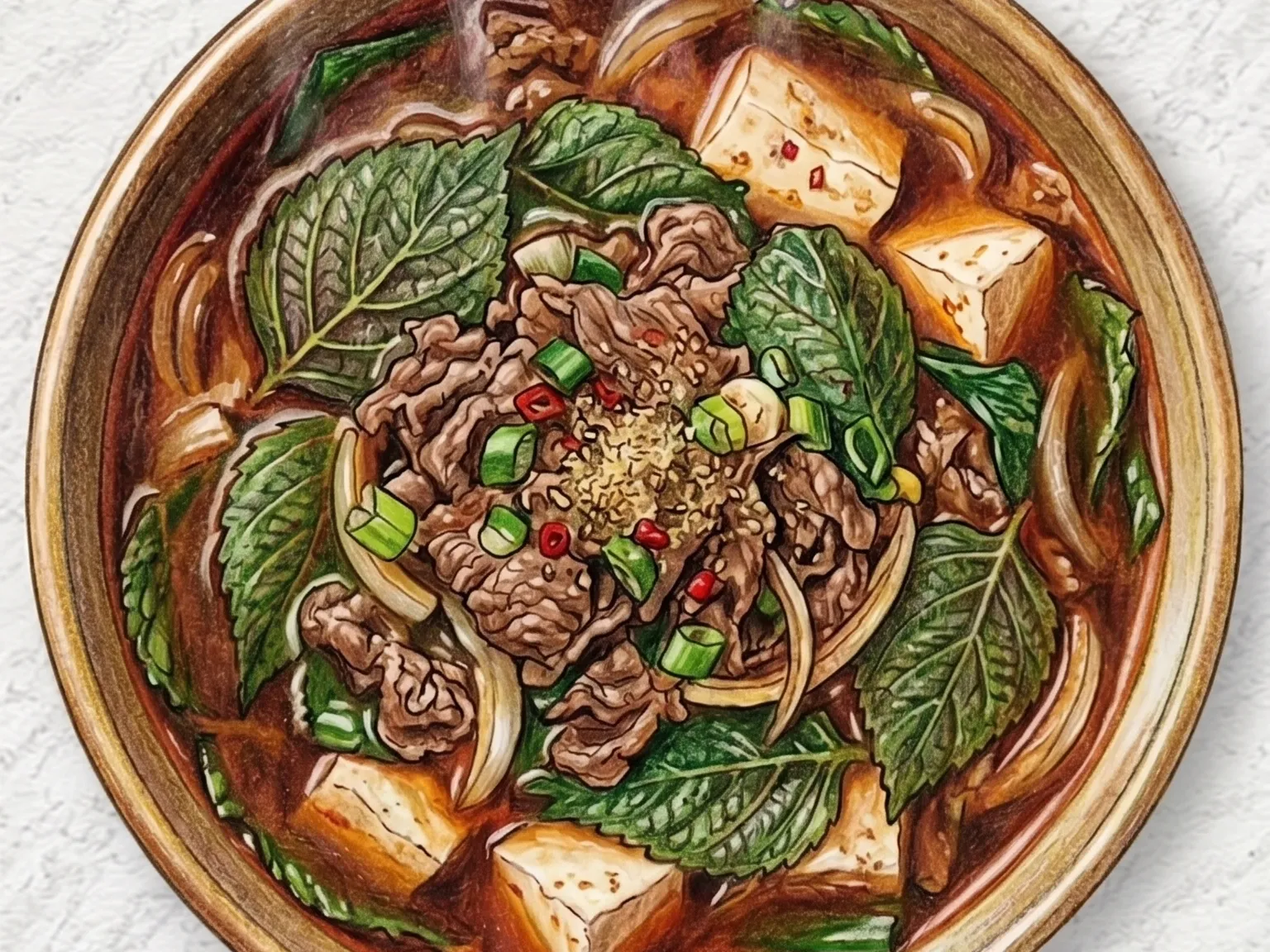
Korean perilla leaf beef stew is a savory broth dish that combines thinly sliced beef with perilla leaves.

What makes this special

  • Kkaennip-soegogi-jjigae infuses savory beef broth with the minty, herbal scent of perilla leaves.
  • Marinated beef seared then merged with anchovy stock for layered umami
  • 12 perilla leaves shredded at the end to spread herbal aroma throughout
Total time
35 min
Level
Easy
Servings
2 servings
Ingredients
9
Calories
385 kcal
Protein
30 g

Key ingredients

thinly sliced beefperilla leavesfirm tofuoniongreen onion

Core cooking flow

  1. 1 Pat 180g of thinly sliced beef dry, then separate any large folded pieces into bite-size strips.
  2. 2 Slice half an onion thinly and cut 1 stalk of green onion on the diagonal.
  3. 3 Heat a pot over medium heat, then add the seasoned beef and sliced onion.

Korean perilla leaf beef stew is a savory broth dish that combines thinly sliced beef with perilla leaves. The cooking process starts by marinating the beef with soup soy sauce and minced garlic, then stir-frying it briefly with sliced onions to extract its natural flavors. Anchovy stock is then poured into the pot and brought to a boil. Red pepper flakes, soup soy sauce, and garlic are added to build a spicy broth, followed by cubes of firm tofu that simmer for several minutes to absorb the seasoning. At the very end of cooking, twelve fresh perilla leaves are sliced and added to the pot for just a minute or two along with green onions. This late addition ensures the delicate, herbal aroma of the perilla leaves is preserved, infusing the entire stew. Seasoned primarily with soup soy sauce, the stew highlights the distinct taste of beef and perilla without heavy seasonings.

Prep 15min Cook 20min 2 servings

Instructions

Read the steps as a cooking flow: prep, heat, seasoning, doneness control, and finish.

6 steps
  1. 1
    Season

    Pat 180g of thinly sliced beef dry, then separate any large folded pieces into bite-size strips.

    Mix with 0.5 tbsp soup soy sauce and 0.5 tbsp minced garlic, and let it season for 10 minutes.

  2. 2
    Control

    Slice half an onion thinly and cut 1 stalk of green onion on the diagonal.

    Cut 200g of firm tofu into large cubes so it can simmer without breaking apart too easily.

  3. 3
    Control

    Heat a pot over medium heat, then add the seasoned beef and sliced onion.

    Stir-fry for about 2 minutes, just until the beef loses its red color and the onion turns translucent.

  4. 4
    Season

    Pour in 600ml of anchovy stock and bring it to a boil, skimming off any foam lightly.

    Stir in 1 tbsp gochugaru, the remaining garlic, and 1 tbsp soup soy sauce.

  5. 5
    Control

    Add the tofu and wait until the broth comes back to a boil, then reduce to medium-low heat.

    Simmer for 7 to 8 minutes, until the tofu takes on the red broth and trembles gently at the edges.

  6. 6
    Finish

    Slice 12 perilla leaves into 1cm strips and add them only at the end.

    Simmer for just 1 to 2 minutes, then add the green onion, check the seasoning, and finish immediately to keep the aroma clear.

After the steps

Pick a recipe that fits this dish.

Continue with shared ingredients, meal pairings, or a similar method.

Recipes That Go Well With This

More Stews →

Based on shared ingredients and meal pairing

Korean Perilla Leaf Soft Tofu Stew
Shared ingredient: perilla leaves Stews

Korean Perilla Leaf Soft Tofu Stew

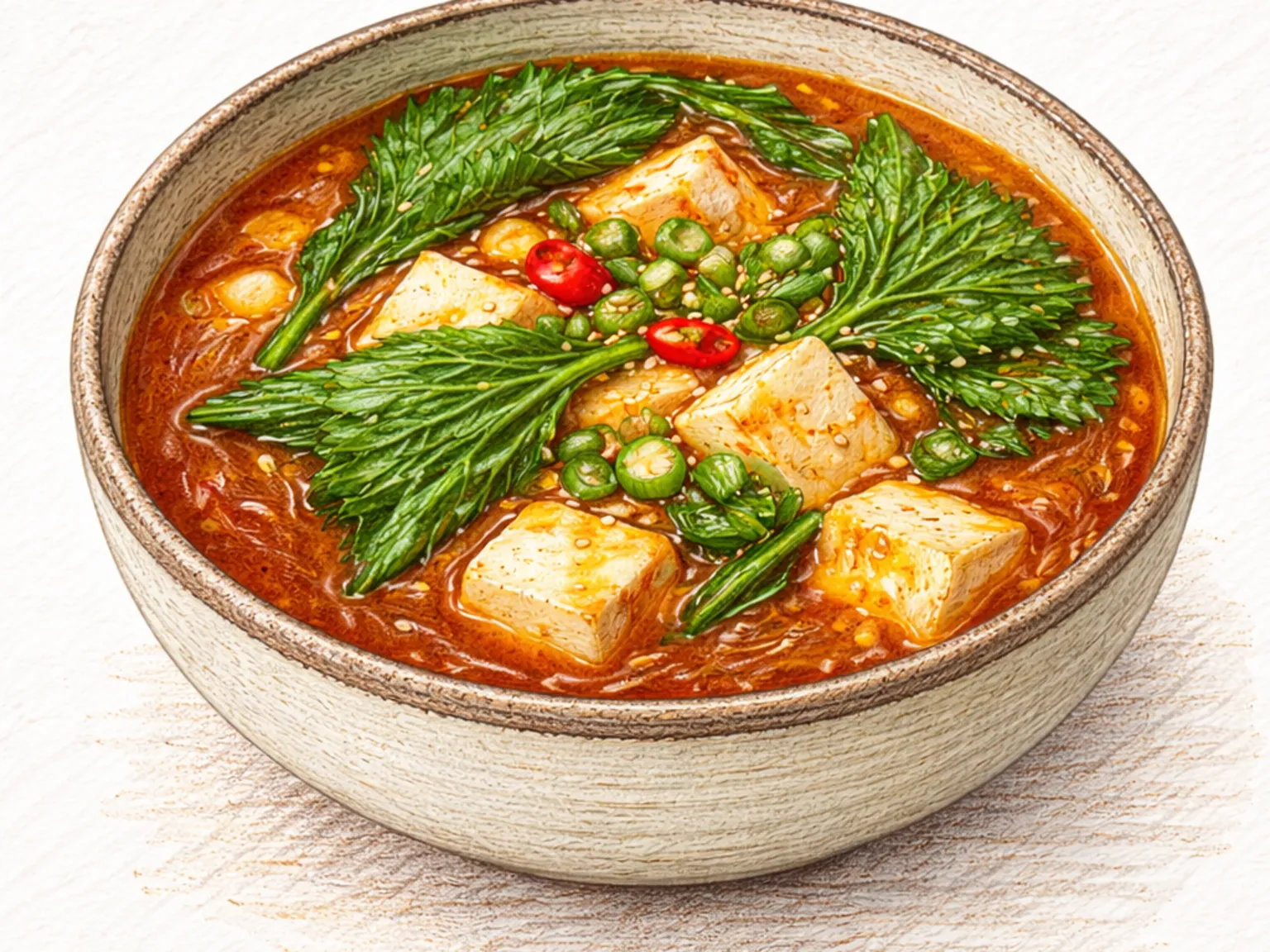
Kkaennip sundubu jjigae is a mild, gently seasoned stew of soft tofu and perilla leaves simmered in a light anchovy broth. The 350g of sundubu goes in as large, rustic pieces that hold their shape while cooking, then collapse into silky, cloud-like curds on the spoon. Twelve perilla leaves added stem-on release their aromatic oils gradually as the broth comes to a boil, giving the stew a distinctly herbal, faintly anise-like character that sets it apart from standard sundubu variations. Gochugaru and soup soy sauce provide just enough background seasoning to keep the perilla fragrance forward rather than overwhelmed by heat, and a drizzle of sesame oil at the finish adds a nutty warmth. Low in spice and gentle on the stomach, this is a practical choice on days when a soothing, unfussy bowl is what is needed.

Dubu Kkaennip-guk (Tofu Perilla Leaf Soup)
Shared ingredient: perilla leaves Soups

Dubu Kkaennip-guk (Tofu Perilla Leaf Soup)

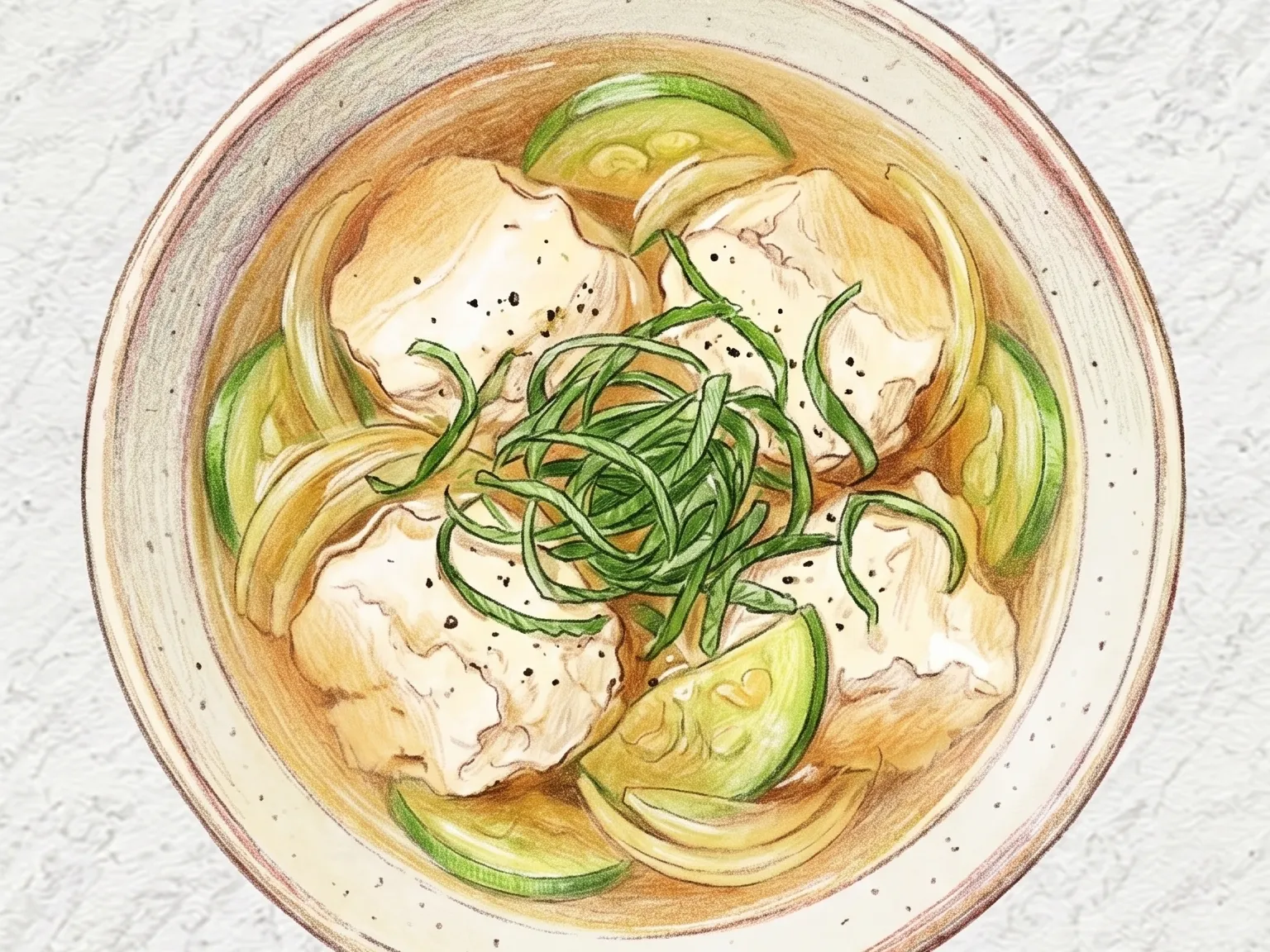
Dubu-kkaennip-guk is a Korean tofu and perilla leaf soup in anchovy broth, finished with chiffonaded perilla leaves that release a bright, minty-herbal fragrance into the clear liquid. Zucchini and onion simmer first to build a vegetable-sweetened base, releasing their natural sugars into the anchovy stock. Large scoops of soft tofu - spooned rather than knife-cut, so the rough surfaces trap more broth - warm through over medium heat for five minutes. The perilla leaves must go in during the last thirty seconds before serving: any longer and they turn dark and lose the sharp aromatic freshness that defines the dish. Soup soy sauce and a light dusting of black pepper complete the seasoning, letting the clean anchovy umami and the herbal lift of the kkaennip share the stage without one overpowering the other. Cooking the zucchini fully soft is important - its gentle sweetness needs time to dissolve into the broth, and when the tofu and vegetables together hold the liquid, each spoonful carries varied texture.

Korean Spicy Stir-Fried Octopus Rice Bowl
Serve together Rice

Korean Spicy Stir-Fried Octopus Rice Bowl

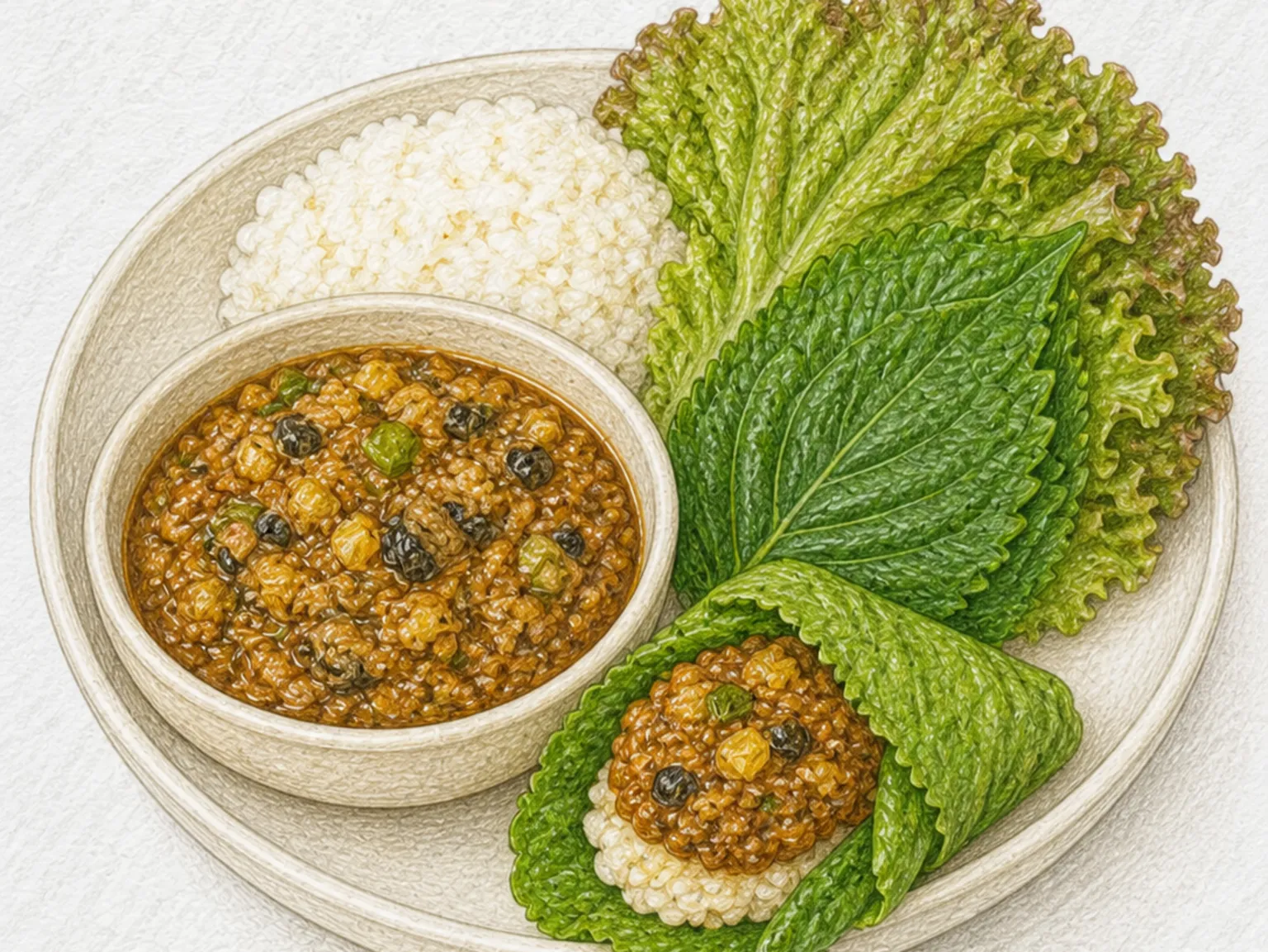
Spicy stir-fried baby octopus in a gochujang sauce is served over a bowl of steamed rice. The octopus delivers a satisfying chew, coated alongside onion and cheongyang chili in a well-seasoned glaze that makes each bite of rice deeply flavorful. Stir-frying on high heat for just a few minutes keeps the octopus springy rather than tough, and scrubbing it with flour before rinsing ensures a clean taste free of any sliminess. Adding a layer of bean sprouts under the stir-fry introduces a contrasting crunch.

Korean Pork Rib Perilla Leaf Stew
Similar recipe Stews

Korean Pork Rib Perilla Leaf Stew

Pork back ribs and perilla leaves come together in this full-flavored, chili-seasoned jjigae. The ribs are simmered first to render a rich, collagen-heavy broth, and then potatoes and onion are added to give the liquid body and natural sweetness. Gochugaru and soup soy sauce establish the spicy base. Fresh perilla leaves are added just before the heat is turned off so their herbal fragrance stays intact, since prolonged boiling drives the aroma away. A touch of ginger keeps the pork flavor clean while the collagen-rich broth from the ribs provides substantial body. Picking the meat off the bone at the table is part of the experience, making this a natural fit for late autumn meals or as a communal drinking accompaniment.

Serve with this

Korean Lotus Root Yuzu Salad
Side dishes Easy

Korean Lotus Root Yuzu Salad

Blanched lotus root slices are dressed in a bright mixture of yuzu marmalade, rice vinegar, sesame oil, and a pinch of sugar. The citrusy yuzu lifts the otherwise neutral lotus root with floral tartness, while the 3 mm thick rounds keep a satisfying crunch even after boiling. Sesame seeds and oil round out the finish with a warm, nutty note. This banchan works especially well alongside richer main dishes, cutting through heaviness with its clean acidity. It can be served as a side dish with rice, with simple accompaniments chosen to match the sauce, broth, or topping.

🏠 Everyday 🍱 Lunchbox
Prep 14min Cook 6min 4 servings
Korean White Kimchi (Non-Spicy Napa Pear Fermented)
Kimchi Medium

Korean White Kimchi (Non-Spicy Napa Pear Fermented)

Baek kimchi is a Korean white kimchi made without gochugaru, producing a completely non-spicy, clear-broth fermented vegetable. Napa cabbage is salted and wilted, rinsed, then layered with julienned radish, sliced garlic, and ginger tucked between the leaves. Pureed pear serves as a natural sugar source that feeds fermentation, while dried jujubes add a subtle background sweetness to the brine. Salted water is poured over the assembled cabbage, the container is sealed, and after one day at room temperature the kimchi moves to the refrigerator for a slow ferment. Without chili heat, the flavor centers on the clean lactic acidity that develops over time, balanced by the natural sweetness of pear and jujube and the warm bite of garlic and ginger dissolved into the brine. The fermentation is slower than standard kimchi, reaching optimal taste at two to three weeks. It is eaten with its brine, either on its own or as a palate-clearing side alongside fatty meat dishes. Before chili peppers were introduced to the Korean peninsula in the late sixteenth century, kimchi without gochugaru was the standard form, and baek kimchi is considered the closest modern equivalent to those pre-chili preparations.

🏠 Everyday 🍱 Lunchbox
Prep 50min Cook 20min 4 servings
Korean Kimchi Pork Jeon (Fermented Kimchi and Pork Crispy Pancake)
Pancakes Easy

Korean Kimchi Pork Jeon (Fermented Kimchi and Pork Crispy Pancake)

Well-fermented kimchi and pork shoulder are the backbone of this hearty Korean pancake. Kimchi brine is mixed directly into the batter, intensifying both the crimson color and the tangy, fermented depth of flavor. A small amount of sugar balances the acidity, while green onion and onion distribute contrasting texture throughout each bite. Pressing the pancake flat in a generously oiled pan over high heat produces deeply caramelized, crispy edges. The kimchi should not be squeezed too dry before mixing in, since residual moisture keeps the interior soft and prevents the finished pancake from becoming dense. Pork shoulder should be cut into small pieces so it cooks through before the exterior over-browns. The kimchi's seasoning is assertive enough that no dipping sauce is required, making this a complete side dish on its own.

🍺 Bar Snacks 🏠 Everyday
Prep 20min Cook 18min 4 servings

Similar recipes

Korean Beef Cabbage Leaf Stew
Stews Medium

Korean Beef Cabbage Leaf Stew

This comforting Korean stew features tender beef brisket and blanched napa cabbage outer leaves simmered in doenjang stock. Thinly sliced brisket is first seared in perilla oil, then stir-fried with doenjang and gochugaru for a minute to bloom the aromas. Water and the cabbage leaves are added, and the pot is simmered over medium-low heat for twenty-five minutes. This slow cooking allows the rich meat broth to permeate the fibrous leaves, making them tender. The perilla oil adds a nutty finish that balances the salty notes of the fermented soybean paste. Slicing the beef against the grain ensures the meat remains soft and easy to chew. Blanching the greens beforehand reduces grassy flavors and yields a cleaner soup. The stew is seasoned with soup soy sauce and finished with sliced green onions before being served hot.

🏠 Everyday
Prep 20min Cook 35min 4 servings
Korean Beef Mushroom Stew
Stews Medium

Korean Beef Mushroom Stew

Soegogi-beoseot-jjigae is a Korean stew featuring thinly sliced beef with oyster mushrooms and shiitake mushrooms in a beef stock base. The beef stays tender throughout the cooking time because it is cut thin, and the two varieties of mushrooms contribute layered umami that deepens the broth considerably. Firm tofu absorbs the surrounding liquid and takes on the flavors of the stew while adding protein and body to the pot. Onion and green onion provide sweetness and fragrance that round out the savory base. The stew is seasoned simply with soup soy sauce and garlic, which keeps the natural flavors of beef and mushroom prominent. Tearing oyster mushrooms by hand along their grain allows the broth to penetrate the fibers better than cutting, and removing the tough stems from shiitake mushrooms before adding them keeps the broth clean and free of bitterness.

🏠 Everyday
Prep 18min Cook 24min 4 servings
Korean Beef Cabbage Leaf Soup
Soups Medium

Korean Beef Cabbage Leaf Soup

Ugeoji soegogi-guk is a spicy, savory Korean beef soup that draws its character from pre-seasoned napa cabbage outer leaves and a brisket-based broth. The ugeoji is rubbed with doenjang and gochugaru before it enters the pot, so when it meets the simmering beef stock, it releases both fermented soybean depth and a steady chili warmth that stains the broth a ruddy brown. The brisket, simmered until the fibers separate easily, is shredded and returned to the pot, adding lean, clean beef flavor throughout. As the ugeoji softens over extended cooking, it absorbs the surrounding liquid like a sponge, so each bite delivers a concentrated burst of the combined seasoning. Daikon radish, if included, tempers the heat with its natural sweetness, while generous amounts of sliced scallion perfume the entire bowl. The overall effect is a soup that is warming and substantial without being aggressive - the spice level is calibrated to soothe rather than overwhelm, which makes it a go-to choice on cold days when the body needs both heat and substance.

🏠 Everyday 🥗 Light & Healthy
Prep 20min Cook 35min 4 servings

Tips

Add perilla leaves at the end to keep their aroma vivid.
Avoid overcooking beef; keep it at medium heat for tenderness.

Nutrition (per serving)

Calories
385
kcal
Protein
30
g
Carbs
10
g
Fat
24
g