Korean Perilla Leaf Soft Tofu Stew
Stews Easy

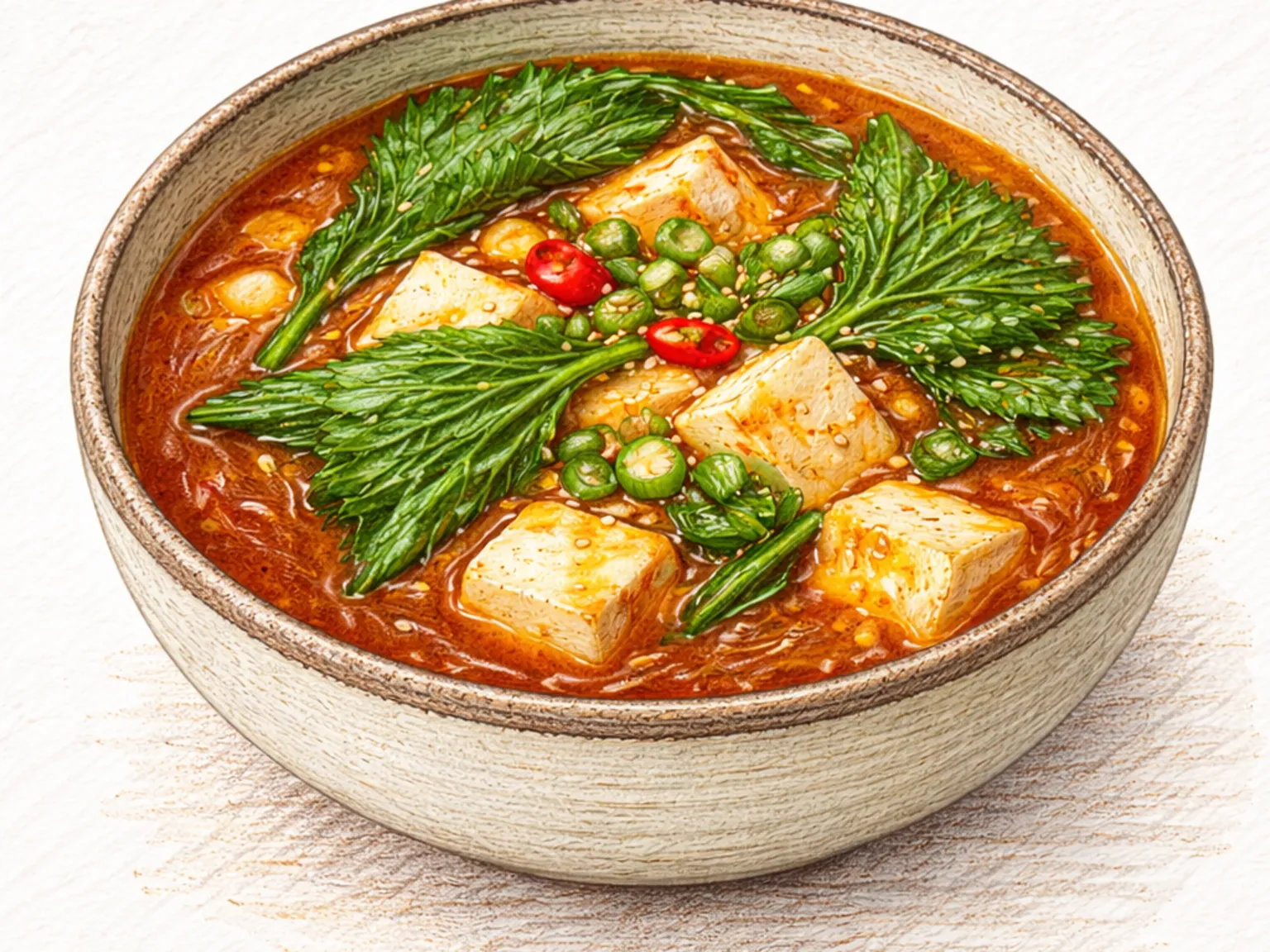
Korean Perilla Leaf Soft Tofu Stew

Quick answer

Kkaennip sundubu jjigae is a mild, gently seasoned stew of soft tofu and perilla leaves simmered in a light anchovy broth.

What makes this special

  • Kkaennip sundubu jjigae releases herbal oils into silky soft tofu for a gentle, aromatic pot.
  • Whole perilla stems release herbal oils into the broth as it simmers
  • Soft tofu added in large chunks melts gently on the spoon
Total time
22 min
Level
Easy
Servings
2 servings
Ingredients
8
Calories
255 kcal
Protein
16 g

Key ingredients

soft tofuperilla leavesoniongreen onionKorean chili flakes

Core cooking flow

  1. 1 Rinse 12 perilla leaves, shake off excess water, and cut them into 1cm strips.
  2. 2 Put 1 tsp sesame oil and 1 tbsp gochugaru in a pot over low heat.
  3. 3 Pour in 500ml anchovy stock and add the sliced onion.

Kkaennip sundubu jjigae is a mild, gently seasoned stew of soft tofu and perilla leaves simmered in a light anchovy broth. The 350g of sundubu goes in as large, rustic pieces that hold their shape while cooking, then collapse into silky, cloud-like curds on the spoon. Twelve perilla leaves added stem-on release their aromatic oils gradually as the broth comes to a boil, giving the stew a distinctly herbal, faintly anise-like character that sets it apart from standard sundubu variations. Gochugaru and soup soy sauce provide just enough background seasoning to keep the perilla fragrance forward rather than overwhelmed by heat, and a drizzle of sesame oil at the finish adds a nutty warmth. Low in spice and gentle on the stomach, this is a practical choice on days when a soothing, unfussy bowl is what is needed.

Prep 10min Cook 12min 2 servings

Instructions

Read the steps as a cooking flow: prep, heat, seasoning, doneness control, and finish.

6 steps
  1. 1
    Prep

    Rinse 12 perilla leaves, shake off excess water, and cut them into 1cm strips.

    Slice 70g onion and 35g green onion about 0.5cm thick so they soften quickly without disappearing into the stew.

  2. 2
    Control

    Put 1 tsp sesame oil and 1 tbsp gochugaru in a pot over low heat.

    Stir constantly for about 20 seconds, only until the oil turns red, because scorched chili flakes will taste bitter.

  3. 3
    Control

    Pour in 500ml anchovy stock and add the sliced onion.

    Raise the heat to medium-high, then simmer for about 4 minutes once bubbling starts, until the onion looks translucent and sweetens the broth.

  4. 4
    Season

    Scoop 350g soft tofu into the pot in large pieces with a spoon, then add 1 tbsp soup soy sauce.

    Stir only around the edges so the tofu stays in soft, generous curds.

  5. 5
    Control

    Lower the heat to medium and simmer for about 2 minutes more.

    When the broth bubbles again and the tofu is heated through, taste the liquid and check only whether it needs a little more salinity.

  6. 6
    Finish

    Add the sliced perilla leaves and green onion at the end, then simmer only 1 1/2 to 2 minutes.

    Turn off the heat as soon as the herbal aroma rises, and serve the stew hot.

After the steps

Pick a recipe that fits this dish.

Continue with shared ingredients, meal pairings, or a similar method.

Recipes That Go Well With This

More Stews →

Based on shared ingredients and meal pairing

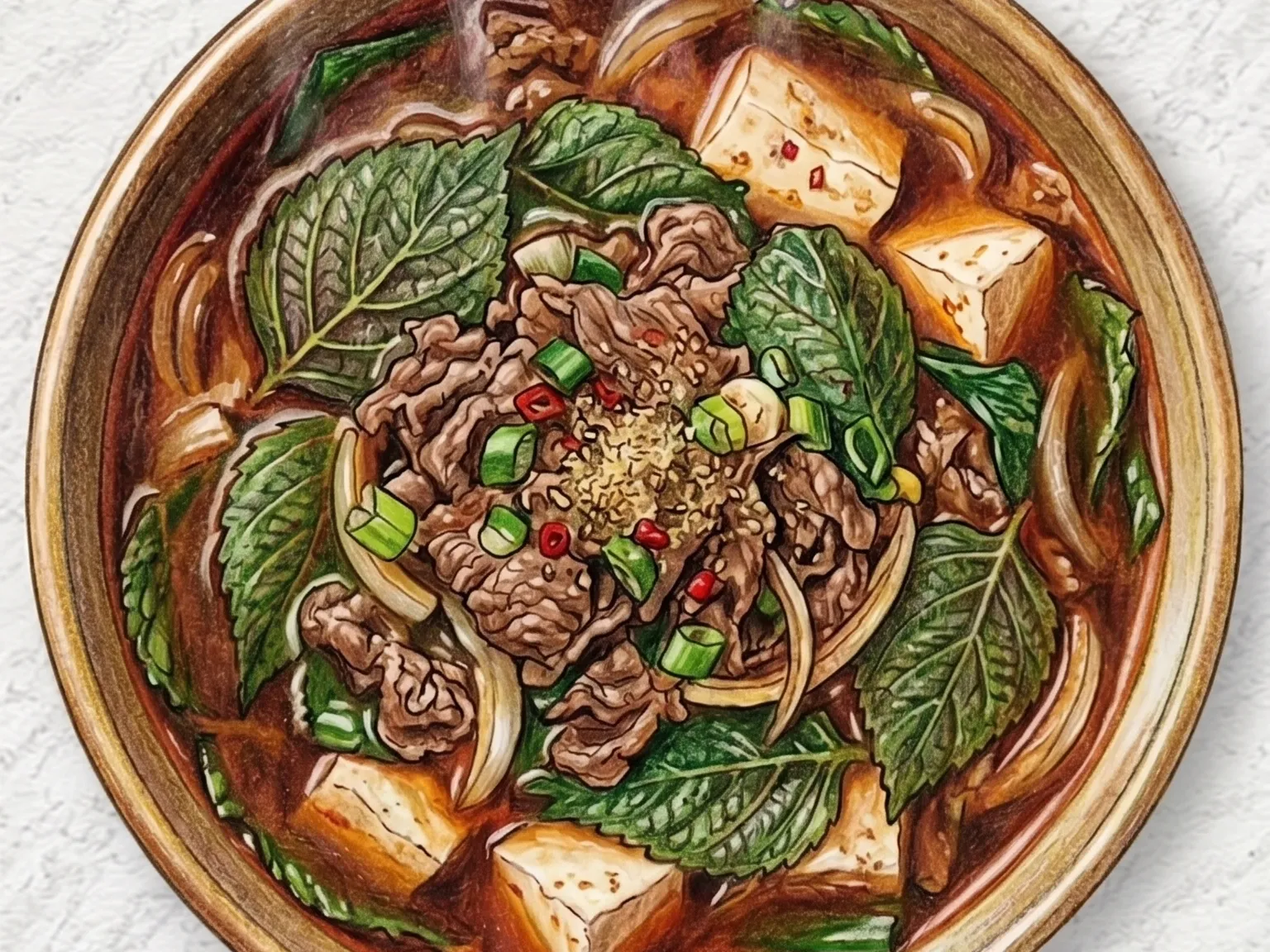
Korean Perilla Leaf Beef Stew
Shared ingredient: perilla leaves Stews

Korean Perilla Leaf Beef Stew

Korean perilla leaf beef stew is a savory broth dish that combines thinly sliced beef with perilla leaves. The cooking process starts by marinating the beef with soup soy sauce and minced garlic, then stir-frying it briefly with sliced onions to extract its natural flavors. Anchovy stock is then poured into the pot and brought to a boil. Red pepper flakes, soup soy sauce, and garlic are added to build a spicy broth, followed by cubes of firm tofu that simmer for several minutes to absorb the seasoning. At the very end of cooking, twelve fresh perilla leaves are sliced and added to the pot for just a minute or two along with green onions. This late addition ensures the delicate, herbal aroma of the perilla leaves is preserved, infusing the entire stew. Seasoned primarily with soup soy sauce, the stew highlights the distinct taste of beef and perilla without heavy seasonings.

Korean Pork Rib Perilla Leaf Stew
Shared ingredient: perilla leaves Stews

Korean Pork Rib Perilla Leaf Stew

Pork back ribs and perilla leaves come together in this full-flavored, chili-seasoned jjigae. The ribs are simmered first to render a rich, collagen-heavy broth, and then potatoes and onion are added to give the liquid body and natural sweetness. Gochugaru and soup soy sauce establish the spicy base. Fresh perilla leaves are added just before the heat is turned off so their herbal fragrance stays intact, since prolonged boiling drives the aroma away. A touch of ginger keeps the pork flavor clean while the collagen-rich broth from the ribs provides substantial body. Picking the meat off the bone at the table is part of the experience, making this a natural fit for late autumn meals or as a communal drinking accompaniment.

Korean Soft Tofu Stew Rice Bowl
Serve together Rice

Korean Soft Tofu Stew Rice Bowl

Fiery soft-tofu stew is cooked until bubbling and poured directly over a bowl of rice so the spicy broth seeps into every grain. The silky tofu breaks apart gently, creating pockets of creamy texture within the chili-laced soup. Cracking a raw egg into the simmering pot softens the heat and adds body to the broth. Variations with shrimp, clams, or pork each shift the base flavor in a different direction, making this a versatile single-bowl meal. Serving it soon after cooking keeps the intended texture clearer, while brief resting lets the sauce or broth settle into the dish.

Korean Lotus Root Perilla Seed Stew
Similar recipe Stews

Korean Lotus Root Perilla Seed Stew

Korean lotus root perilla seed stew is a vegetable stew that features crisp lotus root and oyster mushrooms cooked in a thick perilla seed broth. The process begins by soaking sliced lotus root in vinegar water for five minutes to prevent browning and reduce astringency. Onion and oyster mushrooms are stir-fried in sesame oil before adding the lotus root and vegetable stock. After simmering until the lotus root is tender, soup soy sauce and minced garlic are stirred in. Finally, four tablespoons of perilla seed powder are dissolved into the soup along with tofu, and the stew is heated over low heat. Adding the perilla powder at the end preserves its rich, nutty aroma without making the broth chalky. Built on vegetable stock without meat or fish, this dish offers a clean taste and varied textures.

Serve with this

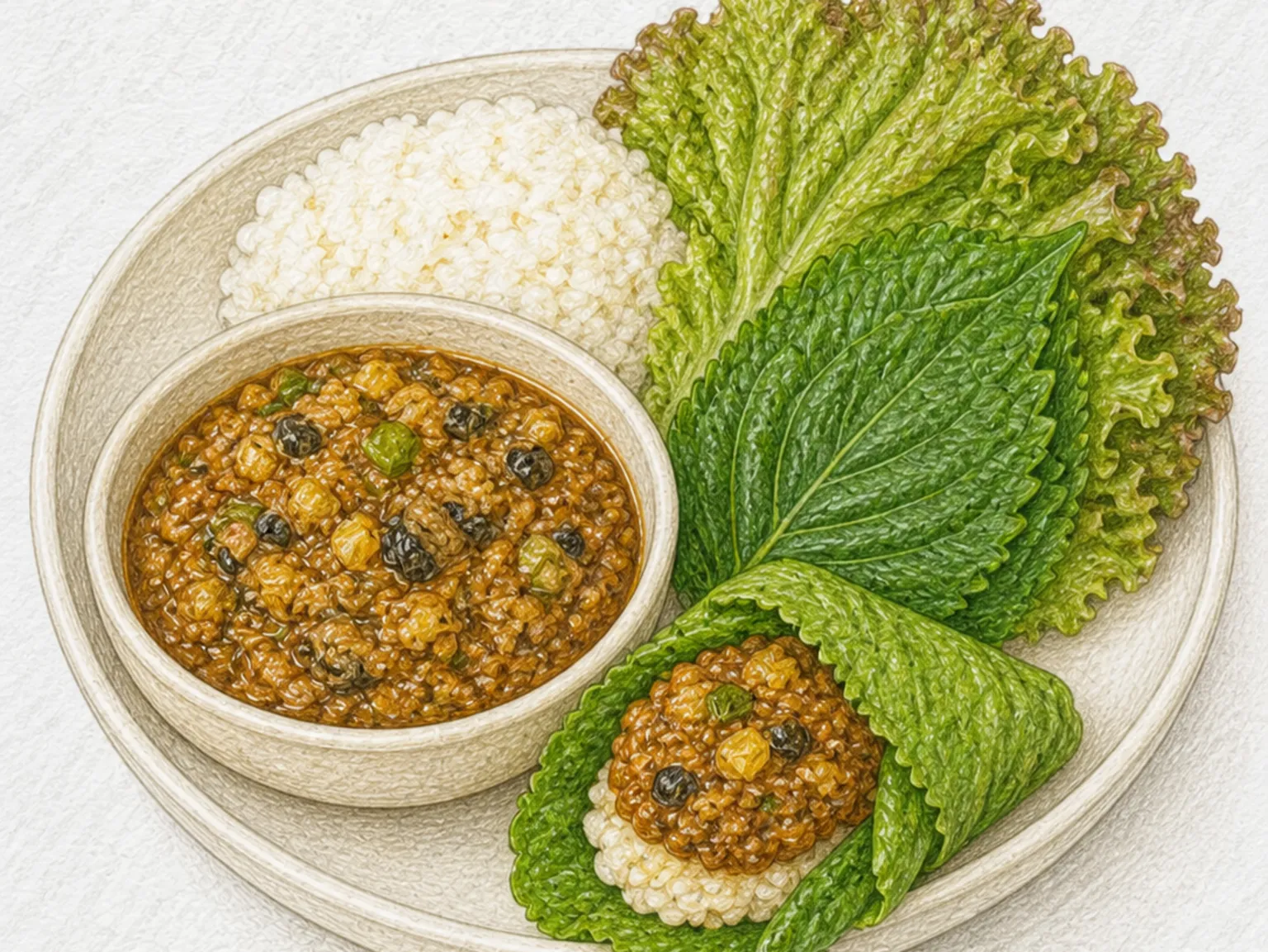
Chicken Cabbage Wraps
Side dishes Easy

Chicken Cabbage Wraps

Chicken Cabbage Wraps represent a simple side dish combining tender chicken tenderloin with steamed cabbage leaves. The cabbage leaves are steamed for seven to eight minutes until slightly translucent, then cooled in cold water to preserve their color and flexibility. The chicken tenderloins are prepared by removing the tough tendons and marinating with mirin, salt, and pepper to reduce dryness and enhance tenderness. Once grilled on a medium-heated pan until cooked through, the chicken is rolled tightly inside the prepared cabbage leaves. Brushing the rolls with sesame oil before slicing them into bite-sized pieces adds a nutty finish. Serving these wraps with ssamjang creates a balanced dish with minimal ingredients, offering a clean taste and a pleasant contrast of textures.

🔥 Trending Now ⚡ Quick
Prep 15min Cook 15min 2 servings
Korean Bangwool Yangbaechu Kimchi (Brussels Sprout Kimchi)
Kimchi Medium

Korean Bangwool Yangbaechu Kimchi (Brussels Sprout Kimchi)

Bangwool yangbaechu kimchi is a creative Korean kimchi made from halved Brussels sprouts, brined in salt and dressed with gochugaru, fish sauce, garlic, and apple. Brussels sprouts are denser than napa cabbage and hold their structure after salting, giving each bite a firm crunch that releases a natural sweetness as you chew. The combination of fish sauce and gochugaru builds a spicy-salty depth, while grated apple introduces a fruit sweetness that softens the chili heat without masking it. Scallions contribute a fresh note throughout. Because the sprouts are compact and less watery than cabbage, the kimchi ferments more slowly and stays crisp longer. It can be eaten right away as a fresh kimchi, or left to ferment for several days as the flavors deepen. In season from autumn through early spring, this kimchi suits both traditional Korean meals and modern brunch spreads.

🍱 Lunchbox 🏠 Everyday
Prep 30min 4 servings
Korean Radish & Shrimp Pancake
Pancakes Easy

Korean Radish & Shrimp Pancake

Julienned Korean radish and small peeled shrimp are combined in a pancake batter fortified with a measured amount of potato starch for added crispiness. Egg is mixed into the batter to improve binding and keep the pancake intact when flipped. Scallions are distributed throughout for a mild, grassy fragrance. Radish releases notable moisture as it cooks, so frying over high heat is essential to drive off that liquid quickly and achieve a crisp outer surface. The sharp, slightly bitter edge of raw radish disappears with heat and gives way to a gentle natural sweetness that pairs cleanly with the mild, delicate flavor of the shrimp. Pressing the center of the pancake down with a spatula while frying encourages even browning all the way through.

🍺 Bar Snacks ⚡ Quick
Prep 15min Cook 12min 2 servings

Similar recipes

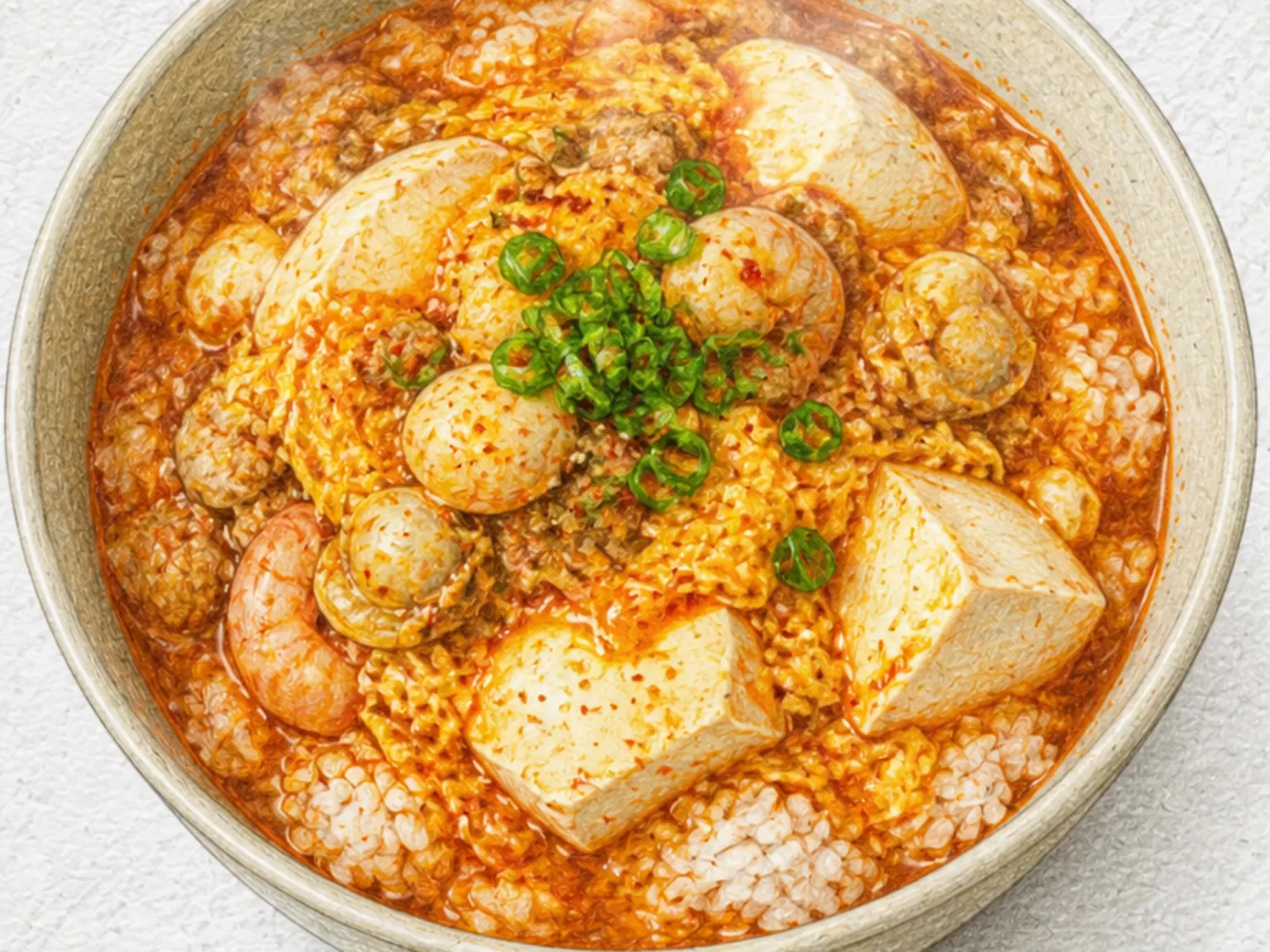
Korean Soft Tofu Stew (Silken Tofu in Spicy Clam Broth)
Stews Easy

Korean Soft Tofu Stew (Silken Tofu in Spicy Clam Broth)

Sundubu-jjigae is one of Korea's most recognizable stews, built around silken soft tofu simmered in a fiery broth with clams, ground pork, and gochugaru. The process starts by frying sesame oil, chili flakes, and garlic together until the fat turns red and fragrant, which becomes the flavor foundation of the entire pot. Stock is poured in and brought to a hard boil, then two eggs are cracked directly onto the surface of the stew and left to set into a soft, barely-cooked yolk. Clams bring a clean oceanic salinity to the broth while the pork provides a meatier, rounder depth, and the two work together to create a layered complexity that neither delivers alone. The stew is served still boiling in an earthenware pot because the clay retains heat far longer than metal, keeping every spoonful scalding from first to last. A scoop of rice stirred into the leftover broth absorbs the spicy, savory liquid completely.

🏠 Everyday ⚡ Quick
Prep 10min Cook 20min 2 servings
Dubu Kkaennip-guk (Tofu Perilla Leaf Soup)
Soups Easy

Dubu Kkaennip-guk (Tofu Perilla Leaf Soup)

Dubu-kkaennip-guk is a Korean tofu and perilla leaf soup in anchovy broth, finished with chiffonaded perilla leaves that release a bright, minty-herbal fragrance into the clear liquid. Zucchini and onion simmer first to build a vegetable-sweetened base, releasing their natural sugars into the anchovy stock. Large scoops of soft tofu - spooned rather than knife-cut, so the rough surfaces trap more broth - warm through over medium heat for five minutes. The perilla leaves must go in during the last thirty seconds before serving: any longer and they turn dark and lose the sharp aromatic freshness that defines the dish. Soup soy sauce and a light dusting of black pepper complete the seasoning, letting the clean anchovy umami and the herbal lift of the kkaennip share the stage without one overpowering the other. Cooking the zucchini fully soft is important - its gentle sweetness needs time to dissolve into the broth, and when the tofu and vegetables together hold the liquid, each spoonful carries varied texture.

🏠 Everyday 🥗 Light & Healthy
Prep 10min Cook 15min 2 servings

Tips

Add perilla leaves at the end to preserve fragrance.
For richer flavor, add 1 tsp perilla seed powder.

Nutrition (per serving)

Calories
255
kcal
Protein
16
g
Carbs
10
g
Fat
17
g