Korean Kkaennip Chamchi Jeon (Perilla Tuna Pancakes)
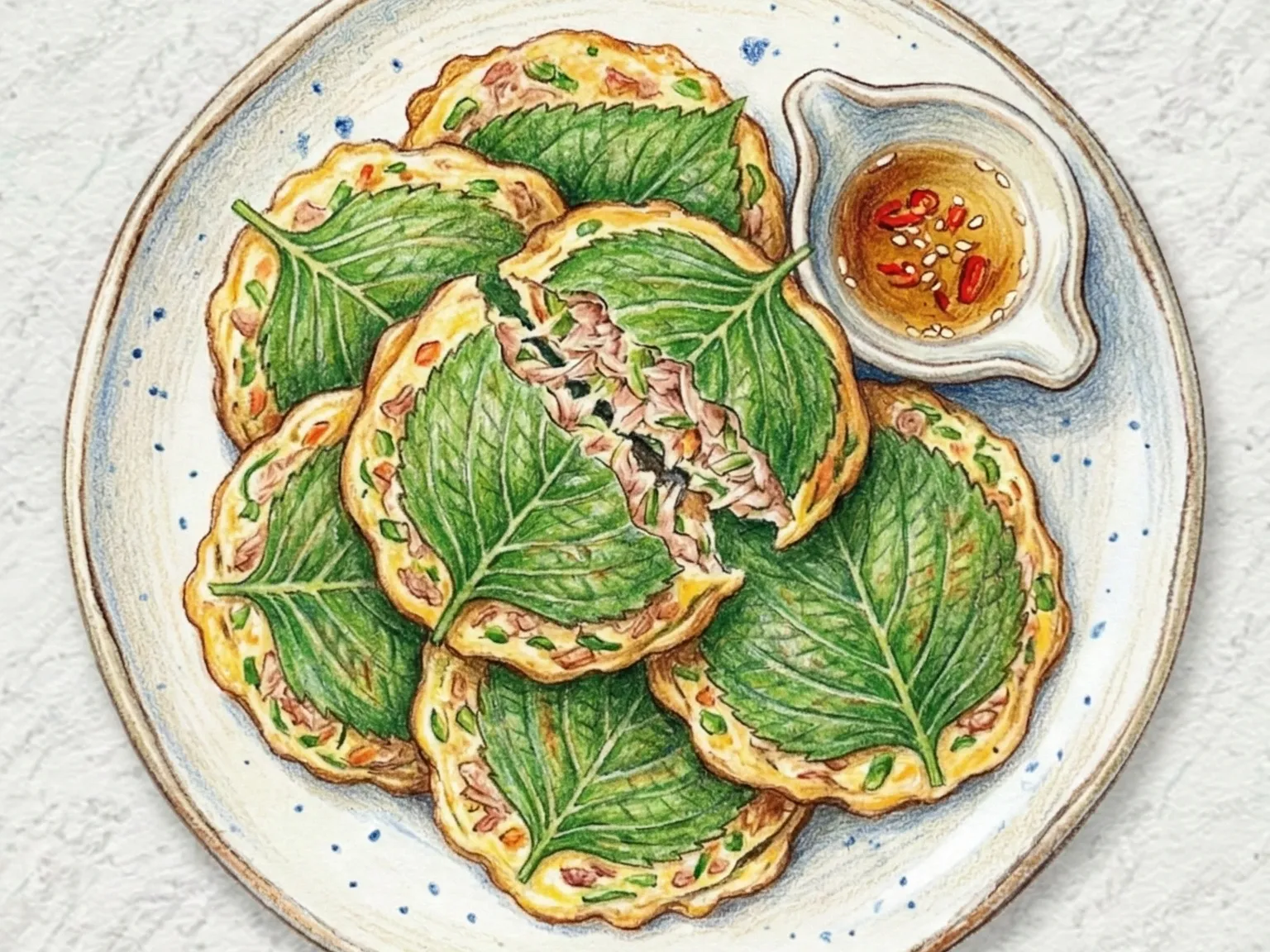
Drained canned tuna is mixed with chopped onion, carrot, and a pancake-mix batter, then spooned onto individual perilla leaves and pan-fried over medium-low heat. Each leaf acts as a natural wrapper, adding a distinctly herbal, slightly minty fragrance that balances the saltiness of the tuna. Frying slowly produces a crisp golden crust on the outside while keeping the filling moist inside.
Adjust Servings
Instructions
- 1
Drain tuna and finely chop onion and carrot.
- 2
Mix pancake mix, water, egg, and salt into a batter.
- 3
Fold in tuna and chopped vegetables evenly.
- 4
Lay out perilla leaves and spread a thin layer of batter on each.
- 5
Pan-fry over medium-low heat until both sides are golden.
- 6
Blot excess oil with paper towel and serve.
As an Amazon Associate, we may earn from qualifying purchases.
Tips
Nutrition (per serving)
More Recipes

Korean Kimchi Jeon Cup (Kimchi Pancake Cups)
Kimchi jeon cups are small Korean pancakes made from a batter of pancake mix, water, kimchi brine, finely chopped aged kimchi, green onion, and Cheongyang chili, pan-fried in rounds and served standing upright in cups. Adding kimchi brine to the batter spreads fermented umami throughout, making the flavor more intense than standard kimchi pancakes. Generous oil and medium heat crisp the edges into a fried shell, and the Cheongyang chili adds a sharp heat on top of the kimchi's sourness. A thick batter consistency is essential so the pancakes hold their shape when stood in cups.

Korean Tuna & Perilla Leaf Fritters
This jeon brings together canned tuna, perilla leaves, onion, and carrot in a pancake-mix batter bound with egg. The tuna provides a briny, savory base while the perilla leaves contribute their characteristic herbal fragrance. Finely diced carrot and onion add natural sweetness that balances the saltiness of the tuna. It comes together quickly and holds up well at room temperature, making it a practical choice for lunchboxes or a quick snack.

Korean Kimchi Cheese Gamja Jeon Cup (Kimchi Cheese Potato Cup)
Kimchi cheese gamja jeon cups are made by mixing julienned potato and chopped kimchi with Korean pancake mix and egg, pressing the batter into cup shapes in a pan, then filling the center with mozzarella and green onion and covering to melt. The potato starch acts as a natural binder that holds the cup shape, and the bottom develops a golden, crispy crust. Under the lid, the cheese melts and mingles with the spicy kimchi while the potato provides a mild, starchy base. Squeezing excess liquid from the kimchi before mixing is essential to prevent the cups from collapsing.

Korean Tuna and Kimchi Pancake
Chamchi-kimchi-jeon is a Korean pancake made from drained canned tuna and finely chopped aged kimchi mixed into a simple batter of Korean pancake flour, water, and egg. The tuna provides mild protein bulk while the fermented kimchi delivers tangy acidity and deep umami, and the minimal batter lets both flavors come through without being muted. Using well-aged kimchi intensifies the sour depth that offsets the tuna's mildness, and the egg in the batter helps the pancake hold together during flipping. The whole dish comes together in under ten minutes from pantry staples, making it one of the quickest jeon varieties for a casual meal or drinking snack.

Korean Street Ham & Egg Toast
Gilgeori ham egg toast is the foundational version of Korean street toast, combining a pan-fried cabbage-carrot-egg patty with lightly seared ham between buttered bread. The vegetables are shredded fine and mixed into egg batter, then cooked flat, while the ham gets a quick 30-second sear on each side for slight caramelization at the edges. Sugar dusted over ketchup is the defining flavor trick, adding sweetness that plays against the salty ham. Without cheese, this version is lighter and more straightforward than its richer counterparts.

Korean Oil Tteokbokki (Dry-Stir-Fried Rice Cakes in Chili Soy Glaze)
Gireum-tteokbokki is a dry-style tteokbokki where rice cakes are stir-fried in oil and coated with a concentrated paste of gochugaru, soy sauce, sugar, and garlic - no broth involved. Blooming the chili flakes briefly in oil draws out their nutty aroma rather than raw heat, and the soy sauce and sugar build layered sweetness and umami on top. Without liquid, the seasoning clings tightly to each rice cake's surface, creating an intense glaze. Green onion and sesame seeds added at the end provide a fresh bite and fragrance to balance the rich coating.