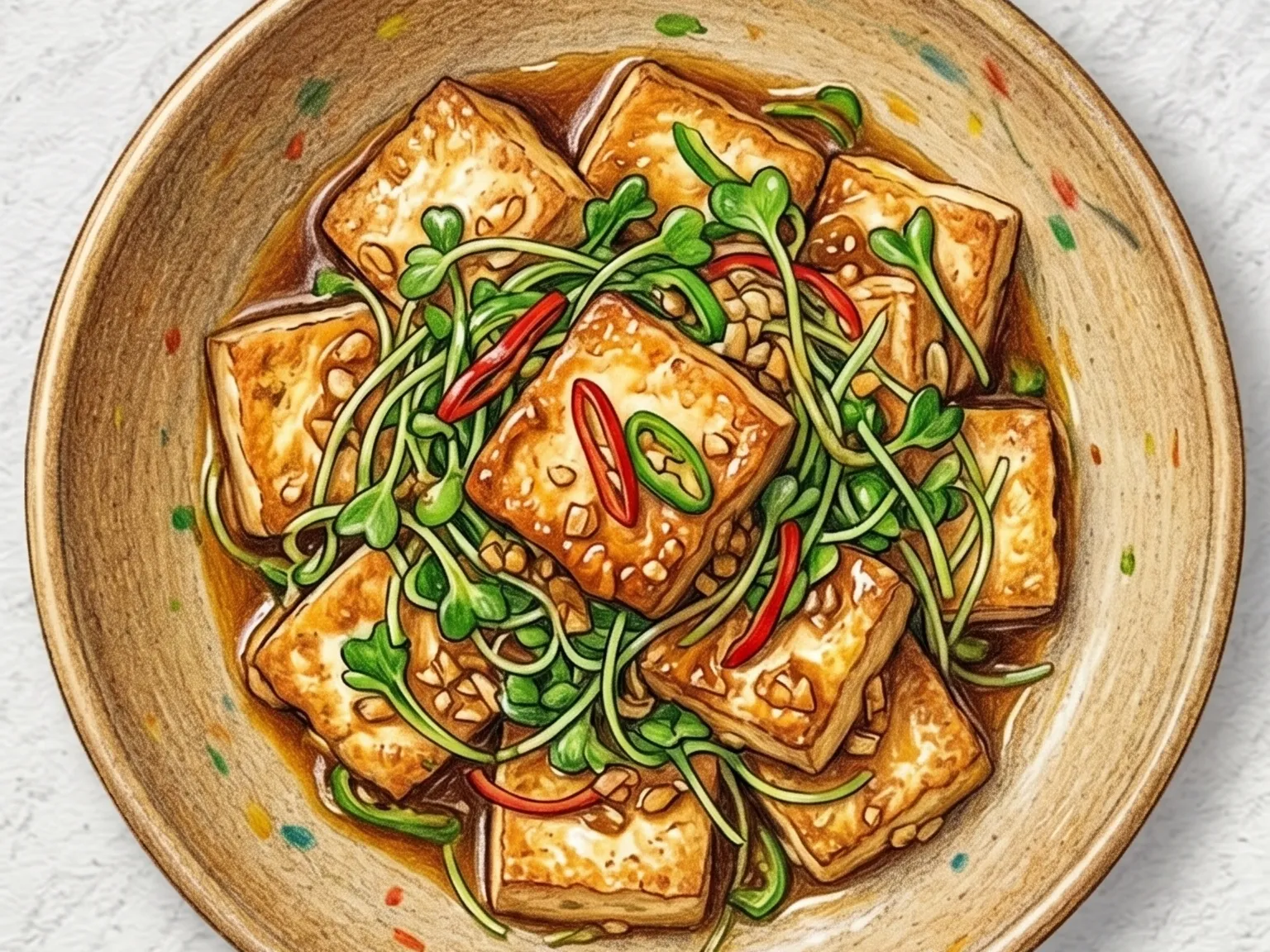
Korean Perilla Sprout & Tofu Soybean Paste Stir-fry
Kkaetsun dubu doenjang bokkeum pairs pan-seared firm tofu with perilla sprouts in a doenjang-based sauce made by dissolving the fermented soybean paste with water, garlic, and onion. The doenjang coats the golden tofu surfaces with a salty, earthy glaze, while perilla sprouts - softer than mature perilla leaves - release a subtle sesame-like fragrance as they wilt. The contrast between crisp tofu edges and tender greens defines the dish's texture. A half Cheongyang chili adds a light sting that lifts the heaviness of the fermented paste.
Adjust Servings
Instructions
- 1
Cut tofu into 1.5 cm cubes and remove excess moisture with paper towels.
- 2
Trim tough stems from perilla sprouts, rinse, and shake off water.
- 3
Use half the perilla oil to pan-sear tofu for 2 minutes until lightly golden; set aside.
- 4
In the same pan, sauté onion and garlic, then dissolve doenjang with water to make sauce.
- 5
Add tofu, perilla sprouts, and chili, then toss quickly for 1–2 minutes until just wilted.
- 6
Drizzle remaining perilla oil for aroma and serve immediately.
As an Amazon Associate, we may earn from qualifying purchases.
Tips
Nutrition (per serving)
More Recipes

Korean Beurokolli Dubu Doenjang Bokkeum (Broccoli Tofu Doenjang Stir-fry)
Broccoli florets and firm tofu are stir-fried in a sauce made by dissolving doenjang in water, creating a Korean vegetarian side with deep fermented-bean umami. Pan-searing the tofu in perilla oil until golden before combining it with the other ingredients prevents it from crumbling during the stir-fry and gives each cube a crisp shell encasing a soft interior. The broccoli is blanched for only 40 seconds to lock in its crunch, then added to the pan where the doenjang sauce coats each floret, suppressing any raw green bitterness and replacing it with a mellow savoriness. Because doenjang is already quite salty, the soy sauce should be adjusted at the very end after tasting. A sprinkle of sesame seeds at the finish adds one more layer of nuttiness. The dish provides both plant-based protein from the tofu and fiber from the broccoli in a single, well-balanced plate.

Korean Gondre Dubu Doenjang Bokkeum (Thistle Tofu Doenjang Stir-fry)
Gondre dubu doenjang bokkeum pan-sears firm tofu in perilla oil until golden, then stir-fries it with blanched gondre thistle greens in a doenjang sauce. Searing the tofu separately keeps its shape intact and adds a crisp edge that contrasts with the soft greens. Doenjang dissolved in a splash of water coats the gondre, letting the fermented soybean paste's deep umami seep into every strand. Soup soy sauce fine-tunes the seasoning without making the dish overly salty. Sliced cheongyang chili introduces gentle heat. The perilla oil ties everything together with its distinctively nutty, herbal aroma.

Korean Perilla Leaf Tofu Stir-fry
Kkaennip dubu bokkeum is a side dish of firm tofu cubes pan-fried until golden, then seasoned with soy sauce, onion, and garlic before being tossed with chiffonaded perilla leaves and ground perilla seeds at the end. The tofu develops a lightly crisp shell that absorbs the soy seasoning while the interior stays soft. Perilla leaves contribute a distinctive herbal fragrance, and the ground perilla seeds add a nutty depth that elevates the dish beyond a basic tofu stir-fry. A final touch of sesame oil brightens the aroma.

Korean Shepherd's Purse Tofu Stir-fry
Naengi-dubu-bokkeum is a spring-seasonal Korean stir-fry that pairs shepherd's purse - a wild herb with a distinctive earthy bitterness - with cubed firm tofu in perilla oil and soy sauce. The tofu is pan-seared until golden to build a crust, then set aside while onion and garlic cook in the same pan before soy sauces go in. The tofu returns along with the cleaned, trimmed shepherd's purse, which needs only two minutes of gentle tossing to wilt without losing its herbal bite. A final drizzle of perilla oil and a pinch of toasted sesame seeds layer nuttiness over the herb's green, slightly bitter fragrance.

Korean Napa Cabbage Perilla Stir-fry
A Korean home-cooking staple found on family dinner tables far more often than in restaurants. Napa cabbage is tossed in perilla oil over high heat until wilted, then braised briefly with soup soy sauce until the leaves turn silky while stems keep a slight bite. Ground perilla seeds dissolve into the liquid at the end, forming a creamy, pale-tan coating with an earthy, seed-forward taste. Saucy enough to soak into steamed rice, it also travels well cold in lunchboxes.

Korean Seasoned Perilla Sprout Namul
Kkaetsun-namul-muchim uses young perilla shoots rather than the mature leaves, blanched and dressed with doenjang and perilla oil. Kkaetsun has more tender stems and a more concentrated aroma than full-grown kkaennip, and it appears in traditional markets mainly from summer into early autumn. Trimming the thick lower stems and blanching for just forty seconds preserves the fragrance while softening the fibrous stalks. Hand-dressing with doenjang, soup soy sauce, garlic, and deulgirum (perilla oil) creates a double layer of herbal nuttiness - the fermented paste's earthy umami meeting the shoot's intense green perfume. Perilla oil is preferred over sesame oil here because it belongs to the same botanical family as the shoots, creating a more harmonious pairing. This seasonal namul is a strong alternative when you want something beyond the usual sigeumchi (spinach).