Charim

2686 Korean & World Recipes

2686+ Korean recipes, clean and organized. Ingredients to instructions, all at a glance.

Korean Seasoned Perilla Sprout Namul

Korean Seasoned Perilla Sprout Namul

Kkaetsun-namul-muchim uses young perilla shoots rather than the mature leaves, blanched and dressed with doenjang and perilla oil. Kkaetsun has more tender stems and a more concentrated aroma than full-grown kkaennip, and it appears in traditional markets mainly from summer into early autumn. Trimming the thick lower stems and blanching for just forty seconds preserves the fragrance while softening the fibrous stalks. Hand-dressing with doenjang, soup soy sauce, garlic, and deulgirum (perilla oil) creates a double layer of herbal nuttiness - the fermented paste's earthy umami meeting the shoot's intense green perfume. Perilla oil is preferred over sesame oil here because it belongs to the same botanical family as the shoots, creating a more harmonious pairing. This seasonal namul is a strong alternative when you want something beyond the usual sigeumchi (spinach).

Prep 10minCook 3min2 servings

Adjust Servings

2servings
servings

Instructions

  1. 1

    Trim thick stems and wash the perilla sprouts.

  2. 2

    Blanch in lightly salted boiling water for 40 seconds.

  3. 3

    Rinse cold, squeeze dry, and cut into 5 cm pieces.

  4. 4

    Mix doenjang, soup soy sauce, garlic, and perilla oil.

  5. 5

    Add sprouts and chopped green onion, then toss gently.

  6. 6

    Finish with sesame seeds.

🛒Shop Ingredients on Amazon

As an Amazon Associate, we may earn from qualifying purchases.

Tips

Overblanching weakens the aroma.
Add perilla oil at the end for stronger fragrance.

Nutrition (per serving)

Calories
95
kcal
Protein
4
g
Carbs
6
g
Fat
7
g

More Recipes

Korean Seasoned Swiss Chard Namul
Side dishesEasy

Korean Seasoned Swiss Chard Namul

Geundae - Swiss chard in Korean kitchens - has been used in doenjang soup and namul for generations. Because the stems are substantially thicker than the leaves, they are blanched separately: stems go in first for thirty seconds, then leaves join for another thirty. After squeezing dry, the greens are hand-dressed with doenjang, soup soy sauce, garlic, and perilla oil, allowing the fermented paste's earthy depth to merge with chard's faintly bitter, mineral flavor. Perilla powder stirred in last thickens the dressing into a clinging coating without adding liquid. Chard leaves hold up better than spinach after dressing, making this namul a sturdy banchan that does not wilt quickly.

🏠 Everyday🍱 Lunchbox
Prep 10minCook 4min4 servings
Korean Seasoned Napa Cabbage Namul
Side dishesEasy

Korean Seasoned Napa Cabbage Namul

Boiled napa cabbage dressed with doenjang and perilla, passed down through generations of Korean home cooks. The cabbage boils two minutes - leaves collapse while white stems stay slightly firm - then is rinsed, squeezed, and cut. Perilla oil gives a distinctly herbal quality, and perilla powder thickens the dressing into a paste clinging to each piece. This quiet, understated banchan pairs well with clear soups and plain rice.

🏠 Everyday🍱 Lunchbox
Prep 10minCook 5min4 servings
Korean Seasoned Amaranth Greens
Side dishesEasy

Korean Seasoned Amaranth Greens

Amaranth greens - biryeom - are a summer vegetable with deep green, purple-tinged leaves that bleed reddish into the blanching water. Blanched one minute, squeezed, and dressed with doenjang, soup soy sauce, garlic, and scallion. Perilla oil replaces sesame oil, lending a herbal note matching amaranth's mineral taste. The leaves hold firmer than mallow or spinach, gripping the dressing without collapsing. A countryside banchan tied to the short summer harvest.

🏠 Everyday🍱 Lunchbox
Prep 10minCook 4min4 servings
Korean Seasoned Rapeseed Greens
Side dishesEasy

Korean Seasoned Rapeseed Greens

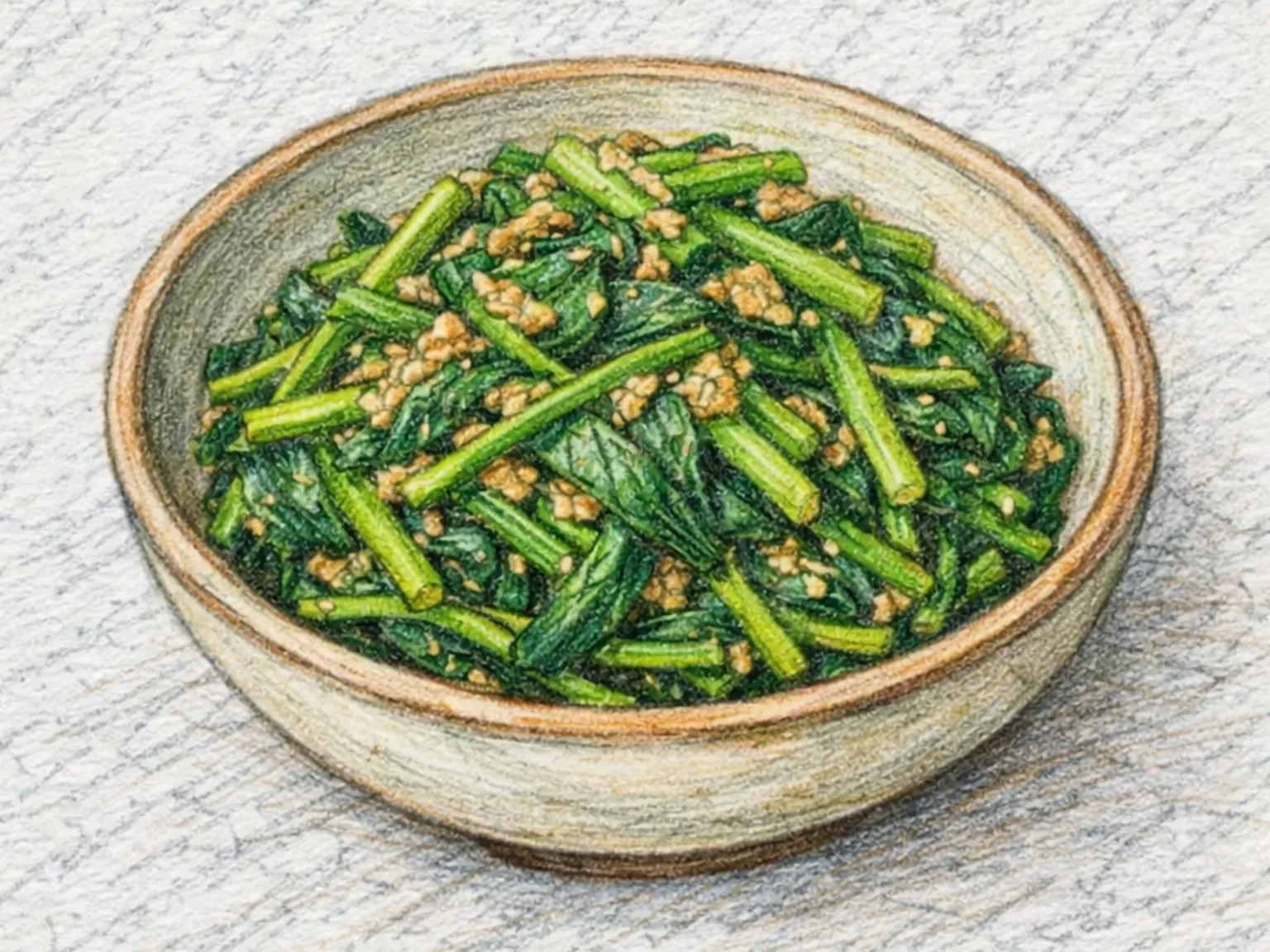
Young rapeseed greens are blanched for just 40 seconds in salted water, then squeezed dry and tossed with doenjang, minced garlic, green onion, sesame oil, and ground sesame. The brief blanching preserves the stems' gentle snap, and the fermented soybean paste brings an earthy depth that pairs naturally with the greens' mild grassy flavor. Squeezing out excess water before seasoning keeps the dressing concentrated on each piece rather than pooling at the bottom. From prep to plate, this banchan takes under fifteen minutes.

🏠 Everyday🍱 Lunchbox
Prep 8minCook 3min4 servings
Korean Perilla Sprout & Tofu Soybean Paste Stir-fry
Stir-fryEasy

Korean Perilla Sprout & Tofu Soybean Paste Stir-fry

Kkaetsun dubu doenjang bokkeum pairs pan-seared firm tofu with perilla sprouts in a doenjang-based sauce made by dissolving the fermented soybean paste with water, garlic, and onion. The doenjang coats the golden tofu surfaces with a salty, earthy glaze, while perilla sprouts - softer than mature perilla leaves - release a subtle sesame-like fragrance as they wilt. The contrast between crisp tofu edges and tender greens defines the dish's texture. A half Cheongyang chili adds a light sting that lifts the heaviness of the fermented paste.

🏠 Everyday🍱 Lunchbox
Prep 14minCook 8min2 servings
Korean Butterbur Stem Stir-fry with Perilla
Stir-fryMedium

Korean Butterbur Stem Stir-fry with Perilla

Meowi-dae-deulkkae-bokkeum is a seasonal Korean stir-fry of boiled butterbur stems coated in perilla seed powder and perilla oil. The stems are peeled of their tough outer fibers and cut into 5 cm lengths before a brief boil removes their natural bitterness, leaving a soft, slightly slippery texture. Soup soy sauce seasons the base, and perilla powder is folded in at the end to preserve its nutty, toasty fragrance. This dish appears most often in spring, when fresh butterbur is in season across Korean markets.

🏠 Everyday🍱 Lunchbox
Prep 25minCook 10min4 servings
More Side dishes