Korean Seasoned Cockle Salad
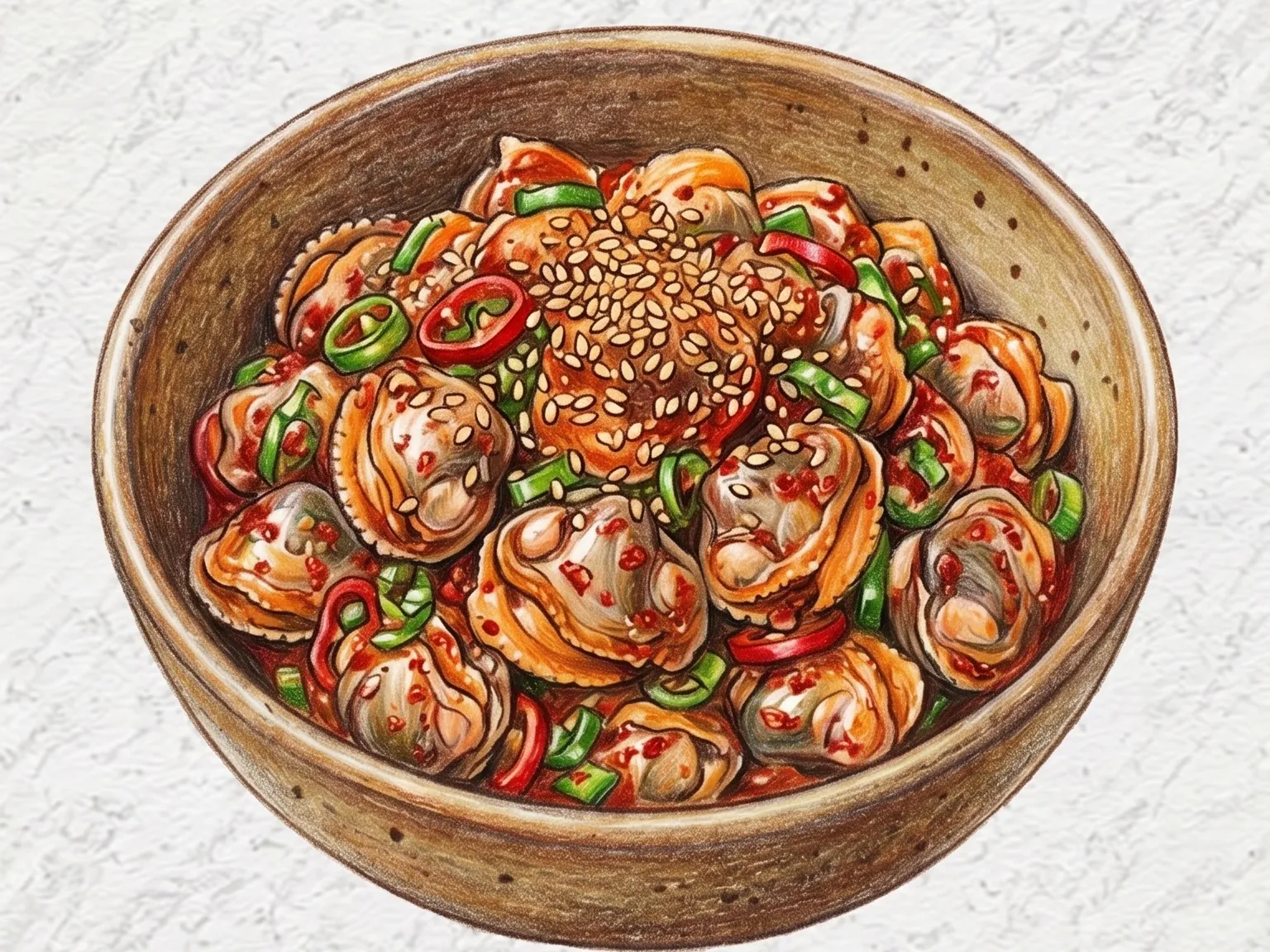
Kkomak-muchim is a seasoned cockle banchan synonymous with Beolgyo in Jeollanam-do, a town known for Korea's finest cham-kkomak (true cockles) harvested from its nutrient-rich tidal flats from November through March. Cooking technique matters enormously: once the water begins to boil, stirring in one direction only ensures the shells open evenly, and the cockles must be pulled at the four-minute mark before the meat contracts and toughens. Shells are pried open immediately, the meat collected and drained. The dressing - gochugaru, soy sauce, vinegar, sugar, and garlic - adds a tangy-spicy layer over the cockle's naturally briny, springy flesh. Chopped green onion goes in for freshness, followed by sesame oil and seeds. A ten-minute rest after dressing allows the sauce to penetrate the dense cockle meat. This is one of the most sought-after seasonal banchan in Korean cuisine.
Adjust Servings
Instructions
- 1
Scrub cockles in salted water and rinse several times.
- 2
Boil cockles for about 4 minutes until shells open.
- 3
Remove the meat from shells and drain well.
- 4
Mix chili flakes, soy sauce, vinegar, sugar, and garlic into a dressing.
- 5
Add chopped green onion and cockles, then toss gently.
- 6
Finish with sesame oil and sesame seeds, rest 10 minutes, and serve.
As an Amazon Associate, we may earn from qualifying purchases.
Tips
Nutrition (per serving)
More Recipes

Korean Spicy Seasoned Deodeok
Deodeok - Codonopsis lanceolata - is a mountain root used in Korean cooking and folk medicine for centuries. Its flesh is fibrous and sticky, with a ginseng-like bitterness. Peeled and pounded with a mallet to split fibers into ribbon-like shreds, then soaked in cold water to draw out bitterness. A gochujang-vinegar dressing with garlic, sugar, and gochugaru clings to each strand's rough surface. The finished dish is chewy and resinous, with a sweet-sour-spicy glaze.

Korean Seasoned Salted Pollock Stomach
Changnanjeot - salt-fermented pollock stomach - belongs to Korea's jeotgal tradition, where seafood organs are brined for months until they develop intense umami. The stomach lining has a firm, slightly rubbery chew distinct from softer jeotgal like salted shrimp. Drained of excess brine and dressed with gochugaru, garlic, scallion, and sugar, it becomes a high-impact condiment banchan. A thumbnail-sized piece on rice delivers a concentrated burst of fermented marine salt and chili heat.

Korean Spicy Ponytail Radish Salad
Chonggak - small ponytail radishes with green tops attached - are a fixture of Korean autumn markets. Unlike long-fermented chonggak kimchi, this fresh muchim salts sliced radishes for just 15 minutes to draw out water and concentrate crunch. Gochugaru, fish sauce, garlic, sugar, and vinegar coat the slices in a spicy-sour glaze. The radish bites back with a sharp, peppery heat typical of young Korean radishes. Best eaten the same day, before salt continues softening the texture.

Korean Seasoned Dried Squid Strips
Jinmichae-muchim tosses dried shredded squid in a spicy-sweet sauce without any cooking - the no-heat approach preserves the chewy, almost jerky-like pull of the raw strands that stir-frying would soften. The dressing layers gochujang, gochugaru, and oligosaccharide syrup with one tablespoon of mayonnaise, which is the small detail that makes this version work: the mayo's emulsified fat coats each strand, preventing the dry roughness that plain-dressed squid can have against the palate. After mixing, a ten-minute rest lets the squid absorb the seasoning evenly. Because there is virtually no liquid in the finished dish, it travels well in lunchboxes without bleeding into neighboring banchan. Heat level is adjustable by dialing gochugaru up or down, and the whole process takes about fifteen minutes.

Korean Kkomak Yangnyeom Gui (Spicy Grilled Cockles)
Cockles are purged in salt water, blanched for just two minutes until they open, then topped with a sauce of gochujang, chili flakes, soy sauce, garlic, sugar, and sesame oil before grilling over high heat for three to four minutes. The brief blanch keeps the cockle flesh firm and bouncy, while the strong flame rapidly reduces the sauce into a spicy, salty crust. A final thirty seconds over open flame, if available, adds a distinct smokiness.

Korean Spicy Salted Octopus Jeotgal
Nakji jeotgal is a Korean fermented octopus side dish made by salting cleaned octopus for forty-five minutes to draw out moisture and firm the flesh, then dressing it in a paste of gochugaru, minced garlic, ginger, anchovy fish sauce, and plum syrup. The initial salt cure tightens the octopus's naturally chewy texture, and the chili seasoning coats every surface in a spicy, crimson layer that penetrates deeper as it sits. Plum syrup counteracts any residual marine smell while adding a subtle fruit sweetness that balances the salt and heat. After two to three days of refrigeration, fermentation begins to develop, pushing the umami forward. Each piece has a springy, resistant chew that releases concentrated ocean flavor against the warmth of steamed rice.