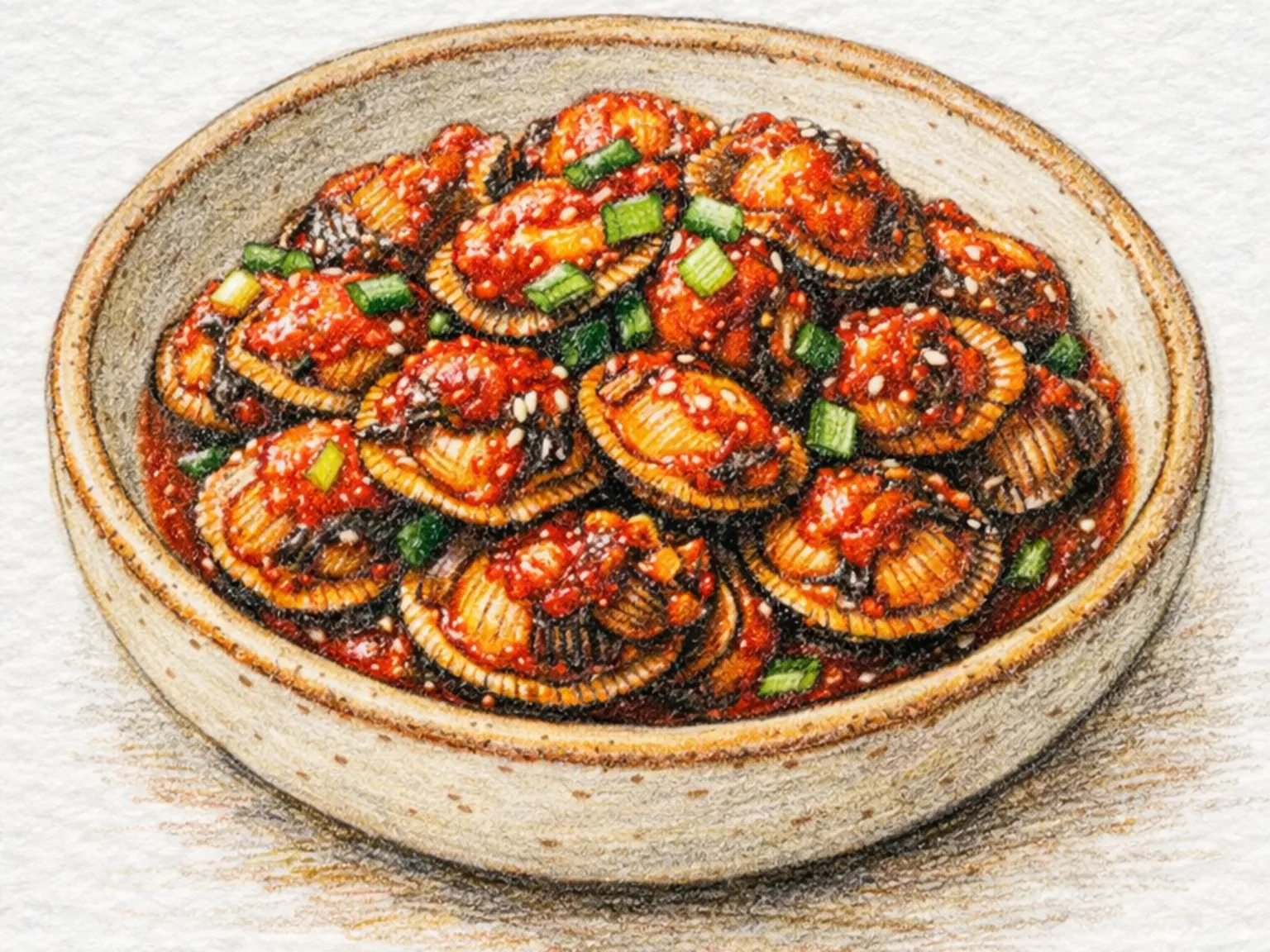
Korean Kkomak Yangnyeom Gui (Spicy Grilled Cockles)
Grilled Medium

Korean Kkomak Yangnyeom Gui (Spicy Grilled Cockles)

Quick answer

Cockles are purged in salt water, blanched for just two minutes in boiling water until they open, then topped with a sauce of gochujang, chili flakes, soy sauce, garlic...

What makes this special

  • Spicy grilled cockles rely on a brief two-minute blanch to maintain a springy, tender texture.
  • Two-minute blanch keeps cockle flesh springy without shrinking
  • Winter-to-early-spring peak season gives firm, full-flavored meat
Total time
30 min
Level
Medium
Servings
2 servings
Ingredients
8
Calories
280 kcal
Protein
30 g

Key ingredients

cocklesgochujangKorean chili flakessoy sauceminced garlic

Core cooking flow

  1. 1 Soak 600 g cockles in salted water for 20 minutes to purge grit.
  2. 2 Bring water to a full boil before adding the cockles, then blanch for no more than 2 minutes.
  3. 3 Mix 1.5 tablespoons gochujang with 1 tablespoon each gochugaru, soy sauce, a...

Cockles are purged in salt water, blanched for just two minutes in boiling water until they open, then topped with a sauce of gochujang, chili flakes, soy sauce, garlic, sugar, and sesame oil before grilling over high heat for three to four minutes. Keeping the blanch to two minutes is the key step: longer cooking shrinks the flesh and makes it rubbery, while a brief blanch leaves the cockles firm, bouncy, and moist inside. The strong flame rapidly caramelizes and reduces the sauce into a spicy, salty crust on the surface while the interior stays juicy. A final thirty seconds over open flame, where available, adds a distinct smokiness that deepens the overall flavor. The cooking liquid that pools at the bottom of the pan, a mix of the seasoning paste and the brininess released by the cockles, is intensely savory and works well spooned over rice. Cockle season runs from winter through early spring, when the flesh is at its fullest and most flavorful.

Prep 20min Cook 10min 2 servings

Instructions

Read the steps as a cooking flow: prep, heat, seasoning, doneness control, and finish.

6 steps
  1. 1
    Season

    Soak 600 g cockles in salted water for 20 minutes to purge grit.

    Rub the shells gently against each other under running water, then rinse well so sand and excess brininess do not carry into the grill pan.

  2. 2
    Heat

    Bring water to a full boil before adding the cockles, then blanch for no more than 2 minutes.

    As soon as the shells begin to open, lift them out so the flesh stays plump instead of shrinking and turning rubbery.

  3. 3
    Control

    Mix 1.5 tablespoons gochujang with 1 tablespoon each gochugaru, soy sauce, and minced garlic, plus 1 teaspoon each sugar and sesame oil. Stir until smooth so the sauce spreads thinly and reduces evenly over the cockles.

  4. 4
    Season

    Arrange the blanched cockles with the meat facing up, then spoon on a thin layer of sauce.

    Let them sit for just 5 minutes so the seasoning clings without making the cockles overly salty or heavy.

  5. 5
    Control

    Heat a pan or grill very hot over high heat, then set the seasoned cockles on it for 3 to 4 minutes.

    Stop when the sauce bubbles, thickens at the edges, and forms a thin spicy glaze without burning.

  6. 6
    Finish

    If direct flame is available, finish the cockles over it for only 30 seconds to add smokiness.

    Sprinkle with 2 thinly sliced scallion stalks and serve immediately with the savory sauce pooled in the pan.

After the steps

Pick a recipe that fits this dish.

Continue with shared ingredients, meal pairings, or a similar method.

Recipes That Go Well With This

More Grilled →

Based on shared ingredients and meal pairing

Korean Seasoned Cockle Salad
Shared ingredient: cockles Side dishes

Korean Seasoned Cockle Salad

Kkomak-muchim is a seasoned cockle banchan that has become inseparable from the town of Beolgyo in South Jeolla Province. Beolgyo sits at the meeting point of wide tidal flats with strong current flow, producing an environment rich in organic matter where true cockles (cham-kkomak) grow plump, sweet, and full. The season runs from November through March, the months when the meat is at its densest and most flavorful. Cooking precision determines the outcome: stirring only in one direction once the water reaches a boil ensures all the shells open evenly rather than at staggered intervals, and the cockles must be removed at the four-minute mark before the flesh contracts and turns rubbery. The shells are pried apart immediately after lifting, the meat collected and drained well so the dressing does not turn watery. The seasoning is built from gochugaru, soy sauce, vinegar, sugar, and minced garlic, all mixed into a tangy, spicy paste that coats each cockle in a bright, assertive layer. Sliced green onion adds freshness, sesame oil adds a roasted fragrance, and a ten-minute rest after mixing allows the dense cockle meat to absorb the dressing from the surface inward. This is among the most sought-after seasonal banchan in Korean cuisine and a central part of what makes Beolgyo food culture distinctive.

Korean Seafood Hot Pot Soup
Serve together Soups

Korean Seafood Hot Pot Soup

Haemul-tang is a Korean seafood hot pot that throws together crab, shrimp, clams, and squid in a fiery, brick-red broth. The liquid starts with gochugaru and plenty of garlic, building a spicy base that the seafood then amplifies with its own briny juices. Radish chunks soften as the pot bubbles, thickening the broth slightly and adding a cool sweetness behind the heat. Green onions and cheongyang peppers go in toward the end for a sharp, vegetal bite. The magic of haemul-tang lies in the convergence of flavors: crab shells release a sweet, crustacean stock; clams open to spill their liquor; shrimp and squid contribute distinct textures from snappy to chewy. The pot is brought to the table still at a rolling boil, and diners pick through the shells and tentacles while the broth continues to concentrate.

Korean Stir-fried Butterbur Stems
Serve together Side dishes

Korean Stir-fried Butterbur Stems

Meowi-namul-bokkeum stir-fries boiled butterbur stems in perilla oil, adding a cooking step that distinguishes it from the cold-dressed muchim version. While the muchim blanches and seasons immediately without further heat, the bokkeum takes the boiled stems into a pan with soup soy sauce and water for five minutes or more, driving the seasoning deep into the plant fibers. This additional cooking time also volatilizes more of the butterbur's bitter compounds, producing a milder flavor compared to the cold preparation. Perilla oil, though more prone to oxidation than sesame oil, is the traditional choice because its earthy, grassy aroma harmonizes with the herb's character in a way sesame oil cannot. Adding perilla seed powder in the last minute causes its starch to partially gelatinize, giving the sauce a thicker consistency, but leaving it on the heat too long makes the dish chalky and heavy. Timing this final step precisely is what separates a well-made version from an overcooked one. This banchan appears on spring mountain-village tables alongside gondeure-namul and chwinamul as part of the seasonal wild greens spread that marks the transition out of winter.

Korean Kkotge Gochujang Gui (Spicy Grilled Crab)
Similar recipe Grilled

Korean Kkotge Gochujang Gui (Spicy Grilled Crab)

Kkotge-gochujang-gui is a Korean spicy grilled crab where halved blue crabs are thoroughly coated in a thick paste of gochujang, gochugaru, soy sauce, oligosaccharide syrup, and garlic, then marinated for fifteen minutes before going onto a medium-heat grill. The sugar in the syrup and the fermented compounds in the gochujang caramelize over direct flame, forming a glossy, dark-red lacquer on the shell while the crab meat underneath is steam-cooked by the insulating shell, keeping it moist and sweet. Controlled medium heat is essential because the sauce scorches quickly: four minutes shell-side down first, then a flip for five to six more minutes ensures even cooking without burning. When the crab is turned, the sauce drips into the interior cavity and coats the exposed meat directly, intensifying the spice penetration on the flesh side. A final drizzle of sesame oil and a scatter of toasted sesame seeds layer a nutty, smoky fragrance over the lacquered coating.

Similar recipes

Korean Spicy Grilled Gizzard Shad
Grilled Medium

Korean Spicy Grilled Gizzard Shad

Baendaengi yangnyeom gui is a Korean grilled fish dish in which scored gizzard shad are coated in a gochujang-based glaze and cooked over medium heat until caramelized. Scoring the fish achieves two things simultaneously: it lets the seasoning penetrate into the flesh rather than sitting only on the surface, and it severs the fine pin bones that run through the small fish so they become less noticeable when eating. The marinade combines gochujang, soy sauce, oligosaccharide syrup, gochugaru, and ginger juice. The ginger juice specifically targets the fishiness of the shad, neutralizing it while adding a warm, sharp note to the overall flavor. Sugar content in the glaze is high enough that high heat will char the coating before the fish cooks through, so medium heat is maintained throughout, with three to four minutes per side giving an even result. As the oligosaccharide heats, it caramelizes into a glossy amber coating that makes the finished fish look as good as it tastes. A scattering of toasted sesame seeds adds a nutty fragrance in the final step. Gizzard shad are small enough to be eaten whole, bones included, and the bold spicy-sweet glaze makes them as suitable alongside a bowl of rice as they are paired with soju at the table.

🍺 Bar Snacks 🏠 Everyday
Prep 20min Cook 12min 2 servings
Korean Grilled Webfoot Octopus
Grilled Medium

Korean Grilled Webfoot Octopus

Cleaned webfoot octopus is tossed in a marinade of gochujang, chili flakes, soy sauce, and sugar for ten minutes, then seared on high heat for just three to four minutes. Webfoot octopus has thicker tentacles than nakji and a more resilient chew, which makes it particularly well suited to this type of spicy, high-heat preparation. The short cooking time is not a shortcut -- it is the point. Overcooking webfoot octopus makes it rubbery and dry, and the difference between three minutes and five minutes is the difference between tender-chewy and tough. High heat is equally important: the goal is to sear, not steam, so the pan must be very hot and the pieces should not be crowded. Where the glaze catches on the pan surface and scorches slightly, it leaves behind charred bits that coat the octopus with a smoky depth the marinade alone cannot provide. Green onion added in the final seconds cuts through the heat with a sharp, fresh note. Just before the main harvest season in spring, webfoot octopus carries roe that adds a rich, creamy nuttiness to each bite, and this is when Korean cooks consider the ingredient at its peak. The cooked pieces wrap well in perilla leaves and are also popular as a fried rice finisher.

🍺 Bar Snacks 🏠 Everyday
Prep 20min Cook 8min 2 servings
Korean Spicy Grilled Octopus
Grilled Medium

Korean Spicy Grilled Octopus

Muneo-yangnyeom-gui is a Korean spicy grilled octopus dish where pre-boiled octopus is cut into bite-sized pieces, marinated for ten minutes in gochujang, gochugaru, soy sauce, oligosaccharide syrup, and minced garlic, then seared quickly in a smoking-hot pan. Since the octopus is already cooked, extended heat exposure only toughens it-the entire grilling step should finish within three to four minutes. Blotting the octopus completely dry before cooking prevents the sauce from becoming watery and ensures rapid caramelization at high temperature. Sesame oil, sliced green onion, and sesame seeds are tossed in after the heat is off, adding a toasted, aromatic layer over the spicy-sweet glaze.

🍺 Bar Snacks 🏠 Everyday
Prep 20min Cook 10min 2 servings
Korean Butter-Grilled Scallops
Drinks Medium

Korean Butter-Grilled Scallops

Garibi butter-gui sears fresh scallops in garlic butter until each side develops a deep golden-brown crust, then finishes with lemon juice and parsley to balance the richness. Removing every trace of surface moisture with paper towels before seasoning is the single most important step -- water on the surface of the scallop causes it to steam rather than sear, and no caramelized crust will form until that moisture has evaporated. Each side cooks for only one to two minutes at the highest heat the pan can sustain, leaving the center just barely opaque and the texture tender rather than rubbery. After flipping, butter and minced garlic are added directly to the hot pan and spooned continuously over the scallops so the aroma infuses the surface. A squeeze of lemon and a scatter of chopped parsley added just before removing from heat layers acidity and freshness over the butter richness. Simple to prepare and fast to cook, this dish appears regularly at home gatherings in Korea as a crowd-pleasing appetizer.

🍺 Bar Snacks 🎉 Special Occasion
Prep 12min Cook 8min 2 servings

Tips

Do not overcook cockles; remove as soon as they open.
If possible, finish with 30 seconds over direct flame for extra smokiness.

Nutrition (per serving)

Calories
280
kcal
Protein
30
g
Carbs
10
g
Fat
12
g