Korean Grilled Pacific Saury
Quick answer
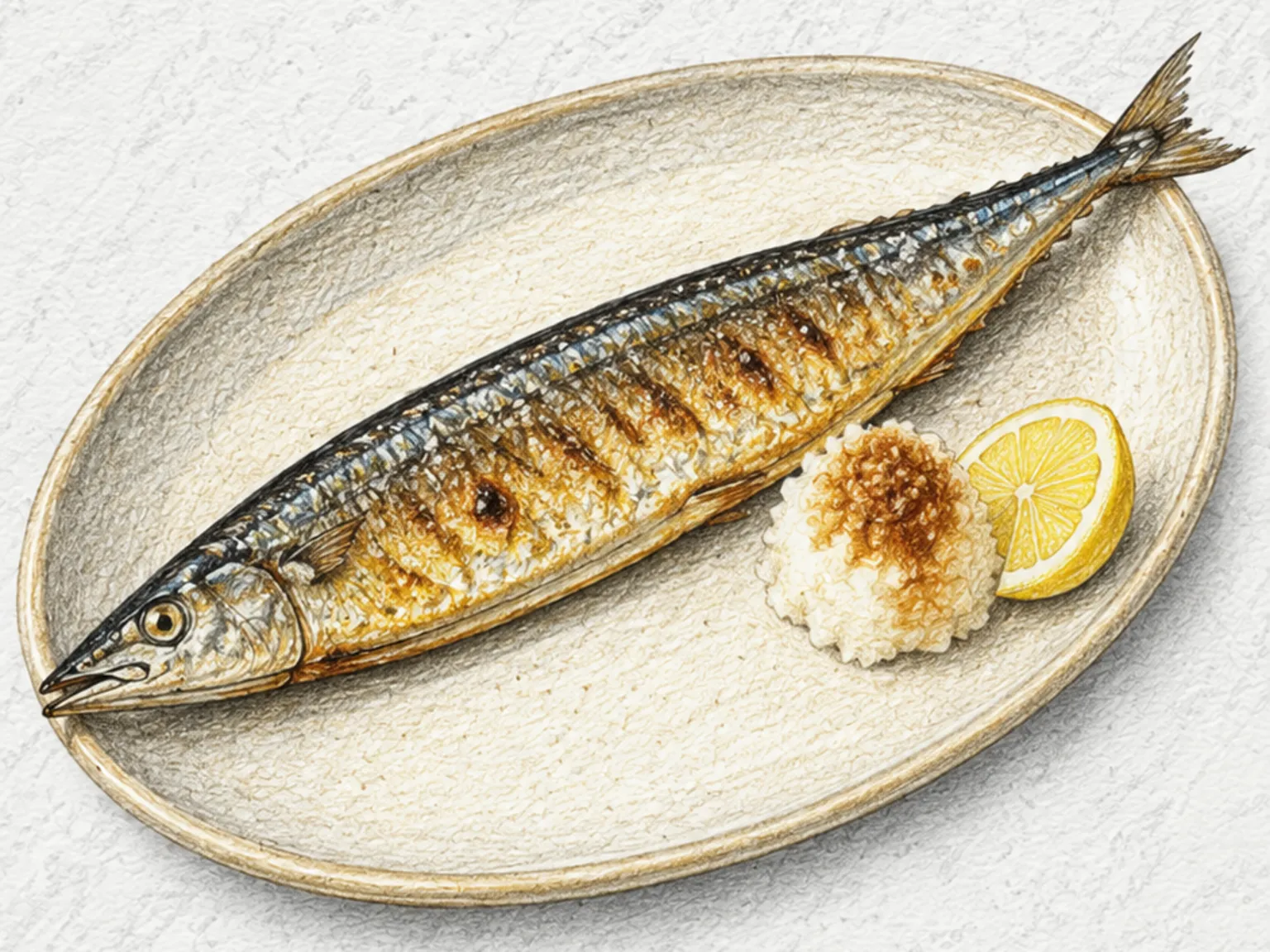
Kkongchi-gui is a Korean salt-grilled Pacific saury that relies on the fish's abundant natural oil for flavor.
What makes this special
- Grilled Pacific saury self-bastes in its own natural oils to produce a crisp, savory skin.
- Fatty blue-backed fish self-bastes as fat melts, crisping skin without added oil
- Salting and resting 10 minutes draws out surface moisture and fishy odor
Key ingredients
Core cooking flow
- 1 Gut 2 Pacific saury and rinse them briefly under running water.
- 2 Sprinkle 1 teaspoon coarse salt and 0.3 teaspoon black pepper evenly over both sides and inside the belly.
- 3 Wipe away the moisture that appears on the seasoned fish before cooking.
Kkongchi-gui is a Korean salt-grilled Pacific saury that relies on the fish's abundant natural oil for flavor. Saury, an oily blue-backed fish at its peak in autumn, renders its own fat when grilled, creating a crisp, golden skin without additional oil. Gutting the fish and salting it for ten minutes draws out surface moisture and tames any strong fishy scent before it hits the pan. Each side cooks for four to five minutes over medium-high heat until the skin blisters and the flesh near the spine turns opaque. Grated daikon mixed with a splash of soy sauce and a wedge of lemon served alongside cut through the richness cleanly.
Instructions
Read the steps as a cooking flow: prep, heat, seasoning, doneness control, and finish.
- 1Step
Gut 2 Pacific saury and rinse them briefly under running water.
Pat the belly cavity and the outside very dry with paper towels, since excess moisture makes the skin stick and steam instead of crisping.
- 2Season
Sprinkle 1 teaspoon coarse salt and 0.3 teaspoon black pepper evenly over both sides and inside the belly.
Rest the fish for 10 minutes so the salt draws out surface moisture and softens any strong smell.
- 3Control
Wipe away the moisture that appears on the seasoned fish before cooking.
Add 1 tablespoon cooking oil to a pan in a thin layer and preheat it well over medium-high heat before the fish goes in.
- 4Step
When the oil moves easily across the hot pan, lay in the saury.
Do not move the fish for 4 to 5 minutes, letting the skin brown, firm up, and release more cleanly from the pan.
- 5Heat
Turn each fish carefully in one motion with a spatula and cook the other side for another 4 to 5 minutes.
It is done when the flesh is opaque and the area near the bones is hot.
- 6Finish
Transfer the grilled saury to plates right away so the crisp skin does not soften in the pan.
Serve hot with 2 tablespoons grated radish and half a lemon for squeezing over the rich fish.
After the steps
Pick a recipe that fits this dish.
Continue with shared ingredients, meal pairings, or a similar method.
Recipes That Go Well With This
More Grilled →Based on shared ingredients and meal pairing
Korean Spicy Stir-Fried Anchovies
Spicy stir-fried anchovies (maeun myeolchi-bokkeum) toss medium-sized dried anchovies in a gochujang-gochugaru glaze, occupying the opposite end of the flavor spectrum from the sweet jiri-myeolchi version and targeting adult palates. Medium anchovies are larger and thicker than the tiny variety, requiring individual head-and-gut removal to eliminate bitterness - a tedious prep step that nonetheless determines the dish's clean finish. After dry-toasting to drive off moisture, the anchovies simmer in a sauce of gochujang, gochugaru, soy sauce, oligosaccharide, and minced garlic until each piece is coated in a rust-colored glaze. The gochujang's fermented heat combines with gochugaru's vivid red to create both flavor depth and visual appeal. The larger anchovy size delivers a satisfying crunch that lingers alongside a lasting savory umami. Heat intensity is adjustable via gochugaru quantity - adding chopped cheongyang chili ratchets it up another notch. This banchan doubles as a soju drinking snack, appearing as frequently on bar tables as on dinner tables.
Korean Soy Glazed Beef Rice Bowl
Sogogi deopbap tops steamed rice with thin-sliced beef and onions cooked in a sweet-soy glaze, served with just enough sauce to soak into the grains. The beef is marinated briefly in a mixture of dark soy sauce, sugar, and minced garlic, which caramelizes quickly in a hot pan. Onion slices cook alongside the beef, their natural sweetness balancing the salty-sweet sauce as they soften. Sesame oil added toward the end leaves a nutty aftertaste that lingers. The key is keeping a small pool of sauce in the pan rather than reducing it completely - that glossy liquid seeps into the rice and makes each spoonful flavorful without needing additional seasoning. A generous crack of black pepper at the end adds a sharp finish.
Korean Salted Anchovy Jeotgal
Myeolchi jeotgal is a traditional Korean fermented anchovy preserve made by layering cleaned small anchovies with coarse sea salt in a sterilized container, pressing firmly to eliminate air pockets, then refrigerating for extended aging. As salt draws moisture from the fish, it begins breaking down proteins into concentrated umami compounds, stripping away the raw fishiness and building the deep, complex flavor that defines this preserve. On the fifth day of fermentation, minced garlic, grated ginger, chili flakes, and rice wine are folded in to add aromatic layers on top of the developing fermented base. The salt ratio must stay at or above twenty percent of the anchovy weight throughout the process, as dropping below this threshold allows harmful bacteria to take hold and risks spoilage. The finished jeotgal has two primary uses in Korean cooking: stirred in small amounts into kimchi seasoning paste as an umami backbone, or spooned directly over hot rice as a pungent, savory side dish. It can also substitute for fish sauce in doenjang jjigae or seasoned vegetables, adding a more pronounced fermented character.
Korean Grilled Atka Mackerel
Atka mackerel is seasoned with salt and pepper, wiped down with diluted vinegar to settle the fishiness, then pan-grilled on both sides until golden. The fish is naturally high in fat, and as it cooks the oil renders from within and permeates the flesh, building a rich, savory depth without any sauce at all. Thicker sections benefit from a brief covered rest on medium heat, which carries heat evenly to the center before the surface can scorch. A wedge of lemon at the side cuts through the rendered fat with clean brightness, making this grilled fish equally good as a rice side or a drinking snack.
Similar recipes
Korean Grilled Dried Pollack
Dried pollack strips are briefly moistened, coated in a paste of gochujang, soy sauce, and oligosaccharide syrup, then grilled low and slow. The slow heat lets the glaze seep into the chewy dried fish without charring, building layers of spicy-sweet flavor. A touch of sesame oil applied at the finish adds a toasted aroma that rounds out the dish. The sweet-spicy glaze filling the kitchen with fragrance as the fish grills is part of what makes this a beloved home-cooked snack. Controlling surface browning and internal doneness helps the ingredients cook evenly while keeping the final seasoning balanced.
Korean Chili Soy Grilled Tofu
Chili-tofu-gui is a Korean pan-grilled tofu dish where firm tofu slices are browned on both sides, then glazed with a sauce of soy sauce, minced hot green chili, garlic, sesame oil, and sugar. Pressing moisture out of the tofu before cooking is essential for achieving a clean, golden-brown sear without oil spattering across the pan. Once the sauce is added, a brief simmer on low heat coats each slice in a glossy layer where the soy's saltiness, the sugar's sweetness, and the chili's sharp heat play against the tofu's neutral base. The dish works equally well as a weeknight side dish or as a quick drinking snack. Adding one tablespoon of water when simmering the sauce prevents it from reducing too sharply and ensures each slice is evenly coated rather than over-salted. A scattering of sesame seeds at the end is optional but recommended.
Korean Grilled Yellow Croaker
Yellow croaker is scaled and gutted, then salted for ten minutes to draw surface moisture out of the flesh, which simultaneously reduces any fishy odor and firms the exterior slightly before cooking. A light dusting of flour creates a thin barrier between the skin and the hot oil, preventing the delicate skin from sticking to the pan and forming a fine crisp layer that holds the juices inside. The mild, clean white flesh of yellow croaker is one of its most valued qualities, and the flour coating allows that flavor to express itself without interruption from heavy seasoning. Knowing when to flip is the central technique: the fish should not be touched until the underside has turned fully golden-brown and released naturally from the pan surface, at which point two wide spatulas used simultaneously keep the body intact through the turn. Yellow croaker has been a fixture on ancestral memorial tables (jesa-sang) and ceremonial spreads throughout Korean history, and remains a steady everyday banchan alongside rice and soup.
Korean Grilled Dried Pollack
Hwangtae-po-gui is a grilled dried pollack snack prepared by brushing seasoning paste onto semi-dried hwangtae fillets and cooking them over medium-low heat. Hwangtae is pollack that has been freeze-dried repeatedly through winter cycles, a process that puffs up the flesh and gives it a softer grain and chewier texture than ordinary dried fish. A paste of gochujang, soy sauce, and oligosaccharide syrup is spread on both sides and grilled slowly so the sugars caramelize into a glossy, sticky coating. Minced garlic, sesame oil, and sesame seeds add roasted richness, and each torn piece delivers alternating salty and sweet notes. Cooking over high heat is a common mistake that chars the surface while leaving the interior hard and dry, so maintaining a low, patient heat is what allows the seasoning to penetrate fully and the fillet to stay moist. The finished snack pairs well with makgeolli or soju, and dipping torn pieces into mayonnaise is a widely practiced variation that softens the saltiness with a creamy counterpoint.
Korean Braised Anchovy Side Dish
Myeolchi-jorim simmers tiny dried anchovies in soy sauce, rice syrup, and garlic into a moist, glazed banchan that contrasts fundamentally with stir-fried anchovy preparations. Where bokkeum chases crispness by cooking over high heat with minimal liquid, jorim pursues the opposite - anchovies braise in a seasoned liquid on low heat until they absorb it from the inside out, becoming pliant and saturated with sweet-salty flavor all the way through their flesh. A one-minute dry toast in a bare pan removes any residual fishiness before soy sauce, syrup, minced garlic, and water go in together, simmering uncovered for ten minutes while the liquid steadily reduces. As the sauce thickens, a sticky dark glaze wraps around each anchovy; biting one releases a rush of seasoned juice from within rather than the crunch of a dehydrated fish. Sesame seeds and sesame oil stirred in off heat add a final layer of warmth and nuttiness. Once fully cooled, the reduced sauce thickens further into an almost jelly-like coating that holds the anchovies together in a satisfying cluster. Stored in an airtight container in the refrigerator, myeolchi-jorim keeps well for over a week and the flavor continues to deepen as the anchovies sit in the congealed glaze.