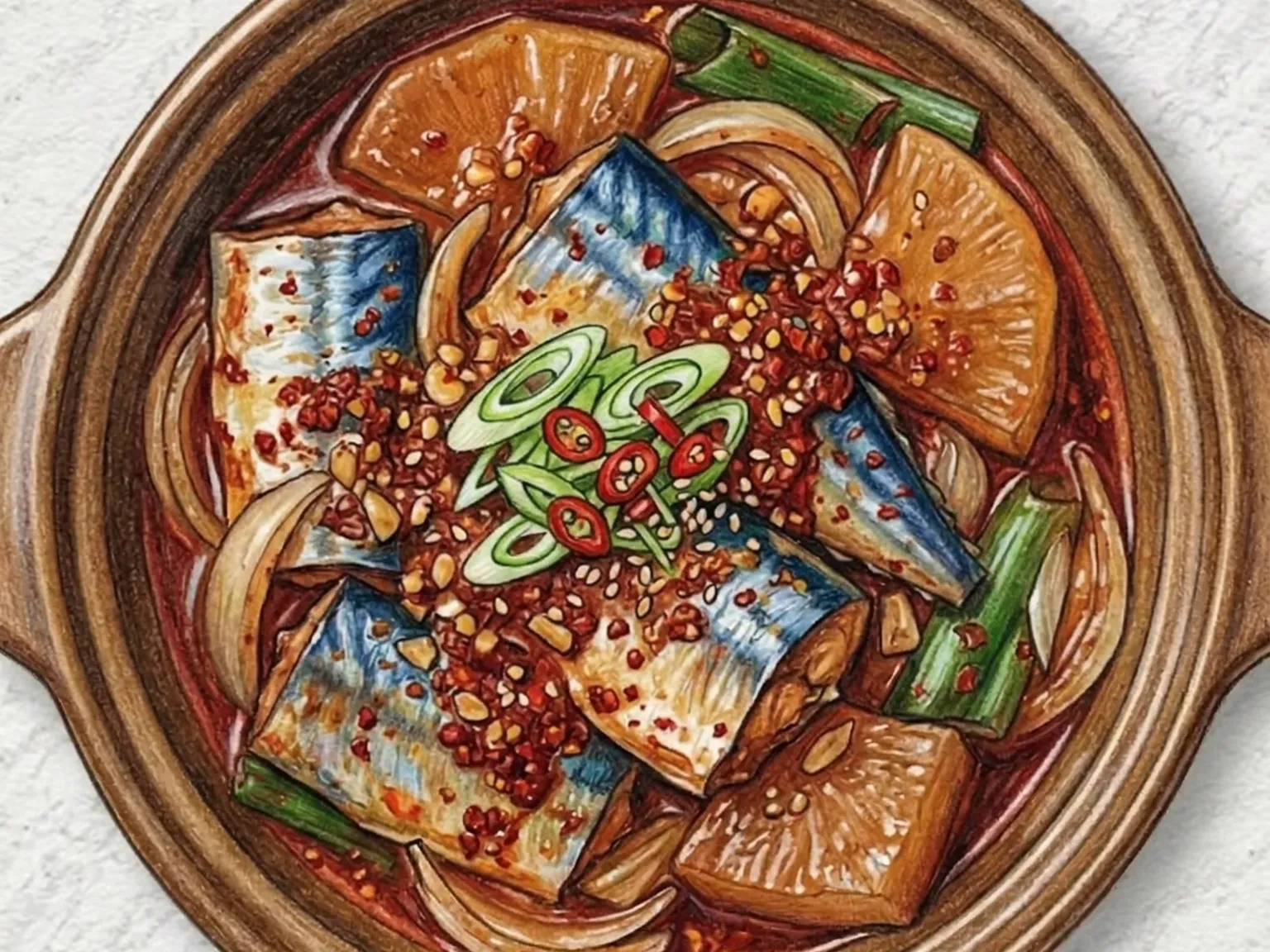
Korean Steamed Pacific Saury
Quick answer
- Total time
- 50 min
- Level
- Medium
- Servings
- 2 servings
- Ingredients
- 8
About this dish
Oily Pacific saury can braise for a good twenty minutes in a spicy soy broth and still come out moist.
Read more
Laying the fish in a single layer over thick radish slices, and pouring water in around the edge rather than over the top, keeps the soft flesh in whole pieces. Skimming the foam when it first boils keeps the sauce clean, and spooning the liquid over the fish midway seasons the exposed top. The liquid is cooked down until only a shallow layer remains, which coats both the fish and the radish. Whatever sauce is left gets spooned onto rice.
Ingredients
Instructions
- 1
Clean 2 Pacific saury thoroughly, removing any innards and blood near the bones, then cut each fish into 2 to 3 pieces.
Slice 250 g Korean radish thickly, and cut the onion and green onion into easy eating pieces.
- 2
Spread the radish in a single layer across the bottom of the pot and pour in part of the 350 ml water.
Cook over medium heat for 6 to 8 minutes first, until the edges start turning slightly translucent.
- 3
Place the saury pieces and 1/2 onion over the radish.
Arrange the fish in one layer so the flesh does not break, then pour the remaining water around the edge of the pot instead of directly over the fish.
- 4
Mix in 1.5 tbsp gochugaru, 1.5 tbsp soy sauce, and 1 tsp minced garlic, loosening the seasoning into the broth.
Bring it to a boil over high heat, then skim off foam so the sauce tastes cleaner.
- 5
Cover the pot, lower the heat, and simmer for about 20 minutes.
Spoon the broth over the fish once or twice during cooking, and check that the radish is tender enough for a chopstick to slide in easily.
- 6
Add 1/2 green onion and cook uncovered for 5 more minutes.
Finish when the liquid has reduced to a shallow, glossy sauce and the seasoning clings to the saury, then serve hot with rice.
Use-up ingredient planner
Turn these ingredients into two more meals
The overlap excludes basic seasonings. Open the next recipe and your selected dishes will stay with you.
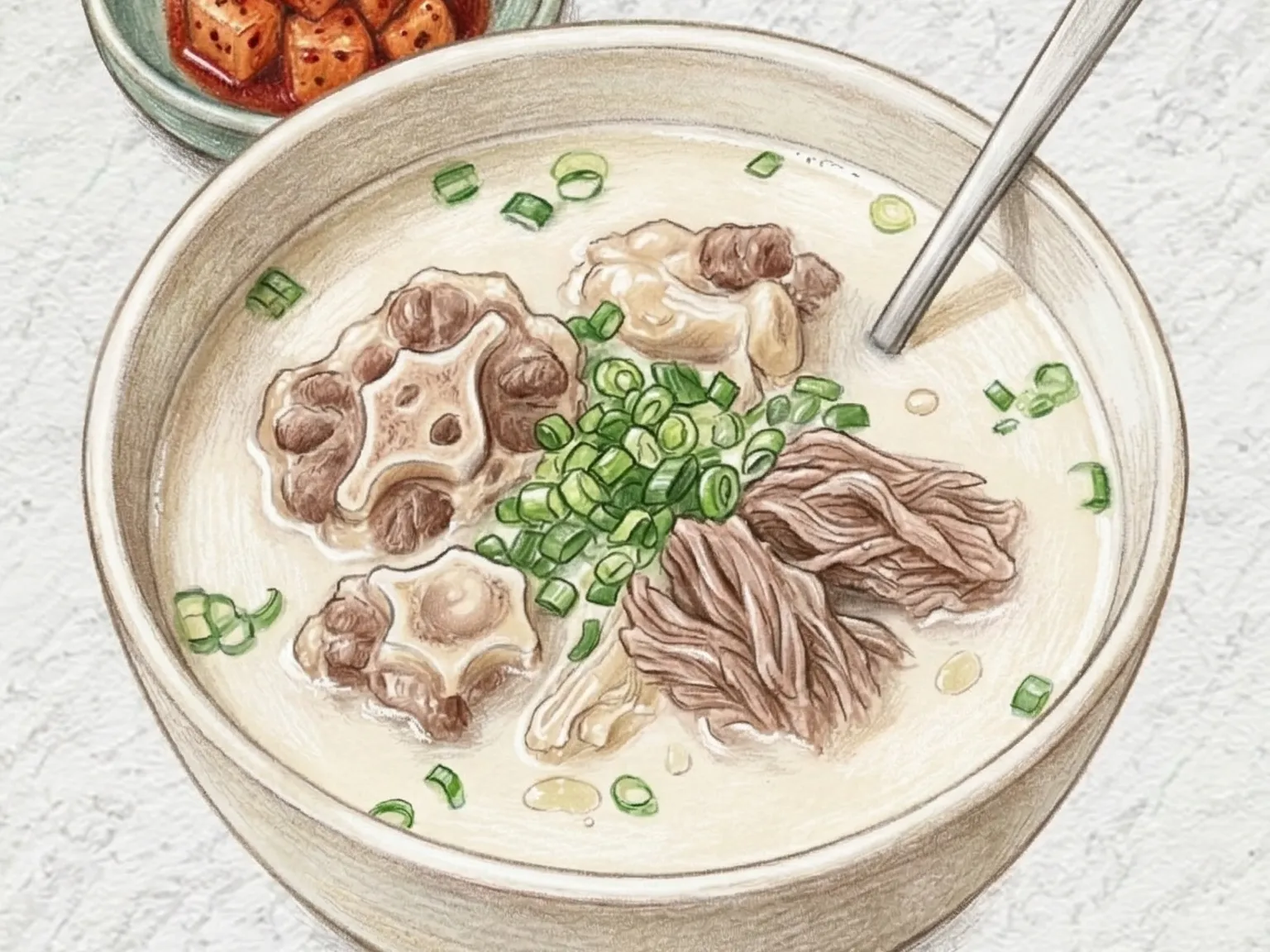
Korean Oxtail Soup
Korean radish, onion
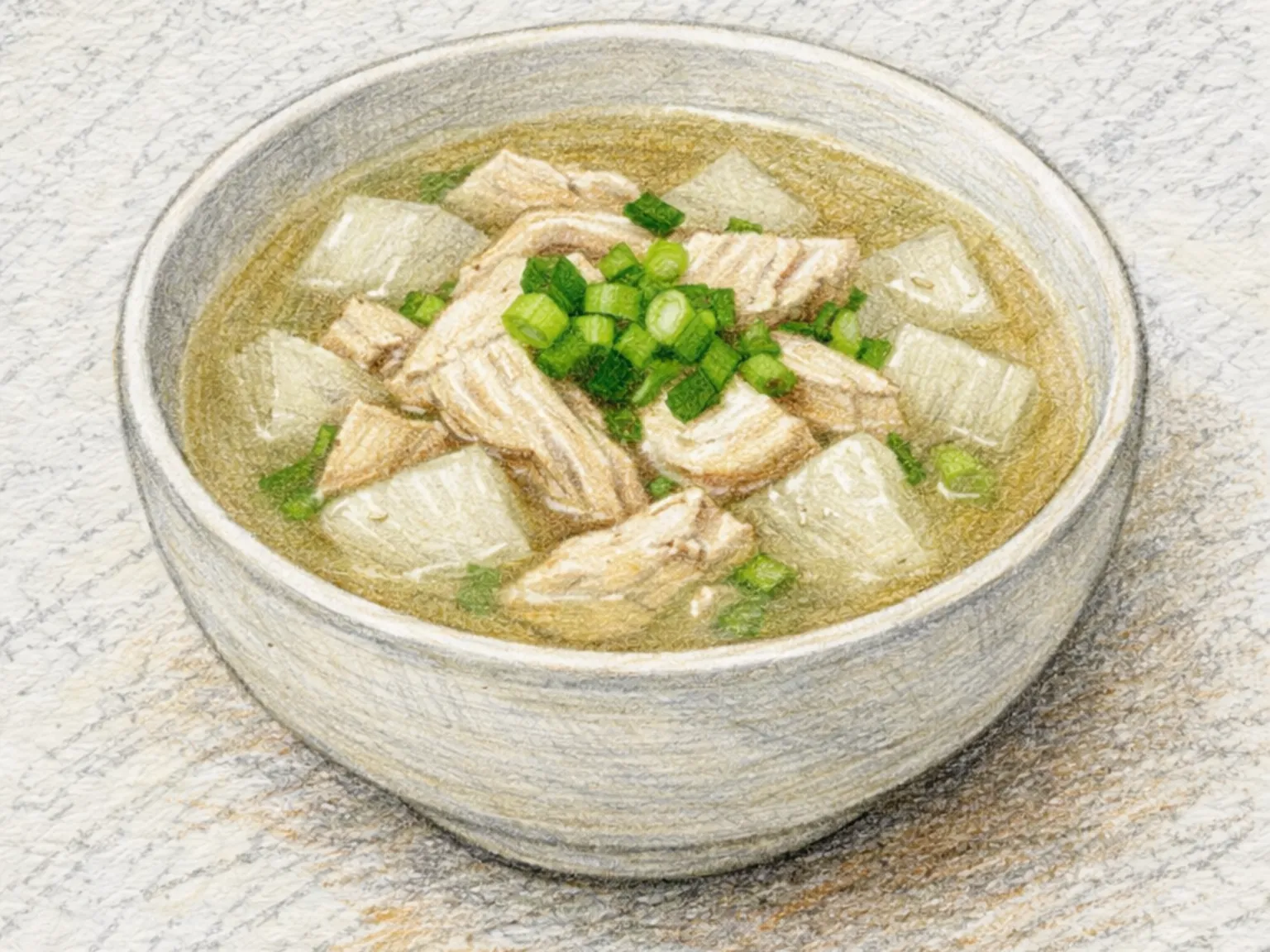
Korean Chicken Radish Soup
Korean radish, onion
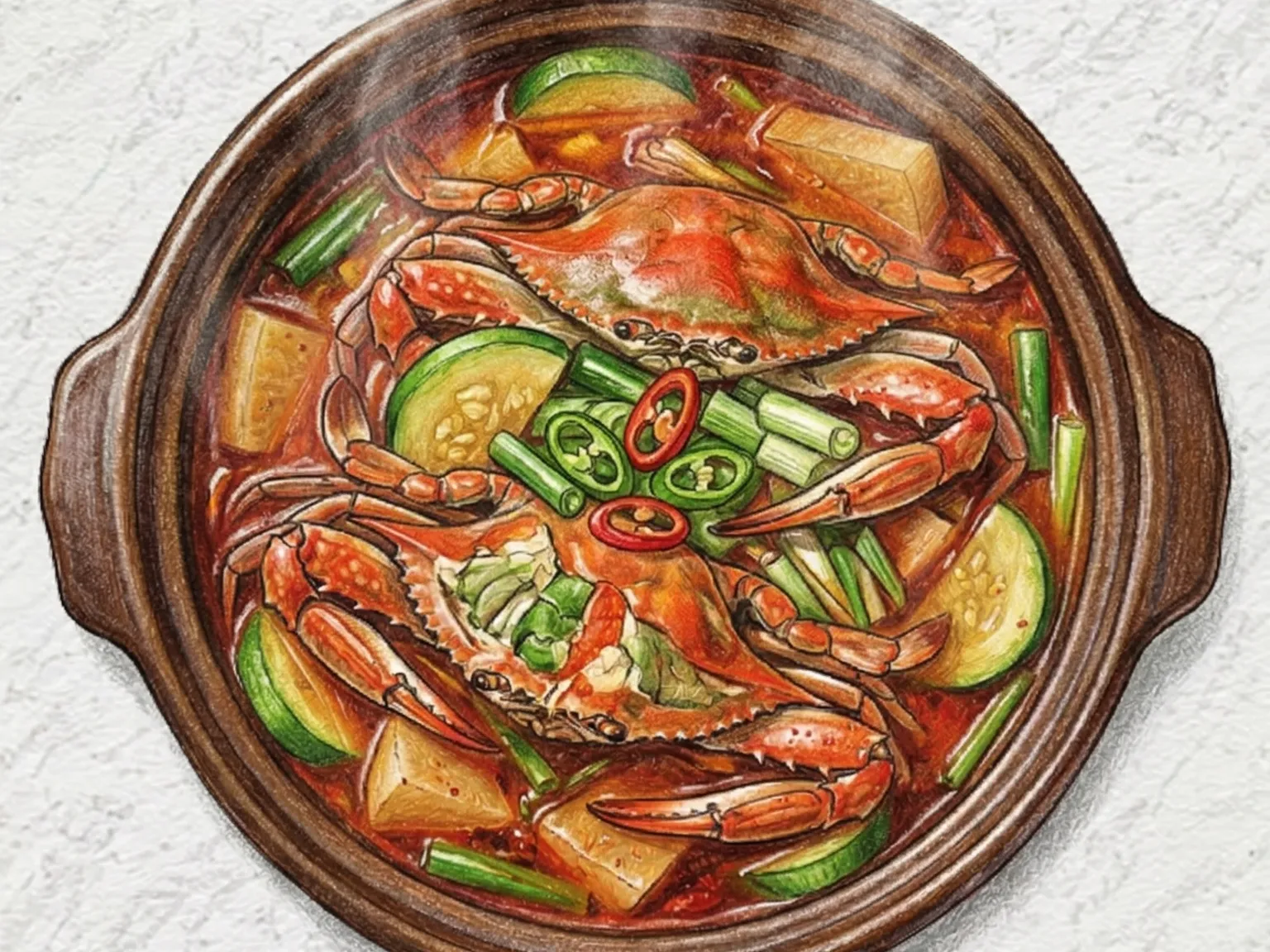
Korean Spring Blue Crab Stew
Korean radish, onion