Korean Braised Saury Kimchi
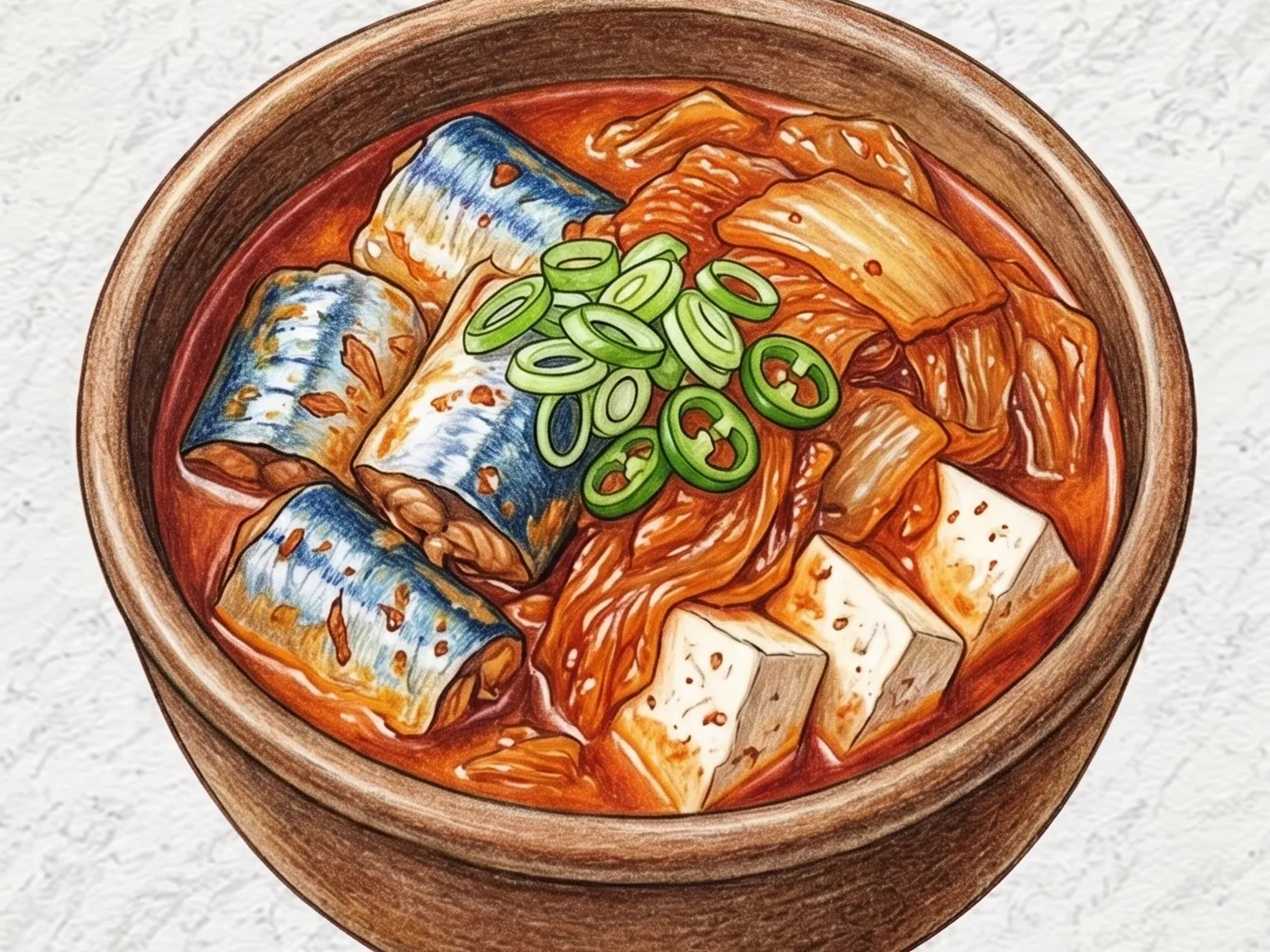
Kkongchi-kimchi-jjim is a Korean braise of canned Pacific saury and well-aged kimchi simmered together until the flavors meld into a concentrated, tangy broth. The aged kimchi's deep acidity and fermented complexity dissolve into the saury's natural oils, building a rich sauce without any additional stock. Adding tofu lets the cubes soak up the spicy liquid, and green onion with cheongyang chili finishes the dish with a sharp kick of heat. Using canned fish keeps preparation minimal, while the aged kimchi does the heavy lifting to create a flavor that tastes like it has simmered for hours.
Adjust Servings
Instructions
- 1
Cut kimchi into bite-size pieces and slice onion and chili.
- 2
Place kimchi and onion in a pot, then add saury on top.
- 3
Add seasonings and water, then bring to a boil.
- 4
Reduce to medium heat and braise for 25 minutes, spooning sauce over the fish.
- 5
Add chili and cook 5 more minutes before serving.
As an Amazon Associate, we may earn from qualifying purchases.
Tips
Nutrition (per serving)
More Recipes

Korean Braised Hairtail Fish
Galchi-jjim is a Korean braised hairtail fish dish simmered with Korean radish in a spicy soy sauce and gochugaru broth. The hairtail's white, flaky flesh absorbs the bold seasoning while remaining tender throughout. Ginger juice is key to keeping the dish clean-tasting by cutting through any fishiness. The radish softens in the braising liquid and the remaining sauce is meant to be spooned over rice, making this a staple fish dish on Korean dinner tables.

Korean Steamed Pacific Saury
Kkongchi-jjim is a Korean braised Pacific saury cooked with Korean radish, onion, and green onion in a gochugaru and soy sauce broth. The saury's naturally oily flesh pairs well with the bold spice, and the radish softens in the braising liquid while drawing out any fishiness. Garlic and ginger clean up the broth's flavor, and the chili heat stimulates the appetite without overwhelming the fish. The remaining sauce, spooned over rice, is often the best part of the meal - a humble but deeply satisfying home-cooked fish dish.

Korean Pacific Saury Stew
Kkongchi jjigae is a budget-friendly Korean stew built around a single can of saury, making it one of the simplest jjigae to prepare. Korean radish and onion simmer alongside the fish, soaking up its bold, oily flavor. A half-tablespoon of doenjang tames any fishiness while adding fermented depth, and gochugaru brings the characteristic spicy kick. With everyday pantry staples and minimal prep, this stew delivers a full-flavored meal in under 30 minutes.

Korean Braised Pollock (Frozen Pollock with Radish in Spicy Sauce)
Dongtae-jjim is frozen pollock braised with Korean radish and bean sprouts in a sauce of gochugaru, soy sauce, garlic, and ginger. Using frozen rather than fresh pollock is traditional - the freezing-and-thawing process gives the flesh a firm, slightly spongy texture that holds up well in the spicy broth. Radish soaks up the chili-laced liquid and turns sweet against the heat, while bean sprouts contribute crunch and a clean, refreshing aftertaste. The sauce reduces to a shallow pool at the bottom, meant to be spooned over rice as a wintertime staple.

Korean Steamed Rockfish (Spicy Gochugaru Radish Braise)
Ureok-jjim is a Korean spicy steamed rockfish cooked with Korean radish, onion, and green onion in a gochugaru and soy sauce broth. Rockfish has firm, well-defined flesh that holds its shape through the cooking process, and scoring the skin lets the bold seasoning reach deep into the meat. Radish softens in the braising liquid and absorbs the chili heat while contributing natural sweetness, and ginger keeps the fish tasting clean. The remaining sauce is concentrated enough to spoon over rice, delivering a hit of spicy, salty flavor with every bite.

Korean Spicy Fish Stew (Mackerel in Chili-Radish Broth)
Saengseon jjigae is a spicy Korean fish stew made with mackerel or beltfish cut into chunks, simmered alongside daikon radish and zucchini. Gochujang, gochugaru, soy sauce, and garlic build a bold, peppery broth in an anchovy stock base. The radish neutralizes any fishiness while adding natural sweetness to the soup. Picking the flaky fish off the bone and eating it with spoonfuls of the fiery broth over rice is the traditional way to enjoy it.