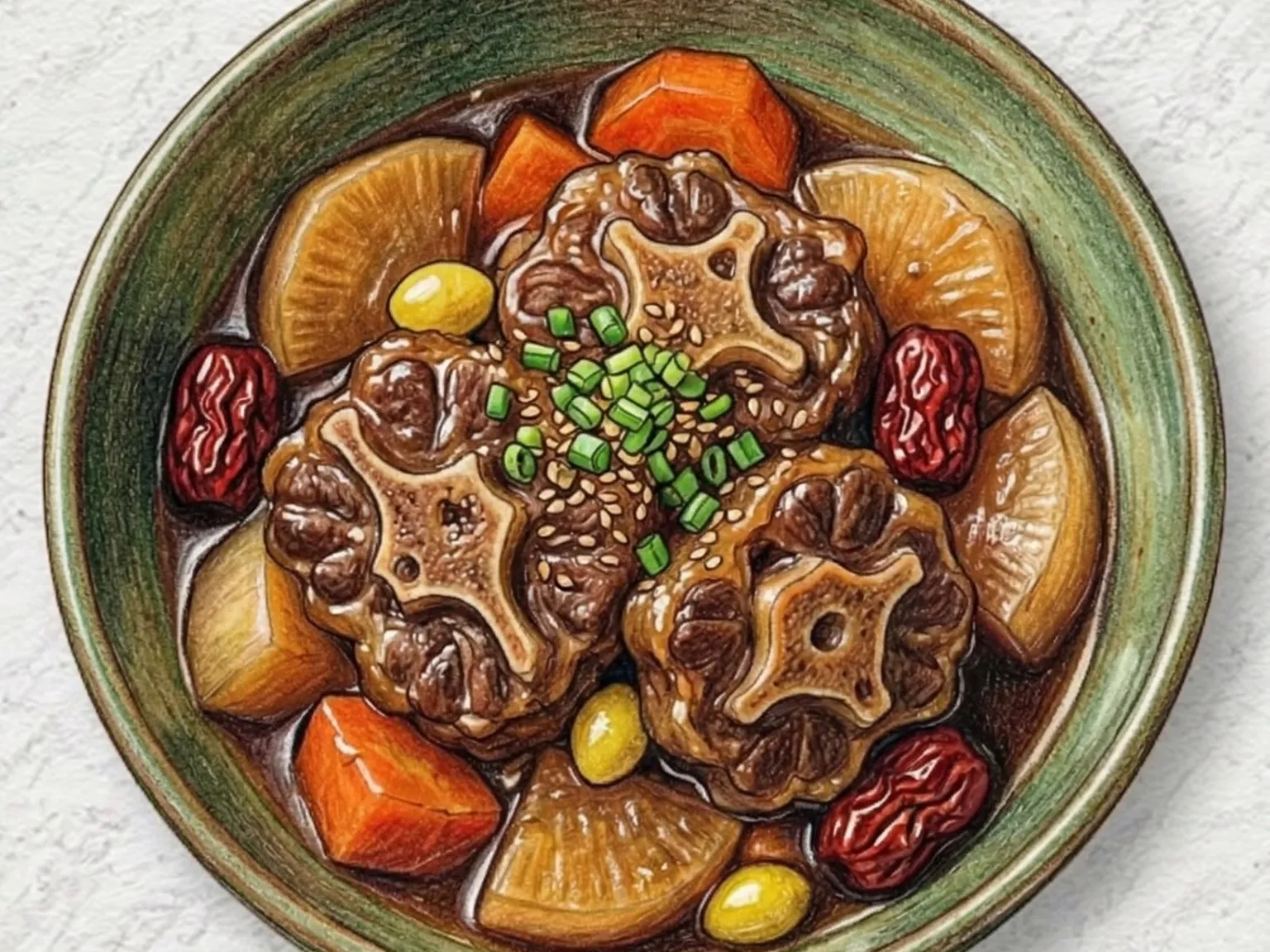
Korean Braised Oxtail (Soy Collagen Radish Braise)
Kkori-jjim is a Korean braised oxtail dish that begins with a long initial boil to tenderize the joints, followed by a second braise in soy sauce, sugar, and garlic. The collagen in the oxtail joints melts during the extended cooking, thickening the sauce into a glossy, gelatinous consistency while the meat becomes fork-tender. Korean radish and carrot cook alongside the tail pieces, contributing sweetness, while jujubes and ginkgo nuts add an understated elegance. This is a celebratory dish, typically reserved for holidays and special occasions, prized for its deep beef flavor and rich mouthfeel.
Adjust Servings
Instructions
- 1
Soak oxtail in cold water for 1 hour to remove blood.
- 2
Blanch for 5 minutes in boiling water, then rinse clean.
- 3
Simmer with fresh water, green onion, and ginger for 90 minutes until tender.
- 4
Add soy sauce, sugar, garlic, then radish and carrot; braise over medium heat.
- 5
When liquid reduces by half, lower heat and finish until glossy.
As an Amazon Associate, we may earn from qualifying purchases.
Tips
Nutrition (per serving)
More Recipes

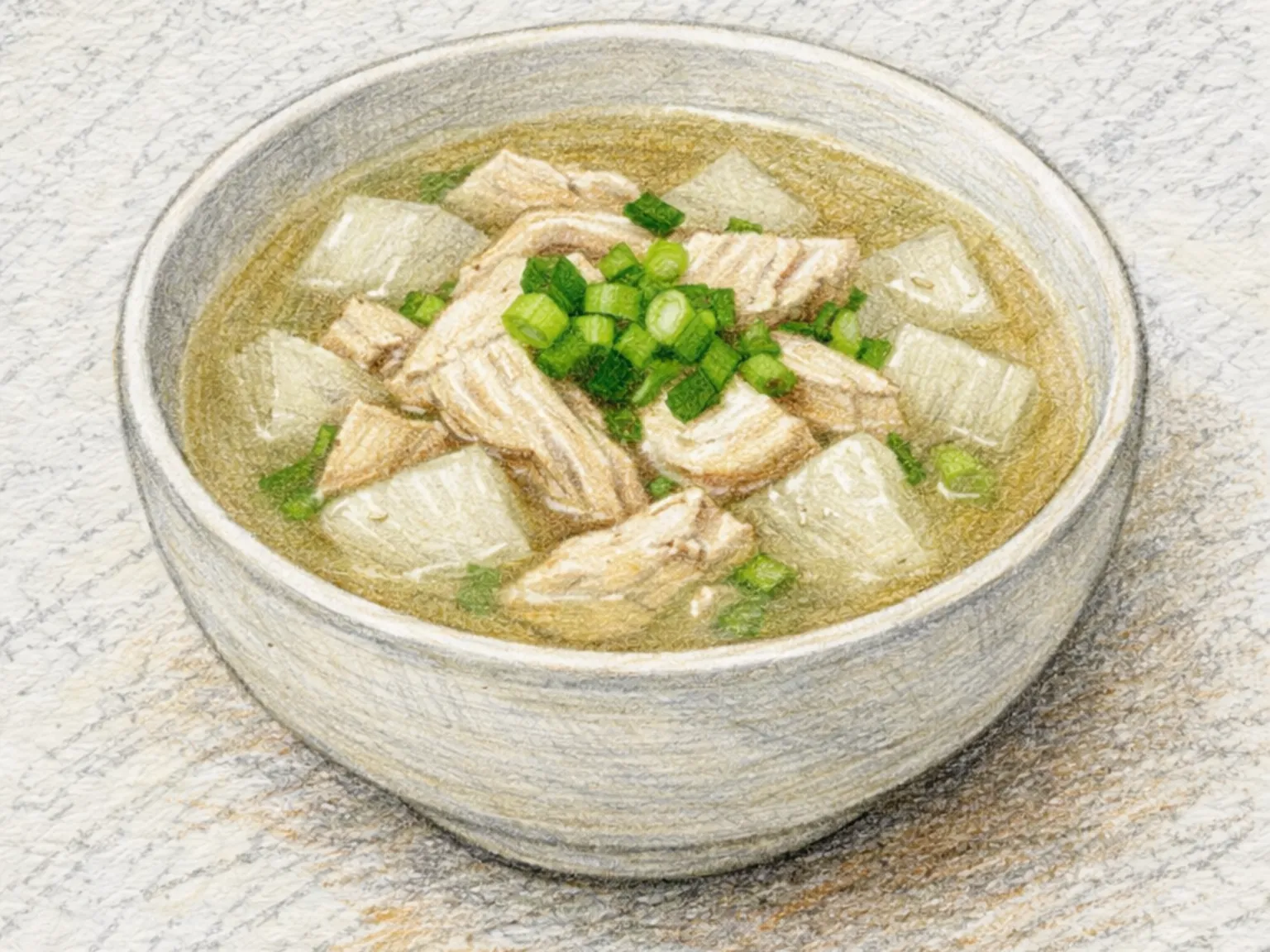
Korean Braised Beef Trotter
Ujok-jjim is Korean braised beef trotter simmered for over two hours with soy sauce, garlic, ginger, and green onion until the collagen-rich joints turn soft and gelatinous. The long, low braise dissolves the connective tissue into the cooking liquid, making it so concentrated that it sets into a firm jelly when cooled. Sugar and soy sauce create a sweet-savory seasoning that penetrates deep into the layered skin and tendons. Traditionally regarded as a nourishing food for joint health, this is a slow-cooked comfort dish especially popular among older generations in Korea.

Korean Braised Beef Knee Cartilage
Dogani-jjim is beef knee cartilage slow-braised with soy sauce, cooking wine, garlic, and ginger until the connective tissue turns soft and gelatinous. Hours of simmering dissolve the collagen so the cartilage becomes jiggly and yielding, while the broth grows so rich it sets into a jelly when cooled. Onion and green onion mellow any off-flavors and contribute a quiet sweetness, and ginger cleans up the finish. Traditionally valued as a nourishing food believed to support joint health, it is especially popular among older generations in Korea.

Korean Braised Beef Shank
Satae jjim is a Korean braised beef shank dish that requires soaking the meat in cold water to draw out blood, then simmering it with aromatics for over two hours. The extended cook breaks down the shank's tough connective tissue until the beef can be pulled apart along its grain, yielding a satisfying, fork-tender texture. Soy sauce and sugar establish a deeply savory-sweet base, and radish added midway through absorbs the concentrated broth while contributing its own refreshing sweetness as a counterpoint. Chilling the finished braise overnight and reheating it the next day lets the seasoning permeate the meat even further.

Korean Braised Pollock (Frozen Pollock with Radish in Spicy Sauce)
Dongtae-jjim is frozen pollock braised with Korean radish and bean sprouts in a sauce of gochugaru, soy sauce, garlic, and ginger. Using frozen rather than fresh pollock is traditional - the freezing-and-thawing process gives the flesh a firm, slightly spongy texture that holds up well in the spicy broth. Radish soaks up the chili-laced liquid and turns sweet against the heat, while bean sprouts contribute crunch and a clean, refreshing aftertaste. The sauce reduces to a shallow pool at the bottom, meant to be spooned over rice as a wintertime staple.

Korean Beef & Quail Egg Soy Braise
Jangjorim is how Korean cooks make beef last all week. Eye-round is simmered, shredded along the grain, and braised in concentrated soy sauce with sugar, garlic, and whole black peppercorns. Quail eggs absorb the dark liquid until chestnut brown throughout. Low heat reduces the sauce to a thick, glossy coating on every strand. Served cold, jangjorim is intensely salty - meant for small bites with plain rice, where one piece of soy-stained beef carries an entire mouthful of grain.

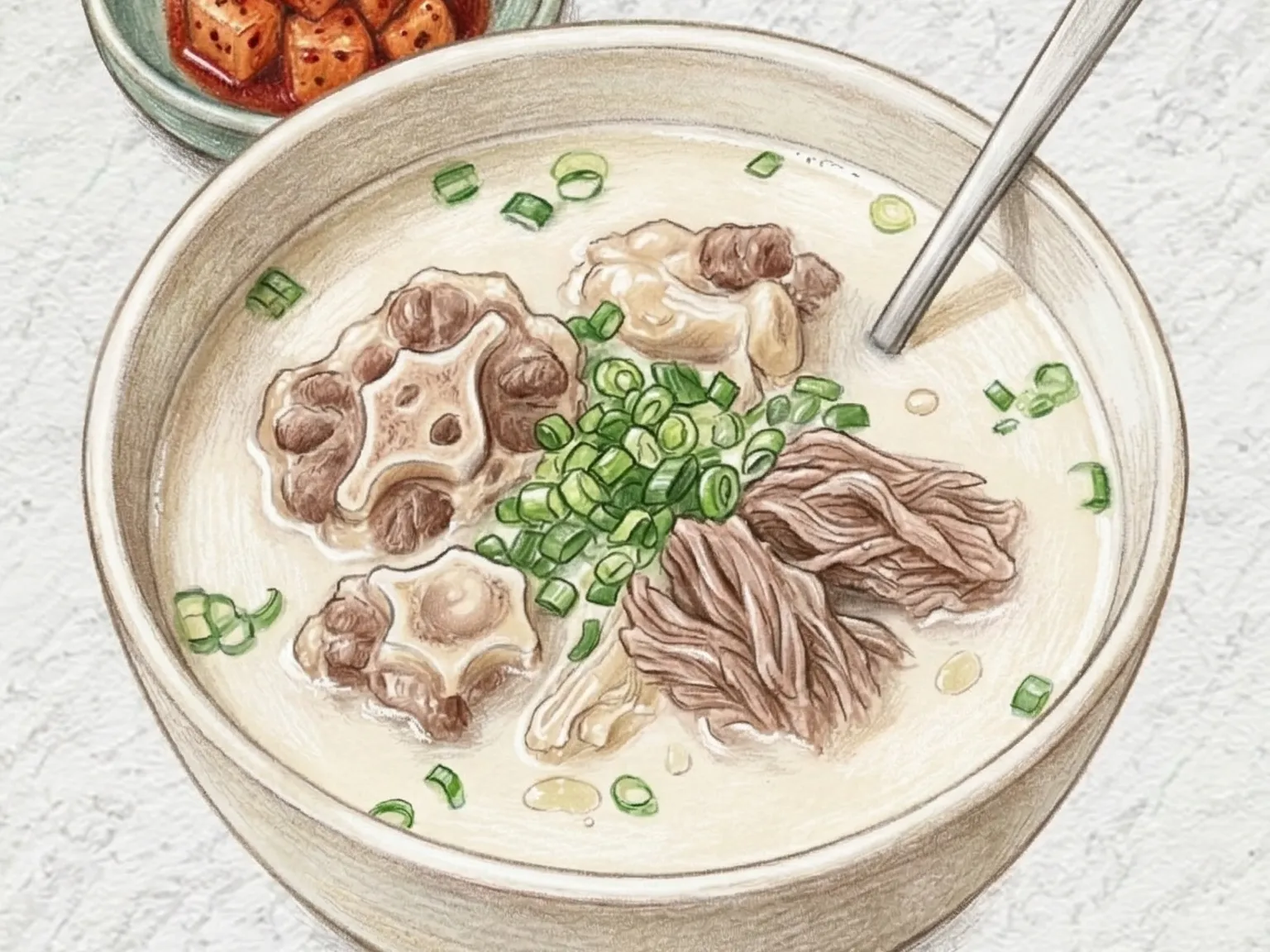
Korean Oxtail Soup
Sokori-guk demands patience - oxtail pieces are soaked in cold water to draw out blood, then placed in a heavy pot with enough water to cover and simmered for at least three to four hours. During that long, slow cook, collagen buried in the joints and connective tissue dissolves into the liquid, producing a broth so rich in gelatin that it sets into a solid block when refrigerated. Skimming fat and foam at regular intervals keeps the final broth a clean, milky white with no greasy residue. The meat, once it slides easily off the bone, is torn along the grain into shreds that are impossibly soft, while the tendon segments offer a pleasantly bouncy chew. Seasoning is deliberately minimal - coarse salt, black pepper, and sliced scallion - because the bones themselves have already contributed all the depth the soup needs. Served with a bowl of steamed rice and a side of kkakdugi, the cubed radish kimchi's sharp tang provides the only counterpoint this quietly powerful broth requires.