Korean Blue Crab Soy Stir-Fry
Stir-fry Medium

Korean Blue Crab Soy Stir-Fry

Quick answer

Kkotge ganjang bokkeum is a Korean blue crab stir-fry where halved crabs are lightly dusted with flour, pan-seared until the shells turn deep red, then braised briefly un...

What makes this special

  • Kkotge ganjang bokkeum sears blue crab in a flour coating before a brief braise in sweet soy sauce.
  • Flour coating traps crab moisture and makes sauce cling to the shell
  • Ginger is the key spice neutralizing crab's briny fishiness
Total time
35 min
Level
Medium
Servings
2 servings
Ingredients
8
Calories
200 kcal
Protein
22 g

Key ingredients

blue crabsoy saucesugargarlicginger

Core cooking flow

  1. 1 Clean the 2 live blue crabs just before cooking.
  2. 2 Pat the cut sides dry, then dust them lightly with flour.
  3. 3 Heat a pan over medium heat and place the crabs cut side down first.

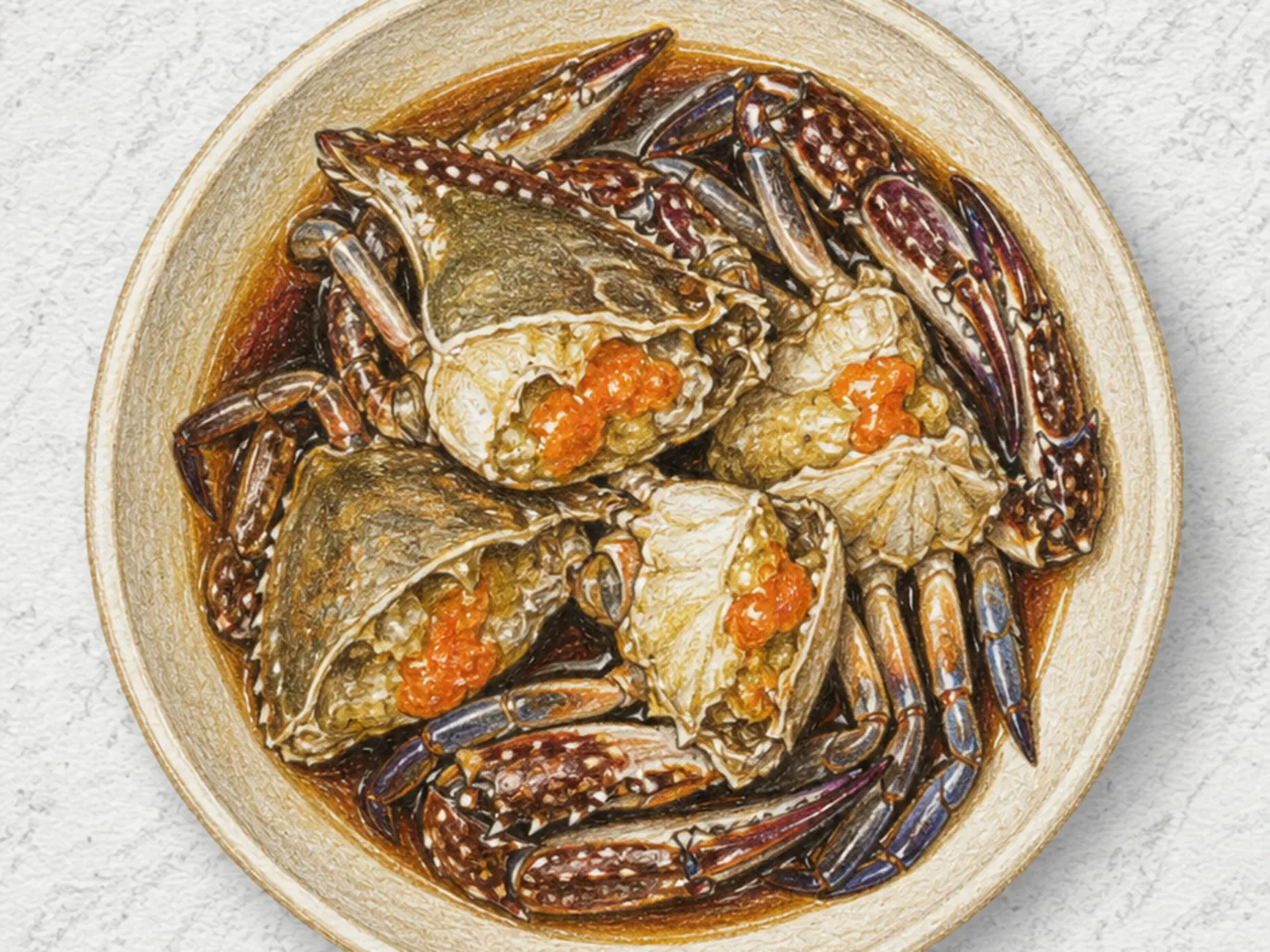
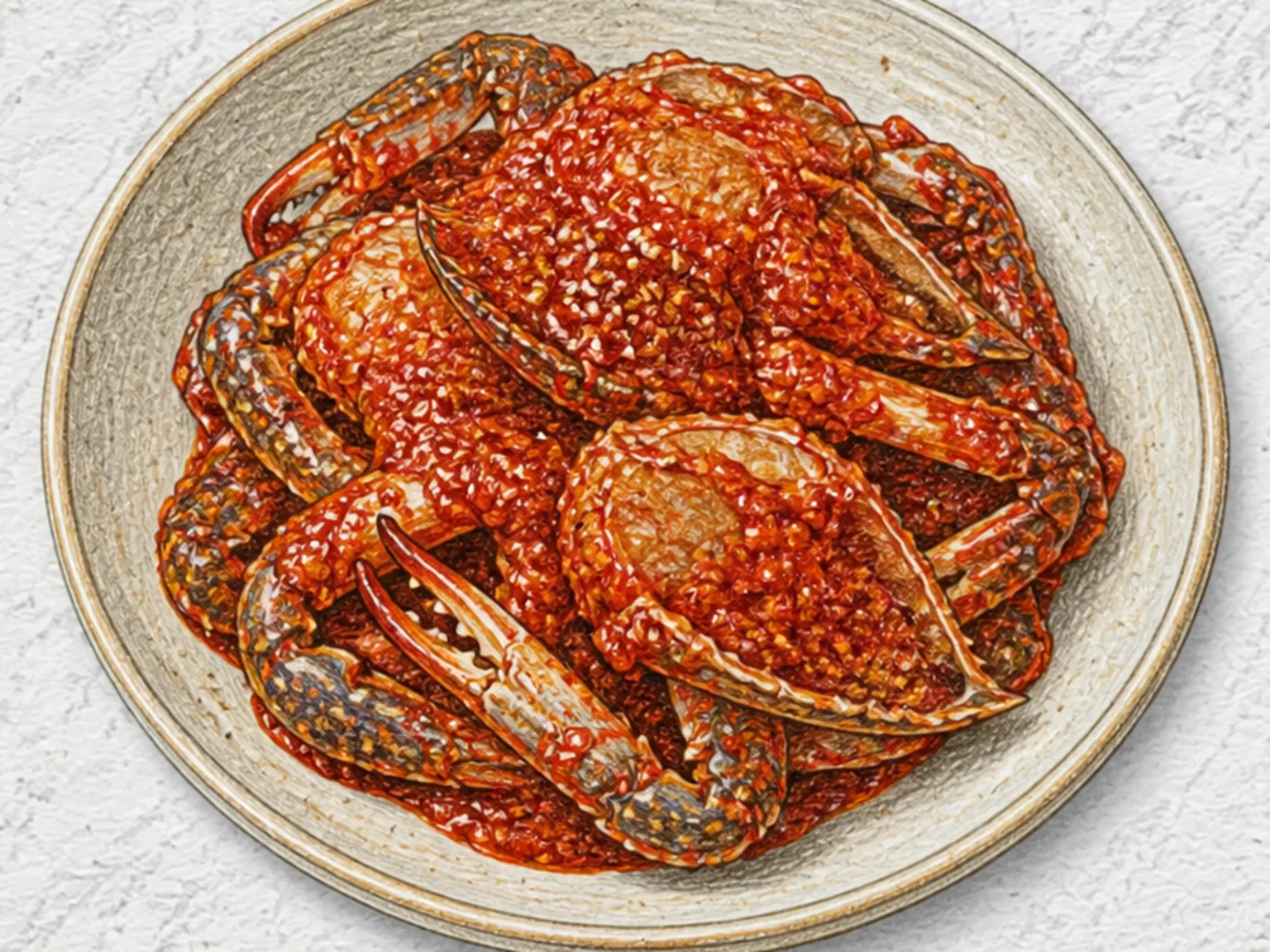
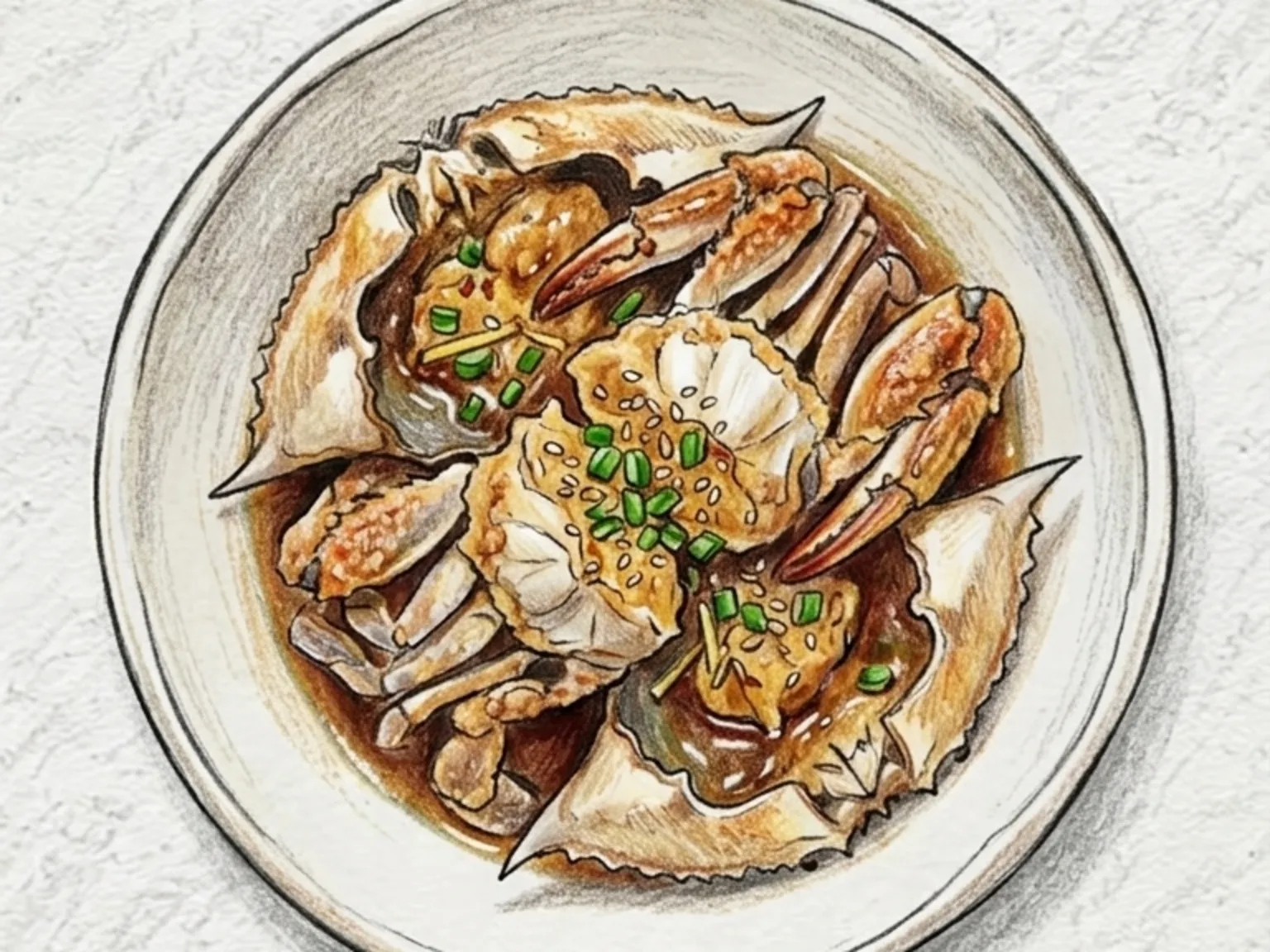
Kkotge ganjang bokkeum is a Korean blue crab stir-fry where halved crabs are lightly dusted with flour, pan-seared until the shells turn deep red, then braised briefly under a lid in a sauce of soy sauce, sugar, garlic, ginger, and gochugaru. The flour coating seals in moisture and helps the sweet-salty sauce cling to the shell surface, leaving a sticky, aromatic glaze that is meant to be licked off the fingers. Ginger neutralizes the briny smell that crabs can carry, while scallion and sesame oil are stirred in at the end to build the final aromatic layer. Using live crabs and cooking them immediately after cleaning ensures the meat stays firm and sweet; frozen crabs lose moisture during thawing and produce a noticeably softer result. Scoring the claws before cooking allows the sauce to penetrate the thicker sections of shell.

Prep 20min Cook 15min 2 servings

Instructions

Read the steps as a cooking flow: prep, heat, seasoning, doneness control, and finish.

6 steps
  1. 1
    Season

    Clean the 2 live blue crabs just before cooking.

    Remove the top shells and gills, halve the bodies, and score the claws so the sauce can reach the thicker shell sections.

  2. 2
    Prep

    Pat the cut sides dry, then dust them lightly with flour.

    Shake off any excess because a thick coating turns pasty and keeps the soy glaze from clinging cleanly to the shells.

  3. 3
    Control

    Heat a pan over medium heat and place the crabs cut side down first.

    Sear for about 2 minutes, then turn them when the shells redden and the exposed meat surface firms up.

  4. 4
    Season

    Mix 3 teaspoons soy sauce, 1 teaspoon sugar, 4 minced garlic cloves, 5 grams ginger, and 1 teaspoon red pepper flakes.

    Pour it around the edge of the pan so the aromatics bloom without scorching.

  5. 5
    Control

    Cover the pan and simmer over medium-low heat for 5 minutes.

    Spoon the sauce over the crabs once midway, and add only a small splash of water if the pan bottom dries out.

  6. 6
    Finish

    Add the 2 green onion stalks and stir-fry for 30 seconds to release their aroma.

    Turn off the heat, drizzle in 1 teaspoon sesame oil, and serve as soon as the glaze looks glossy.

After the steps

Pick a recipe that fits this dish.

Continue with shared ingredients, meal pairings, or a similar method.

Recipes That Go Well With This

More Stir-fry →

Based on shared ingredients and meal pairing

Korean Spicy Blue Crab Hot Pot
Shared ingredient: flower crab Stews

Korean Spicy Blue Crab Hot Pot

Maeun kkotge jeongol is a fiery blue crab hot pot made with two whole crabs broken down and simmered in a gochujang and gochugaru-laced broth. The crab shells and innards gradually release a deep, concentrated shellfish essence into the pot, which layers with the fermented chili paste to produce a broth that is bold and complex rather than simply hot. Daikon radish and tofu absorb the spicy liquid as they cook, becoming flavorful in their own right, while thick green onion stalks add fragrance near the end. This is a communal dish meant to be placed in the center of the table over a portable burner and shared as it simmers, with a little water added as the broth reduces to keep it going through the meal. Stirring the crab innards directly into the broth deepens the umami considerably.

Korean Soy-Glazed Chicken Stir-Fry
Shared ingredient: ginger Stir-fry

Korean Soy-Glazed Chicken Stir-Fry

Chicken thigh meat stir-fries in soy sauce, sugar, and oligosaccharide syrup for a sweet-salty glaze. Garlic and ginger go into the oil first to infuse the fat with fragrance before the chicken is added, letting the aromatics penetrate deep into the meat as it cooks. The oligosaccharide heats into a tacky gloss that coats each piece evenly as the liquid reduces. Sesame oil and whole sesame seeds scattered over the top at the end bring a nutty, aromatic finish. The flavor profile runs close to Japanese teriyaki, but the heavier use of garlic and ginger pushes it toward the more direct, punchy spice character typical of Korean cooking. Boneless thighs cut into bite-sized pieces cook more evenly than larger pieces, and keeping the heat high through most of the cook ensures the surface caramelizes without turning rubbery.

Korean Taro Porridge (Perilla Oil-Toasted Rice with Taro Root)
Serve together Rice

Korean Taro Porridge (Perilla Oil-Toasted Rice with Taro Root)

Soaked rice is toasted in perilla oil until fragrant, then simmered with peeled taro in a generous amount of water until the porridge reaches a thick, flowing consistency. Some taro pieces dissolve into the liquid and naturally thicken it, while others hold their shape and offer a starchy, crumbly bite. The gentle nuttiness of perilla oil and the mild earthiness of taro create a soothing combination with no sharp flavors. Seasoning with just salt preserves the delicate taste of the taro without masking it.

Korean Soy-Glazed Shrimp Stir-Fry
Similar recipe Stir-fry

Korean Soy-Glazed Shrimp Stir-Fry

Ganjang saeu bokkeum coats plump shrimp in a sweet-savory soy glaze built on a base of melted butter and garlic. A single cheongyang chili adds a subtle kick that lifts the buttery richness without overpowering it. The key timing rule is to add the sauce the moment the shrimp turn pink: any longer and they become rubbery, but the glaze needs just enough heat to caramelize lightly and coat. Stir-frying the garlic in the butter before the shrimp go in lays a nutty base across the entire sauce. A final splash of soy sauce over high heat at the end creates the lacquered sheen that defines the finished dish. With only eight minutes of cooking time total, this works equally well as a quick banchan alongside rice or as an appetizer with drinks.

Serve with this

Manduguk (Korean Dumpling Clear Broth Soup)
Soups Easy

Manduguk (Korean Dumpling Clear Broth Soup)

Manduguk is a Korean dumpling soup in which hand-folded dumplings stuffed with ground pork, tofu, scallion, and garlic are dropped into a clear, simmering broth, typically anchovy-kelp stock or beef broth, and cooked until they float. As the dumplings cook, their thin wheat-flour wrappers release a subtle starch that gives the broth a barely perceptible body, while the filling leaks savory juices that enrich the liquid gradually. A thin drizzle of beaten egg stirred in near the finish creates silken wisps on the surface of the broth and gives the bowl a more finished appearance. Shredded egg strips and crumbled dried seaweed scattered on top add a pleasant contrast in color and a faint oceanic note to the flavor. Many Korean households serve manduguk on Lunar New Year as an alternative to tteokguk, and some combine the two by adding sliced rice cakes alongside the dumplings. Dumplings can be made in large batches and frozen raw, which means this soup can be pulled together quickly on weeknights without sacrificing any of the flavor that comes from homemade filling. A small dish of soy-vinegar dipping sauce served alongside lets each person adjust the seasoning at the table, and the light acidity of the sauce cuts through the mild broth in a way that makes the contrast between the two worth trying.

🏠 Everyday 🎉 Special Occasion
Prep 10min Cook 15min 4 servings
Korean Soybean Leaf Doenjang Muchim
Side dishes Medium

Korean Soybean Leaf Doenjang Muchim

Kongip-doenjang-muchim dresses boiled soybean leaves in doenjang and perilla oil - a rustic Korean banchan more commonly found on countryside tables in Jeolla and Gyeongsang provinces than in urban kitchens. Soybean leaves are larger and thicker than perilla leaves, with a chewy, almost fabric-like texture after cooking. Fresh leaves are a seasonal ingredient available only in summer, typically sourced at rural markets or directly from farms rather than supermarkets. Boiling for five to six minutes softens the tough fibers while preserving the earthy, beany aroma unique to the leaf. Since doenjang is the primary seasoning and can easily over-salt the dish, diluting it with a tablespoon of water brings the intensity to the right level. Perilla oil is chosen over sesame oil because its grassy, nutty profile harmonizes with the leaf's herbaceous character. Gentle hand-mixing is essential - aggressive tossing tears the softened leaves.

🏠 Everyday 🍱 Lunchbox
Prep 12min Cook 8min 4 servings
Korean Mushroom Dumpling Hot Pot
Stews Easy

Korean Mushroom Dumpling Hot Pot

Mandu jeongol is a generous hot pot of twelve large dumplings simmered with napa cabbage, shiitake mushrooms, oyster mushrooms, and bok choy in anchovy-kelp stock. The two varieties of mushroom add layers of umami to the clear broth, while the cabbage and bok choy soften and release their natural sweetness as they cook. The dumplings cook directly in the simmering stock, their wrappers gradually turning chewy as the filling flavors seep into the surrounding liquid. Soup soy sauce and garlic provide a clean, understated seasoning that keeps the broth from overshadowing any single ingredient. The right moment to eat is when the vegetables have wilted and the dumplings float to the surface, signaling they are cooked through. The absence of any spice or strong seasoning makes this one of the more universally approachable hot pots, suited for all ages. Leftover broth absorbs cooked rice or soaked glass noodles easily, turning what remains into a satisfying finish to the meal.

🏠 Everyday 🎉 Special Occasion
Prep 15min Cook 20min 4 servings

Similar recipes

Korean Clam Stir-Fry (Manila Clams with Butter, Garlic and Chili)
Stir-fry Easy

Korean Clam Stir-Fry (Manila Clams with Butter, Garlic and Chili)

Bajirak bokkeum is a Korean clam stir-fry where purged manila clams are cooked quickly over high heat with butter, garlic, and cheongyang chili. Thorough purging in salted water beforehand removes all sand and prevents grit from appearing in the finished dish. Rice wine goes in first with the lid closed, so the alcohol steam helps the clams open rapidly while eliminating any lingering briny or muddy off-notes. Once the shells open, butter is added and emulsifies naturally with the released clam juices, building a salty, savory sauce without any additional effort or thickening agent. Generous sliced garlic infuses the butter sauce with depth as it cooks, and the cheongyang chili introduces a bright, sharp heat that prevents the richness from becoming too heavy. A small measure of soy sauce adjusts the final seasoning, though it must be kept minimal because the clams already contribute their own pronounced salinity. Scallion is tossed in at the very end for a clean, herbal finish before the pan comes off the heat. Total cooking time must stay within three to four minutes: beyond that window, the clam meat contracts, toughens, and loses its tender, juicy texture entirely. The sauce left in the pan after eating is intensely concentrated with shellfish flavor and pairs exceptionally well with crusty bread for soaking up every last drop. The dish works equally as a drinking snack alongside beer or as a side with steamed rice, and frozen manila clams produce reliably good results when fresh ones are unavailable.

🏠 Everyday 🌙 Late Night
Prep 15min Cook 10min 2 servings
Korean Mussel Stir-Fry (Plump Mussels with Butter, Garlic and Chili)
Stir-fry Easy

Korean Mussel Stir-Fry (Plump Mussels with Butter, Garlic and Chili)

Honghap-bokkeum is a Korean stir-fried mussel dish cooked in a garlic butter sauce. The recipe begins by cleaning the mussels, removing the beards, and discarding cracked shells. Garlic slices are sautéed in melted butter until fragrant. The mussels are then added with rice wine, covered, and steamed for four minutes. This steaming process creates a savory sauce by combining the butter with the natural juices from the mussels. Unopened shells are discarded. Sliced green onions and cheongyang chilies are stir-fried with the mussels for one minute, adding a sharp heat that balances the buttery richness. Finally, a splash of soy sauce is drizzled around the pan edge to glaze the shells, making the dish ready to serve alongside steamed rice.

🏠 Everyday 🌙 Late Night
Prep 10min Cook 10min 2 servings
Korean Grilled Soy-Marinated Blue Crab
Grilled Medium

Korean Grilled Soy-Marinated Blue Crab

Ganjang-gejang-gui is a Korean grilled blue crab dish where the crab is halved, marinated in soy sauce with garlic, ginger juice, and sesame oil, then cooked on a grill or in an oven until the shell chars and the meat absorbs the salty-sweet seasoning. The key flavor element is the crab's hepatopancreas inside the top shell, which solidifies under heat into a thick, intensely savory paste that acts as a built-in sauce when eaten with the leg and body meat. The sugars in the soy marinade caramelize over high heat, forming a glossy glaze across the shell surface, and a final brush of sesame oil before serving adds a toasted nuttiness over the briny crab flavor. Marinating time matters considerably: a minimum of thirty minutes allows the soy to penetrate the surface, but refrigerating the crab for one to two hours gives the seasoning time to reach the interior flesh, producing noticeably deeper flavor. Placing the grilled crab over a bowl of rice and mixing the shell's concentrated juices and tomalley into the grains makes a complete meal without any additional side dishes.

🍺 Bar Snacks 🥗 Light & Healthy
Prep 20min Cook 15min 2 servings

Tips

Buy live crabs and cook immediately for best flavor.

Nutrition (per serving)

Calories
200
kcal
Protein
22
g
Carbs
8
g
Fat
8
g